

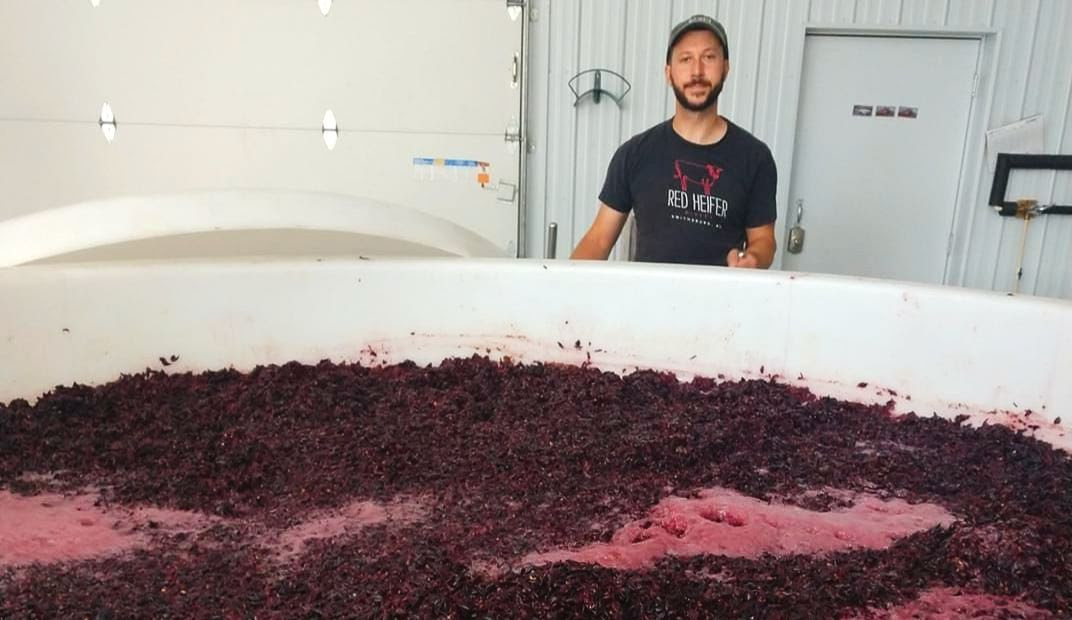
Kevin Ford, Owner/Winemaker of Red Heifer Winery, with his Flextank F-900
Whether in a tank or a bin, open-top fermenting is a moderately advanced technique that, when performed correctly, can provide some very beneficial properties for creating exquisite red wines!
Open-Ferment Benefits
- Builds a strong yeast with more oxygen exposure
- Allows heat to escape for more manageable fermentation temperatures
- A cap of skins and carbon dioxide produced by the yeast during alcoholic fermentation act as a blanket over the wine to protect it from outside elements
Ideal Vessels for Open-Fermenting
These and similar vessels provide quick access to the cap (the grape skins that rise to the top), allowing it to easily be punched down into the must.
Traditional open top fermenting in a vessel made from modern easy to clean polyethylene material. Principally intended for red ferments, punch down may be achieved manually or with a fork truck mounted plunger.
FDA approved resin, easy to clean & sanitize, bolted on rotatable and replaceable rollover pallet base, extremely durable, stack lid included with each bin, bins stack 2 & 3 high for transit, nestable when empty to maximize space, solid- wall means no voids or cracks or crevices to harbor mold or bacteria. Capacities: 1,000, 1,500 & 2,000lbs. (Maximum per stack 4,000lbs)
Expert Tips for Open Fermenting
- The term 'Open' need not be taken too literally. Most wineries do keep a loose lid on their fermenters at all times to lessen risk of fruit flies and debris.
- Don't fill the tank right to the top with ‘must’. You will need to leave enough space for the cap to expand due to the build-up of CO2 gas. Typically fermenters are filled about 75% or less with the must to leave room for the cap. Be conservative if you're working with a new varietal for the first time until you get an idea of how much cap it develops.
- As the ferment slows, you begin to lose the protective CO2 blanket and the cap quits rising as high or may actually sink. The reduction in CO2 generation will leave your wine exposed to oxygen and the associated risk of problems. This is the time to take your wine to its next step in the process such as pressing or extended maceration.