

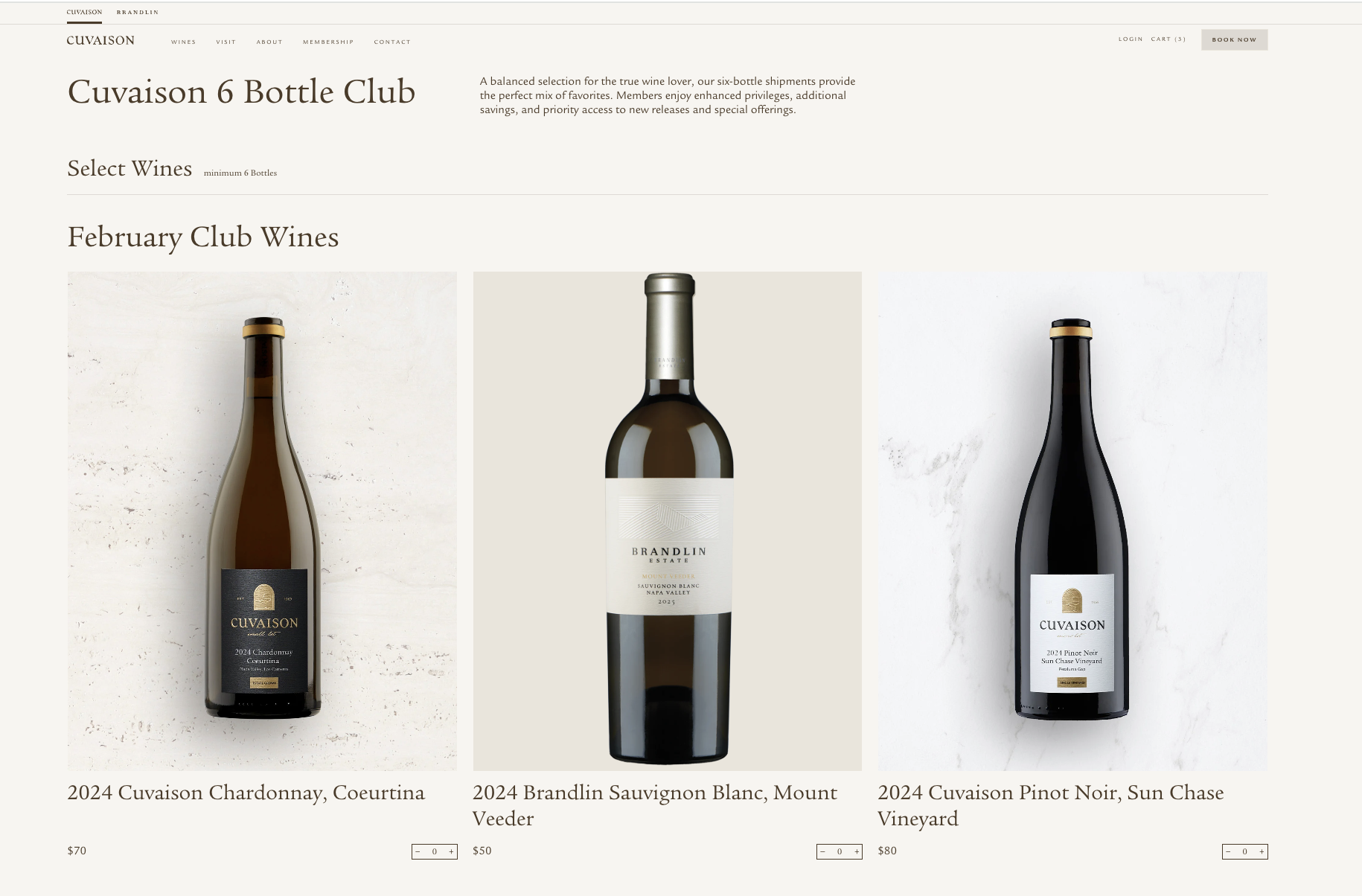
 For a long time, the standard wine club model was simple: you pick the wines, you set the price, members sign up and receive what you ship them. Curated. Chef's kiss. Non-negotiable.
That model still works — for the right clubs and the right member base. But the world has shifted. Members who joined in the past few years have been shaped by Amazon, Stitch Fix, and a dozen other subscription experiences that gave them control. They've come to expect customization as the default, not a premium.
And the data backs this up. Wine clubs that offer member customization see measurably lower churn, higher average order values, and stronger long-term engagement. Not because flexibility is inherently better — but because it removes one of the most common reasons members leave.
The Cancellation You Could Have Prevented
When you look at why wine club members actually cancel, a consistent pattern appears:
"I already have too much wine."
"I don't drink red wine and I keep getting red."
"We're trying to cut back on spending."
"We travel a lot — this just isn't working right now."
Notice what's not on that list: "I don't like your wine" or "I had a bad experience."
The majority of cancellations aren't rejection. They're friction. Members who liked you enough to sign up are leaving because the rigid structure stopped working for their life.
Build-a-box directly addresses this. When members can adjust quantities, swap varietals, or build their own selection from your available inventory — the "too much wine" complaint becomes a "let me dial this down to two bottles" adjustment. The "I only drink white" complaint becomes a white-only configuration. A problem that would have been a cancellation becomes a customization.
How It Works in Practice
A well-implemented build-a-box experience gives members a defined window before their shipment date to modify what's coming. In most implementations, you set the parameters:
Which SKUs are available for swapping. You can restrict this to current club-eligible inventory — no one's raiding your single-bottle allocation.
The quantity range. Members can add or remove bottles within limits you define. Someone overwhelmed can drop to two. An enthusiast can add a few extras.
Whether modifications affect pricing. You can offer flat-rate boxes (swap within the tier price) or dynamic pricing (add bottles, pay more).
The customization window. Typically 7-14 days before processing. Members get an email notification, make their selections, and the shipment goes out as configured.
The key is that this happens inside your existing club infrastructure — it's not a separate product or a manual process. Awtomic's build-a-box is integrated into the customer portal that members already use to manage their membership. No new login, no extra step.
The "Too Much Wine" Problem Is Specifically Yours to Solve
Wine clubs have a unique challenge that other subscription categories don't: the product is perishable, accumulates, and takes up physical space. Your member can't just let their skincare subscription pile up in a drawer. Wine takes over counters, closets, and eventually the relationship with the club.
A member who's fallen behind — who has 8 bottles from last quarter they haven't opened — is not going to be excited about the next shipment arriving. If they have no way to skip or reduce, their options are limited: drink faster, cancel, or do nothing and cancel later.
Build-a-box (or a simpler skip/reduce option) breaks this cycle. The member who can say "actually, just send me two bottles this time — I'm trying to catch up" is the member who stays for another year.
What Wineries Get in Return
Member flexibility isn't just a churn-prevention tool. There are some less obvious benefits:
Higher average order values. When members can add bottles, a meaningful percentage do. A flat club tier that would have processed at $90 becomes a $120 order because the member decided to grab an extra bottle of the white they've been enjoying. That's incremental revenue at near-zero cost.
Better inventory management. When you know what members actually want before you process their shipment, you can plan your picking and fulfillment more accurately. Less guessing about how much of each SKU to pull.
Stronger engagement signals. A member who logs into the portal to configure their box every quarter is more engaged than one who just receives what ships. Engagement correlates strongly with long-term retention. The act of choosing creates ownership.
A meaningful differentiator. Not every wine club offers this. If yours does — and the experience is smooth — it becomes part of why members stay and part of how they describe your club to friends.
Getting Started Without Overhauling Your Operation
The hesitation most winery teams have is operational: "If we let members customize everything, won't fulfillment become a nightmare?"
In practice, it doesn't have to. The key is setting clear parameters: a defined SKU set, a defined quantity range, a defined customization window. Members who engage with it do so in ways that are predictable and manageable. Members who don't want to engage don't have to — the default shipment still goes out if they do nothing.
Awtomic's build-a-box configuration takes about 20-30 minutes to set up per club tier. You define what's available, set the window, and it runs. The portal handles member communication, modifications, and inventory allocation automatically.
The wineries that have moved to a flexible model aren't doing it because it's trendy. They're doing it because it works — and because the math on retaining one more member per quarter easily justifies the setup.
If your club is seeing higher-than-expected churn and you haven't given members a way to customize, that's worth looking at.
Awtomic is a wine club subscription platform built for Shopify. Build-a-box, the customer portal, and Awtomic Moments are all included. Learn more or book a demo.