

The following is an excerpt from our most recent blogpost. Read the whole article here.
Between stunted growth to unexpected nutrient deficiencies, this second consecutive year of drought threw us quite a few curve balls. One thing people aren’t expecting to hear though is that some places haven’t needed to irrigate all season. That’s right. Some vineyards we consult for have been just fine using no water for irrigation.
How is this the case? We take soil moisture very seriously. Let me break it down for you.
Here's a site we didn't need to irrigate at all
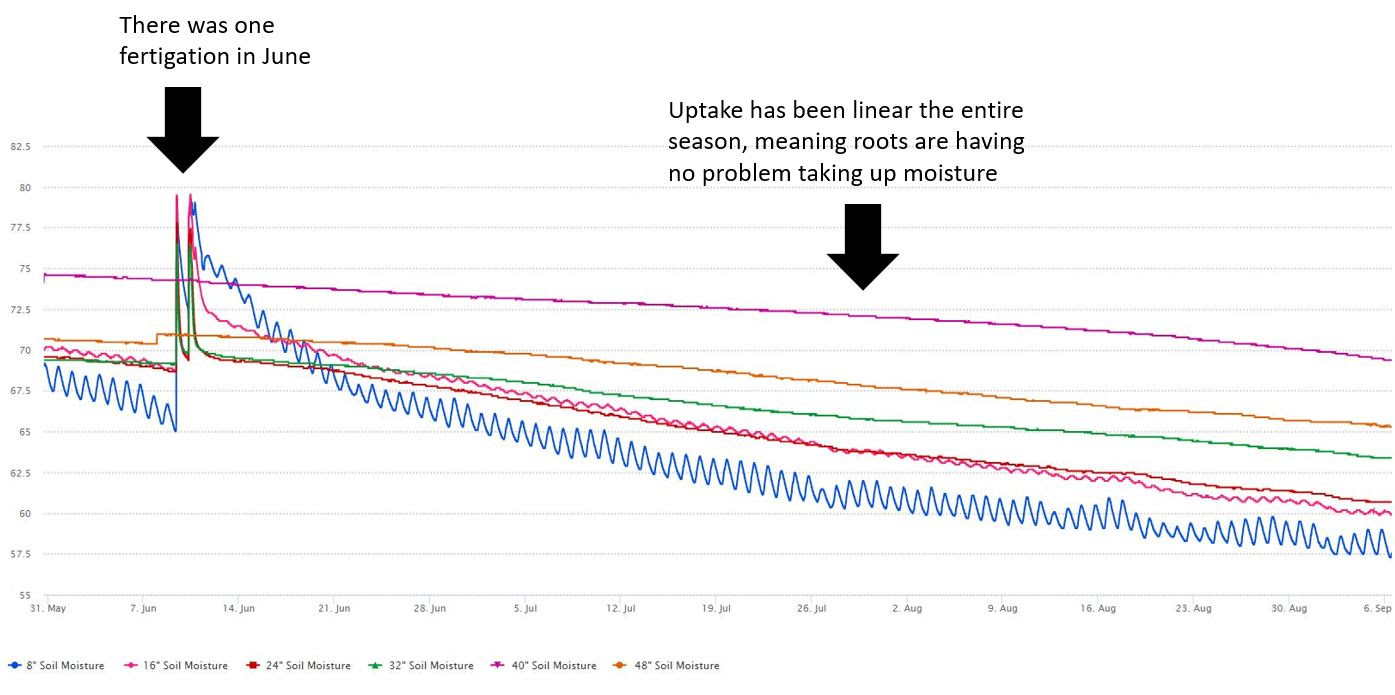
It could be a combination of soil type, or balanced canopy size, but for whatever reason average soil moisture at this site has never dipped below 60% relative water content (we consider anything above 80% to be around field capacity).
Here's a site that looked dry but had deeper moisture
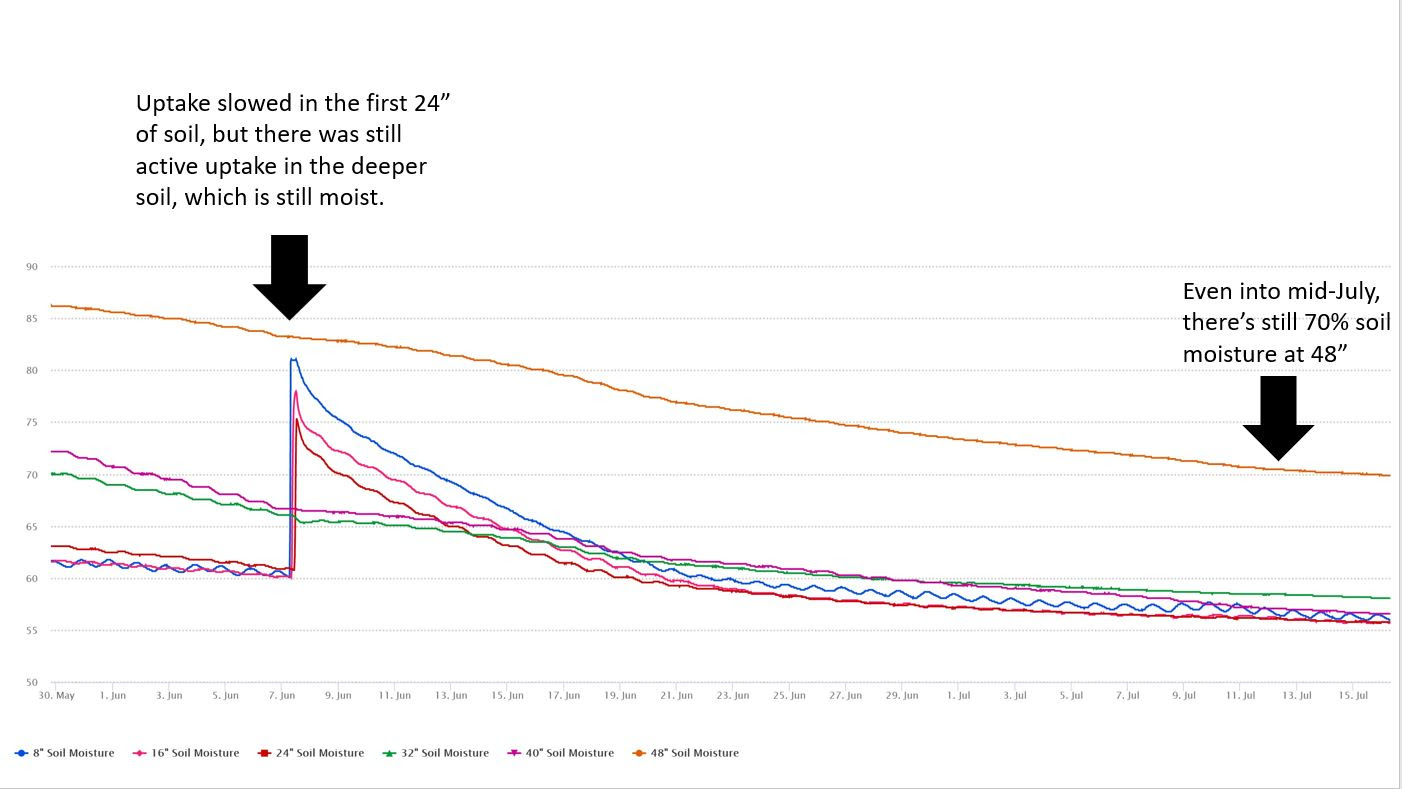
This site may have looked dry in the first few feet of soil but look at how much water was waiting down below. Now we could have started irrigating earlier, but then those roots would have never tapped into that water down below 40” soil depth. Why go searching for water when it’s being fed to you, right? Forcing the roots to dig deeper means the vine will develop a large healthy root system that takes advantage of the water already present in the soil. This will make the vine more drought tolerant and save you precious water, less dependent on irrigation.
Here's a site where water percolated too deeply
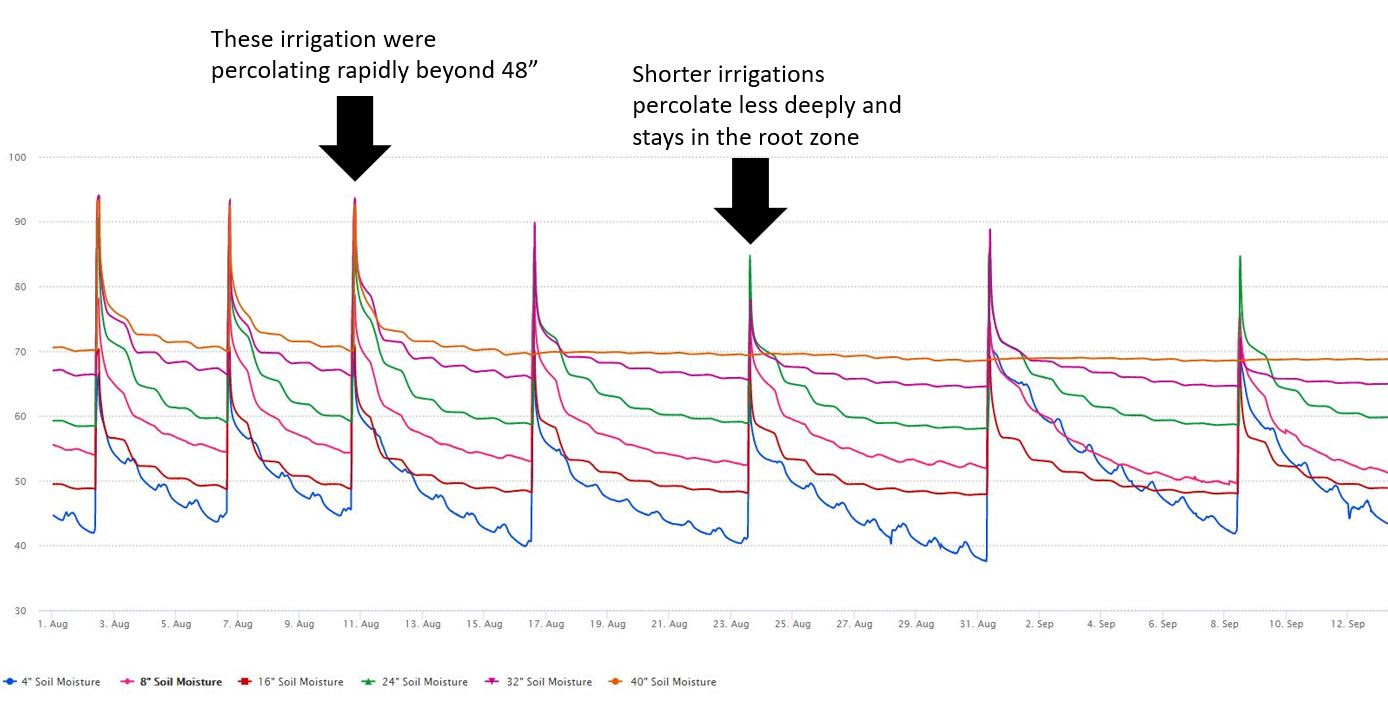
Knowing your soil moisture can also help you irrigate more effectively. This site for instance has a sandy soil that doesn’t hold onto water very well (i.e. low water-holding capacity). You can go ahead and irrigate this site all you want, but all that water is going to percolate way deeper than your roots go (most vine roots are found above 3 to 4 feet in depth). So instead of wasting that water, it’s better to give your vines small frequent drinks. That way you’re watering your vines more and your bedrock less.
Here's a site where water didn’t percolate
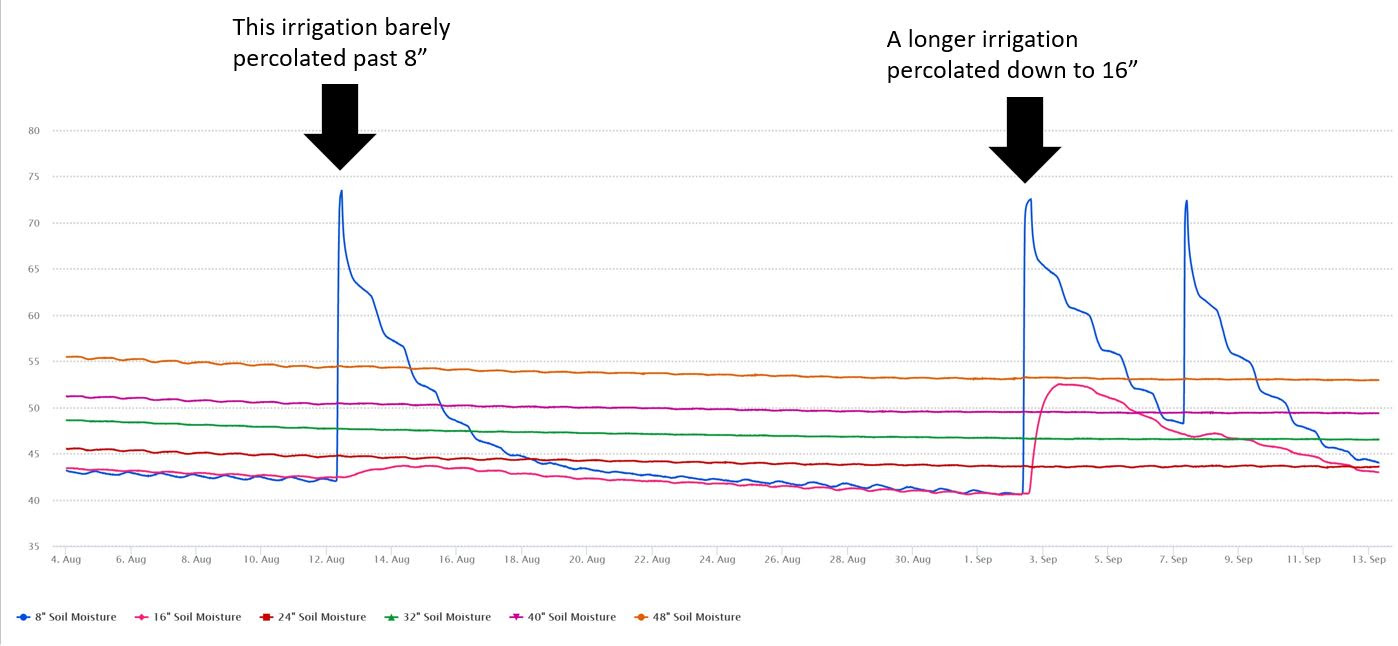
This site has the opposite problem. Water here hits the 24” mark and just stops. In this case, a schedule of 6 hours every ten days as opposed to shorter weekly irrigations percolates more deeply and stimulates deeper root activity.
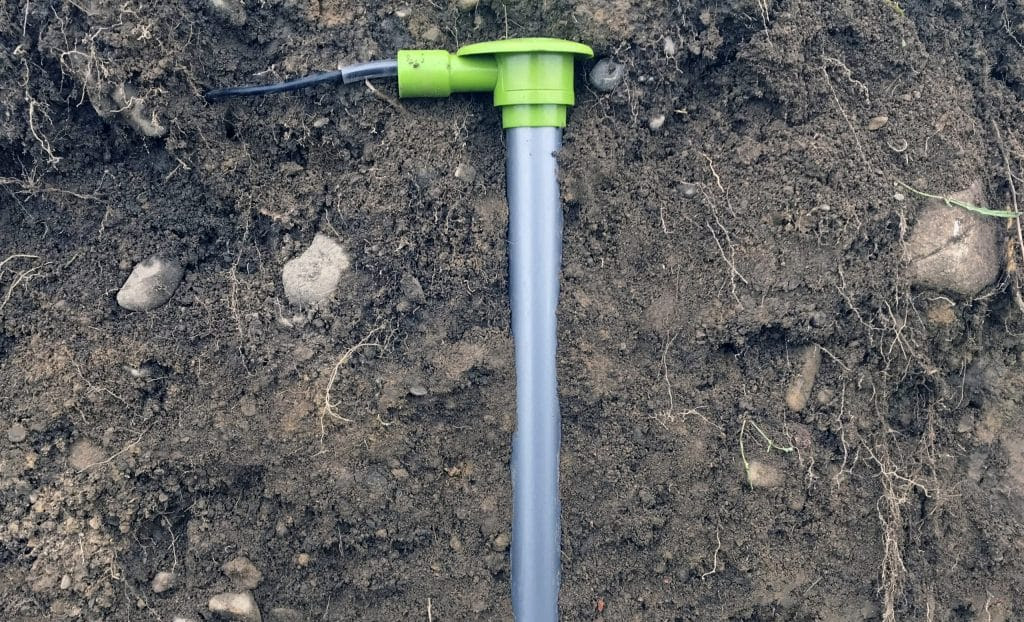
A lot goes into making irrigation decisions but knowing your soil moisture should be your first step. A capacitance probe will cost you under $1000, but will give you the knowledge that you’re using your water as efficiently as possible to produce the highest quality grapes.
Knowing how much water you have in your soil is as important as knowing how much water you have in your well or pond. If you want us to help with this next step, contact paul@advancedvit.com.
Want to read more? Click here to visit the Advanced Viticulture blog.