

Thiamine, also known as vitamin B1, is an essential micronutrient for yeast metabolism. The thiamine content typically found in grapes ranges from 80 µg/L to 1.2 mg/L. Although most yeasts, including Saccharomyces cerevisiae, can synthesise thiamine, they prefer to absorb it from grape must. This preference conserves energy, which can be used for cell growth and the production of vital fermentation metabolites. In fact, yeasts can absorb all available thiamine in the must within the first six hours after inoculation. A thiamine deficiency in the must can have practical consequences, such as sluggish or stuck fermentations and an altered aromatic balance.
Thiamine’s role in yeast metabolism and fermentation
Thiamine and its biologically active forms serve as cofactors in central carbon metabolism (sugar breakdown). Without thiamine, several enzymes cannot function, risking incomplete fermentation. Thiamine also exhibits antioxidant activity, protecting yeasts from free-radical damage under stressful conditions. Besides its role in fermentation efficiency, thiamine can also indirectly impact wine aroma. It helps break down amino acids, leading to the formation of aromatic compounds such as esters and higher alcohols. When thiamine levels are too low, yeasts tend to produce more undesirable fatty acids such as isovaleric and butyric acid, leading to unpleasant odours.
Causes and impacts of a thiamine deficiency
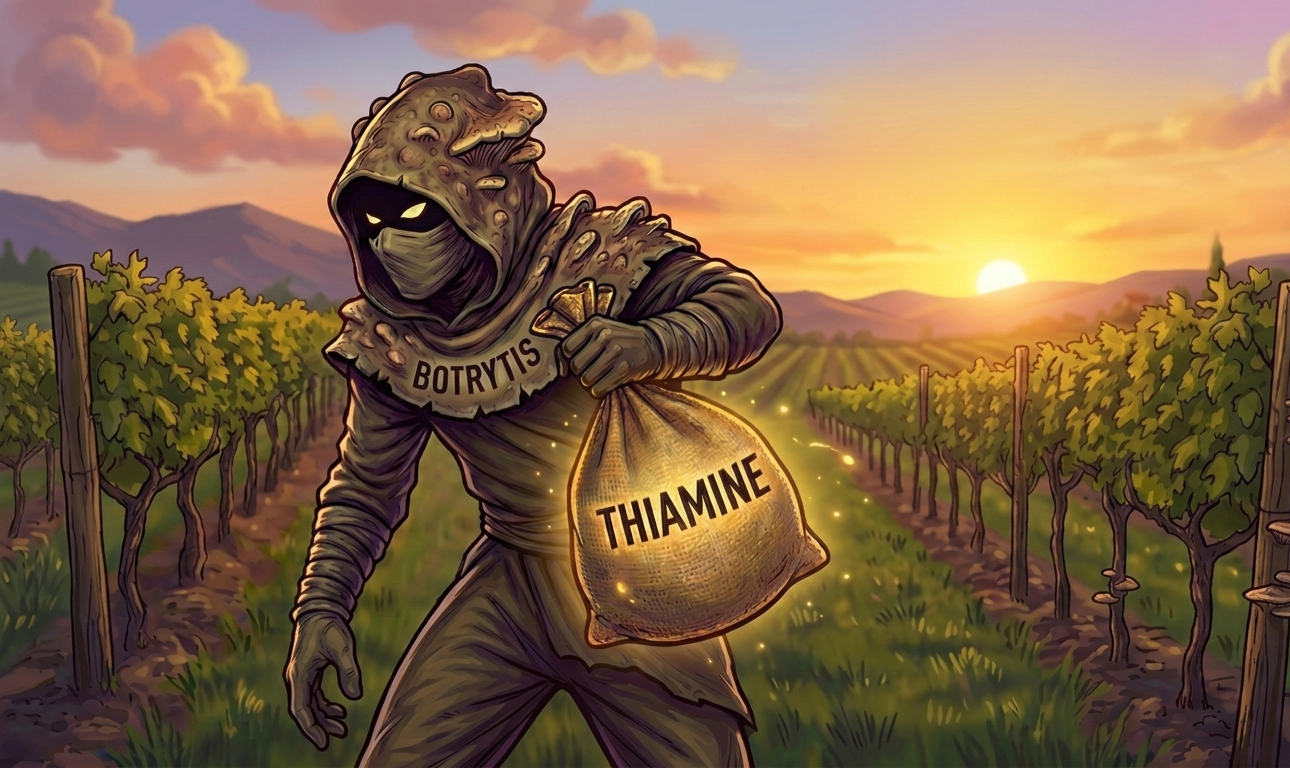
Several factors can deplete thiamine before or during fermentation. Fungal infections, such as Botrytis cinerea, reduce the thiamine content even before harvest. Indigenous microflora present in the must can consume significant amounts of thiamine. High SO2 additions at the crusher can also chemically degrade some thiamine. During thiamine deficiency, metabolic pathway bottlenecks occur, leading to the accumulation of intermediary metabolites. Some of these metabolites are known to bind sulfur dioxide (SO2). This poses a potential problem in the finished wine because SO2 additions to achieve sufficient free SO2 for preservation might increase total SO2 levels beyond the legal threshold.
Overcoming the thiamine deficiency
Historically, thiamine supplementation was developed especially for noble rot sweet wines. In addition to being a growth factor for yeast, thiamine promotes the decarboxylation of ketonic acids. This way, it helps to limit the SO2 combination rate. Today, thiamine supplementation is a standard practice in winemaking. Yeast nutrients containing thiamine hydrochloride are recommended to be added at the beginning of alcoholic fermentation to maximise their efficiency.
LAFFORT® nutrients containing extra thiamine include:
- NUTRISTART™ (organic nitrogen + DAP + thiamine)
- THIAZOTE™ (ammonium sulfate + thiamine)
- THIAZOTE™ PH (DAP + thiamine)
To calculate how much nutrients to add, refer to our Nutrition Decision-Making Tool.
References
- Evers MS, Roullier-Gall C, Morge C, Gobert A, Alexandre H. Vitamins in wine: which, what for, and how much?Compr Rev Food Sci Food Saf. 2021;20:2991-3035.
- Labuschagne P, Divol B. Thiamine: a key nutrient for yeasts during wine alcoholic fermentation. Appl Microbiol Biotechnol. 2021;105(3):953-973.
- Ribéreau-Gayon P, Dubourdieu D, Donèche B, Lonvaud A. Traité d’œnologie 1- Microbiologie du vin, Vinifications, 1998