

When it comes to marketing your winery, it's all about the consumer. That's the one theme that sums up everything we gathered from last month's Direct to Consumer Wine Symposium in California. Or, at least it should be, according to insights gathered by Outshinery founder, Laurie Millotte. Laurie was a featured speaker at the symposium as well as at the Commerce7 roadshow. She was on tour spreading insight on how wineries can add delight to their communication. If you’re curious about the topic, check out the recap resources here.
 Click to get Laurie's take on why visuals count in online communication + how to avoid 3 common pitfalls in your own wine marketing.
Laurie was surrounded by peers from the wine industry—wineries big and small as well as businesses that serve them. Think: tech pros, designers, consultants and more. Laurie says that regardless of background, wineries are facing an opportunity in 2020: “How to do more with less in a way that really resonates with today’s consumer.”
There isn’t any bulk solution to the idea of resonating with the shopper. In fact, hopes of a single silver bullet in the form of demographics or a sales-y approach are exactly what today’s wine shopper doesn’t want. Instead, Laurie gleaned from conversations and panelists, “all people in this hyper-connected world want it to be all about them.”
“What’s the best way to do this, especially for wineries with a “small and hustling team?” Laurie says it’s time to leverage technology in order to offer customer service that represents the wine world’s sense of hospitality, yet captures best practices outside of the industry.
One way forward is to rethink the traditional wine club. In the modern version, consumers expect customization, similar to other subscriptions found in their lives. “The wine club model is old and antiquated,” says Laurie.
 Laurie’s opening slide at the DTC Wine Symposium - click to access the full presentation
One way to step up to this challenge is to change how shipments are arranged for and scheduled. Rather than do a few big shipments every few months, wineries should consider that batching predetermined orders isn’t the best customer service. And, contrary to popular belief, it may not be the most effective or generate optimal income. “When you leave the opportunity to adapt and modify their order, the value of the package goes higher and people tend to top-up with more expensive wines,” says Laurie, based on data she picked up from Commerce7.
Personalization isn’t only important with wine club members,— it should be the guiding light on every winery’s website, tailored to visitors by displaying the preferences of that individual customer front and center. Raising the bar on a customer’s online experience is one of the best ways to capture sales and build trust and engagement with new and potential shoppers.
According to Commerce7, wineries can drive 16.5 times more “add to cart” clicks by adding personalization to their communication.
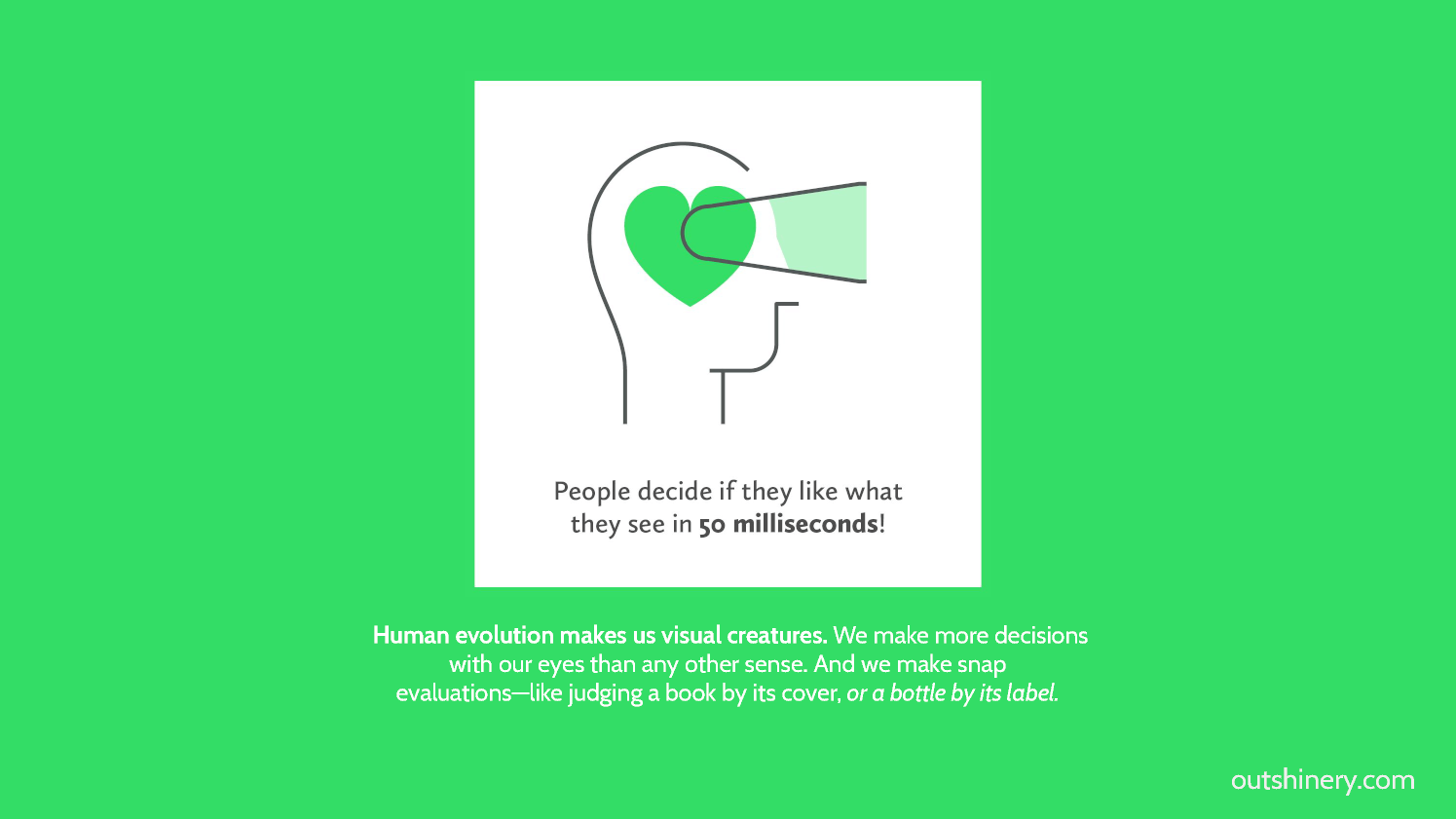 People decide if they like what they see in 50 milliseconds - click to access the full presentation
This is referred to as segmentation, and it boils down to offering the right messages to the right people, based on what you know about them...either from what they tell you or what you come to understand from their behavior on your site or with your product.
Laurie says that delighting customers, with particular attention paid to the audience, can make meaningful connections. Human beings are driven by emotion, so if people are absolutely delighted by a product and the experience shopping for it (or using it) gives them, they’ll start talking about it. This is how wineries achieve organic exponential growth.
“Human beings are driven by emotion, so if people are absolutely delighted by a product and the experience shopping for it (or using it) gives them, they’ll start talking about it. This is how wineries achieve organic exponential growth.”
If the idea of employing technology sounds mystifying (like: how do I do that?) it’s time for wineries to realize they shouldn’t be performing this all by themselves. They should use 2020 to invest in what Laurie and others in the industry call a “tech stack,” a suite of technologies that, when built together, create a packaged solution. In this case, it’s direct to consumer wine sales. See an example created by Paul Mabray of Emetry here, to visualize the mojo of a tech stack.
While this may seem newfangled to the wine industry, it is best practice in many others. Employing these ideas “democratizes” wine, according to Laurie. “Technology can reach more people, more genuinely, and that gets me excited.”
Access the entire presentation here.