

Maintaining wine balance in a changing climate
Climate change is reshaping the wine industry. In many wine regions, each year seems to set new records for the hottest or driest growing season, followed by the earliest harvest dates yet. Such accelerated ripening is disrupting grape physiology; phenolic and aromatic development fall out of sync, sugar levels soar, and acidity drops away (1). So how can we adapt and build a more resilient wine sector?
The answer to this question is multifaceted. In the vineyards, grape growers are rethinking their management practices, adjusting canopy architecture, introducing shading or optimising irrigation (1,2). Some are reaching for higher altitudes or moving further from the equator in search of cooler conditions (1). Others are trialling alternative heat- and drought-tolerant varieties, from long-forgotten cultivars to newly bred plant material. In the cellars, winemakers may turn to pragmatic solutions such as dilution or blending strategies (3) or ultimately use physical methods to ‘fix’ their wines (2).
In parallel, the use of microbiological tools to improve the balance of wines during alcoholic fermentation (AF), also known as BIOAcidification, is also being explored (2,3). A yeast species of particular interest is Lachancea thermotolerans, as it has the unique ability to produce lactic acid from sugars (4). The use of commercial strains such as ZYMAFLORE™ OMEGA has become common practice to increase acidity and reduce ethanol content of wines.
More recently, yeast breeding techniques have delivered novel Saccharomyces cerevisiae strains capable of preserving or even increasing malic acid levels beyond those initially present in grapes (5). This is particularly important because most S. cerevisiae starters partially consume malic acid during AF. In the new ‘ACIDIC’ strains, malic acid is synthesised from sugars, contributing not only to acidity but also to lower ethanol content in wines. This is the signature trait of ZYMAFLORE™ KLIMA, a new, easily implementable tool for enhancing wine balance (6).
Yeast trial in ripe Sauvignon blanc
The press fraction of a 2024 Napa Valley Sauvignon blanc (sugar 240 g/L, malic acid 2.77 g/L) was divided into two identical tanks (510 gallons / 1930 litres each). The juice was inoculated (250 ppm) with ZYMAFLORE™ VL3 (control) and KLIMA after rehydration with SUPERSTART™ Blanc & Rosé (200 ppm). A complex yeast nutrient (NUTRISTART™) was added at inoculation (30 ppm) and at one-third of AF (530 ppm) to supplement the initial low YAN content (95 ppm). After AF at 15.5°C (60°F), the wines were racked and stabilised with SO2 (50 ppm) ahead of bottling and analysis.
Less alcohol and more acidity with KLIMA
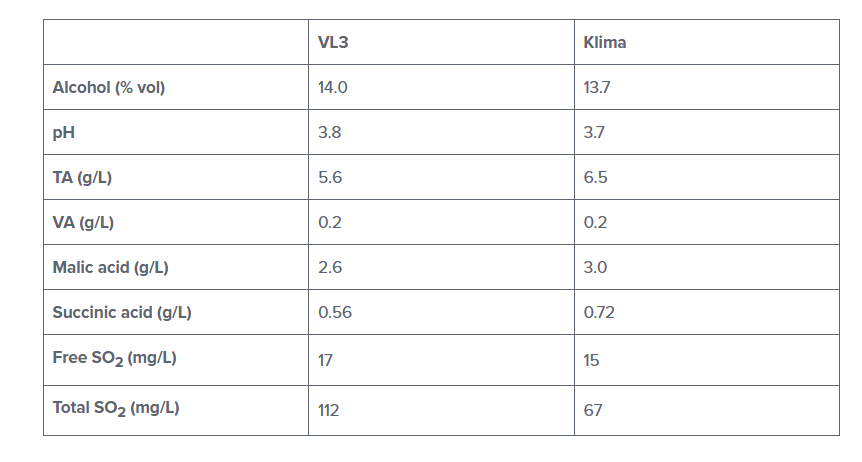
Compared to the VL3 control, representative of ‘classical’ S. cerevisiae wine strains, KLIMA wine contained 0.3 % vol. less alcohol (Table 1). It also showed a lower pH (0.1 unit) and higher TA (0.9 g/L). This was associated with an increase in malic acid, 0.4 g/L more than in VL3, and 0.2 g/L more than in the initial juice. Succinic acid was also slightly higher in KLIMA, as the production of malate and succinate is positively correlated in ‘ACIDIC’ strains (5). Volatile acidity remained similarly low in both wines (0.2 g/L), while lower total SO₂ levels in the KLIMA modality suggest a decreased formation of sulfur-binding compounds by this yeast.
Table 1. Main oenological parameters of dry Sauvignon blanc wines fermented with ZYMAFLORE™ VL3 and ZYMAFLORE™ KLIMA.
What about the aroma profile?
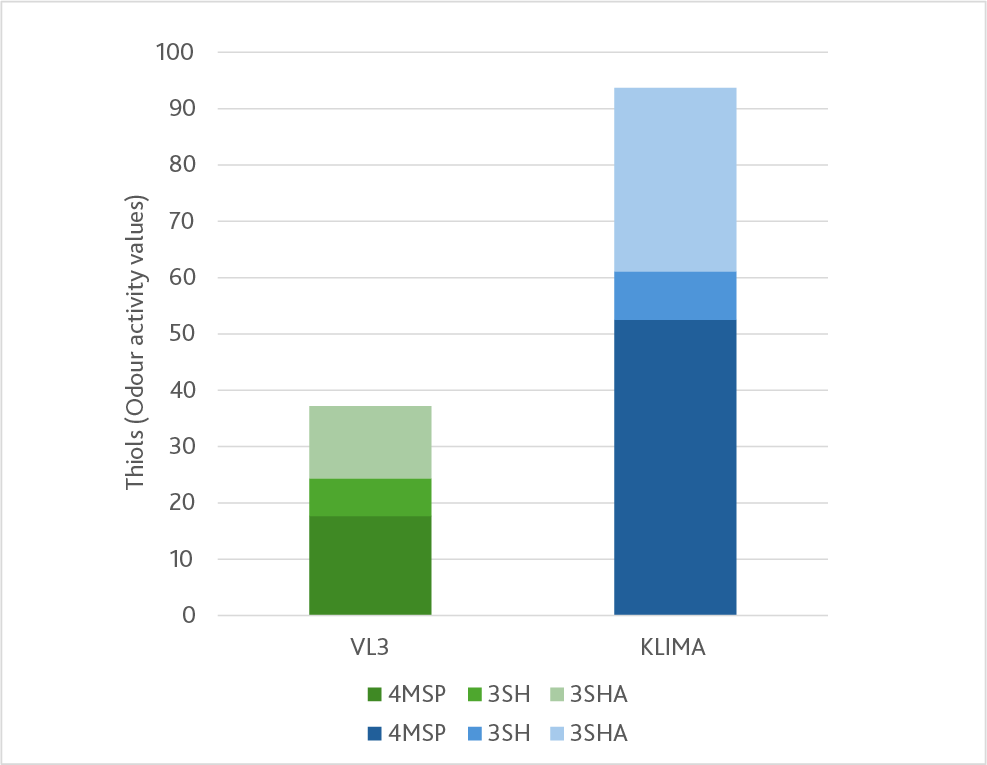
The choice of yeast strain directly influences the production of various aroma-active compounds, including varietal thiols and esters. Varietal thiols, which are grape-derived compounds that largely define Sauvignon blanc aroma profile, are released through yeast activity (7). KLIMA carries gene variants associated with enhanced varietal thiol release during AF, i.e., two functional copies of IRC7 (6). As a result, levels of three key thiols, 4-methyl-4-sulfanylpentan-2-one (4MSP), 3-sulfanylhexan-1-ol (3SH), and 3-sulfanylhexyl acetate (3SHA), were nearly 100 times above their sensory thresholds in the KLIMA wine (Figure 1A). The VL3 control, a widely used Sauvignon blanc yeast, also produced perceivable levels of these thiols, but at lower concentrations than KLIMA.
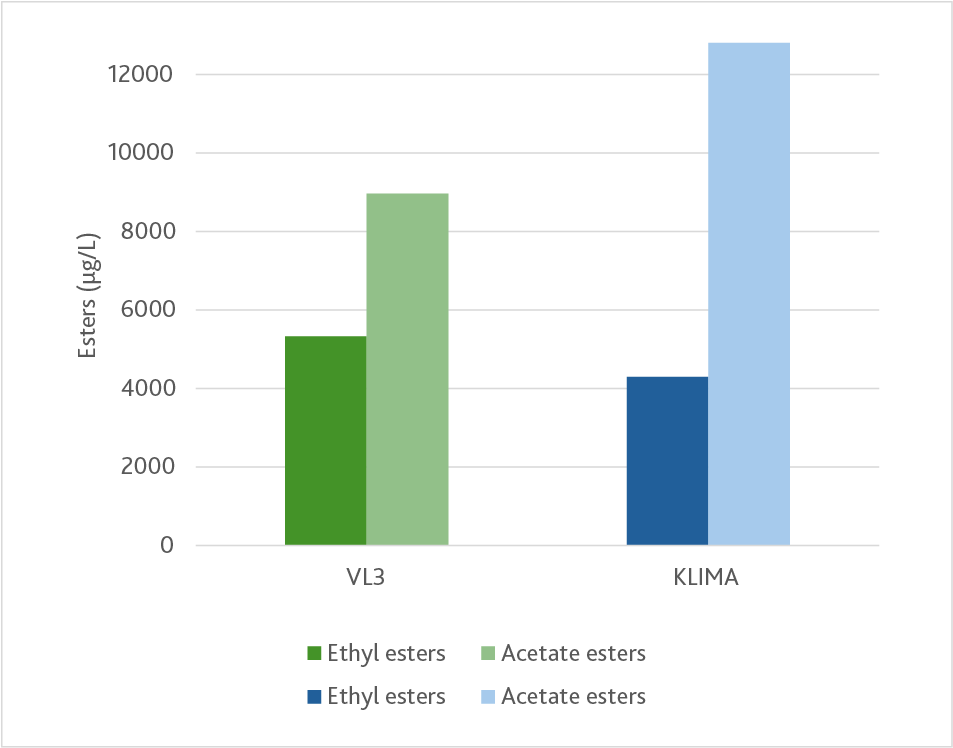
Esters are produced through yeast metabolism, and their concentrations vary depending on the strain and fermentation conditions (7). Two major groups of esters showed distinct patterns in the experimental wines. The ethyl esters of short- and medium-chain fatty acids that impart a ‘fruity’ character were higher in VL3 wine. The acetate esters of higher alcohols, associated with ‘fermentative’ notes, were more abundant in KLIMA wine (Figure 1B), highlighting the unique aromatic signatures of the two yeasts.
 A
A
 B
B
Figure 1: Volatile composition of bottled ZYMAFLORE™ KLIMA and ZYMAFLORE™ VL3 wines. (A) Key thiols (4MSP, 3SH, 3SHA). (B) Esters: ethyl esters (propanoate, butyrate, hexanoate, octanoate, decanoate, dodecanoate, 3-hydroxybutyrate, 2-methylpropanoate, 2-methylbutyrate, 3-methylbutanoate) and acetate esters (isoamyl-, isobutyl-, hexyl-, phenylethyl-).
Sensory profiling by wine professionals
Blind tasting by a large panel is arguably the most compelling way to assess the wine profile. The two wines were therefore presented blind to a group of wine professionals during a winemaking technical seminar (LAFFORT® Rendezvous, USA, 2025) held across three sites in California and Oregon. The attendees were asked to score the intensities of seven preselected sensory descriptors using the TASTEL Web questionnaire.
Responses from 84 participants revealed significant differences (t-test, p<0.05) for three descriptors (Figure 2). The KLIMA wine was rated as more thiolic, acidic and balanced than the VL3 control. For a 14% press juice requiring acidity adjustment, KLIMA proved to be the more suitable yeast choice. In contrast, VL3 is better suited to leaner matrices that benefit from enhanced mouthfeel imparted by this strain.
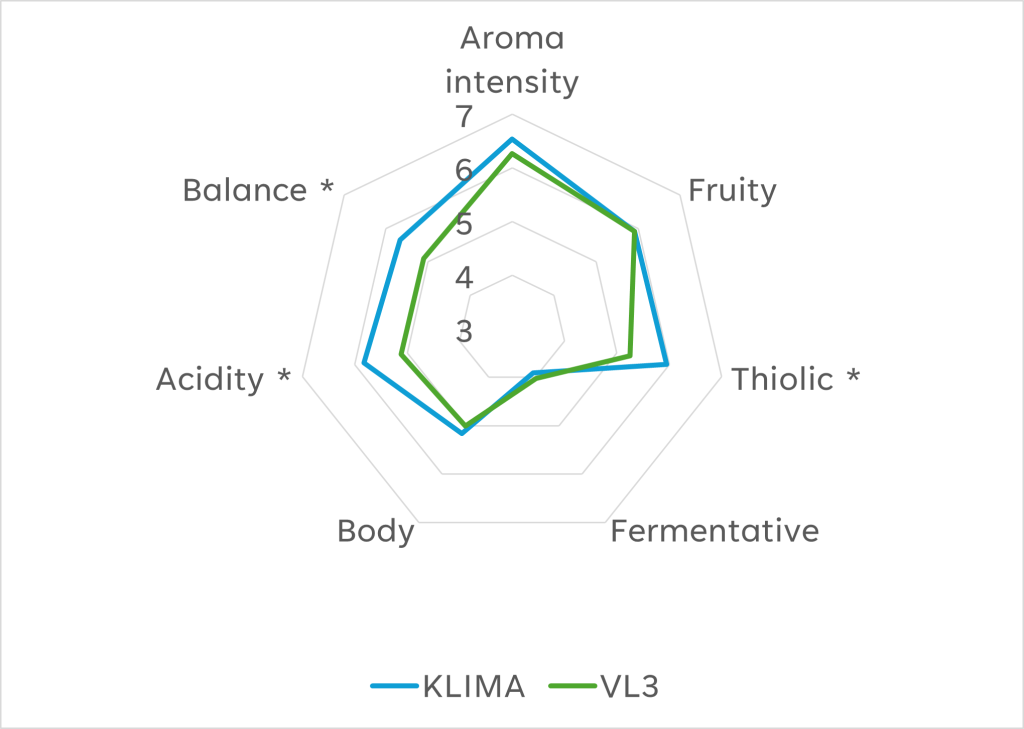
Figure 2: Sensory profiles of ZYMAFLORE™ KLIMA and ZYMAFLORE™ VL3 Sauvignon blanc wines. Mean scores from 84 panellists (1–10 scale); symbol * indicates significant differences (t-test; p < 0.05).
Unique tool for climate-resilient winemaking
This trial illustrates the effects of KLIMA on a white wine from a warm vintage and region, reflecting conditions that are becoming the new norm. The compositional changes are in line with numerous comparative trials, showing that, compared to typical starter cultures, KLIMA consistently produces wine with slightly lower alcohol, higher malic acid post-AF, and/or increased lactic acid post-MLF (Figure 3). These shifts lead to a lower pH (~0.1), higher TA, and less VA (Figure 3).
In addition to reducing exogenous tartaric acid additions, BIOAcidification also helps mitigate calcium instability, which is becoming increasingly common due to climate change. Heat and drought stress promote calcium accumulation in grapes, as calcium plays a key role in the plants’ stress response (8). Higher pH levels in such grapes favour the full dissociation of tartaric acid (T2-), which can bind with calcium to form calcium tartrate (CaT) in wine. Under these conditions, the addition of tartaric acid may further increase the risk of CaT instability.
In addition to its acidifying properties, ZYMAFLORE™ KLIMA’s elegant impact on wine aroma and palate structure makes it a valuable tool for enhancing wine freshness, stability and balance.
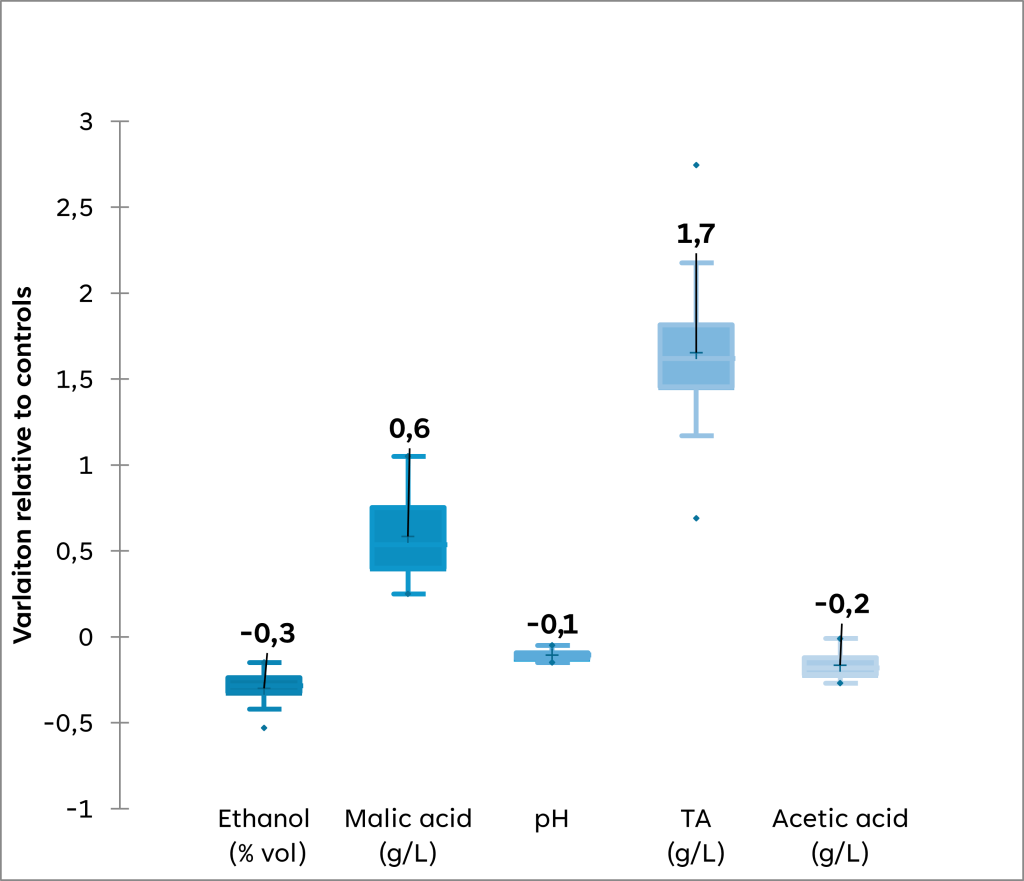
Figure 3: The impact of ZYMAFLORE™ KLIMA on wine analytical parameters compared to control strains. Cumulative data from 20 winery trials (2022–2024) from various winemaking regions (boxplots with highlighted median values).
References
(1) Van Leeuwen, C, Sgubin, G, Bois, B, Ollat, N, Swingedouw, D, Zito, S & Gambetta, GA, 2024. Climate change impacts and adaptations of wine production. Nature Reviews Earth & Environment, 5(4), pp.258-275.
(2) Varela, C, Dry, PR, Kutyna, DR, Francis, IL, Henschke, PA, Curtin, CD & Chambers, PJ, 2015. Strategies for reducing alcohol concentration in wine. Australian Journal of Grape and Wine Research, 21, pp.670-679.
(3) Ristic, R, Schelezki, O & Jeffery, D, 2018. Lowering alcohol: Water into wine: Pre-fermentation strategies for producing lower alcohol wine. Wine & Viticulture Journal, 33(1), pp.26-29.
(4) Hranilovic, A, Gambetta, JM, Schmidtke, L, Boss, PK, Grbin, PR, Masneuf-Pomarede, I, Bely, M., Albertin, W & Jiranek, V, 2018. Oenological traits of Lachancea thermotolerans show signs of domestication and allopatric differentiation. Scientific Reports, 8(1), p.14812.
(5) Vion, C, Yeramian, N, Hranilovic, A, Masneuf-Pomarède, I & Marullo, P, 2024. Influence of yeasts on wine acidity: new insights into Saccharomyces cerevisiae. OENO one, 58(4).
(6) Hranilovic, A, Vion, C, Capitanio, J, Mansour, C, Bernard, M, Muro, M, Marullo, P, Seabrook, A & Coulon, J. New kids on the block: Novel malic acid-producing Saccharomyces cerevisiae starters. AWITC conference 2025
(7) Waterhouse AL, Sacks GL, Jeffery DW. Acids. In: Understanding Wine Chemistry. Wiley Blackwell; 2016:19–33. doi:10.1002/9781118730720
(8) Fioschi G, Prezioso I, Sanarica L, Pagano R, Bettini S, Paradiso VM., 2024. Carrageenan as possible stabilizer of calcium tartrate in wine. Food Hydrocoll. 157:110403.