
 Management of vineyard nutrition is not an exact science, but nutrient/fertilizer management is not something that should be handled generically either. It’s quite easy to approach fertilization with off-the-shelf blends that your distributor carries and those may be quite adequate. Or they may not be. As for most of viticulture, timing is everything. So, the application of nutrients has a time element. Instead of my typical approach of discussing the topic nutrient-by-nutrient, I’ll discuss them instead by phenological stages.
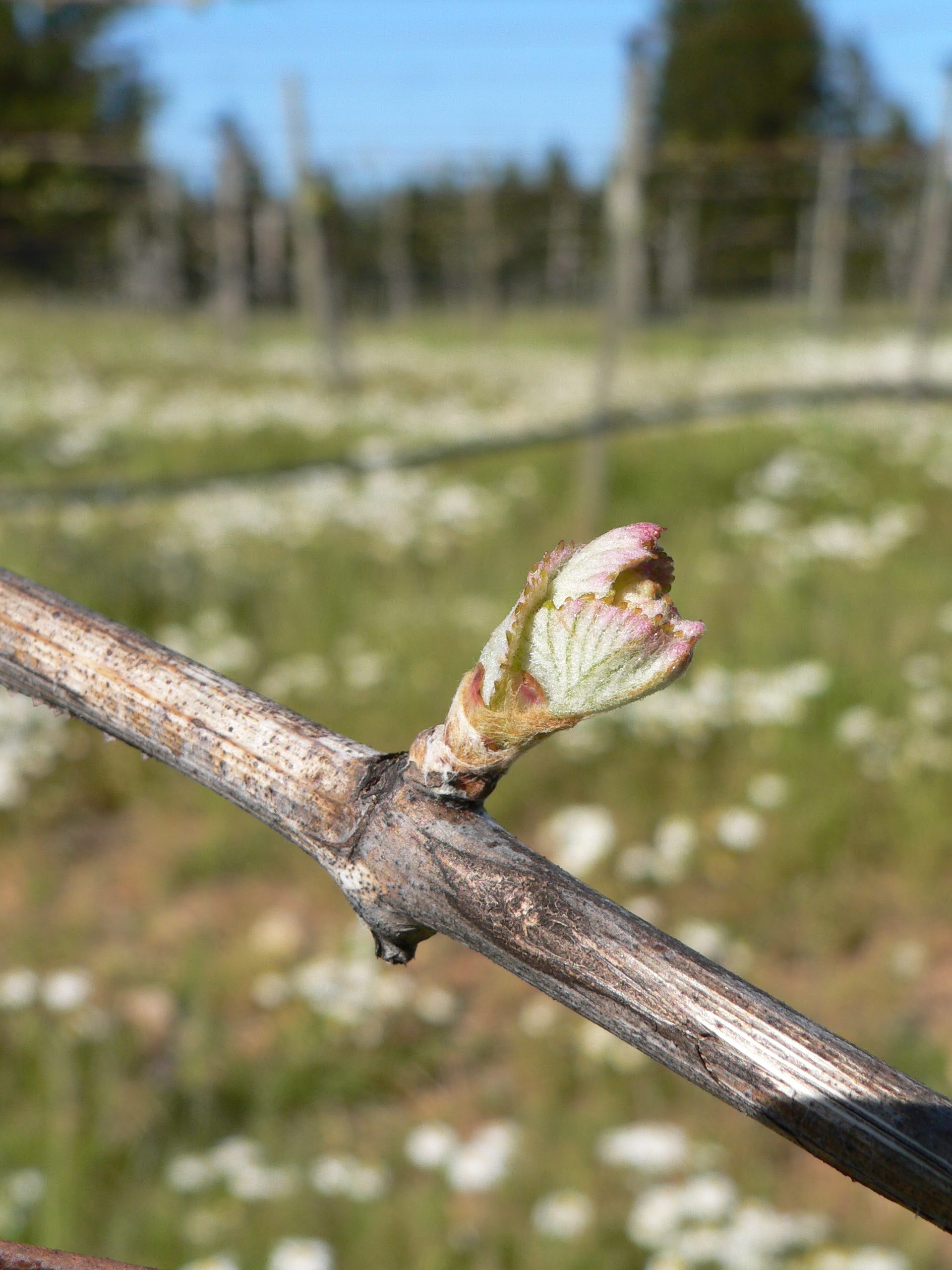
Budburst
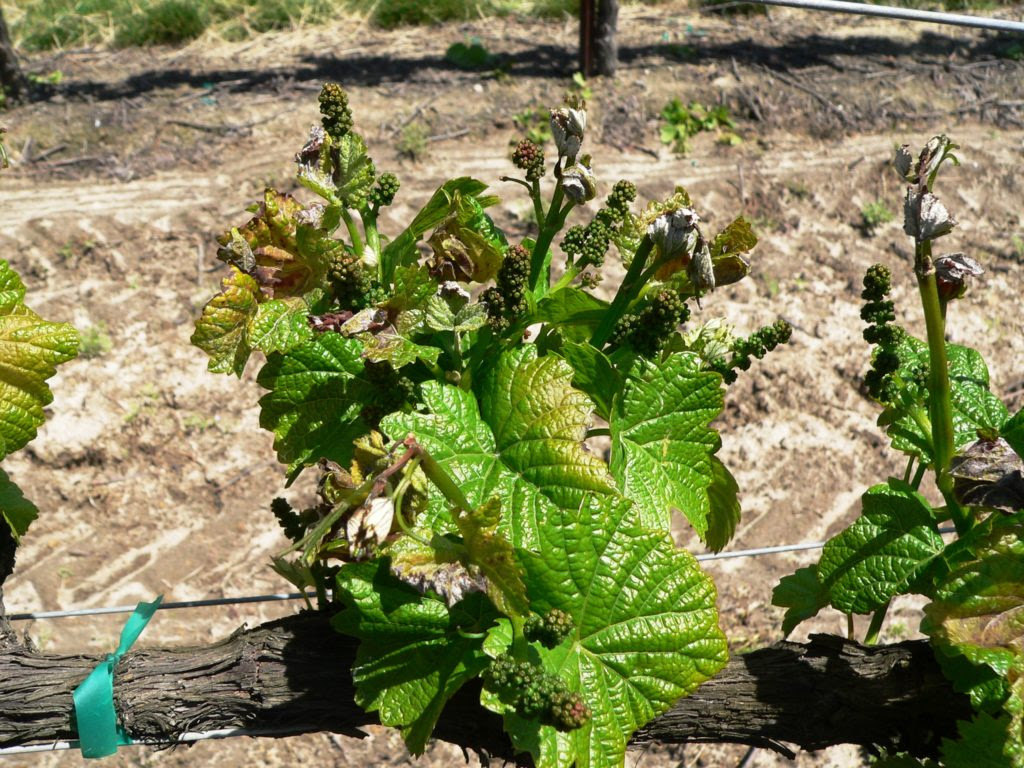
At budburst (some people told me that ‘budburst’ was more accurate than ‘budbreak’ so I’m trying to use that term when I remember to), soil is cold and roots are just emerging from dormancy and the vine is not doing a whole lot of uptake of anything. So, fertilizer applications now should be limited. However, I have found that vineyards who lack in vigor benefit from a small application of nitrogen at budburst. Now, ideally, this nitrogen should be mostly available from storage within the vines’ tissues, so post-harvest fertilization can help here. But since we’re going chronologically here, I had to start somewhere. Regardless, some vineyards struggle early in the season so a small application of nitrogen fertilizer at budburst is sometimes advisable.
For conventional vineyards, I like to apply something as simple as urea (46-0-0) at that time, usually only at 3 pounds of N per acre. For organic vineyards, I will apply more N, but no more than 5 pounds of N per acre. Organic fertilizers have their N largely in organic form (obviously), which will be broken down and mineralized by soil microbes for uptake by plants. This is a much slower process than the application of mineral forms of N.
It’s important not to apply the N too early in a wet climate because nitrate-N will easily leach through the soil profile. However, applying fertilizer around budbreak time and towards the end of the rainy season is a pretty safe bet. I like to use urea because it is cheap and because it quickly breaks down into ammonium ions, which are not likely to leach. However, they will rapidly volatilize, so it is important to chase the urea with some water after injection of urea to push the minerals below the soil surface. While plants can take up ammonium, they are much more probe to take up nitrate-N. Urea will be nitrified by microorganisms rapidly so that the nitrate can be taken up by the vines.
Besides, N, there is really nothing else that needs to be applied at budburst.
Pre-bloom
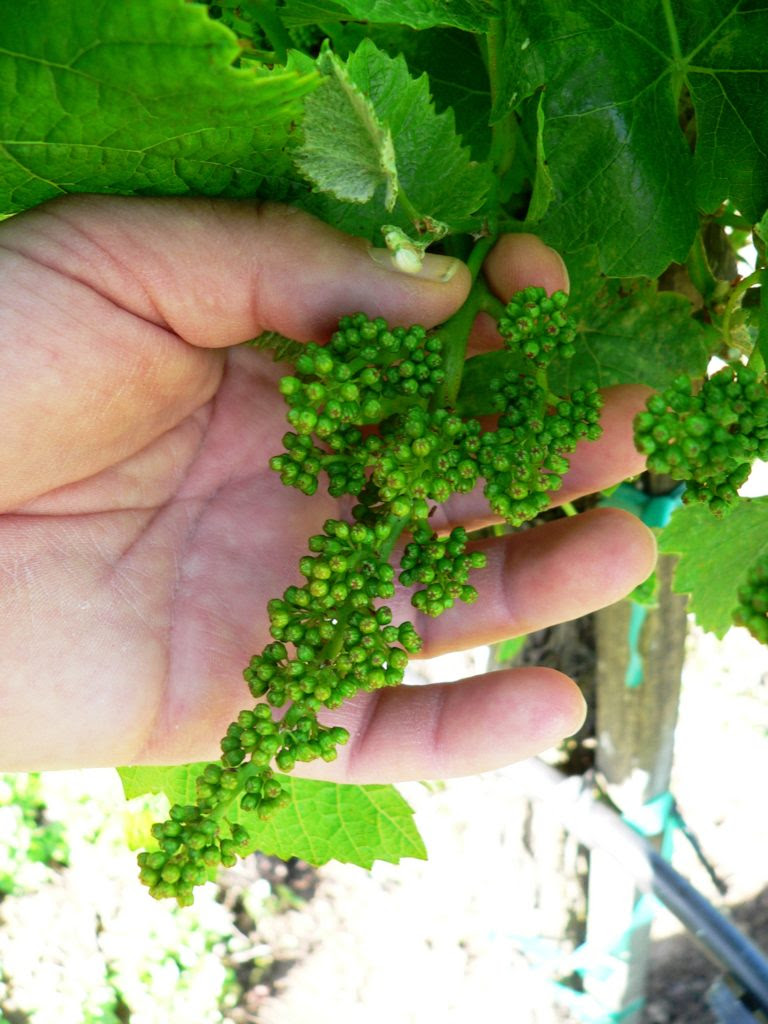
Pre-bloom is time for micronutrients primarily. This is the best and usually the only time that micronutrients are applied and the application method is usually foliar. Commonly, boron and zinc are applied at this time, but some vineyards have benefitted from an application of molybdenum as well. Molybdenum has been shown to be effective for Merlot, but I like to add it to foliar applications in vineyards that tend to set fruit poorly. It’s needed only at rates of ounces (by weight) per acre, so the cost is low unless it is included in some proprietary fertilizer blend.
It is usually advisable to apply both boron and zinc before bloom, however, unless tissue levels of these nutrients have tended to be adequate or elevated. This is especially true for boron, which is toxic to vines at elevated levels. Ideally, I prefer to split the micronutrients in two consecutive sprays, included with the standard mildew control sprays. The reason for splitting the application is really twofold: as a hedge for getting the timing right (ideally applied two weeks before bloom) as well as a way to reduce risk of phytotoxicity, primarily by boron. Incidentally, with respect to boron, borax is often used as an organically-acceptable form of boron, which can be used foliarly. However, it is a sodium salt and can possibly cause desiccation of flower parts or pollen, so we usually try to avoid its use after bloom has started. Otherwise, there is no hazard in applying micronutrients even during bloom....
Continue reading the rest of the post here.