

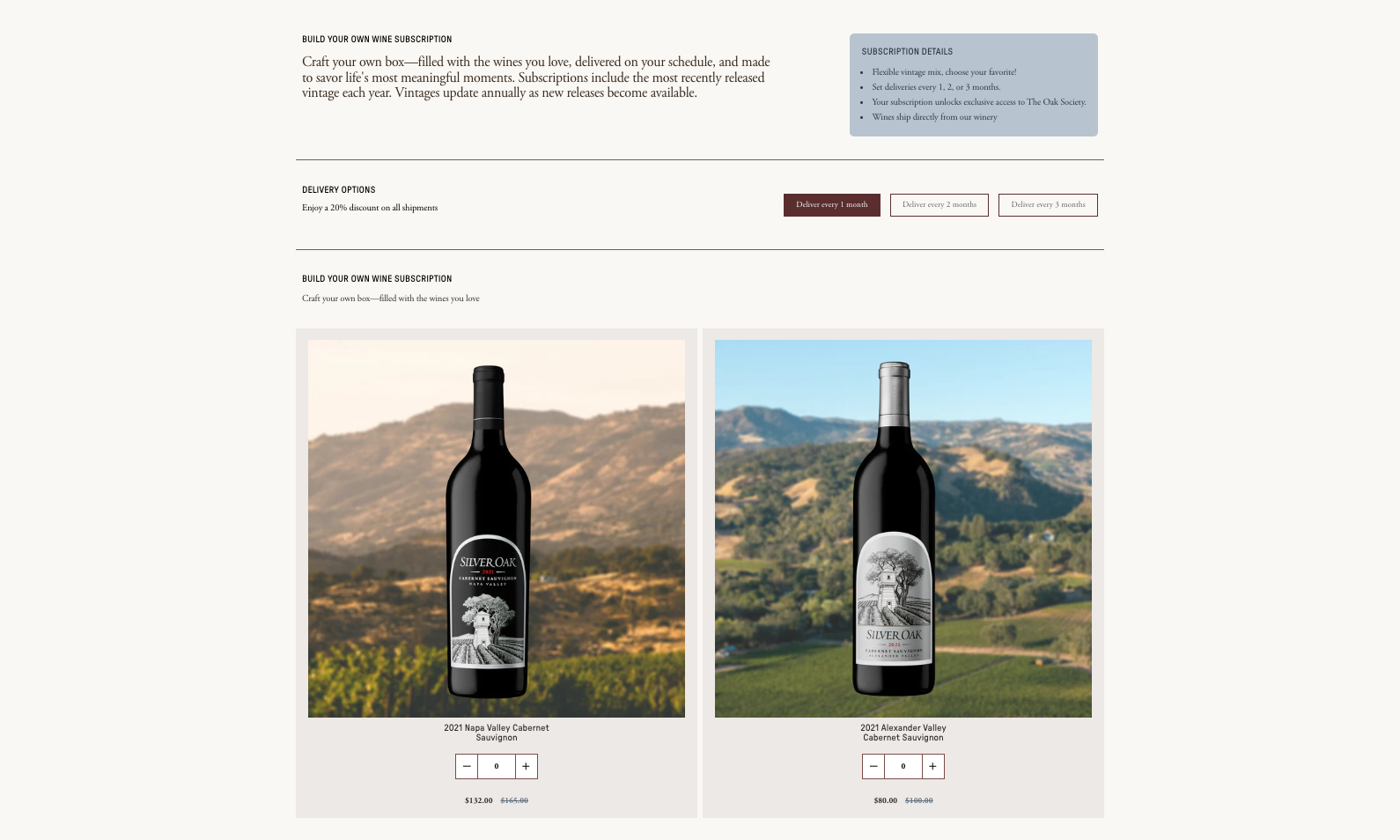
Five years ago, running a winery on Shopify meant duct-taping a lot of things together. Great for e-commerce. Okay for DTC. Difficult for wine clubs. Not really designed for tasting rooms.
That's changed.
The combination of Shopify's platform investments and a handful of wine-specific apps has created something genuinely new: a single operational stack that connects your tasting room, your wine club, your online store, and your loyalty program under one customer record. That convergence has real operational consequences — and it's why an increasing number of wineries are consolidating everything onto Shopify.
Here's what's actually different.
Your Card on File, Finally Done Right
One very frustrating limitation of running a winery business on Shopify used to be simple: Shopify didn't let you vault a customer's payment card and charge it later for anything other than a subscription — not from your POS or your back office or sales team for one-time purchases.
Awtomic's card-on-file capability fixes this. When a customer's card is captured — through your Shopify checkout, your Awtomic admin or customer portal, or directly through Shopify POS during a tasting room visit — Awtomic vaults it and makes it available for future billing for one-off purchases as well as club shipments.
This sounds like a small thing. It isn't. It means that valued members who are visiting don’t need to be asked to take out their card every time they want to order a bottle. When your team calls members to sell them wine outside of the club, they can place the order seamlessly without needing to invoice them. It removes the friction from ALL repeat purchases.
The Tasting Room Is Actually Great Now
Shopify POS has become legitimately good for winery tasting rooms. Recent updates — tap-to-pay, multi-location inventory, smart receipts — close most of the gap that used to push wineries toward a dedicated hospitality POS.
But hardware is table stakes. What matters for wineries is what happens around the transaction: signing people up for the club, managing their loyalty, and connecting the tasting room visit to the ongoing relationship.
A few apps have built specifically for this:
Awtomic handles wine club enrollment at POS. A customer who has a great experience at your tasting room can be signed up for your club before they leave — their card is vaulted, their preferences are captured, and they receive a confirmation email within minutes. No paper forms. No follow-up entry work.
Simmer fills in the restaurant and hospitality side — food menus, ticketing, coursing, easy splitting of orders between bar and food KDS or printers. For wineries with event spaces, caves, or food programs, it handles the complexity that a pure retail POS doesn't.
Angle brings loyalty and membership intelligence into the physical visit. Customers can check in at the tasting room using a wallet pass — their phone, their Apple Wallet, no app required. Angle surfaces their purchase history, their loyalty status, their tier, and their preferences to your tasting room staff before the conversation starts. Your team knows they're a premium club member before they've said a word.
What makes this combination work is that Shopify serves as the customer record underneath all of it. When someone checks in at your tasting room through Angle, spends $200 at your restaurant, and gets enrolled in your club through Awtomic — that's one customer record. One purchase history. One loyalty balance. One card on file.
That used to require a custom integration project. Now it's four apps and an afternoon of setup.
Reporting That Actually Tells You Something
Shopify's native analytics got dramatically better when they rolled out AI-assisted reporting. For wineries with mixed revenue streams — tasting room, direct shipping, club shipments, allocation releases — the ability to ask a natural-language question and get a properly segmented answer is a legitimate upgrade.
"Show me the top 10 zip codes by wine club revenue this quarter" or "Which products had the highest reorder rate among club members who joined at POS" — these queries used to require an export, a pivot table, and someone who knew what they were doing in Excel. Now they're a few seconds in Shopify's admin.
For wine-specific analytics — vintage performance, varietal trends across channels, correlation between wine club tenure and DTC basket size — Enolytics remains the standard. The Awtomic-Enolytics integration means your subscription data flows directly into the platform: tenure, billing status, cancellation reasons, offer acceptance. Enolytics layers on the industry benchmarks that make your own data meaningful — you're not just looking at your churn rate, you're comparing it to comparable-size wineries in your region.
The reporting picture for a Shopify winery now looks like this:
Shopify native analytics: Revenue by channel, product performance, customer acquisition — AI-assisted queries for day-to-day operational questions
Enolytics: Wine club health, member behavior, industry benchmarking — the analysis that informs strategy
Awtomic admin: Subscription metrics, dunning performance, cancellation reasons, retention analytics — the real-time pulse of your club
Between these three tools, you have meaningful visibility into every layer of the business without building anything custom.
The Real Unlock: One Customer
Shopify's fundamental value in this stack isn't any single feature. It's the customer record.
Before Shopify became the consolidation point, most wineries ran:
A tasting room and/or restaurant POS
A wine club subscription platform
A DTC e-commerce store
A loyalty program
Appointment booking and/or table management software
A corporate gifting system
Compliance software
Each of these systems had its own customer record. Syncing them — to the extent anyone bothered — was a quarterly data cleanup project.
With a Shopify-native stack, the customer who books a cave tour through your appointment tool, buys two bottles in the tasting room through Shopify POS, earns loyalty points through Angle, and then joins your wine club through Awtomic is one record. Their full journey is visible, their card is stored once, their communications come from one place, and their loyalty follows them across every channel.
The practical consequence: your tasting room staff can see that the person in front of them has been a wine club member for three years before they say a word. Your DTC team can see that a member who just cancelled had a failed payment six weeks ago and two unreturned shipment emails. Your marketing team can segment "members who visited the tasting room in the last 90 days" and "members who've never visited" and send different campaigns — without pulling from three separate lists.
This isn't a hypothetical. It's what's available right now, with apps that are designed to work together on a platform that was built for it.
Is This for Every Winery?
Yes - it can be! The best thing about Shopify is that it can grow with you. You can start off on a basic tier with a smaller set of apps and then adjust as you grow without having to do multiple platform migrations.
But it's especially valuable if you're growing, if you're managing a multi-tier club with hundreds of members, if you're running tasting room events and also doing DTC shipping and also thinking about loyalty — the fragmentation cost compounds quickly. Every time you add a channel without consolidating the customer record, you're adding reconciliation work and losing insight.
The wineries moving to Shopify at scale are doing it because the consolidation payoff is real. One stack, one customer, one view. The tech is finally good enough to deliver on that promise.
Awtomic is a wine club subscription management platform for Shopify — recurring billing, customer portal, card-on-file, Awtomic Moments, and built-in analytics. Learn more or book a demo. Reach out to us for a downloadable guide to the best wine partners in the ecosystem.