

You know it’s harvest season when the winemakers emerge from their cavernous abodes and start making appearances in the vineyard. It’s a magical time, I mean, sometimes they bring donuts! But they also bring with them some funny ideas about irrigation methods, mostly that you make better wine by curtailing water in the weeks leading up to harvest. It’s a silly one-size-fits-all approach. Here’s why.
Thou shalt not irrigate after veraison…why is this wrong?
I’m not sure the logic here, but I think this comes from some idea about “concentrating flavors” and not letting them get diluted by irrigation. It’s ironic given how much watering-back is done in California wineries. More than that though, it’s physiologically erroneous.
At the start of sugar accumulation, the grape berry partially severs contact with the xylem almost exclusively allowing the influx of sucrose-laden sap from the phloem. Excess water is not going to blimp up your berries post-veraison in the same way that it would prior to veraison.
Cutting off water post-veraison harkens back to a time when vineyards were overwatered all season. It may make you feel better, but it's not sustainable.
Aside from being irresponsible, we know that overwatering diminishes wine quality especially during lag phase. Vines that experience water stress from berry set through the end of veraison are higher in phenolics than those that aren’t. This makes for better color and better mouthfeel...for red grapes anyway.
What do you want to accomplish with pre-harvest irrigation?
Your main goal as you slide into home is to keep canopies active. Green leaves are functioning leaves. If you want your fruit to keep ripening, you will want your leaves to be making sugar.
Senescing leaves aren’t just turning yellow because they’re dying. They’re actively exporting all the nutrients they contain to the rest of the vine. This is good if you’ve harvested and the only “sink” for nutrients and carbohydrates are your roots, but if you still have fruit attached, a lot of that’s going to go straight into the grapes.
Remember all that potassium you didn’t want in your wine? Senescing leaves dump their contents of K right into the fruit. As an aside, this is another reason to not be excessively stingy about K fertilization in general.
Read the rest of the article here.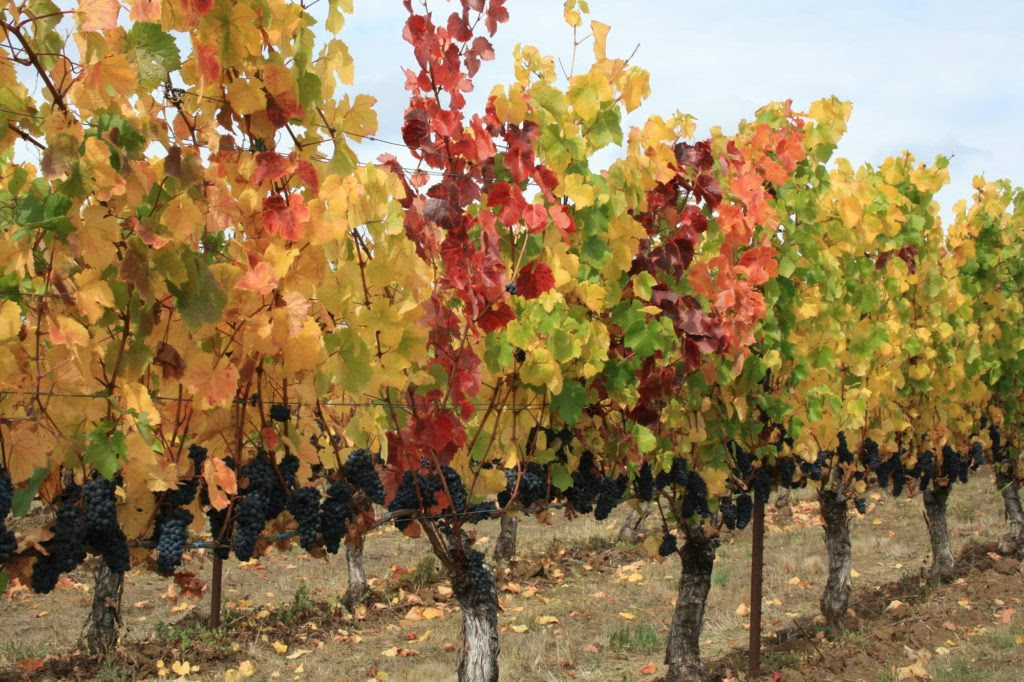 A senescing canopy can't ripen fruit properly and may lead to higher than desired potassium levels.
SWEEP is just around the corner...
This year the SWEEP program has $200 million to give away. That's double what they had last year. Contact loni@advancedvit.com or call (415) 619-4955 to start hashing out your next water/energy-saving project.
There's other funding out there too. Don't miss the opportunity to fund things like:
- Soil probes
- Weather stations
- Well-monitoring
- Flowmeters
- Valve automation
- Variable Frequency Devices
- Solar
Getting your application in early is imperative. Let AV help get you on track today.
For information on soil moisture probes and other vineyard technologies contact josh@advancedvit.com or loni@advancedvit.com to discuss a site specific solution.