

This week is supposed to be hot. Really hot. Any temperature over 105 degrees will cause damage and usually the surface of exposed fruit is 10-15 degrees F hotter than ambient temperature. We’re probably going to see some of that this week.
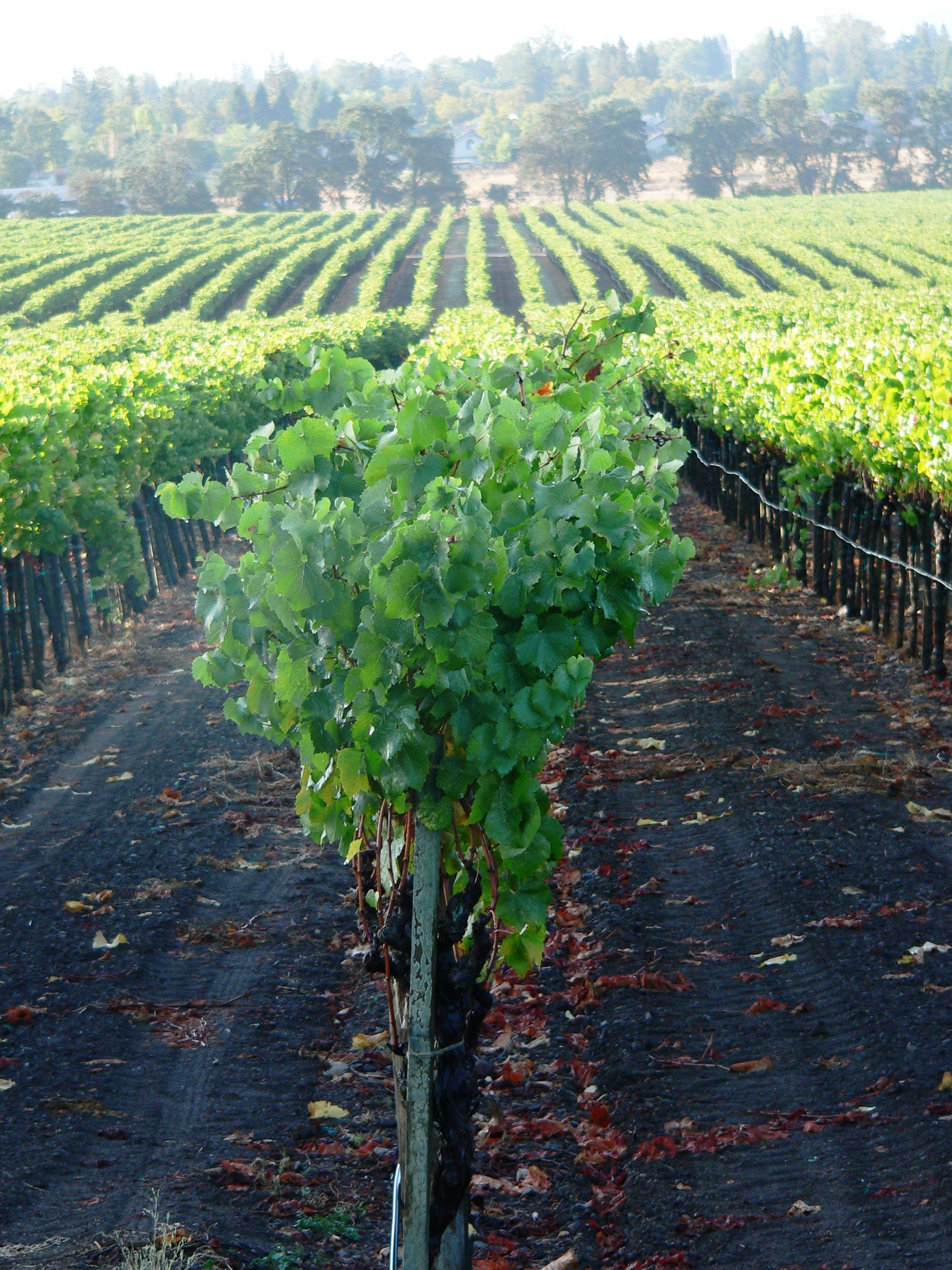 A loose canopy protects fruit better than a tight VSP. For those growers that got roasted in June of 2021, it’s déjà vu all over again. The earlier in the season that heat damage hits, the worse it is. There’s the obvious fried fruit, but last year we saw damage to vascular tissue in the rachis as well as possible enzyme degradation that affected ripening for the rest of the season.
The typical response we see from growers is to lay on the irrigation. That’s fine…but it probably isn’t going to help you that much. Having ample water in the soil will allow the canopy to transpire better and cool itself down, but it will do little to save this year’s crop. Berries just don't transpire much compared to leaves. If you have the water though, and it will make you feel better, go ahead. Watering a couple days in anticipation of the heat will help the canopy adjust, and it isn’t going to hurt anything.
So, what can you do? There are some preventative activities. If you’re going to leaf, leaf soon after set. This will allow your young grapes to acquire the phenolics that will help them slowly adjust to higher and higher temperature. This would be more effective if we didn’t have the wild swings we’ve been seeing lately. If your vineyard is located in a place where heat stress is likely to be an issue, you can choose a trellis system that provides some protection from direct afternoon sun. A tight VSP with super exposed fruit is asking for trouble.
Shade cloth is a great option, but it is expensive and laborious. With weather like this, it’s becoming more and more of a necessity.
Stay cool out there.
A better way to visualize soils information
Here at AV we've been working with some new soil-sampling equipment: our power probe and electromagnetic soil electrical conductivity sensor. We've taken data collected via these tools and integrated it with old-fashioned soil pit analysis. The result is a way to spatially view numerous aspects of soils. Check it out!
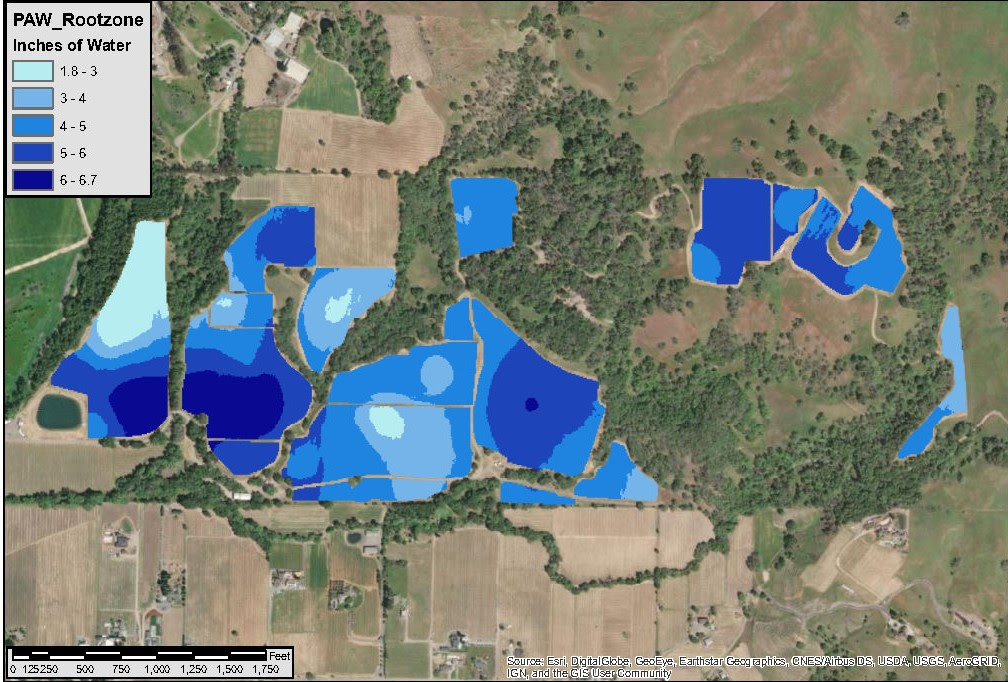 We can use this information to look varying levels of plant-available water in the rootzone.
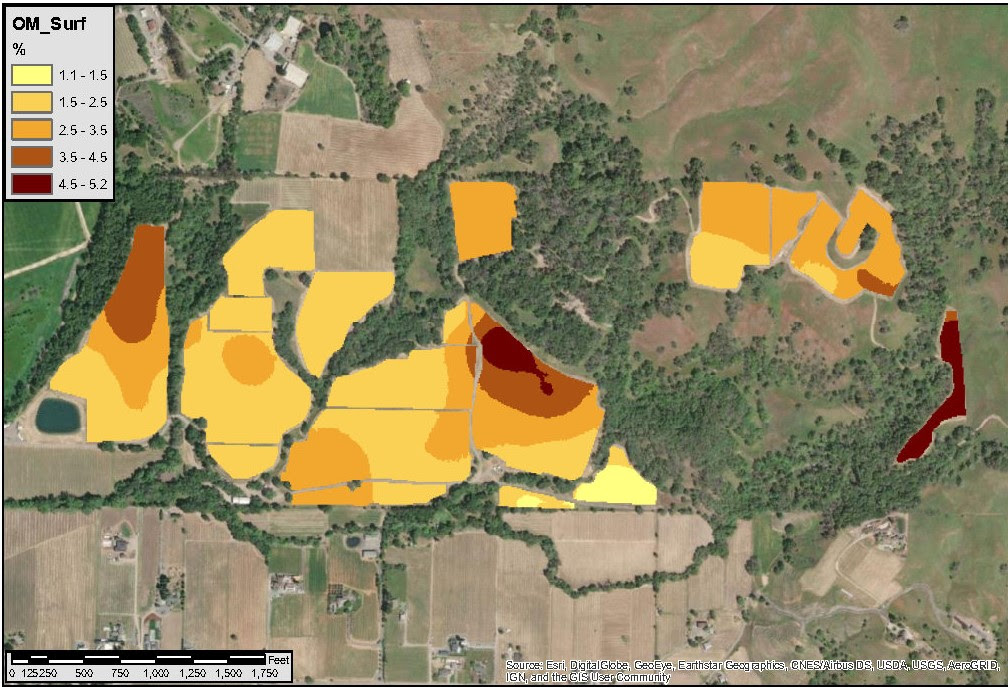 We can also look at differences in organic matter percentage.
These are just a few examples of the numerous soil characteristics we can analyze and present. These maps consolidate tables of numerical data into spatial maps that are easily interpreted by anyone - not only soil experts!
Read this recent response from one of our clients:
"The amount of information is incredible. Very informative for a guy like me who doesn’t know much about the roles of different soil levels. The color map charts clearly show some mass differences throughout the property. It appears to be a very powerful tool for (our vineyard manager) to better understand your recommendations for treatments to certain sections/blocks."
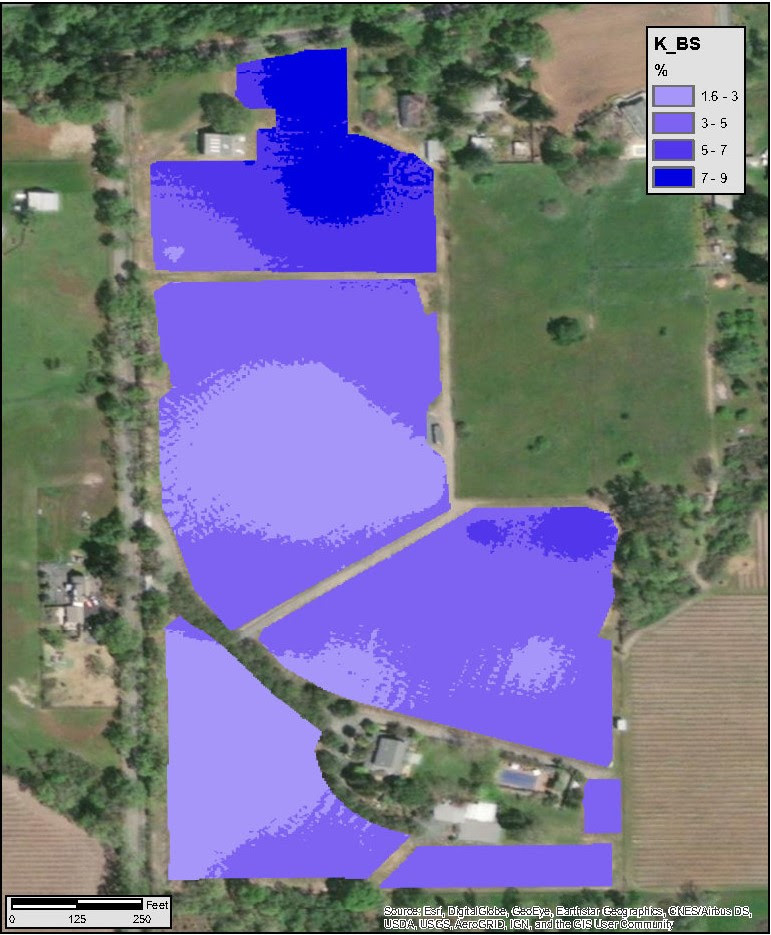 This map shows the K-base saturation
Want to make more informed decisions on fertilizer-applications and irrigation?
Contact loni@advancedvit.com to discuss your next soil project.