
Malolactic fermentation (MLF) is a secondary bacterial fermentation that converts malic acid into lactic acid in wine. It is a common step in winemaking and is necessary for some wine styles. This process creates aroma and flavor compounds and reduces the acidity of the wine, which increases the roundness of the mouthfeel. MLF can occur naturally during or after primary fermentation or can be induced by inoculating the wine with a selected bacterial strain. It is much slower and less turbulent than primary (alcoholic) fermentation; taking weeks, even months, to complete, and truly testing the patience of an enologist. The fermentation is complete when malic acid levels are measured below 0.1 g/L.
Recommended practices for a successful MLF:
- For easier acclimatization, keep the wine below 15% alcohol and above pH 3.1. Consult the recommendations for your selected strain of bacteria for specific parameters.
- Maintain a temperature between 63–77°F (17–25°C) to activate the bacteria. Temperatures above 77°F or below 50°F can be detrimental or even fatal to bacteria.
- Malolactic bacteria tend to be quite susceptible to and inhibited by the presence of sulfur dioxide (SO2). Maintaining a free sulfur dioxide (FSO2) concentration below 10 ppm and a bound sulfur dioxide (TSO2) below 50 ppm is necessary for bacterial activity.
- Avoid over-clarifying the wine before MLF to prevent the bacteria from getting hungry. A combination of yeast hulls and malolactic bacteria nutrients can be added to increase turbidity.
- The malolactic culture should be added at the end of the primary fermentation. A malolactic bacteria nutrient can be added immediately prior or within a few days after that.
- Add an appropriate amount of bacteria, following the manufacturer’s addition instructions.
Identifying and Correcting a Sluggish Fermentation:
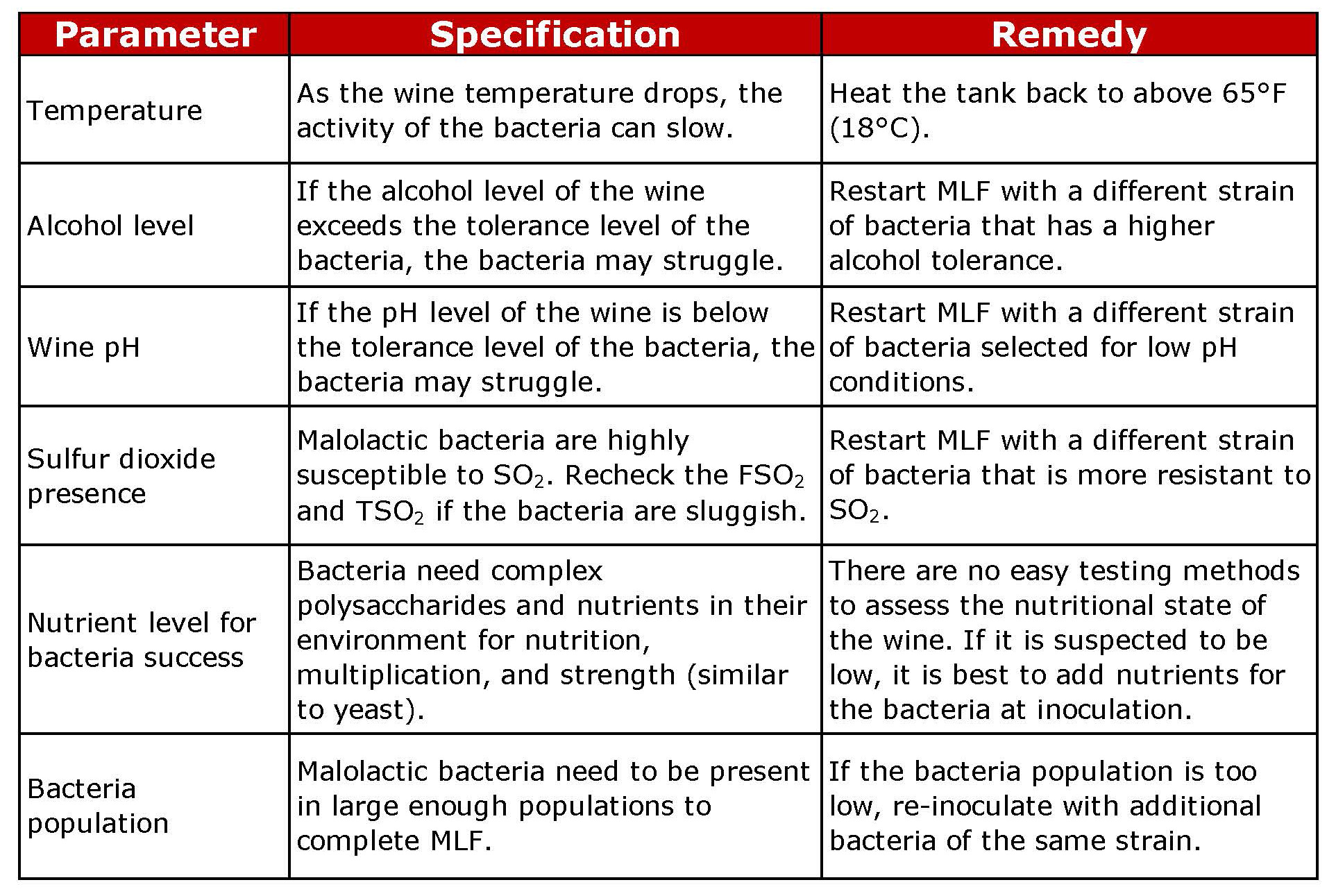
Malolactic fermentation can be a slow process, but sometimes it slows too much or stops altogether before the malic acid has been fully degraded. Below are recommended parameters to evaluate if the MLF activity seems to be slowing. Sometimes a small intervention is all that is needed to get back on track. If none of these seem to work, it may be necessary to restart the stuck fermentation (below).
- To assist the bacteria in finishing the fermentation, it is first important to assess the physicochemical state of the wine.
- After evaluating the wine, assess the health of the bacteria.
Procedure for Restarting a Stuck Malolactic Fermentation:
If a sluggish malolactic fermentation cannot be recovered it may be necessary to restart MLF, after first cleaning the wine of any suspected toxins and lees.
- Detoxify the wine with the addition of 2 lb/1000 gallons (24 g/hL) of Malo-Detox.
- Dissolve Malo Detox in 10 times its weight of clean water, at least 1 hour before adding it to the tank. After adding, gently pump the tank over to mix.
- Allow Malo-Detox to settle, then rack or filter the wine from the settled lees.
- Adjust wine temperature back to above 65°F (18°C), if needed.
- Add 1 lb/1000 gallons (12 g/hL) Malo NutriBact.
- Suspend Malo NutriBact in a small amount of warm water (68°F) (18°C) and add it directly to the wine before adding the bacteria culture.
- If the tank was filtered in step 2, also add 1/8 lb/1000 gallons (1.5 g/hL) of Springcell Yeast Hulls for turbidity. Homogenize the tank.
- Add a full dose of Malo-Plus Malolactic Bacteria.
- Continue to monitor the malic acid degradation in the wine. It may take 2–4 days to start seeing activity again.
For more information on our ML products or for help designing a protocol specific to your needs, contact your ATPGroup Enology Products Specialist, call (707) 836-6840, or visit www.ATPGroup.com.
_____________________________
ATPGroup was founded as a family business in 1991. Now a leading supplier to the wine, beer, food, and pharmaceutical markets, they strive to provide solutions and create value for their customers in each of the industries they serve. The company offers an unparalleled range of high-quality products and services including winemaking & cellar products, brewery supplies, glassware, production equipment, cleaning & sanitation solutions, parts & servicing, mobile services, tartaric acid, cream of tartar, and Rochelle salt. Its team is made up of industry veterans, engineers, cellar masters, and product specialists who provide technical expertise in their respective fields. With warehouses across the country, the company is strategically located to serve customers throughout the U.S., Canada, and Mexico.