


Fermenting on bentonite can be tricky! Here's a quick rundown on why we like it and who it's right for.
Who should ferment on bentonite?
Winemakers making tank fermented whites that need early protein stabilization and preservation of aromatics, especially in high protein varietals or in difficult seasons.
Why ferment on bentonite?
- Early removal of heat unstable proteins (solubility of proteins decrease as alcohol increases)
- Better preservation of aromatics than post-fermentation bentonite additions
- May lower overall levels of bentonite needed (compared to post-fermentation treatment levels)
- FERMOBENT PORE-TEC compacts well and leads to lower lees volumes than post-fermentation bentonite treatments
What bentonite?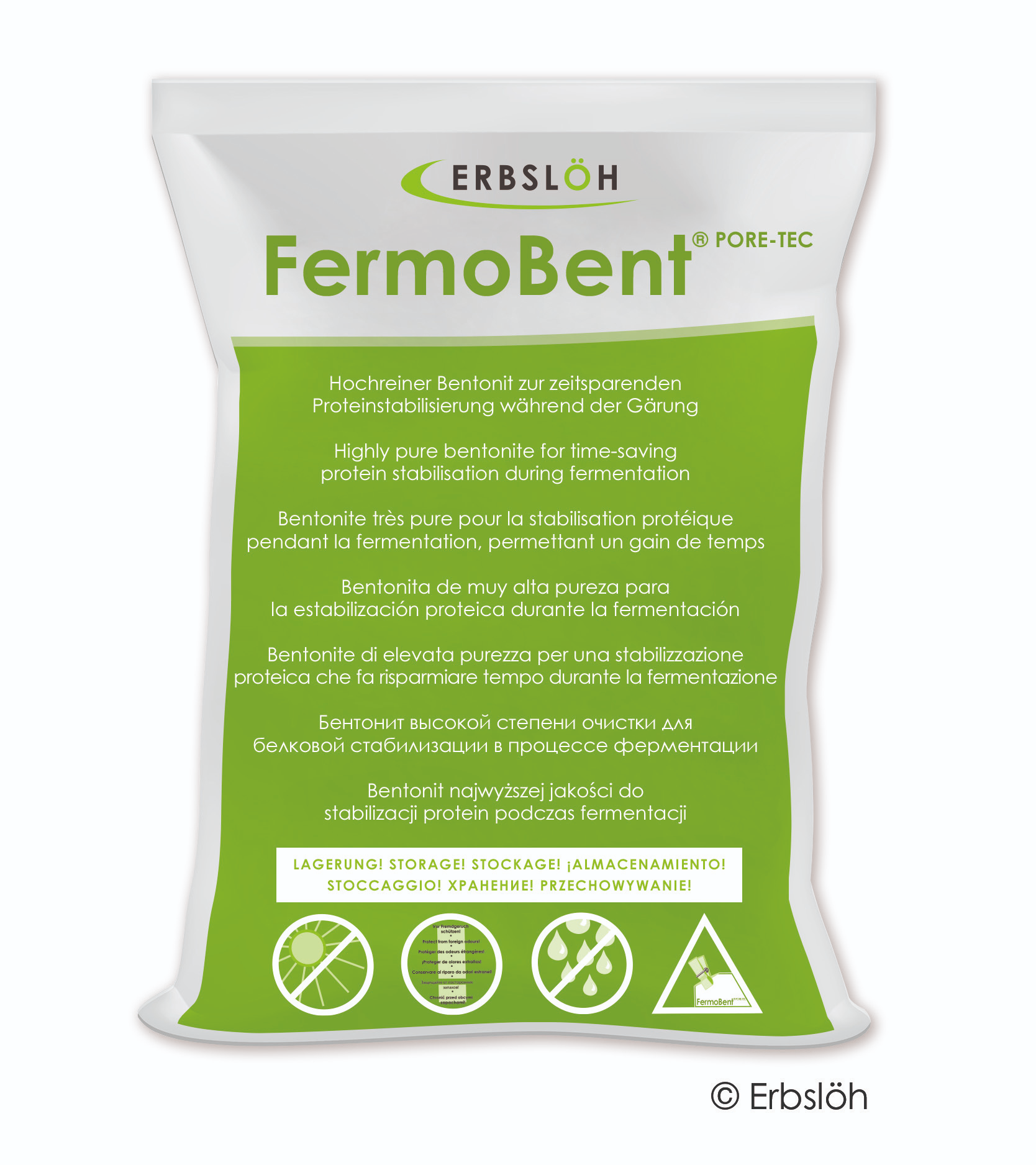
FERMOBENT® PORE-TEC is our recommended bentonite for use during fermentation because of its exceptional purity, good dispersion, effective protein removal, and formation of a stable deposit.
When is the best time to add bentonite?
Bentonite may be added at any stage of fermentation; however, studies suggest that adding bentonite mid-to-late fermentation removes protein more effectively than adding in the juice phase or early fermentation.
Common concerns:
- Does fermenting on bentonite affect YAN? Trials at Erbslöh suggest fermenting on bentonite does not diminish yeast assimilable nitrogen (YAN). This is even less of a concern if a proper nutrition strategy is followed.
- Are aromatics negatively affected? No, in most cases aromatics are higher in wines fermented on bentonite when compared to those receiving post-fermentation bentonite treatments (Horvat et al., 2019).
Want more information? Check out our recently published article to learn more about fermenting on bentonite.
Ready to give it a try? Visit our website to order online today.