
The following is an excerpt from our new blogpost.
With the dramatic ups and downs of the climate, shade cloth is rapidly becoming a necessity here in California. I’ve written a bit about shade cloth before, but recently we were asked by a client if colored shade cloth made any difference.
Luckily, the UCDavis Extension led by Kaan Kurtural has done the legwork for us.
Kurtural et al. examined the effectiveness of 4 different shade cloth colors: 40% black, 40% blue, 40% Aluminet (Shiny), and 20% Pearl. The percentages refer to how much light each cloth excluded. They compared these shade cloths to a control, where no shade cloth was used.
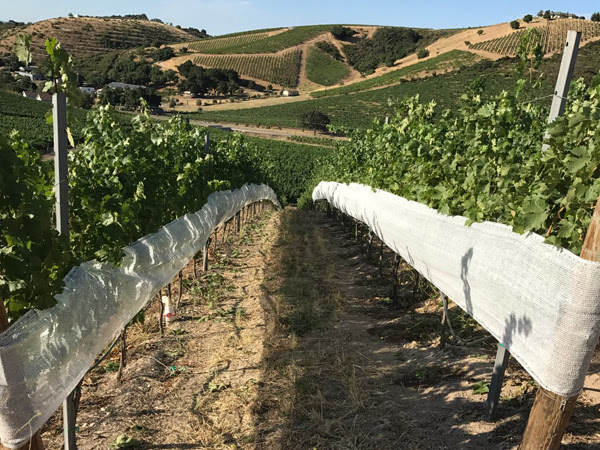 Shade cloth is now available in all sorts of colors, but black is still the best for limiting heat stress in the fruit zone.
It’s important to go over some physiology at this point, mainly how grapes are affected by light and heat. Light, more specifically UV and visible light, can cause the increased synthesis of anthocyanins (color) and flavonoids. Excessive heat however, can cause the degradation of these same compounds even if you don’t see physical signs of sunburn.
It’s important to strike a balance here: you want your fruit exposed enough to synthesize desirable color and flavonoids without overheating.
As Californians (most of you anyway) you’re better off guarding against the heat. Unless you’ve grown a super vigorous canopy, you’re going to get enough light into your fruit zone. Heat exceeding 35°C (95°F) causes the degradation of anthocyanin and flavonoids in addition to depleting acidity and denaturing enzymes important for ripening.
So which shade cloth does this better and why? Aside from aesthetics, the difference in shade cloth color lies in what part of the spectrum is absorbed and how much is transmitted. Black absorbs all parts of the spectrum at an even 40%, while blue allows the passage of more light in the blue and the Infrared portion of the spectrum into the canopy. While common sense would say that Aluminet reflects more light, it also seems to reflect light into the canopy hence it’s elevated transmittance. Pearl allows the least amount of light through, but not by much.
Want to read more? Check out the rest of the post here.