
Filter Post Type
NewsVideoProductEventLink
Sort:
Relevance
1–10 of 21

January 27, 2023
ICYMI: GPI President Scott DeFife Says Glass Bottles Are a Sustainable Packaging Choice for Wine
DeFife provided a glass market update at the Unified Wine & Grape Symposium, highlighting the sustainability of wine in glass bottles and the upcoming
00
January 27, 2022

Afternoon Brief, January 27th
Wine Bottle Shortage Is a Myth Says Glass Packaging Institute President: In his remarks and presentation to the press DeFife stated that: “A glass shortage is not an accurate description of the current state of the market. We understand some end-market customers may have issues with getting bottle stock, but that is not a “glass shortage.”...
00

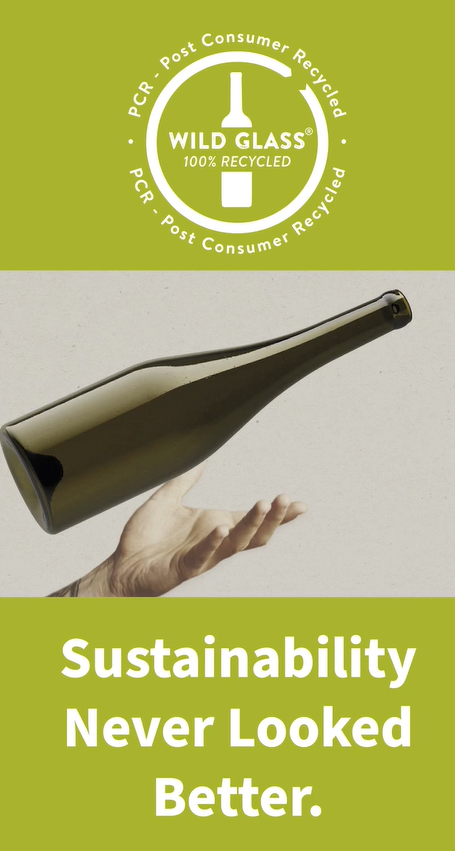
Sustainability has become a core focus across every industry sector lately, but, as lovers of the traditional, the wine and spirit industries are behind the curve on implementing sustainable glass packaging. According to the IWSR, 48% of American alcohol drinkers say that a company’s sustainability or environmental initiatives positively influences their purchasing decisions. Furthermore, according to a report by the global decision intelligence company, Morning Consult, 7 in 10 American adults would consider purchasing from a food and beverage brand that prioritizes sustainability, the highest share across all industries. In the face of ongoing environmental concerns, a growing number of media stories have cited the need for our industry to find a more sustainable package solution. And the call is validated by consumer demands. We are seeing the emergence of a new category of wine consumer: the environmentally-conscious consumer, who is choosing wines and spirits based on the s
00
September 16, 2025
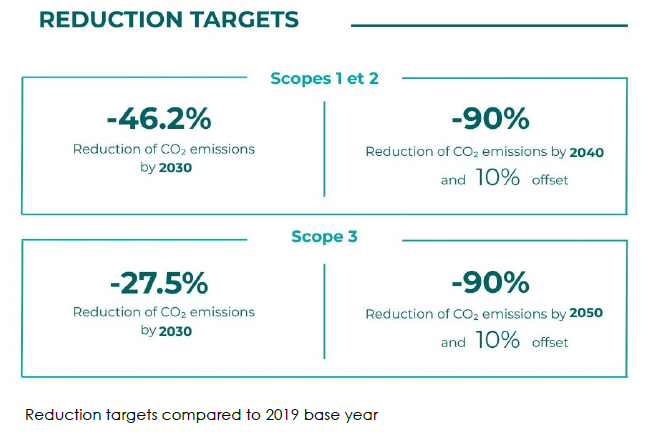
The Science Based Targets initiative has validated Verallia’s Net Zero 2040 trajectory in line with the SBTi Net-Zero Standard [1]. This commitment confirms the strength of the Group’s climate strategy, the result of constant investments and concrete actions to reduce its environmental impact. The Group is committed to achieving its Net Zero target by 2040 for scopes 1&2, illustrating its pioneering role in the glass packaging sector for beverages and food products. For Patrice Lucas, Chief Executive Officer of Verallia « The validation of our Net Zero 2040 trajectory by SBTi is a structuring milestone for Verallia. It reflects the rigor of our approach and the relevance of the investments made over the past years to deeply transform our industrial processes. By committing to 2040, we affirm our willingness to fully embrace our responsibility in the face of sustainability challenges, and to position Verallia as the reference partner for sustainable, innovativ
00

The calendar flip from 2024 to 2025 heralded several new packaging regulations, rulemaking updates, and bills with significant implications for consumer packaged goods in North America and Europe. Recent packaging legislation is reshaping packaging requirements for waste reduction, recyclable materials, circularity, and sustainability. However, actions by the Trump Administration may defer regulatory action at the U.S. federal level and shift packaging-related policies. EPR Packaging Laws Five U.S. states—California, Colorado, Oregon, Maine, and Minnesota—have passed extended producer responsibility laws for packaging. While each state's requirements vary, they share common goals of reducing packaging waste, enhancing recycling efforts, and holding producers (e.g., brand owners) accountable for the life cycle of their products. Since the start of the year, nine states have introduced or re-introduced EPR packaging bills. They include Washington, Tennessee, Hawaii
00
October 12, 2020

Transaction Strengthens Glass Packaging Offerings in Key Verticals.
Milan (October 6, 2020) –Berlin Packaging, the world’s largest hybrid packaging supplier, announced today the acquisition of Vinkova B.V., a Netherlands-based glass packaging supplier with expertise in food and beverage verticals. This strategic transaction, which marks Berlin’s eighth acquisition in Europe since 2016, strengthens the company’s glass offering in northern Europe.
As the leading Dutch supplier of glass packaging for 50+ years, Vinkova has built strong relationships with thousands of customers and leading European glass manufacturers.
With Berlin Packaging’s 40,000+ SKUs, 130+ sales and warehouse locations, and world-class design and innovation centers on two continents, Vinkova’s customers now have access to this expanded packaging offering. Vinkova’s suppliers can expect bottom line growth, as the combined company now has a salesforce of 150+ people.
&ldq
10
April 4, 2025
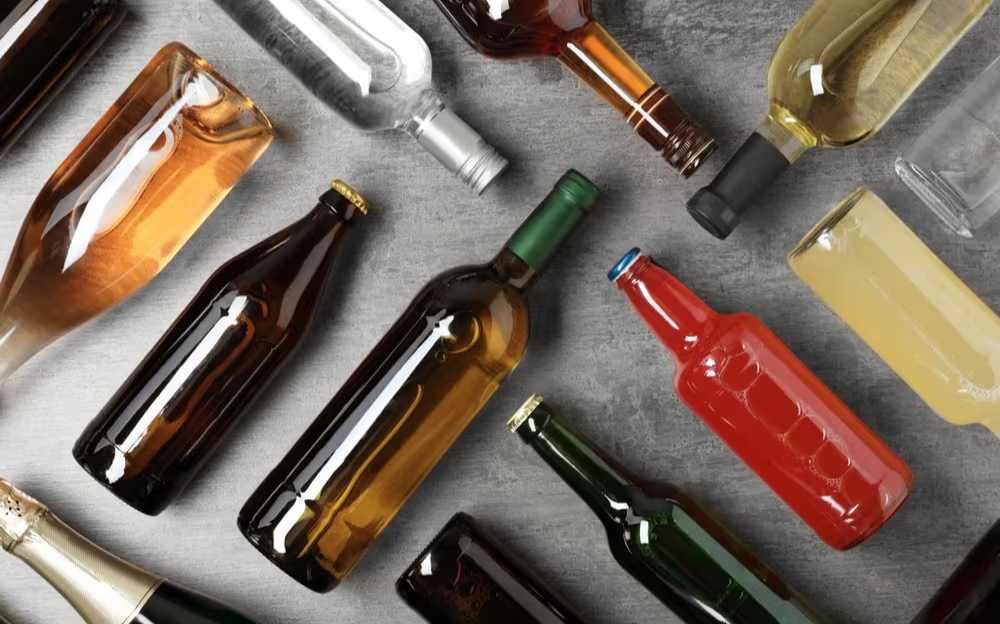
In January 2025, the U.S. Treasury's Alcohol and Tobacco Tax and Trade Bureau (TTB) issued a final rule to add 13 additional standards of fill (i.e., the amount of liquid in a container) for wine and 15 additional standards of fill for distilled spirits, allowing new packaging sizes and formats (e.g., glass for single-serve spirits-based drinks). This rule may reshape market dynamics, foster innovation, and enhance consumer choice. Expanding the range of allowable container sizes enables the U.S. to align with global packaging standards, making it easier for domestic producers to compete internationally and for imported products to enter the market without costly repackaging. This regulatory shift also allows brands more agility to innovate with new product formats, particularly in response to trends such as premiumization and sustainability. From a consumer standpoint, the expanded standards of fill offer an enhanced purchasing experience. Smaller formats cater to health-conscio
00

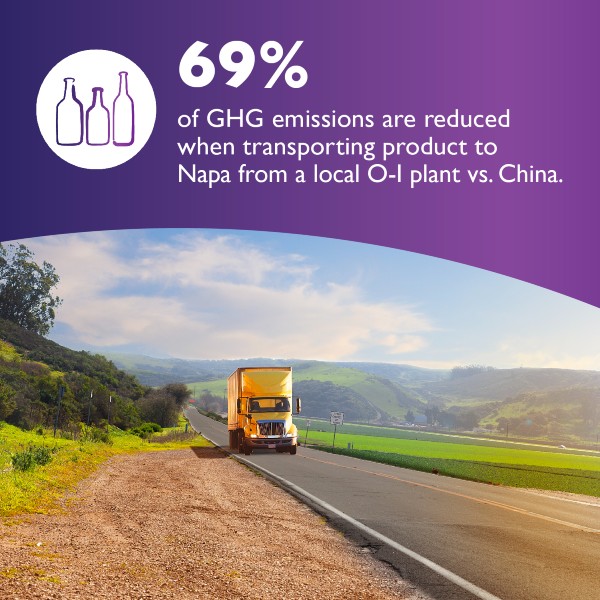
Wineries continue to increase their efforts to reduce their carbon footprint. From harvesting grapes grown in more sustainably focused ways, to water conservation, and fostering healthier soils, there are many things that can be done in the vineyard to make a positive impact on the local ecosystem and wildlife habitat. Beyond environmentally conscious agricultural practices, it is important that wineries look to vendors that operate with similar sustainability views. One impactful consideration is which organization you turn to for glass packaging. If you are looking to step up your efforts even further, there is a reason to choose O-I as that partner. Since 2017, the organization’s multi-pronged approach to sustainability has resulted in a nearly 20% reduction in greenhouse (GHG) emissions. Taking a more granular look at O-I, there are other factors that make the organization a leader in the sustainable packaging space. Here are some points to consider when it comes t
00
May 7, 2024
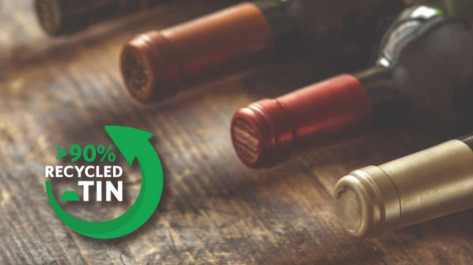
The strategic move - away from primary content and towards using recycled tin - helps Amcor Capsules deliver its vision for a more responsible wine and spirits packaging industry Zurich, Switzerland, 7 May 2024: Amcor Capsules, a global leader in developing and producing responsible closures and capsules for wine and spirits, today announces a strategic shift by introducing more than 90% recycled tin into its premium tin capsules and sparkling foils range. When it comes to sustainability, Amcor Capsules continues to be at the forefront of innovation on the wine and spirits market by introducing tin capsules with an unprecedented level of recycled content sourced from Europe. Indeed, Amcor Capsules has now established sourcing schemes that will enable the company to use recycled tin from end-of-life products, such as car radiators and batteries, ship propellers and bronze scraps from ornaments or statues. After recycling, the tin material is adapted and re-used for capsules and capping
00
Sustainability has become a core focus across every industry sector lately, but, as lovers of the traditional, the wine and spirit industries are behind the curve on implementing sustainable glass packaging. According to the IWSR, 48% of American alcohol drinkers say that a company’s sustainability or environmental initiatives positively influences their purchasing decisions. Furthermore, according to a report by the global decision intelligence company, Morning Consult, 7 in 10 American adults would consider purchasing from a food and beverage brand that prioritizes sustainability, the highest share across all industries. In the face of ongoing environmental concerns, a growing number of media stories have cited the need for our industry to find a more sustainable package solution. And the call is validated by consumer demands. We are seeing the emergence of a new category of wine consumer: the environmentally-conscious consumer, who is choosing wines and spirits based on the
00