
Filter Post Type
NewsVideoProductEventLink
Sort:
Relevance
1–10 of 27
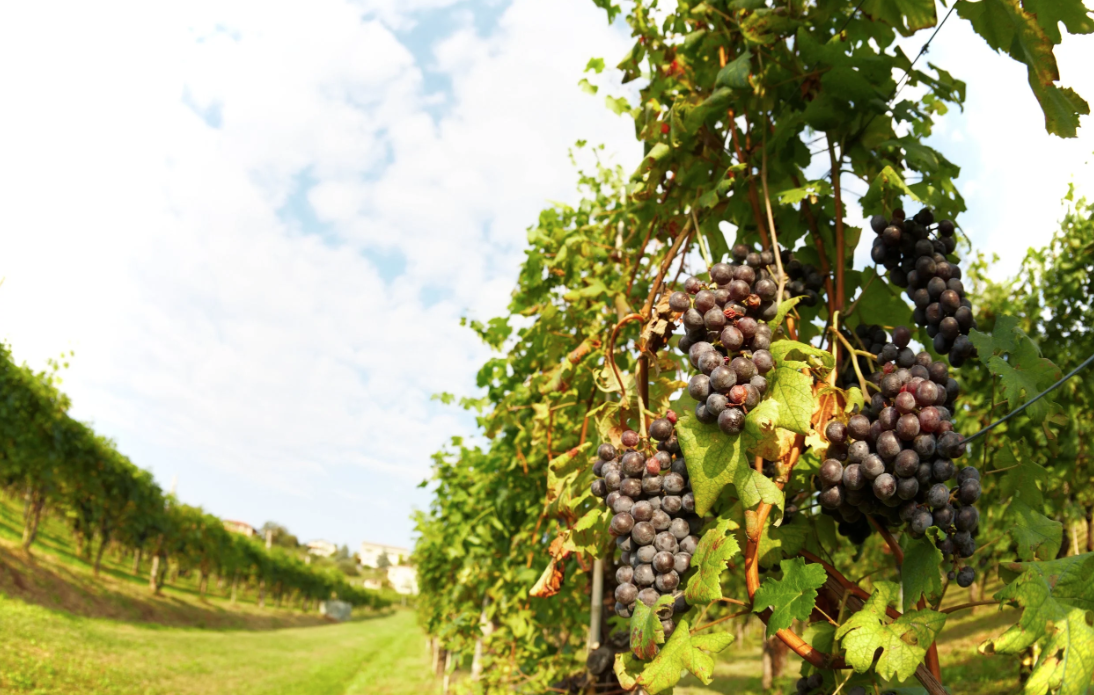
The weather is shifting, trip-planning season is underway, and tasting room traffic is about to pick up. This is the good news. The bad news? If you're reading this and thinking "we'll get to our spring marketing when spring gets here," you're behind. The tasting rooms that stay full from April through June aren't the ones with the best wine or the prettiest views. They're the ones that showed up in someone's planning process three weeks before the trip happened. People don't stumble into wine country on a whim and wander from door to door the way they did fifteen years ago. They research. They scroll. They book. And if your winery isn't visible and compelling during that research window, you're invisible when it counts. The hotel industry figured this out years ago. Marriott doesn't wait until summer to market beach properties. They start running "book your getaway" campaigns in late winter, because they know the booking win
00

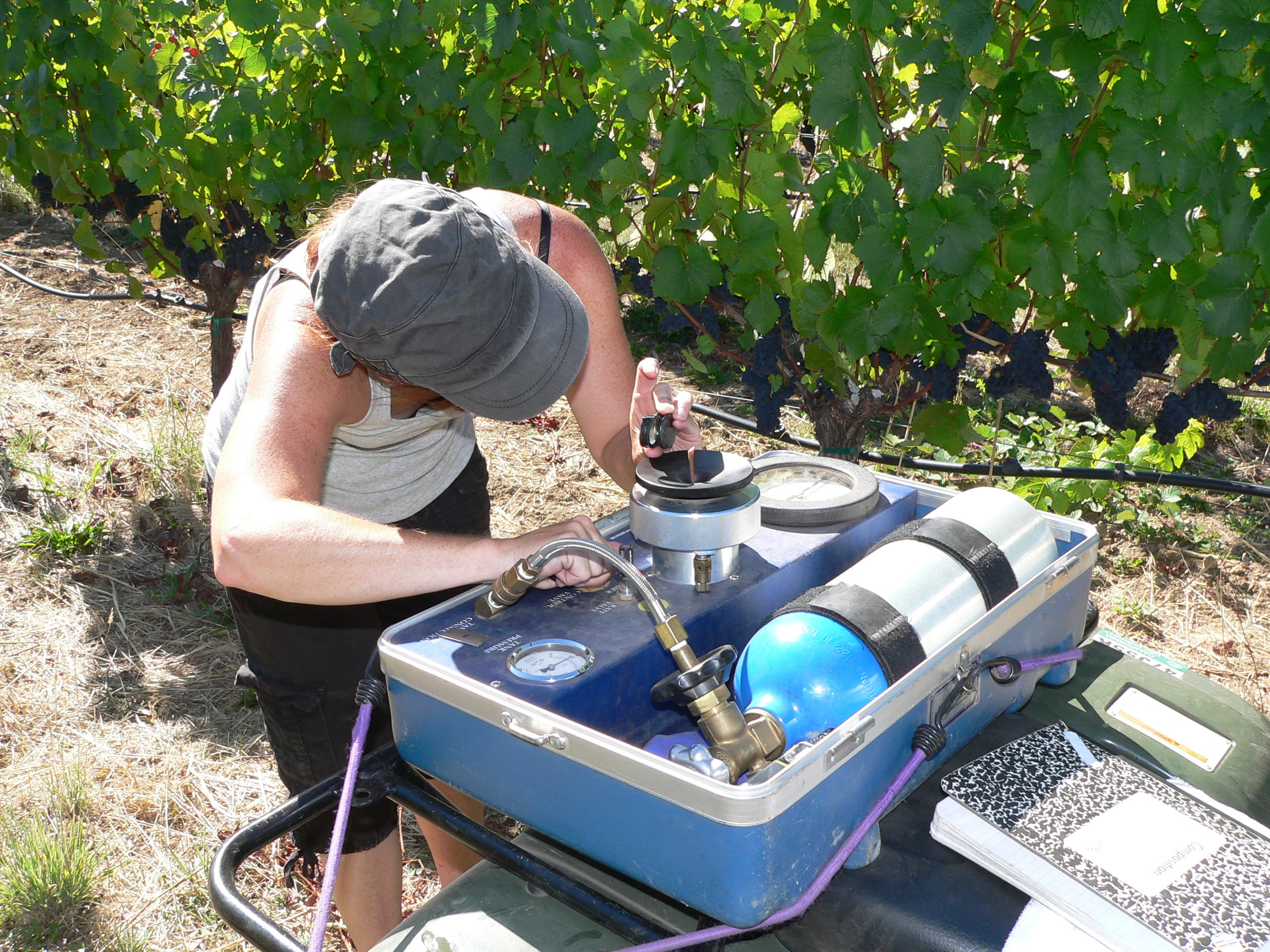
Two years ago, I wrote an article on AI in the vineyard for WBM. Feel free to read that article here…if you want. Otherwise, my basic argument was that although AI will eventually play a role in how we farm grapes, it’s a long way off compared to other industries and even other crops. We who grow grapes are the last ones to see such innovation. And since then, AI has grown exponentially. If two years ago you were playing around with Chat GPT to create bizarrely distorted images and learn about tax loopholes, you can now go onto the likes of Claude and have it just create a website for you from a single prompt. Chatbots like this have essentially eliminated the need for entry-level coders. However Claude is a computer, so it makes sense that it’s gotten very good at writing code for other computers. Similarly Chat GPT has digested the entire internet, and curates any answer for you by plucking it from its vast network of information. Sometimes its correct, and other t
00
December 8, 2025
The wine industry is going through major market changes. Some wineries are posting growth, while others are facing flat or declining sales and increased financial pressure. The difference is not luck. It is strategy, financial clarity, and disciplined execution. As the market corrects, the operators who invest intentionally in their numbers, align their teams, and sell with purpose are the ones maintaining momentum. Recently at WinExpo, Zane had the privilege of moderating a panel of industry experts to discuss how wineries can future-proof their businesses and focus on long-term success. From those discussions came five practical takeaways that winery owners and leaders can apply immediately to strengthen resilience and performance, and we would like to share them with you. 1. Know Your Numbers Financial clarity is critical. It is the foundation of resilience. Understanding gross margin per SKU, contribution margin, and cash flow timing enables operators to make smart decisions rather
00

November 19, 2025
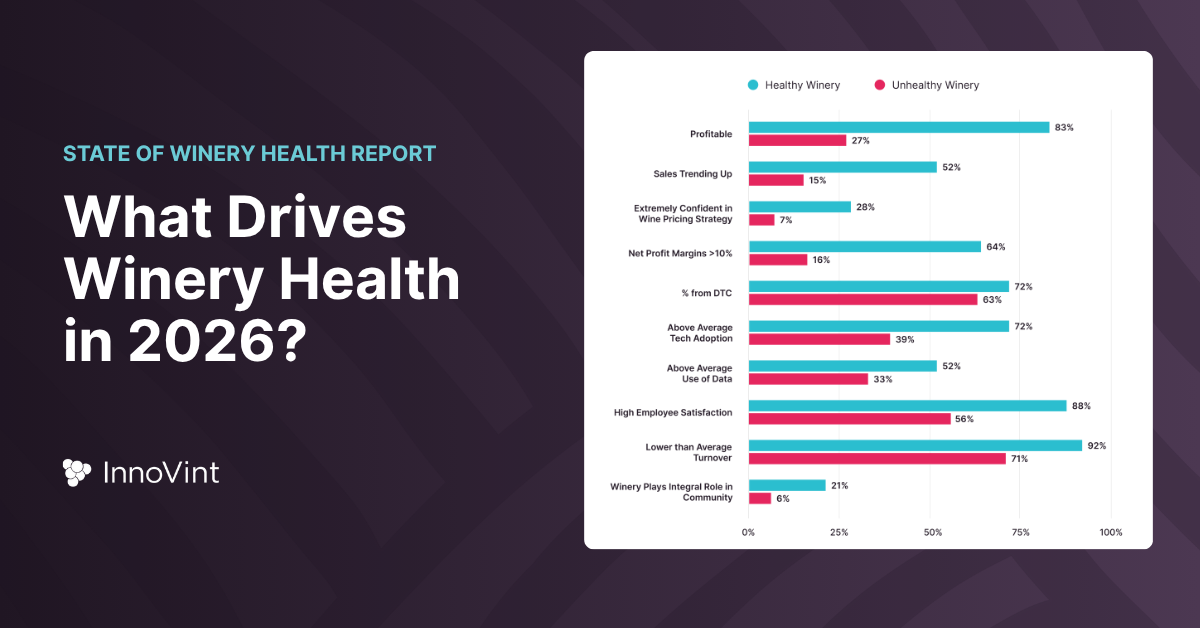
Winery health isn’t defined by one metric. It’s a reflection of how well a winery performs across three key dimensions: financial resilience, operational excellence, and cultural strength. Every year, InnoVint surveys hundreds of winery professionals to understand what truly drives a healthy winery. In the 2025 State of Winery Health Report, our statistical analysis confirmed that all three dimensions matter, but financial performance stands out as the clearest signal of overall business health. Profitability, sales growth, and pricing confidence consistently separate the strongest wineries from those struggling to keep pace. But the story doesn’t end there. Operational practices, technology adoption, and team culture all play vital roles in supporting long-term success. What Does “Winery Health” Mean in 2025? At its core, winery health represents a winery’s ability to stay profitable, efficient, and resilient — even as the industry faces
00
September 1, 2025

Your Customers Check Texts Faster Than Emails, So Why Are You Still Only Relying on Inboxes? The typical American checks their phone 96 times a day, that's once every 10 minutes. While your carefully crafted email campaign sits unopened among dozens of others, text messages get read within minutes. The numbers don't lie: SMS messages have a 98% open rate compared to email's paltry 20-30%. Even more telling, 90% of text messages are read within the first three minutes of delivery. For wineries competing for attention in crowded digital spaces, this isn't just a nice-to-have channel, it's the most direct line to your customer's attention. Why SMS Works Specifically for Wine Brands Wine isn't software or fashion, it's experiential, emotional, and often enjoyed in specific moments. This unique position makes SMS particularly effective for wineries in ways other industries can't match. First, wine consumers are increasingly mobile-first. When planning wee
00

August 21, 2025
In today’s challenging business climate, many small winery owners are cutting back wherever they can. But when it comes to marketing, the stakes are high: cut too much, and you risk losing momentum. Spend without a plan, and you may as well be tossing cash into the vineyard wind. Too often, I see owners relying on what I call “hope marketing.” They send out an ad, launch a promotion, or host an event—and hope it brings in more customers or wine club signups. It’s a bit like planting a vineyard without knowing your soil, climate, or varietals. You spend the money, put in the work, and pray for a great harvest… but you’re not set up for consistent success. And then there’s the temptation to copy what big wineries are doing, thinking it must be the “right way” to market. So they hire an expensive marketing consultant—one who’s used to working with large companies—and end up hearing nothing but crickets. It&rsqu
00
August 5, 2025

Are Your Wine Club Members Ghosting You? Here's Why Your wine club members are breaking up with you, but they're not telling you why. They're just... disappearing. The numbers are stark: Silicon Valley Bank's latest research (which we are going to reference a lot in this blog) shows wine clubs are experiencing member attrition rates between 28-36% annually, with luxury segment clubs performing only marginally better at 23-29% (SVB Direct-to-Consumer Wine Report, 2025). That's not a leak, it's a flood. And while many wineries frantically chase new sign-ups to replace the departed, few address why members leave in the first place. Wine club fatigue isn't a mysterious phenomenon. It's a predictable human response to predictable winery behavior. The Warning Signs You're Already Losing Them Before members cancel, they disengage. They're sending signals you might be missing: Email open rates drop below your average Shipment modifications increase (dow
00

With Spring in the air and Schneckenleitner cask and puncheon orders being fulfilled and planned in Austria, the Bouchard Cooperages team wanted to take the time to highlight the special relationship between the Schneckenleitner family and their largest of client's: Schloss Gobelsburg from Austria's Kamptal region. For any producers still interested in casks and puncheons (500L - 800L) it is not too late to add any orders in our containers or choose from the current stock options of 500L puncheons that we currently have in our US warehouse. Fassbinderei Schneckenleitner Family owned and operated since 1880, the Schneckenleitner family has been manufacturing Austrian oak and Acacia puncheons, casks and conicals for five generations. Nestled along the Ybbs river in Waidhofen an der Ybbs, the new state of the art cooperage, stave mill and wood maturation park was inaugurated in 2022 allowing for the Schneckenleitner's activity to all live in one spo
00
June 30, 2022
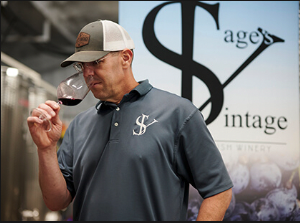
American winery owners from coast to coast rely on Process2Wine winery management software to make each day run smoothly. Process2Wine software is developed by Ertus Group, a French company that came to the US with decades of grape-growing and winemaking experience built into a grape-to-bottle software solution packed with functionality and backed by a technical understanding of what vineyard and winery owners need to succeed. The founder Alain Sutre was formerly the director of prestigious estates in Bordeaux. Thanks to his vision, and to collaboration with experts in the field, Sutre launched Process2Wine in 2011 with the aim of planning and managing all the winemaking operations. We reached out to users to find out why they like working with Process2Wine winery management software. Here are the results: Why they chose Process2Wine Some wineries find Process2Wine through word of mouth. That includes Wes Jensen at Sages Vintage in Nacogdoches, Texas, who says, “I
11
California’s bulk wine and grape markets continue to be active but feel a little less active than in January and February as buyers assess their casegood sales and wait to gain a better idea of the 2021 crop potential. Nielsen numbers for March suggest wine’s off-premise dollar sales are continuing robustly, perhaps not in growth versus the surges we saw this time last year when COVID-19 first hit and Stay in Place orders were rolling out, but still in double-digit growth versus the equivalent period of 2019. For instance, in the week ending March 27th, wine’s dollar sales were down 7.4% versus the equivalent week of 2020 but up a significant 21.1% versus that week in 2019. All segments at $15 and above are in growth, as consumers take advantage of what they see as attractive discounts on quality wines – often on-premise wines that have been diverted into grocery stores. Segments below $15, however, are in decline. Continuing the same story as previo
10