
Filter Post Type
NewsVideoProductEventLink
Sort:
Relevance
1–10 of 22

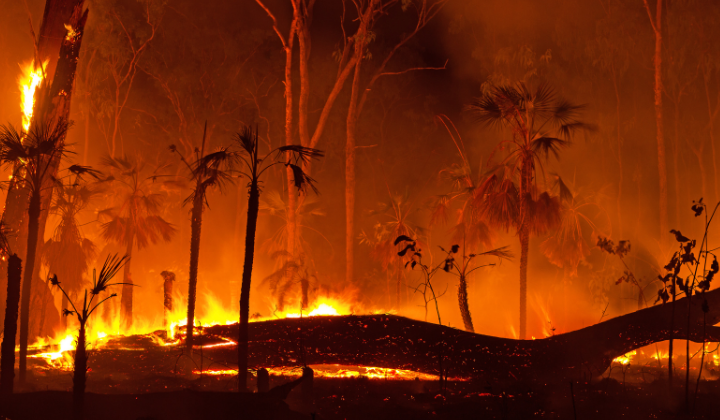
The third week of August served as a wake-up call to Mother Nature’s awesome power. A siege of more than 12,000 lightning strikes ripped through the state, touching off wildfires particularly in Northern California.
The numbers are frightening. CAL FIRE is currently tracking three wildfire groupings covering close to 700,000 acres.
The CZU Lightning Complex around the Santa Cruz Mountains is 56% contained as of this writing and caused the evacuation of the UC Santa Cruz campus.
The SCU Lightning Complex, the second largest fire in California history, encompasses twenty fires east of Silicon Valley. It is currently 82% contained.
The LNU Lightning Complex, already the third largest fire in California history, covers over 375,000 acres, threatens the city of Vacaville. The fires there are 87% contained.
Despite the drama played out by Mother Nature, her lightning accounts for only 6% of wildfires. Human nature triggers by far most of the state’s wildfires.
In a
10

A week ago, Congress left town for the Presidents’ Day recess (another recess!) after funding most of the government except the Department of Homeland Security (DHS), which includes the Immigration and Customs Enforcement division (ICE). The reason: An impasse over ICE’s operations, following developments in Minneapolis as well as other cities. As always, this issue devolved into the blame game: Democrats said Republicans are putting the nation at risk by refusing reasonable changes to ICE’s behavior, while Republicans faulted Democrats for being unreasonable themselves by their willingness to shut down DHS, even though ICE already has $75 billion, and the Department also includes other important agencies like the Coast Guard, FEMA (disaster relief), and TSA (screeners and air traffic controllers), meaning air travel will be affected. Forget about who’s right or wrong. The bigger issue is that shutdowns may become the new normal. The longest one in history (43 d
00

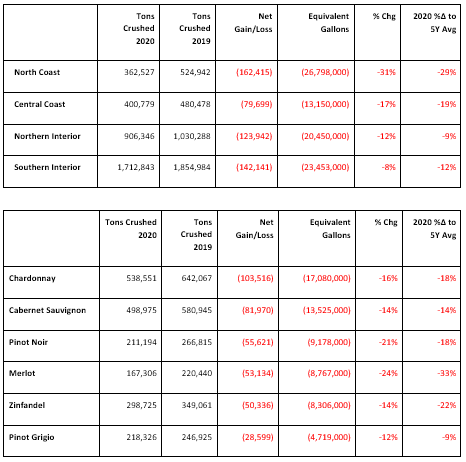
Things Certainly Can Change in One Year by Steve Fredricks Last year at this time, mere weeks before the United States shut down due to the Covid-19 pandemic, we were in an excess phase of the cycle for nearly every variety in California. Now, less than two months into 2021, the situation is different, in many cases dramatically so. We’ve seen continued growth in off-premise value brands, limited on-premise channel sales, and we experienced a light 2020 crop in most areas of California. We also are witnessing multiple market dynamics from excess toward balance and even shortage depending on many factors including region, variety, and, more than ever, by company. The USDA released its annual Preliminary Grape Crush Report on February 10, and the total crush of 3.404 million tons confirmed the light crop in many areas. As you can see from the charts below, overall tons crushed were down across the board. This came as no surprise; statewide yields per acre had been shaping up to be
10
February 10, 2021
February 10th – Novato, CA – The California Department of Food and Agriculture’s Preliminary Grape Crush Report for 2020 has been released. It is a summary for the supply of the wine and grape industry, containing tons crushed and prices of wine grapes sold during the 2020 harvest. The Crush Report provides growers and wineries insight into the inventory position for the California wine business as a whole, and influences market dynamics for the current bulk wine market as well as the upcoming 2021 harvest. Key Insights by Region Tons Crushed 2020 Tons Crushed 2019 Net Gain/Loss Equivalent Gallons % Chg 2020 %Δ to 5Y Avg North Coast 362,527 524,942 (162,415) (26,798,000) -31% -29% Central Coast 400,779 480,478 (79,699) (13,150,000)
10


As California Returns to Reopening, Some in Wine Country Wonder if It’s Too Soon In Pandemic: Gov. Gavin Newsom’s announcement Monday that he’s ended the regional stay-at-home order and returned the majority of the state, including the six North Bay counties, back to the purple tier is welcome news to affected businesses. But business leaders are concerned the shutdowns aren’t over... The post Afternoon Brief, January 26th appeared first on Wine Industry Advisor. Url:https://wineindustryadvisor.com/2021/01/26/afternoon-brief-1787?utm_source=rss&utm_medium=rss&utm_campaign=afternoon-brief-1787 Published Date:Tue, 26 Jan 2021 22:33:19 +0000
10


After several years of record-breaking fire events, experts predicted 2020 to be the “year of recovery” for the California wine industry.
However, with the outbreak of a global pandemic came shutdowns disrupting business early in the year in a way never seen before. Just as consumers were starting to visit wine country again, the fires returned with a vengeance in what some might call a disaster inside of a disaster. Not only did it cripple tourism in the region, but the financial impact on the grape and wine market is also still being assessed. To add to these already unstable conditions, the country faced an incredibly acrimonious Presidential race leading to even more economic uncertainty – an uncertainty that many wineries continue to wrestle with.
This year-end virtual conference will take a close look at the 2020 impact on the California wine industry, beginning with an economic overview, both nationally and regionally, followed by an up to date repor
10

Event Type: Seminar
Location: Springhill Suites by Marriott
Date: 3/14/2024
Join Vineyard Team and the Paso Robles Wine Country Alliance for an educational event that brings together wine industry professionals and energy partners for a half-day of sessions and networking focused on sustainable energy. THURSDAY, MARCH 14 8:00 A.M. - 1:00 P.M. SPRINGHILL SUITES BY MARRIOTT 900 EL CAMINO REAL, ATASCADERO REGISTER Itinerary: 8:00 – 8:30 a.m. …………….. Check-in, Coffee & Networking 8:30 – 9:00 a.m. …………….. Program Begins & Introductions 9:00 – 10:00 a.m. ……….….. Session 1: Energy Shift for the Wine Industry 10:00 – 11:00 a.m. …………. Session 2: Building Resiliency 11:00 a.m. – 12:00 p.m......… Session 3: Leveraging Energy Sustainability 12:00 – 1:00 p.m. …………… Networking Lunch REGISTER SPEAKERS & TOPICS INCLUDE: Energy Shift for the Wine In
00

Join Vineyard Team and the Paso Robles Wine Country Alliance for an educational event that brings together wine industry professionals and energy partners for a half-day of sessions and networking focused on sustainable energy. THURSDAY, MARCH 14 8:00 A.M. - 1:00 P.M. SPRINGHILL SUITES BY MARRIOTT 900 EL CAMINO REAL, ATASCADERO REGISTER Itinerary: 8:00 – 8:30 a.m. …………….. Check-in, Coffee & Networking 8:30 – 9:00 a.m. …………….. Program Begins & Introductions 9:00 – 10:00 a.m. ……….….. Session 1: Energy Shift for the Wine Industry 10:00 – 11:00 a.m. …………. Session 2: Building Resiliency 11:00 a.m. – 12:00 p.m......… Session 3: Leveraging Energy Sustainability 12:00 – 1:00 p.m. …………… Networking Lunch REGISTER SPEAKERS &
00
December 18, 2023

In the realm of power generation, ensuring the reliability of backup systems is paramount. Companies like CD & Power understand the critical role generators play in maintaining operations during power outages. One essential practice in the realm of generator maintenance is load bank testing. Below, learn the significance of load bank testing for generators. Understanding Load Bank Testing Load bank testing is a crucial procedure employed to evaluate the performance and reliability of a generator under various load conditions. This simulation mimics real-world scenarios, allowing operators to assess the generator’s capacity, cooling system, and overall functionality. While generators are designed to handle a range of loads, they often operate at less than optimal levels, leading to issues such as wet stacking and carbon buildup. Load bank testing serves as a proactive measure to address these concerns and ensure generators are ready for action when needed. The Why Behin
00
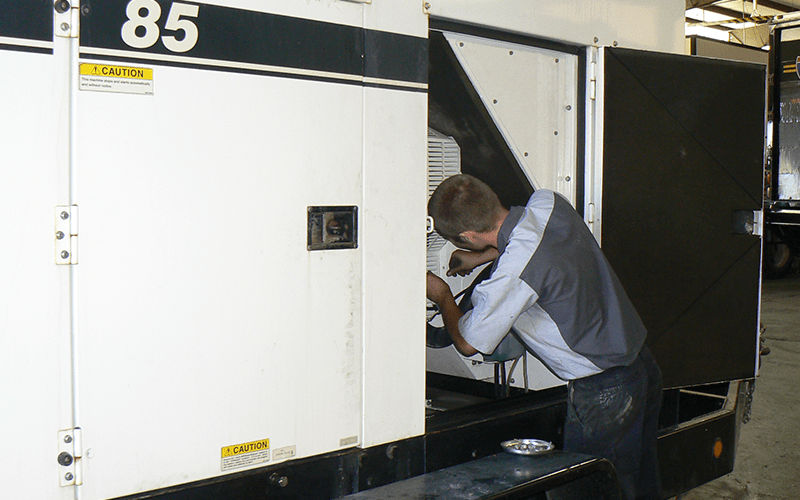
In an age where reliable power is essential for businesses and critical infrastructure, generator maintenance is the unsung hero that keeps the lights on when the grid fails. However, keeping your generator in top shape is not as simple as it might seem. Many generator owners make critical generator maintenance mistakes that can lead to costly breakdowns and downtime. In this blog, we’ll explore the importance of preventative generator maintenance and discuss some common mistakes to avoid in generator upkeep. The Importance of Preventative Maintenance Before diving into the common generator maintenance mistakes, let’s emphasize why preventative maintenance is crucial. Your generator is an investment in your power security, and neglecting its care can lead to disastrous consequences. Routine maintenance ensures that your generator is always ready to kick into action when needed, providing peace of mind and reliability. 7 Generator Maintenance Mistakes to Avoid Neglect
00