
To select the best filtration system, it's important to understand the unique demands at each step of the production process. Keep these factors in mind:
1. Consider Wine Type
Different wine styles = different filtration needs. Sparkling wines, for example, often require filtration methods designed to preserve carbonation, while red wines benefit from gentler techniques to maintain tannins and phenolic compounds. A custom filtration system ensures that each variety maintains its intended flavor profile.
2. Define Filtration Objectives
Your filtration strategy should align with your winery’s production goals and brand standards. While some wineries focus on achieving high clarity, others may prioritize microbial stability. Establishing these objectives upfront helps determine the most suitable filtration process for your winery.
3. Match Filters to Particle Size
Selecting the right pore size is essential to effective filtration. Using overly fine filters in early stages leads to faster clogging and inefficiencies. It is typically best to start with coarser filtration to remove larger particles, followed by finer filtration closer to bottling.
4. Protect Wine Aroma and Flavor
Preserving quality is just as important as achieving clarity. Over-filtration strips wine of its distinct flavor and aroma. Choosing filtration techniques that support flavor retention is key to maintaining wine quality.
5. System Efficiency and Maintenance
Look for systems that deliver both performance and ease of use. Technologies like crossflow filtration offer benefits such as reduced downtime and self-cleaning capabilities. Choosing systems that reduce wine loss and lower maintenance needs can lead to long-term cost savings.
6. Minimize Environmental Impact
Sustainable filtration systems can help reduce waste, conserve water, and lower energy consumption. Opting for environmentally friendly filter designs and configurations can simultaneously support your sustainability goals and operational efficiency.
Better Filtration Starts with Atlas Copco.
A trusted partner with industry expertise can make all the difference. Atlas Copco offers advanced filtration solutions specifically designed for the wine industry. Our systems support clarity, stability, and flavor preservation, and our team works closely with wineries to develop solutions tailored to their needs.
Partner with Atlas Copco to elevate your filtration process - and your wine.
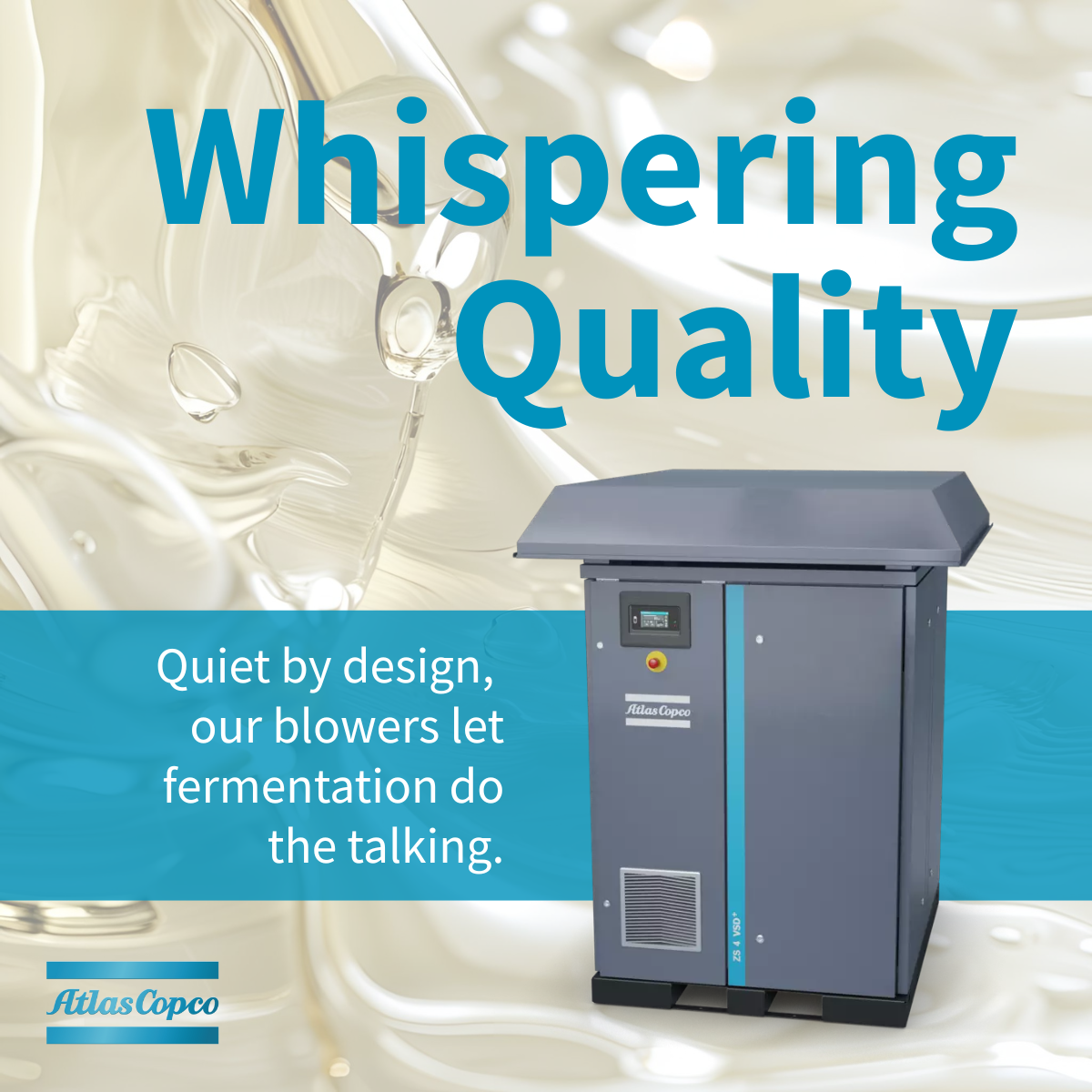
The relationship between fermentation and a reliable air blower is essential for producing a delicious and consistent batch of wine. Though often overlooked, blowers play a vital role by delivering steady pressure and airflow to support healthy fermentation. Any disruption in this delicate process can result in flavor inconsistencies or even product loss. Fortunately, Atlas Copco blowers are renowned for their reliability, energy efficiency, and 100% class 0 oil-free air.
Discover how our blowers keep your process flowing, quietly and efficiently.

Our expert technicians share essential tips to help you beat the heat and prevent common compressor issues during the hottest months of the year:
1. Keep Coolers Clean: Dust, debris, or buildup in the cooler quickly leads to overheating. Make sure coolers are thoroughly cleaned and clear of obstructions before the heat sets in.
2. Inspect Drains: Hotter weather = higher humidity, and that means more condensate. Check that your drains are fully functional and ready to handle the increased moisture to prevent backups or overflow.
3. Check Air and Oil Filters: Clean filters ensure steady airflow and reduce unnecessary energy use. Replacing dirty filters helps maintain consistent pressure for your grape pressing, bottling, and labeling processes.
4. Check Compressor Oil: High outdoor temperatures reduce the lifespan of your oil. Stick to recommended service intervals and use genuine compressor oil and filters to protect your equipment and maintain uptime during busy winery operations.
5. Assess Ventilation: Don’t let the compressor room overheat. Good airflow helps extend system life and maintain reliable performance during long summer workdays.
6. Adjust Water Cooling Systems: If you use a water-cooled compressor, adjust the temperature and flow to handle higher summer loads. Keeping systems cool helps avoid delays in your production schedule.
Your wine deserves uninterrupted protection. Get your compressed air systems summer-ready.
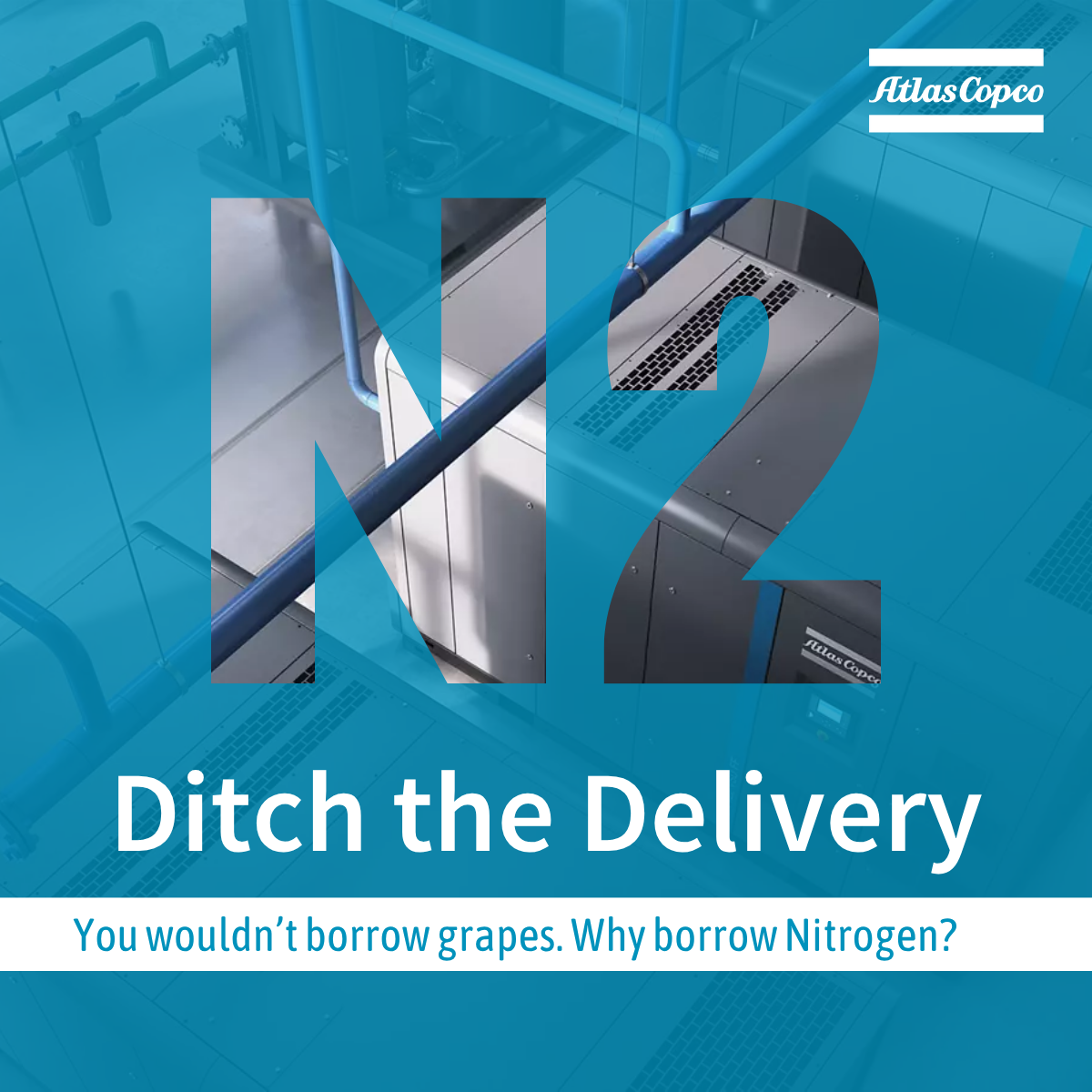 Ditch the Canisters, Improve the Quality
Why let bulky nitrogen tanks and unpredictable delivery schedules disrupt your winemaking process? Atlas Copco’s nitrogen generators put you back in control, right on site. With reliable, high-purity nitrogen available 24/7, you can protect your wine from oxidation at every stage, from fermentation to bottling. Say goodbye to rental fees, downtime, and the space-eating cylinders. Rather, say hello to a safer, more efficient cellar.
Your Wine Deserves the Best
Generating nitrogen onsite means fewer interruptions, better wine stability, and a more sustainable operation. Whether you're blanketing tanks, purging lines, or preserving headspace during bottling, Atlas Copco’s PSA and membrane nitrogen generators deliver what your wine needs, when it needs it. Already have an air compressor? You’re halfway there.
Let’s level up your wine protection with a nitrogen generator.
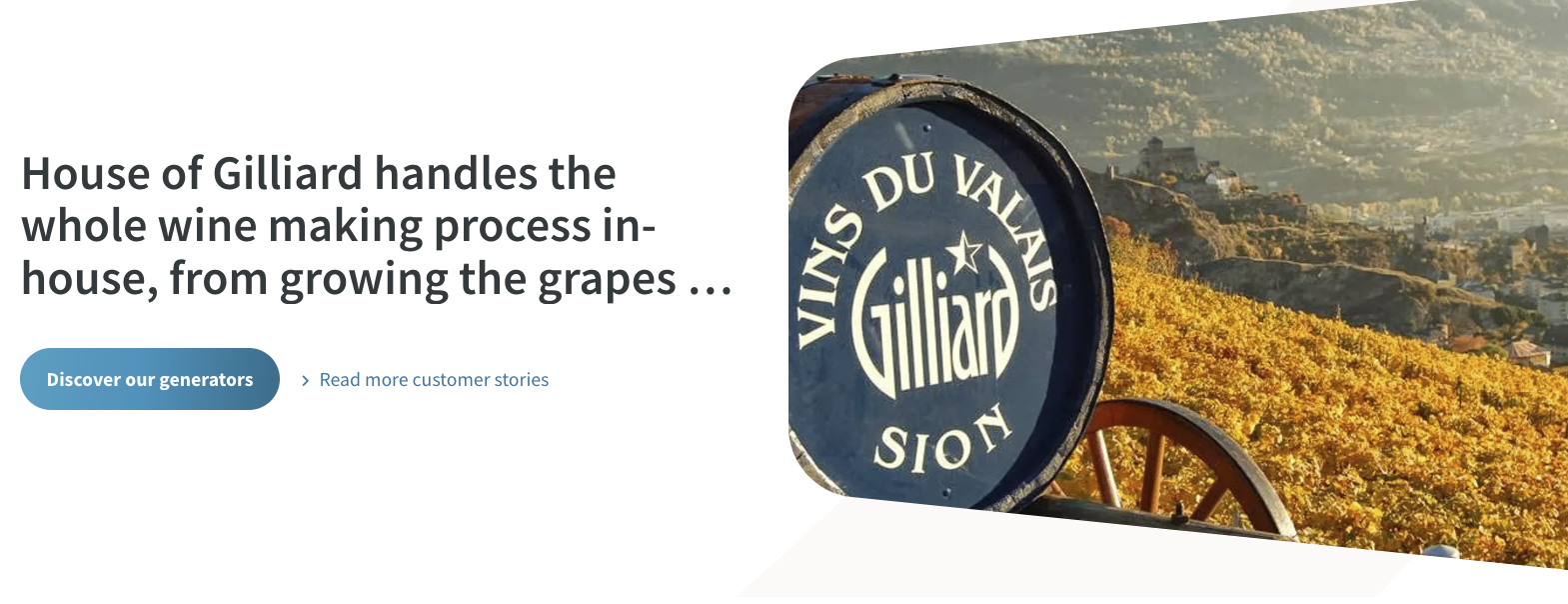
House of Gilliard
The tradition of the House of Gilliard in Switzerland goes back to the 19th Century, with the today famous Dôle des Monts wine. The winery handles the whole wine making process in-house, from growing the grapes to bottling. Achieving wine of the highest quality requires a command of the whole production process. Gilliard’s wine masters rely on Atlas Copco to help them with this task.
The House of Gilliard has equipped its production site with two Variable Speed Drive (VSD) compressors and a nitrogen generator. Thanks to this installation, the wine house has on-site nitrogen and does no longer need to purchase nitrogen in cylinders. The advantages are obvious: the Gilliard house saves time, money and energy thanks to its on-site nitrogen.
Nitrogen, the hidden ingredient
Cultivating grapes, harvesting and wine making: the delicate process of producing wine always ends in bottling, which requires compressed air and nitrogen. The compressed air powers various tools like valves, which are vital when handling liquids. It is much less known that also nitrogen is used, for two different processes. First, nitrogen forces the oxygen from the empty bottles and second, it helps to remove carbon dioxide before capping the bottle. In the past, the Gilliard house bought bottled nitrogen for their production. Now that the winery works with a nitrogen generator connected to a VSD compressor, the company saves time, money and lots of energy. “We estimate that we save 10 000 Swiss Francs (about €7500) annually on energy costs alone,” says wine expert Hansueli Pfenniger. “And we also save on the administration and handling of replacing the bottles and the storage of those nitrogen cylinders”.
Compressed air is almost everywhere
Compressed air is mainly used for bottling, labeling and sealing bottles. In fact “all machines in our plant require compressed air, from the depalletizer to the labeling machine,” explains Roland Crittin, chief technology officer at Gilliard. Most of the compressed air however, is used to operate the large presses of 10 000 liters. “These large volumes require considerable power. We replaced our old compressors with new ones from Atlas Copco before the harvest of 2010. With these new compressors, we have realized time savings of 20%.” In wine production, the compressed air demand fluctuates enormously, so Atlas Copco VSD compressors are perfect to adapt the air flow to the demand at any time.
The House of Gilliard: its domains
The house of Gilliard’s passion for wine is reflected in its vineyards, which stretch out over 50 ha of terraces. The vines are lined up on the mid-slope of the Rhone’s right bank, between Sion and Lienne at an altitude between 550 and 680m. The vineyard resembles a mosaic of terraces spread over the steep hillside: an awe-inspiring landscape. These terraces face south, which makes them ideal for growing high-quality vines. Harvesting is done manually and the grapes are transported by helicopter.
House of Gilliard handles the whole wine making process in-house, from growing the grapes to bottling.
Discover our generators - Read more customer stories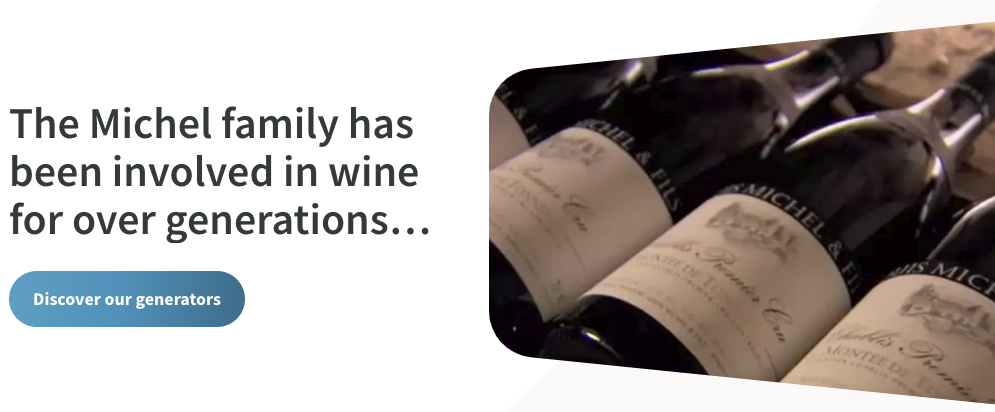
Winemaking at Chablis
After growing and harvesting, the wine needs to be bottled. This process contains several applications, all needing compressed air or nitrogen. The compressed air is used for bottling the machines, putting on the capsules and labelling.
How is nitrogen used during the bottling?
During bottling, nitrogen is used twice. First to remove oxygen from the empty bottles, and afterwards to chase the carbon gasses just before capping. The compressed air and nitrogen is provided by a variable speed drive (VSD) compressor with built-in dryer and a nitrogen generator. On top, the Michel family also uses 3 filters. By replacing nitrogen in bottles with a generator while using a VSD compressor, the Michel family saves not only time and money but also energy.
Did you know that air compressors play a crucial role in crafting high-quality wine? From ensuring pristine cleanliness to perfecting fermentation, these powerful tools help winemakers maintain consistency and precision at every stage.
Discover how air compressors can elevate your winemaking process! 🍇✨
📖 Read more (link to https://www.atlascopco.com/en-us/compressors/industry-solutions/wine-solutions)
Wine filtration is a crucial step in the winemaking process, ensuring the clarity, stability, and overall quality of the final product. As wine moves from fermentation to bottling, various filtration stages are employed to remove unwanted particles, yeast, and bacteria, enhancing the wine's appearance and taste while preserving its character.
Our process map illustrates each stage of wine production, highlighting where advanced filtration systems are utilized to achieve the highest standards of purity and consistency. Explore the process to see how our cutting-edge filtration solutions contribute to the creation of exceptional wines.
Learn more at: https://www.atlascopco.com/en-us/compressors/industry-solutions/wine/filtration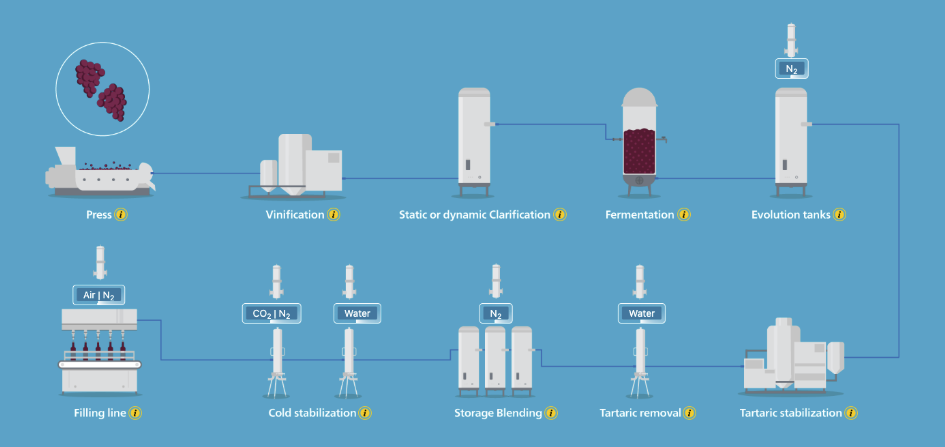
Winemaking is an art, but controlling oxygen, removing contaminants, and ensuring purity requires precision.
Discover how filtration impacts wine quality, stability, and production efficiency—all in one place.
Get expert insights, real winery applications, and best practices in wine filtration.
Find everything you need here: https://bit.ly/3O04epS