
Wineries aren't just about producing great wine—they’re about creating memorable experiences. That means your tasting room, event space, vineyard grounds, and production facilities need to be not only spotless, but also free of pest-related health and safety risks.
Clark Pest Control works closely with wineries to implement non-invasive, audit-ready pest management plans that help you stay compliant with food safety standards and prepared for third-party inspections. From vineyard events to private dinners and seasonal festivals, we help you maintain clean, welcoming, and pest-free environments all year long.
Our Winery-Focused Pest Control Approach Includes:
Targeted pest management for common winery threats, including rodents, ants, flies, and occasional invaders
Preventive maintenance to stop pests before they become a problem—like removing entry points and improving sanitation practices
Audit prep and reporting tailored to the wine industry, including proper documentation and compliance support for organic, kosher, and GMP-certified facilities
Grounds care and exclusion tactics to deter outdoor pests from migrating inside
The Clark Pest Control Advantage:
S.M.A.R.T.™ Sustainable Methods And Responsible Treatments: A low-impact, food-safe approach ideal for wineries
Online customer portal to access reports, service history, and trend analysis anytime
Ongoing support and employee training to empower your team to help prevent pest problems between service visits
Flexible payment options that work for estates with shared spaces or multiple buildings
Wineries face unique challenges at the intersection of agriculture, hospitality, and food service. Clark brings decades of experience and proven success in the hospitality industry to help you manage those risks with confidence.
🎯 Want to keep your wine experience pest-free from vineyard to glass? Let Clark Pest Control show you how.
LEED/Organic Pest Control
PREPARING FOR THE BEST THROUGH LEED
While organic pest management only represents a small portion of LEED credits, its successful deployment is vital to completing LEED's rigorous requirements. Our approach to Integrated Pest Management (IPM) follows these ideals and can qualify for credits in your facility’s LEED scoring. Learn More about LEED here.
ABSOLUTELY ORGANIC
We also understand how important it is to adhere to the strict standards of organic regulations, so Clark's organic pest control program is specially designed to meet your specific needs and maintain your facility’s hard-won certification. We fully support the philosophy and standards of the U.S. National Organic Program (NOP).
CLARK'S ORGANIC PEST CONTROL PROCESS:
- We adhere to a thorough process of inspecting, identifying, monitoring, and evaluating before selecting appropriate control methods. This involves routine inspection and accurate identification of pests, two vital steps in selecting the safest, most effective control methods.
- At LEED facilities, we only apply pesticides after conducive conditions are addressed and other non-chemical certified interventions are employed.
- We use exclusion, maintenance, and sanitation solutions to minimize the need for chemical intervention. We often employ pest traps, vacuums, or low-impact methods like botanical oils.
- Our employees receive regular training in organic food safety to ensure they stay abreast of industry regulations and emerging organic pest control technologies; we are certified by NPMA Food Safety, QualityPro, and GreenPro, and are trained to adhere to GMPs.
- We offer third-party audit preparation, consultation, and representation.
- Our Integrated Pest Management (IPM) program documents the details of all operations, inspection findings, and recommendations.
- We provide you with an on-site binder or online access via our secure web portal to documentation that covers all service details clearly and concisely.
- To ensure that your facility meets all NOP guidelines, both the local branch supervisors and corporate quality assurance personnel perform periodic quality assurance inspections.
- We guarantee our work 100 percent.
For more information on LEED or our certified organic certified pest control, call 1-800-882-0374 or click here.

Whether you’re hosting guests in your tasting room, coordinating vineyard events, or welcoming visitors to your wine country retreat, first impressions matter—and pests can ruin them instantly. Wineries often double as hospitality venues, and that unique combination brings both beauty and challenges. High foot traffic, food and beverage service, and open-air spaces create ideal conditions for pests to thrive.
At Clark Pest Control, we understand the specific pest pressures wineries face. Since 1950, we've partnered with hospitality-driven businesses to ensure their guests stay delighted—and pests stay out.
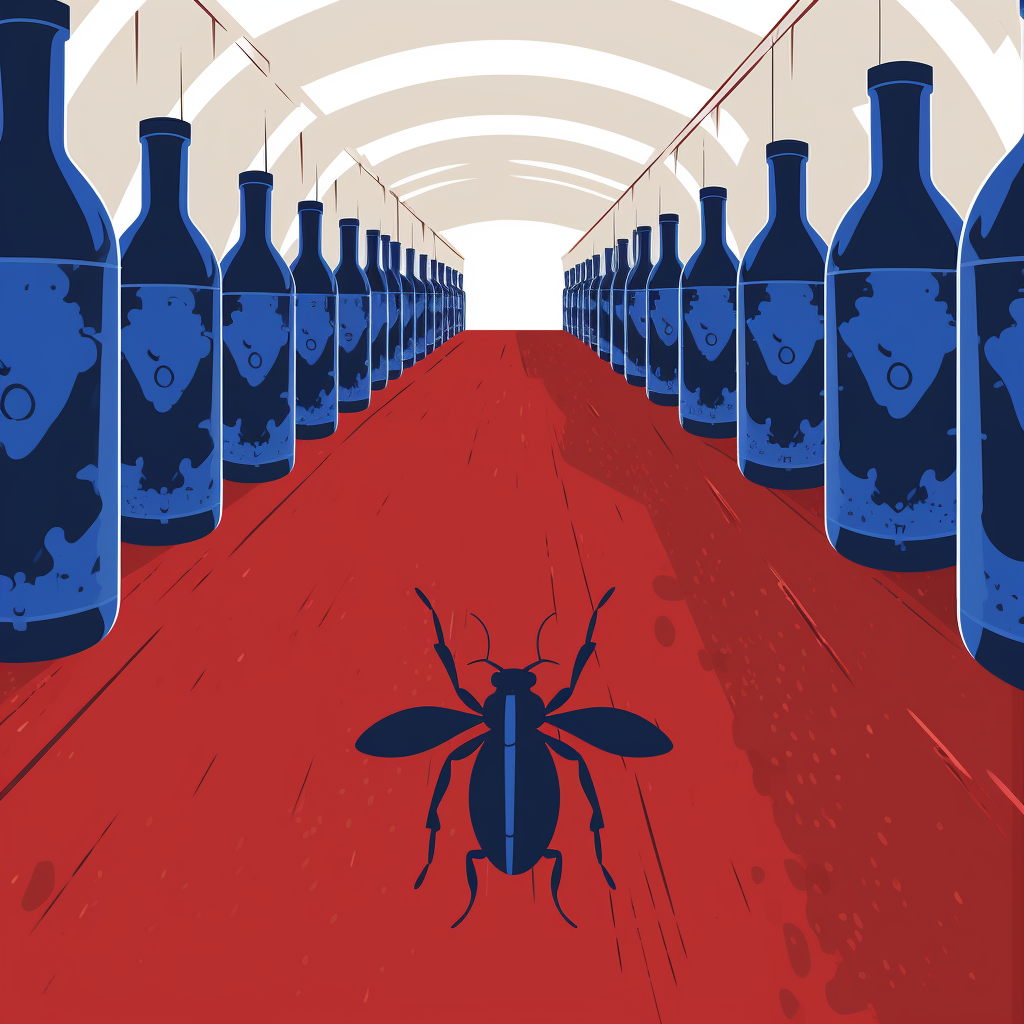 Common Pest Challenges in Winery Hospitality Spaces:
Flies and gnats in tasting rooms and outdoor patios
Rodents nesting in storage areas or near food service zones
Ants and crawling insects drawn to wine production waste or sugary spills
Wasps around event areas and patios during warmer months
Mosquitos around the winery property during the warmer, more higher traffic months
How Clark Helps Wineries Stay Pest-Free:
Our integrated pest management (IPM) approach focuses on prevention, minimal disruption, and environmentally responsible treatments. Here's how we protect your guest-facing areas:
Thorough inspections by licensed technicians trained in hospitality protocols
Physical pest exclusion: sealing cracks, gaps in wall voids, around pipes, and entry points
Customized pest monitoring and trapping plans based on your facility's layout and risk zones
Pre-audit support and documentation to help you meet organic, kosher, or food safety compliance standards
GreenPro and QualityPro certified technicians who follow Good Manufacturing Practices (GMPs)
With Clark’s Pest-Away® year-round program, you’ll not only prevent infestations—you’ll preserve your brand’s reputation and ensure that every guest has a five-star experience, free of unwanted intrusions.
📞 Ready to protect your tasting room, event space, or wine country retreat? Contact Clark Pest Control today for a customized consultation and get back to focusing on what you do best—hospitality.

Non-Chemical Pest Solutions
Kinder and Gentler Effective Pest Control
Clark Pest Control understands that pesticides are not always the answer. There are a number of non-chemical solutions that are just as effective when it comes to preventing and eliminating unwanted pests in commercial facilities. Our pest management experts have developed and currently deploy a wide variety of natural alternatives.
Clark's Chemical-free Pest Control Options:
- Pest Exclusion is the cornerstone of an effective integrated pest management (IPM) program since it works by denying pests access to your commercial facility. Our experts perform a top-to-bottom inspection of your facility to identify potential entry points, and then recommend corrective actions to secure them.
- Cultural practices include maintaining good sanitation habits, regularly rotating products and providing up-to-date employee training; these go a long way towards avoiding pests.
- Vacuum pest control physically removes pests from your facility and is often the most efficient way to reduce the pest population.
- Heat extermination uses both volumetric heat and the direct application of hot vapors to eliminate pests. Volumetric heat penetrates and treats targeted areas of your facility by raising controlled temperatures to a lethal level. We also apply direct hot vapor applications to enable dry steam to raise the temperature of an immediate area (spot treatment) to a lethal level.
- Removal and repair of door and window frames, HVAC vents, openings in the foundation, or furniture – which is either allowing access to pests or has been infested – to immediately stop the infestation and prevent future incidents.
- Pheromone-Baited Traps are highly targeted and extremely effective pest deterrents for most stored-product pest species. They can detect specific pests, and work well for stored products in restaurants, grocery stores, pet stores and large and small food-processing plants and warehouses. These insect-emitted, naturally occurring chemicals are used to attract other like insects or keep them away.
Clark's Process:
- At each service appointment, we thoroughly inspect your property and review our findings with you to determine the best course of action.
- We only apply pesticides after conducive conditions are addressed and other non-chemical certified interventions are employed.
- We offer third-party audit preparation, consultation and representation.
- Our IPM program documents the details of all operations, inspection findings and recommendations.
- We provide you with an on-site binder or online access via our secure web portal to documentation that covers all service details clearly and concisely.
- We guarantee our work 100 percent.
To find out more about chemical-free pest control, call Clark today at 1-800-882-0374, or click here.
 Clark Pest Control will be offering information related to pest management in and around your winery. We offer structural pest control solutions as well as burrowing rodent control and weed abatement solutions to your property. We’re here to discuss all of your pest-related questions and hope to provide you with the solutions to keep your business pest free. Stop by our booth and schedule a free site evaluation with us. We hope to see you there!
Clark Pest Control
Unified Symposium Booth: 804
Clark Pest Control is celebrating 75 years in business in 2025! We offer pest control solutions to fit your facility needs. Our services include flying insect management, stinging insect services, bird/bat/rodent exclusion and clean-up, burrowing rodent control in and around your property, fire breaks and weed control, just to name a few. Stop by our booth to see what we may be able to offer you!
Multiple cockroach species can be found commercial properties, particularly restaurants, food service outlets in malls, airports and entertainment venues, and food processing plants. The most common species found in commercial properties is the German or American cockroach, but the Turkestan cockroach is making its presence known more around commercial properties.
While both German and Turkestan cockroaches are pests capable of causing problems for commercial property owners and managers, their differences in size, appearance, habitat preferences and behavior, make them distinct species with unique characteristics.
SIZE AND APPEARANCE
- German cockroaches are smaller in size, typically ranging from 1/2 to 5/8 inch in length. They are light brown to tan in color, with two dark stripes running lengthwise behind their head.
- Turkestan cockroaches are larger, with adults reaching up to 1 inch in length. They are darker in color compared to German cockroaches, ranging from brown to black, and have a shiny appearance.
BEHAVIOR AND REPRODUCTION
- Both species are known for their rapid reproduction rates, but German cockroaches are notorious for their ability to quickly infest indoor spaces due to their preference for human habitats and their ability to reproduce rapidly in warm, humid conditions.
- Turkestan cockroaches typically have a slower reproductive rate compared to German cockroaches and are less likely to become as widespread indoors, but they can still be a nuisance when they invade outdoor spaces around commercial properties.
HABITAT PREFERENCES
- German cockroaches prefer warm, humid environments and are commonly found indoors, particularly in commercial kitchens, furnace rooms, motor compartments of food processing machinery, bathrooms, and other areas with access to food and water.
- Turkestan cockroaches are more adaptable to various environments. While they can also be found indoors in similar areas as German cockroaches, they are more commonly found outdoors in areas with moderate temperatures, such as gardens, mulch beds, and around buildings.
PREVENTING COCKROACHES IN COMMERCIAL PROPERTIES
Why is effective cockroach prevention so critical for commercial properties, especially those involved with food service and processing, healthcare and education facilities? The bottom line is cockroaches are purveyors of filth.
Cockroaches can contaminate food with bacteria, viruses, and other pathogens that they pick up while crawling through unsanitary areas such as sewers and garbage dumps. They can carry and spread diseases, such as salmonella and E. coli, which can cause serious health problems in humans if ingested. In addition, their droppings and shed skin can trigger allergic reactions in people, especially those with asthma.
Preventing cockroaches in commercial properties involves a multi-tiered approach that includes sanitation, exclusion, and regular inspections.
Maintain Cleanliness
- Keep the premises clean, especially in areas where food is prepared or stored.
- Remove food debris and spills promptly.
- Store food in tightly sealed containers.
- Empty garbage bins regularly and keep them clean.
Eliminate Hiding Places
- Declutter storage areas and remove unused items.
- Seal cracks and crevices in walls, floors, and ceilings.
- Repair leaky pipes and faucets to eliminate water sources.
Exclusion
- Install door sweeps and weather stripping to seal gaps around doors and windows.
- Use screens on windows and vents to prevent entry.
- Seal openings around utility pipes and ducts.
Regular Inspections
- Conduct regular inspections for signs of cockroach activity, such as droppings, egg cases, or live insects.
- Address any issues promptly to prevent infestations from becoming established.
Employee Training
- Educate employees on the importance of cleanliness and proper food storage.
- Encourage them to report any signs of pest activity promptly.
Monitor and Maintain
- Keep track of pest activity and adjust your prevention strategies as needed.
- Maintain a proactive approach to prevent future infestations.
Consult a Pest Control Professional
- Consider hiring a pest control professional to conduct a thorough inspection and design a IPM-based pest control program for the facility.
CLARK PEST CONTROL – COMMERCIAL PEST SOLUTION EXPERTS
If you are looking for a pest management partner that understands your business and can help your company create an effective year-around pest management program, give Clark Pest Control a call at (800) 936-3339.
Risk assessments and trend analysis in pest control provide valuable insights into potential threats and patterns related to pest infestations. They tell the story of what is going on inside your commercial property when it comes to pest activity.
Risk assessments help identify the likelihood of pest problems occurring in a particular area of a commercial property. Factors such as climate, surrounding area, and the presence of conducive conditions (i.e., sanitation protocols, structural conditions, employee actions, etc.) for pests are evaluated to determine the level of risk. This information allows for proactive measures to be taken to prevent or mitigate pest issues before they escalate.
Trend analysis, on the other hand, involves examining historical data to identify patterns and recurring pest problems. This helps in understanding the seasonal variations, population cycles, and other trends related to pest activity. By recognizing these patterns, pest control professionals can develop more effective and targeted strategies for pest management.
Together, risk assessments and trend analysis contribute to a comprehensive pest control strategy, allowing for a more proactive and efficient approach to pest prevention and management.
RISK ASSESSMENTS
Having a risk assessment performed at your facility is the first step in developing an IPM program, and when done regularly and properly, it will continuously improve existing pest management programs.
In food processing facilities, FSMA requirements place significant emphasis on having a science-based risk assessment be performed. Third-party audit standards can require that risk assessments be performed annually and anytime there is a change made in a facility’s pest management program.
What is involved in a risk assessment? Defined as “the scientific evaluation of known or potential adverse health effects resulting from human exposure to foodborne hazards" a risk assessment is a task meant to evaluate and assess a facility’s IPM program.
A true risk assessment is NOT just an inventory of control and monitoring devices within a facility or a means to report how many rodents or insects were caught or killed in that time.
Risk assessments will help answer the following questions:
- Why was the pest present?
- Why did the pest issue occur?
- What was the root cause of the problem?
The information provided in a risk assessment can be used to help adjust and improve existing pest programs.
Risk assessments should be conducted by your pest management service provider with input from plant management since both share the responsibility to create and maintain a pest-free environment and safeguard the food products that are produced or stored at the facility.
Elements of a risk assessment can include, but may not be limited to, the following:
- Audit preparation
- Monitoring
- Control measures
- Corrective actions
- Documentation
TREND ANALYSIS
One of the most beneficial tools used to help evaluate the strengths and weaknesses of a pest management program is trend analysis.
Trend analysis is the collection of information to identify pest behavior and patterns to predict future pest activity and take action to prevent it. It will verify the success of ongoing pest programs, while the IPM risk assessments will validate it. However, without accurate data, trend analysis is useless.
Questions that need to be asked when performing a trend analysis include:
- Is the data being collected accurately and being interpreted correctly?
- Is the pest control technician identifying the root-cause for the pest infestation?
- Are technicians noting the conductive conditions and developing a preventive corrective action/plan or are they just noting ‘caught mouse’ and moving on to the next trap?
Pest management service providers and their clients need to make sure pest management programs – no matter the size and scope – include regular risk assessments and trend analysis.
CLARK PEST CONTROL – COMMERCIAL PEST SOLUTION EXPERTS
If you are looking for a pest management partner that understands your business and can help your company create an effective year-around pest management program, give Clark Pest Control a call at (800) 936-3339.
The need for innovative and dependable pest management services in commercial properties is not a luxury. It is essential, especially for facilities that are involved with food processing, storage and services, healthcare, and education.
It isn’t only the clients and their customers who demand pest-free environments in which to eat, work, shop, and stay. Local, state, and federal inspectors – and independent third-party auditors – also want to ensure that food is safe to eat. Everyone wants to see a pest-free facility. Whether that facility is a massive food processing plant, a chain or independent restaurant, a grocery store, a five-star resort, an urgent care clinic or nursing home, or an office building, it can be vulnerable to invasive pests.
Commercial property owners and managers should identify pest management companies that are experienced at working in commercial facilities. These companies should be willing to adapt to your schedule and emergency situations when needed. The company should be able to demonstrate that it can tailor its services to the specific needs and challenges of your commercial property.
CRITERIA FOR SELECTION
When selecting a pest management provider for the first time or you’re changing providers, it’s important to have a selection criterion in place. What does the company bring to the table that will allow it to design and deliver an effective program and provide exceptional service for your brand?
Does the company have an investigative mindset? Will the company’s technicians and inspectors look deeper for the root cause of a pest infestation and resolve the issue, instead of merely installing more traps or applying more product? How well does it know your business or industry and the specific pest management and food safety requirements that it requires?
Are the company’s service protocols based on IPM principles? Ask for a sample pest management program for a similar facility and check to see if it’s truly IPM-based. What does it include? Is it innovative? Is the goal to reduce the environmental footprint of any service?
Does the company have audit experience? Successful passage of third-party audits is non-negotiable for food processors. What is the company’s experience working with various certification bodies? Do its clients routinely pass audits? Does the company have experience working in organic-certified facilities or clean-room environments?
Does the company have a documentation management system? If it isn’t documented, it didn’t happen. Accurate recordkeeping is a critical component in the FSMA-era of food safety, and pest management companies play a key role in that process. What system does the company have to manage documents? Is its system on a digital platform? How is it shared and is it easily accessible?
Does the company embrace technology and data analysis? Has it adopted such technologies as remote monitoring, video, and others? How does it collect, share, and analyze data for your facility’s benefit? What types of reporting and analysis does it provide?
Is communication a priority? Does the company engage you and your staff during the service process and ask questions? Will it offer training for your staff, and does it list its expectations of your staff?
What is the company’s reputation? Look for established companies with a good reputation in the industry. Read reviews and testimonials from other commercial property owners or managers. Ask for references.
Is the company licensed and certified, and does it carry insurance? Ensure that the pest management company you choose is licensed and certified by relevant authorities. Check if its technicians are trained and certified for commercial pest management. Verify the company carries liability insurance to cover any potential damage during its services.
What service guarantees does the company offer? Understand the terms of its service contracts, including frequency of visits. Check if it offers guarantees and what its policies are for callbacks and follow-up visits if needed.
Transparent pricing: Obtain a detailed quote that includes all costs and potential additional charges for the company’s services. Avoid companies that provide vague or unclear pricing structures.
If you’re looking for a pest management partner that understands your business and can help your company create an effective year-round pest management program, call Clark Pest Control at (800) 936-3339.
https://www.clarkpest.com/commercial-services/industries-served/food-beverage-processing
 Clark Pest Control will have knowledgeable experts on hand to discuss all of your pest-related questions. Whether you operate a winery, vineyard, or tasting room, we’re here to help. We have solutions for all properties, including those with an Organic Certifications. Are gophers, ground squirrels, rats, or mice eating into your profits? Are ants, black widows, yellow jackets, and fruit flies keeping guests out of your tasting rooms? Then just say, “Clark! We Need You!”
Clark Pest Control
WIN Expo Booth: 527
Clark Pest Control has solutions to fit your business and its pest control needs. We offer an in-depth inspection of the property in order to identify the pests on site and determine the appropriate course of action to address them. Our service offerings include:
- Bird, Bat and Rodent Exclusion
- Weed Control
- WDO (wood-destroying organism) inspections, treatment and repairs
- Burrowing Rodent Control
- Swat Away Mosquito Service
Stored product pests are one of the most economically important pests for the food processing and storage facilities – including grain silos, bakeries, breweries, and retail food stores – which store or use large amounts of unprocessed and cereal-based grain products.
Confused flour beetles, Indianmeal moths, sawtoothed grain beetles, weevils, and other stored product pests can infest and spoil grain, flour, rice, and finished goods, rendering these products inedible.
This causes downtime in production, damages the brand name, and creates numerous headaches –in time, operational disruptions, and financial resources – for the facility’s management. Also, if a third-party auditor notices the presence or conditions conducive for stored product pests, it can result in a facility receiving a reduced score or even a failure of their audit.
THE CASE FOR STORED PRODUCT PEST MANAGEMENT
As mentioned above, the economic impact that stored product pests have, if left untreated or undetected in a food processing or storage facility, is considerable. That’s why it’s vital for these facilities to partner with a highly trained pest management professional to design and implement a comprehensive prevention or treatment program.
Protect product quality: Stored product pests, such as beetles, moths, weevils, and mites, can infest and contaminate food products, leading to quality issues. They can cause physical damage, consume or spoil the food, and leave behind eggs, larvae, or excrement. Effective pest management helps prevent such infestations and ensures the quality and integrity of the stored products.
Prevent product loss: Infestations by stored product pests can result in significant product loss. Pests can consume or damage massive quantities of food, leading to financial losses for the facility. By implementing proper pest management strategies, food processing facilities can minimize the risk of product loss and protect their investments.
Comply with regulations: Food processing facilities are subject to strict regulations and standards regarding food safety and hygiene. Many regulatory bodies, such as the Food and Drug Administration (FDA) in the United States, require facilities to implement pest control measures as part of their food safety programs. Compliance with these regulations is essential to avoid failed third-party audits, penalties, legal issues, and reputational damage.
Reduce health risks: Some stored product pests, such as certain types of beetles and moths, can produce allergens and toxins that pose health risks to consumers. If contaminated products reach the market, they can cause allergic reactions or other health issues. By effectively managing stored product pests, food processing facilities can minimize the risk of such health hazards and ensure the safety of their products.
Preserve brand reputation: Any incident of pest infestation or contaminated products can harm the reputation of a food processing facility. Consumers have high expectations regarding the quality and safety of the food they purchase. News of pests or contaminants found in products can quickly spread through social media and negatively affect the facility's reputation. By implementing rigorous stored product pest management practices, facilities can demonstrate their commitment to quality and food safety, enhancing their reputation in the industry.
CONTROL OPTIONS
A common method for controlling stored product pests that threaten food processing and storage facilities is mating disruption. This is the process of introducing artificial sex attractant pheromones into a facility with the intention of distracting male stored product pests – Indianmeal and flour moths, mainly – as they try to make a love connection with their female counterparts during mating season.
These artificial pheromones create false trails that make it harder for male moths to find their sex partners. When that happens, mating does not occur, eggs are not laid, and the populations of these destructive pests drops.
Female Indianmeal moths communicate with males through pheromone plumes, which direct male moths to their location. By using the mating disruption pheromone, the males chase a false trail, exhaust their energy reserves, and die before successfully finding and mating with a female. These disruptions have a significant impact on the moths’ ability to mate and reproduce.
Even though pheromone products are naturally occurring, this application method makes them a registered pesticide. However, they are certified for use in organic food processing facilities, and there is no danger of food products absorbing pheromones unless they come into direct contact with the dispenser.
Pheromone mating disruption dispensers are typically installed and replaced twice a year to ensure coverage through the entire moth mating season. The dispensers are placed within facilities and can treat an entire warehouse, but they have also proven successful in treating specific sections or even aisles in a facility.
A thorough pest monitoring program is also a key part of the process. By deploying standard pheromone traps and light traps, technicians can track pest population levels, and when fewer male moths are caught, it’s more likely that the program is working.
If you are looking for a pest management partner that understands your business and can help your company create an effective year-around pest management program, call Clark Pest Control at (800) 936-3339.