
February 10, 2026 (Napa / Sonoma, CA) — On Wednesday, March 4, 2026, from 3:00 – 5:30 p.m., the Winemaking & Viticulture Roundtable of the Napa-Sonoma chapter of Women for WineSense (WWS) will host a timely proprietary technical presentation, “Vintage 2025 ETS Insights and New Tech Updates for Red Blotch and Smoke Taint.“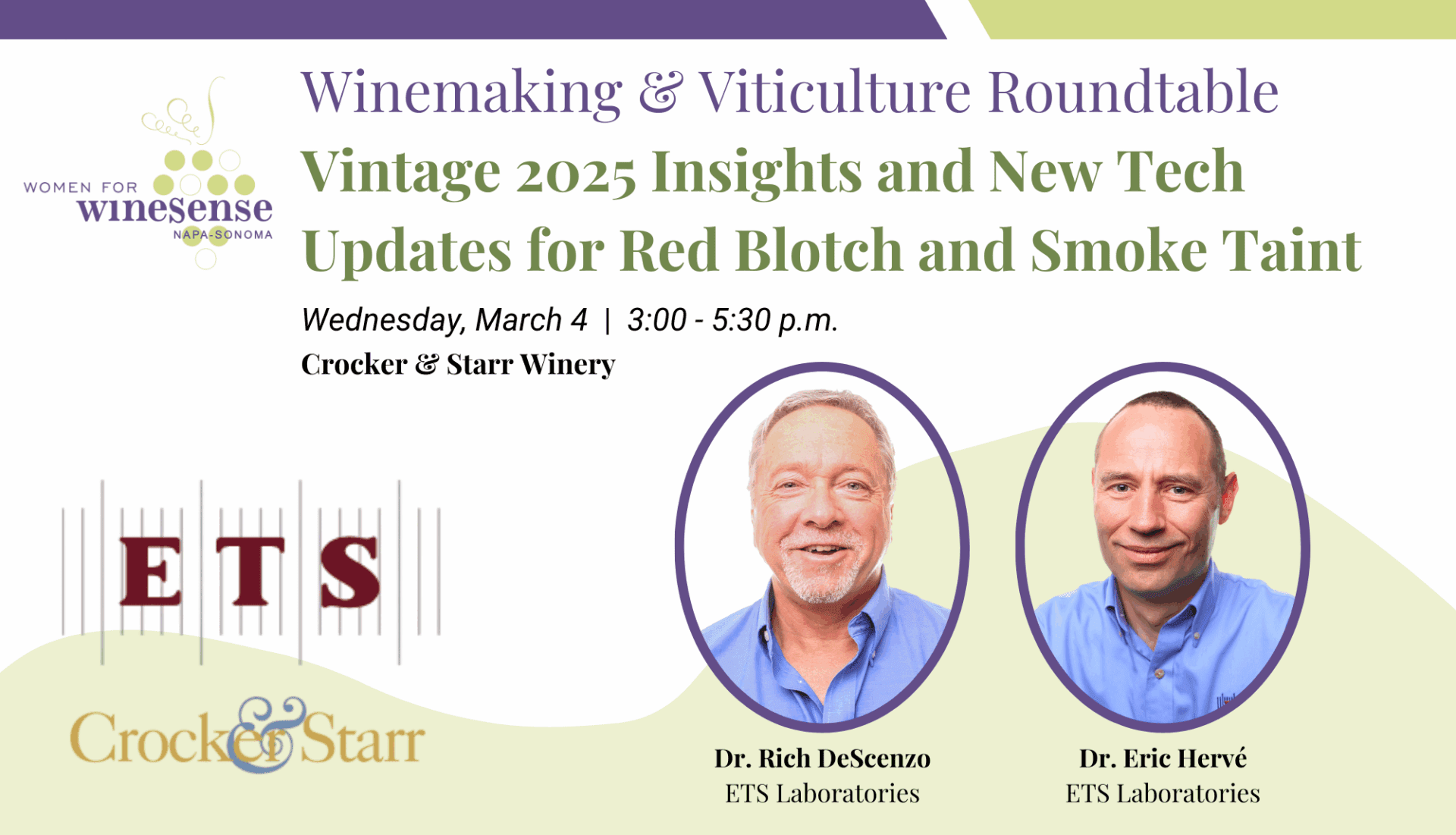
The event opens with a networking wine mingle at Crocker & Starr followed by a behind-the-scenes production tour and an engaging technical viticulture and winemaking research presentation and discussion with guest experts from ETS Labs research scientists Dr. Rich DeScenzo and Dr. Eric Hervé.
This presentation will focus on actionable information to help winemaking and viticulture attendees get a strategic first look at vintage 2025 overall, plus the latest technological updates related to Red Blotch disease and smoke taint. Attendees will hear this first synthesis of proprietary 2025 data and the additional research, ask questions during an interactive Q&A session, and enjoy catching up with fellow winemaking and viticulture peers and friends.
The event will be generously hosted at Crocker & Starr, with Founding Winemaker Pam Starr and Winemaker Julie Robertson.
EVENT DETAILS:
- Date: Wednesday, March 4, 2026
- Time: 3:00 – 5:30 p.m. PST
- Location: Crocker & Starr Winery, 700 Dowdell Lane, St. Helena, CA
- Agenda:
- 3:00 – 3:30 p.m.: Wine mingle
- 3:30 p.m.: Behind-the-scenes production tour
- 4:00 – 5:30 p.m.: Presentation with Q&A
- RSVP here
WHO CAN ATTEND: Professional WWS W&V Roundtable members and their pre-approved qualified guests are welcome to attend, including winemakers, viticulturists, vineyard managers, lab, cellar, vineyard and production professionals. Kindly, no walk-ins.
REGISTRATION:
- Free for WWS W&V Roundtable professional members
- Free for first-time qualified guests
- $20 for returning non-member W&V professional guests
- All attendees are asked to bring a bottle of wine to share as a thank you to our speakers and hosts.
For RSVP assistance, membership status inquiries, or to join or renew, contact Nicole Economou at (831) 332-1727.
To add qualified Roundtable guests or for other questions, contact Roundtable Chair Alicia Sylvester or Chapter President Julie Lumgair.
ABOUT ETS LABS
Since 1978, ETS has partnered with the world’s leading winemakers to deliver innovative, time-proven analytical tools, providing insights into the craft of modern winemaking. ETS has pioneered the use of several new technologies in the wine industry. With a long tradition of innovation, today ETS continues to invest heavily in new technologies and research for the wine industry. It has grown into one of the most advanced wine laboratories in the world.
ABOUT WOMEN FOR WINESENSE
WWS is a national not-for-profit organization 501(c)6. The Napa-Sonoma Chapter, founded in 1990, is the founding chapter of this national organization which provides outstanding educational and networking opportunities to both wine industry professionals and wine enthusiasts by presenting educational, insightful and stimulating events in a welcoming, fun environment. Women and men 21 years old or more are welcome to join any of the 13 chapters.
Multiple professional Roundtables are also available for WWS industry members including owners and GMs, winemaking and viticulture, finance, accounting, human resources and more. To join or learn more, visit Napa-Sonoma Chapter of Women For WineSense.
ABOUT THE WWS WINEMAKING & VITICULTURAL ROUNDTABLE
The Roundtable meets approximately six times a year, taking a harvest break. Roundtable Chair, Alicia Sylvester, noted “Our past meeting topics have focused upon the C-suite professional skills and insights women winemakers and viticultural professionals need but aren’t always easy to get in their daily work environment.”
She further explained that, “Held for 35 years at some of Napa and Sonoma’s finest host wineries, plus online for international speakers, our Roundtable has been a fantastic opportunity for over 100 member women winemakers and viticulturists to connect directly in a friendly professional forum, with experts that they otherwise wouldn’t get to meet for personal advice and questions. Speakers have included top wine publication critics and senior editors, iconic winemakers, leading academics, global sensory consultants, sommeliers, media trainers, professional coaches, recruiters, CFO’s and GM’s.”
ABOUT CROCKER & STARR
Established in 1997, Crocker & Starr is a family-owned and operated estate winery in St. Helena, California. The winery began as a partnership between Charlie Crocker and Pam Starr, bringing together great grapes (Charlie) and great talent (Pam), with a philosophy to capture the greatness of the Crocker Vineyard in powerful and balanced wines without compromise.
As Founding Winemaker, Pam is still involved in all aspects of the business and is always ready to get her hands dirty, especially during harvest. Winemaker, Julie Robertson, applies her creativity and eye for detail honed in her first career in architecture to all aspects of their farming and winemaking. The focus is on sustainable and regenerative agricultural practices, translating grapes in their state-of-the-art facility into world-class wines that are representative of the land in which they’re grown.

ETS’ automated method reports yeast viability and total cell count within hours, using 100 times the volume examined in standard microscopic methods, vastly increasing the accuracy of your results.
How It Works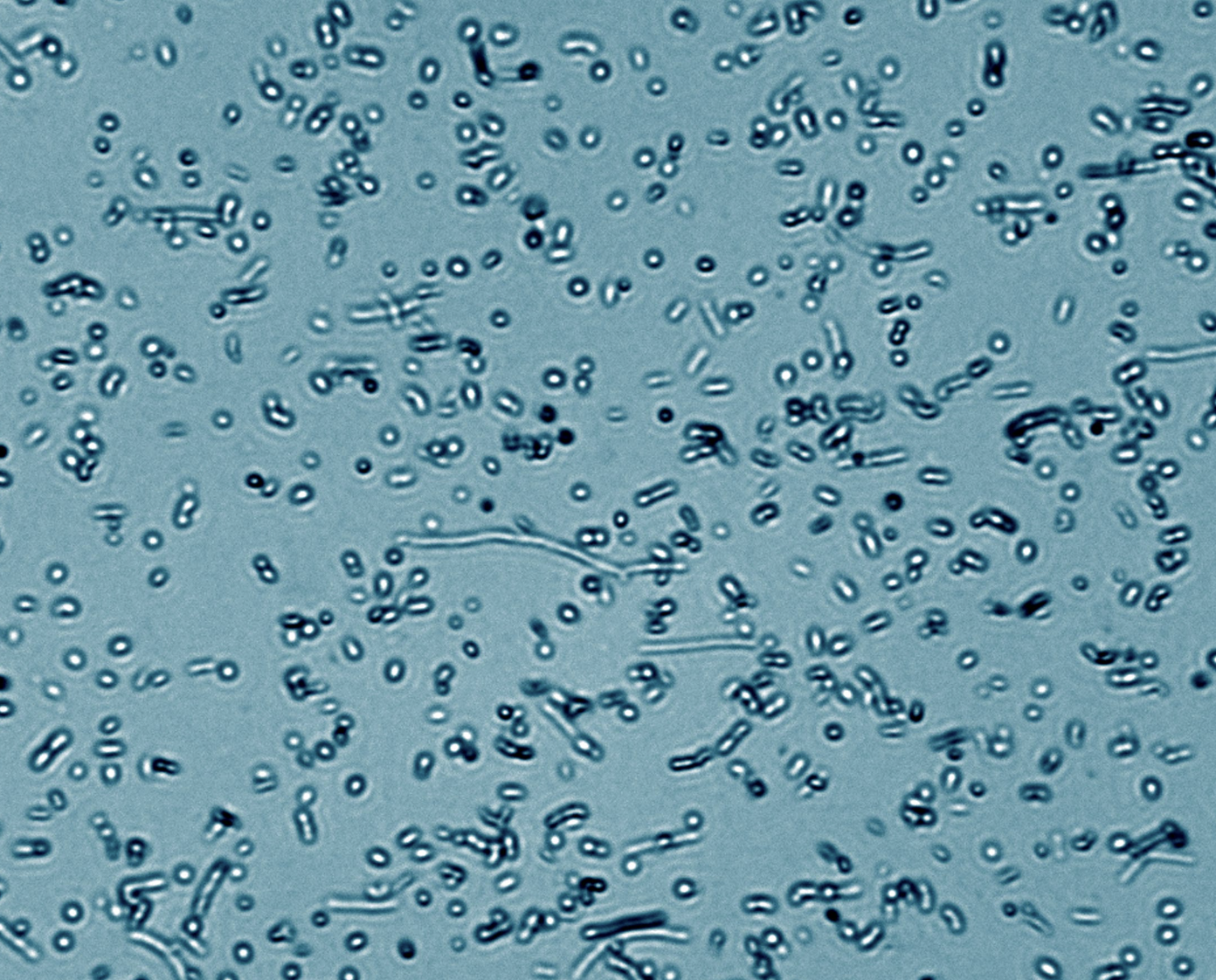
Our automated analysis uses the widely accepted dye exclusion method to determine cellular viability. Live yeast cells have selective cell membranes that exclude dye compounds. When yeast cells die, their cell membranes become permeable, allowing the dye to seep in. The dead, or non-viable, cells become stained and appear darker than the viable cells.
Improved Speed & Consistency
Traditional methods using a microscope suffer from human error in preparation and the subjectivity of visual measurements using the human eye. ETS uses an automated method that couples standard staining methods with advanced optics and flow cytometry to report yeast viability more accurately and precisely. This real-time microscopic flow image analysis also examines 100 times the volume of standard microscopic methods, vastly increasing the accuracy of the results. The automated method gives winemakers rapid information on the status of yeast viability for each sample. In addition, the instrument provides greater consistency between samples by automating preparation.
Reports present the percentage of viable yeast and the total population size per milliliter of sample.
Advance Warning of 'Stuck' and 'Sluggish' Fermentations
Accurate viability staining, in coordination with standard wine chemical analyses, allows winemakers to generate historical profiles of fermentation performance and gives warning of potential problems.
Automated yeast viability testing gives winemakers up-to-the-minute information on the activity of a particular fermentation. Wines at risk of becoming “sluggish” or “stuck” can be monitored at any time, giving winemakers more information to help identify problematic fermentations.
Applications
- Measure viability in a yeast starter culture prior to inoculation
- Measure the effectiveness of yeast nutrient additions
- Track performance of individual fermentations over time
- Monitor yeast viability throughout the fermentation process
Stay ahead of sluggish or stuck fermentations.
With ETS Labs’ automated yeast viability testing, you’ll get fast, highly accurate insights to monitor and optimize fermentation performance. Eliminate guesswork, track trends, and make timely decisions that protect wine quality.
Glutathione, a natural grape antioxidant, can protect the aroma and flavor of white and rosé wines and prevents premature aging.
White Wine Challenges
The increasing demand for white and rosé wines with fresh, fruity or floral characters has led to significant winemaking challenges.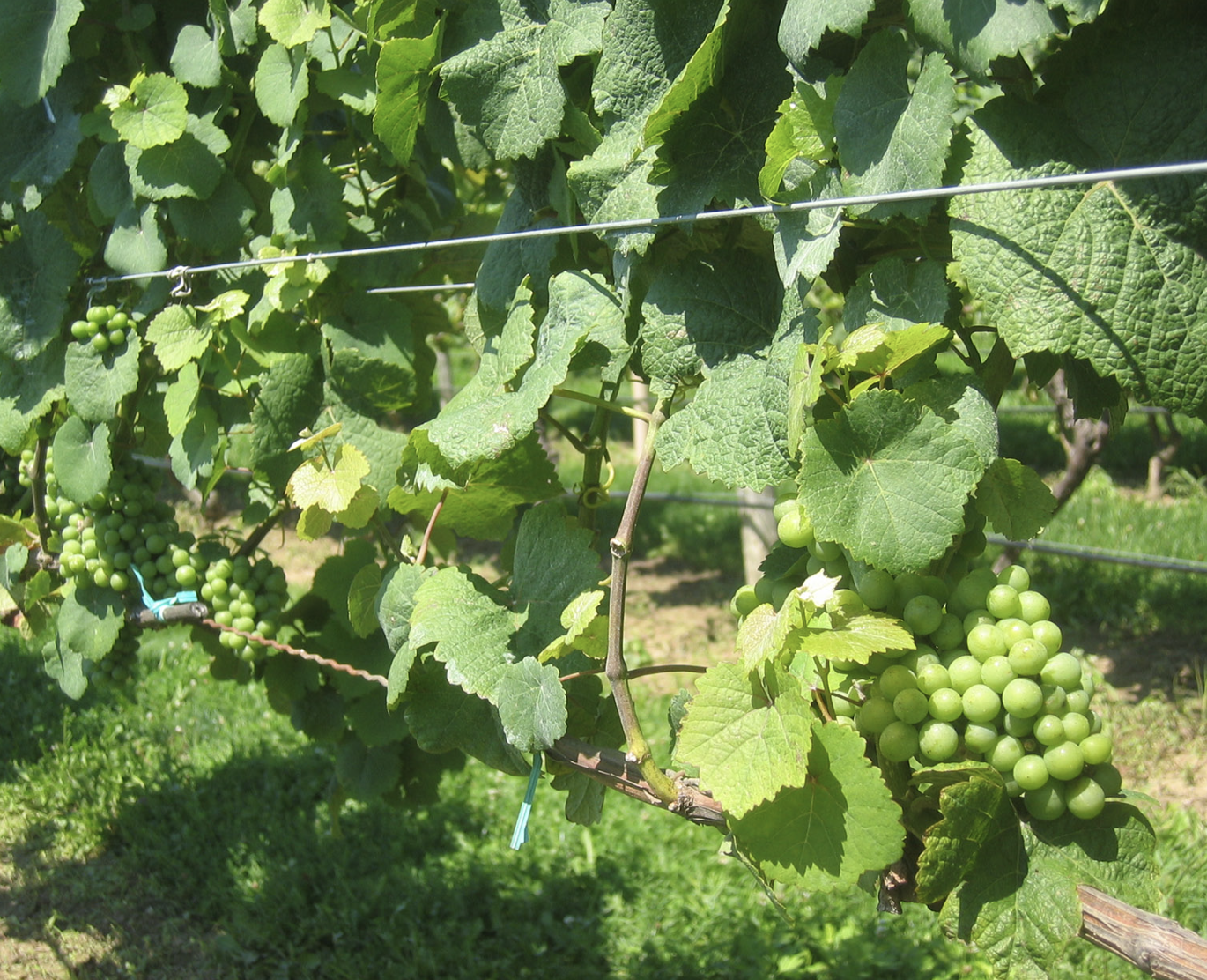
- The aroma compounds in these lighter wines, such as Sauvignon Blanc, are fragile, and oxidation can quickly cause a loss of aroma and flavor.
- Even wines like Riesling and barrel-aged Chardonnay have experienced premature or atypical aging as a result of oxidation.
- Many winemakers are also under pressure to decrease the use of SO2 as an antioxidant while still maintaining protection from oxidation.
The Importance of Glutathione
Glutathione, a natural tri-peptide found in grapes and wine, is a powerful antioxidant that protects white wines and rosés from oxidation and loss of aroma or flavor.
A low level of glutathione in grapes leads to lower levels in the juice, and early losses of aroma compounds.
Glutathione levels fluctuate during production, as the compound can be absorbed by yeast and then released after fermentation.
If final glutathione levels are low in young wines, they will experience faster loss of fresh varietal and fruity aromas, and poor aging potential.
Monitoring Glutathione
Monitoring glutathione levels can be beneficial at all steps of the winemaking process to maximize white wine aroma and flavor, and prevent premature aging.
- The glutathione content in grapes indicates their antioxidant potential, and can be influenced by a number of factors including soil nitrogen, vineyard practices, and grape maturity levels.
- Analyzing changes in glutathione levels during production helps to pinpoint where in the process glutathione is being lost – often from contact with air or exposure to copper residues.
- A testing program can also identify winemaking processes that boost glutathione release after fermentation, and increase levels in wines.
Protect your wine’s aroma, flavor, and aging potential.
ETS Labs offers precise glutathione testing to help winemakers safeguard delicate white and rosé wines from oxidation. Whether you're fine-tuning vineyard practices or tracking changes through fermentation, our tools can guide you every step of the way.
A measurement of phenolic content of grapes describes grape potential. It characterizes grape maturation, block to block variation, and variation between vintages. It is an important part of describing raw material coming into a winery and is often the first indication that a wine lot may have poor color, high or low tannin or unripe seeds.
Grape Water Content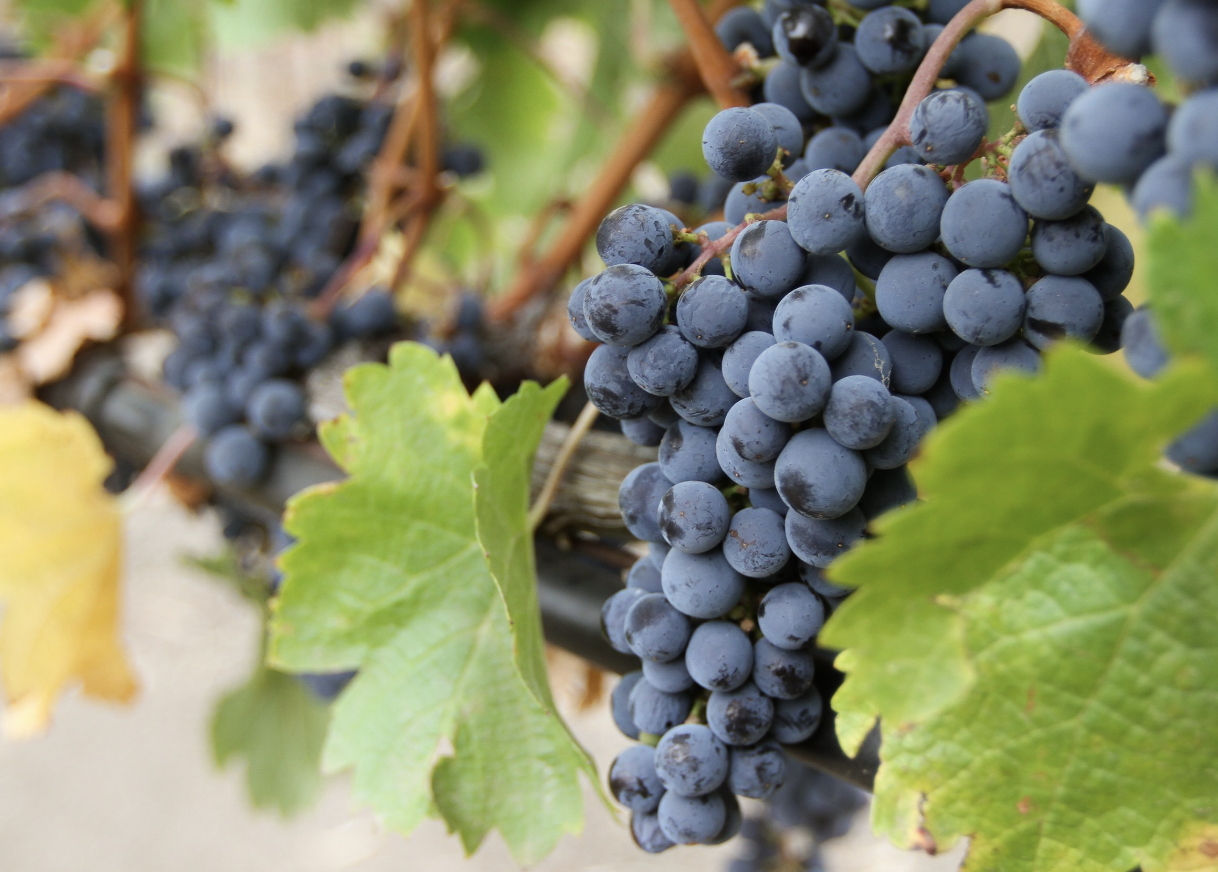
Clients have best results sampling directly from the vineyard rather than from picking bins. Sampling mechanically harvested fruit from gondolas or sampling direct from a fermenter does not give reliable results.
The panel consists of a wine-like extract of the grapes followed by HPLC analysis. The panel is designed for red grapes and the extraction process is intended to mimic red wine fermentation. Reported compounds include total, monomeric and polymeric anthocyanins, tannin, catechin and quercetin glycosides. Two ratios are also reported: the catechin/tannin ratio and polymeric anthocyanins/tannin ratio.
Grape Maturity
The phenolic panel for grapes measures critical parts of the grape ripening process. Anthocyanin synthesis and degradation, seed ripening, tannin concentration due to dehydration, changes in tannin extractability and tannin modification can all be followed by a periodic sampling program.
Raw Materials Description
A measure of Brix, TA and pH is not enough to fully understand grapes arriving at the winery. Phenolic composition along with other grape analytical tools such as grape water content can provide winemakers with the information they need to make initial decisions such as streaming, water adds and saignées as well as a heads up about potential problems in color or seed ripeness.
Vineyard Variation
Grape phenolics are some of the most sensitive indicators for evaluating variation within vineyards or differences between vineyards. Soil variation and management differences may directly affect phenolic composition or may do so indirectly through changes in vine vigor. This information incorporated into a vineyard information system is proving to be a potent tool for identifying vineyard potential as well as vineyard problems and their potential causes.
Experiments
Vineyard trials are an essential part of continual improvement in the vineyard. A measurement of phenolic compounds is an essential part of evaluating the effects of changing production practices in red grapes. Phenolic composition responds to changes in irrigation, ground management, canopy management, yields and spray materials.
Want deeper insight into grape potential and vineyard performance?
ETS Labs' phenolic panel delivers a detailed profile of grape maturity, color potential, and tannin structure—critical data for informed winemaking and vineyard decisions. Reach out to learn how our advanced analytics can help optimize your harvest strategy and improve wine quality from the ground up.
Green Bell Pepper Characteristics (IBMP)
IBMP (3-Isobutyl-2-methoxypyrazine) is the main compound responsible for the “green bell pepper” aroma in wine. In a white wine such as Sauvignon Blanc, the compound adds an often desired “grassy” character. In red wines however, this flavor is largely unpopular. Excessive IBMP levels in red wines, typically Cabernets or Cabernet-based blends, can lead to disappointing ratings and mixed success in the marketplace.
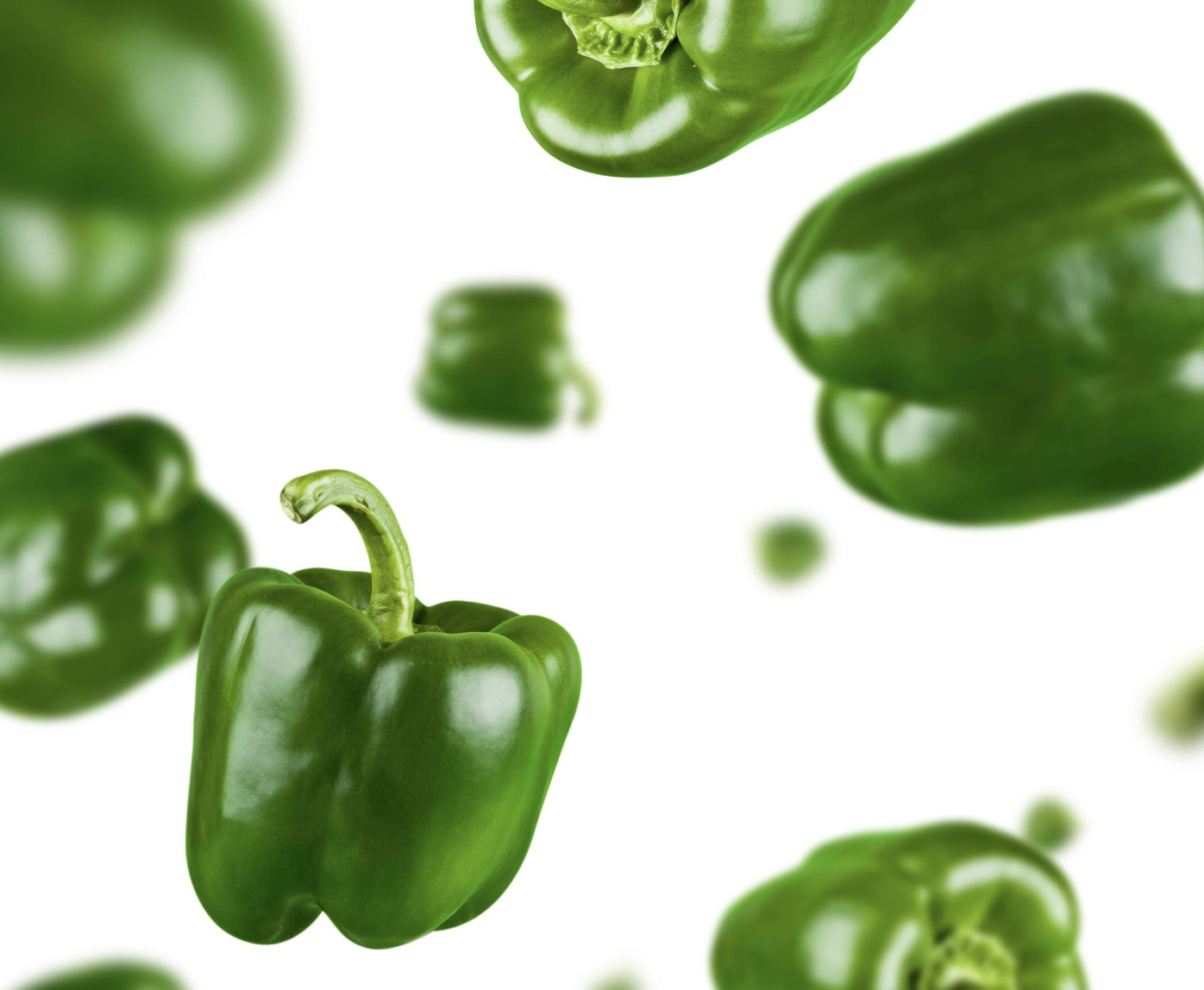 The “green bell pepper” flavor in wine depends primarily on IBMP levels in harvested grapes. Once grapes have been picked, IBMP levels are not easily altered by standard winemaking processes.
Testing and Application
The intensity of “green bell pepper/grassy” characters in wines can be predicted by measuring IBMP in grapes right before harvest. Grape screening of IBMP helps identify “problem” vineyards or blocks.
Since IBMP decreases during grape maturation, monitoring IBMP levels throughout ripening is a unique tool for assessing “aromatic maturity” in Sauvignon Blanc and Cabernet grapes. It allows targeting harvest dates based on desired aroma characteristics.
IBMP levels in grapes can often be effectively manipulated long before harvest. Vineyard management decisions such as trellis types, early leaf removal, fertilization and water availability are well known to impact IBMP levels in grapes. Monitoring IBMP from the early stages of the ripening process can greatly improve fruit quality from underperforming vineyards. Once the kinetics of IBMP accumulation and degradation in specific sites are understood, viticultural practices can be modified accordingly.
The IBMP potential of grapes can be grossly underestimated from juice samples, making whole berries the preferred sample in most cases. Analyzing juice samples may be relevant in white winemaking, however.
ETS Labs offers precise IBMP testing and expert insights to help you make smarter harvest and vineyard management decisions. Contact us today to learn how our advanced analytical tools can support your goals—from grape to glass.
It is widely accepted that oak tannins can have a very significant influence on the tannic structure of wines. Besides their influence on mouthfeel, oak tannins are also antioxidants, and are viewed with renewed interest for their protective effect against wine oxidation. This hasn’t always been the case. Measuring tannins contributed by oak barrels (or barrel alternatives) is a challenging task. Analysis methods have consistently failed to adequately measure these compounds in wines, preventing both researchers and winemakers from fully understanding and assessing their impact.
Why Do Oak Tannins Seem to Disappear in Wine?
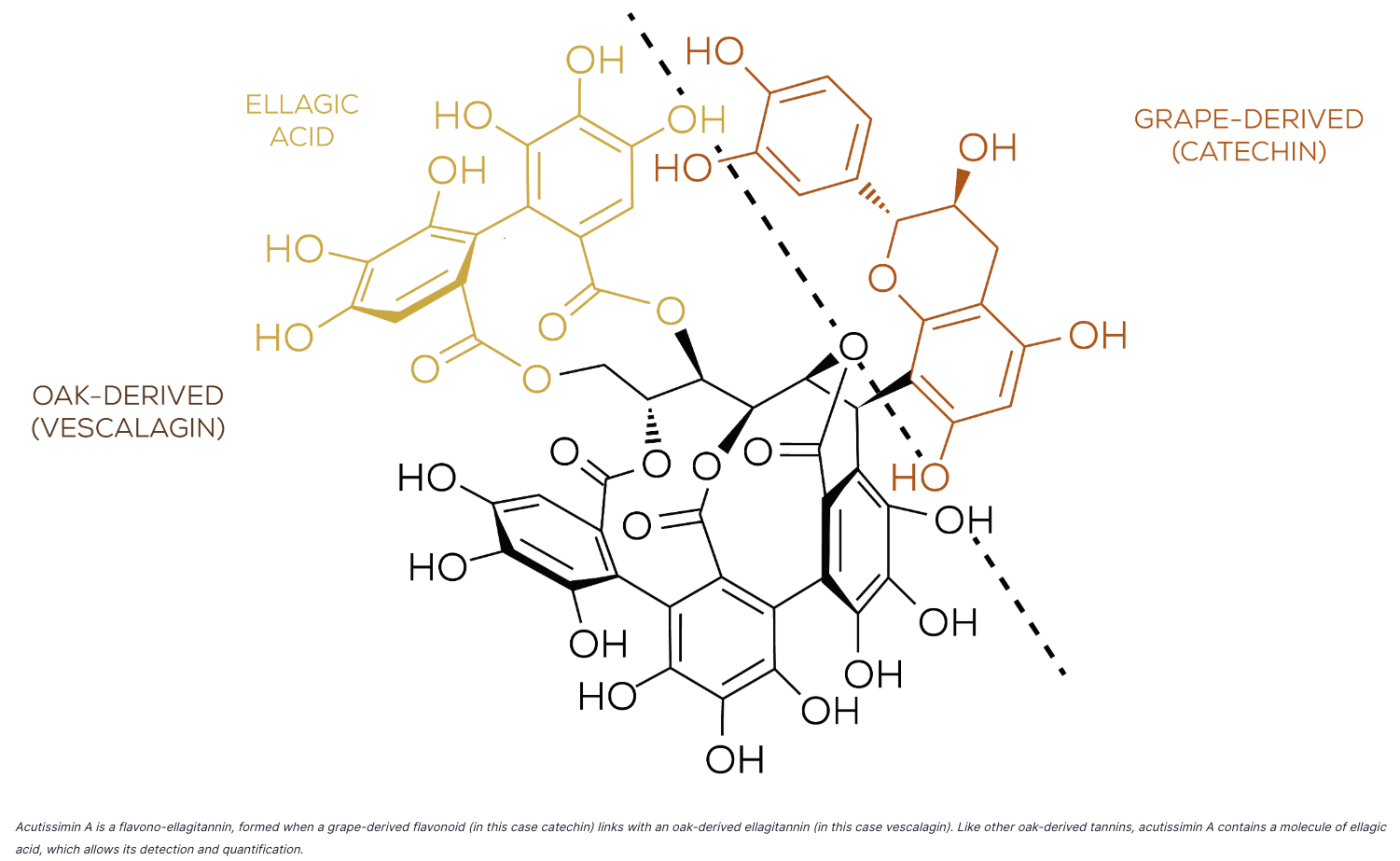
Oak tannins are ellagitannins, relatively complex molecules containing ellagic acid as a main building block. Ellagitannins belong to a class of tannins known as hydrolysable, due to the fact that they easily degrade in acidic aqueous solutions, like wine. Degradation by oxidation is also a cause of their decline in wine. For a long time, it could be argued that levels remaining in wines, especially in red wines, were too low to have a real impact on mouthfeel.
More recently, it has been shown that oak tannins react with grape-derived wine phenolics, creating flavono-ellagitannins: a whole class of “hybrid” compounds containing both a grape derived flavonoid piece (either an anthocyanin or a flavanol), and an oak-derived piece. These compounds can be considered the “hidden” part of oak-derived tannins in wine. They evade detection by usual analysis methods, including HPLC, but play a determining role in enhancing color stability, modulating bitterness and astringency, as well as enhancing antioxidant properties.
They’re Hiding… but Can They Still Be Measured?
In the past few years, analysis methods based on releasing the ellagic acid building blocks of oak-derived tannins, followed by analysis by HPLC with UV detection, have been proposed. The lack of selectivity of UV detection can be an issue, however, especially when dealing with a matrix as complex as wine.
ETS has developed a method based on UHPLC coupled with triple quadrupole mass spectrometry (UHPLC-MS/MS QQQ). Accurate quantification is allowed by the use of an isotopic internal standard. This results in a selective and reproducible method that ETS now offers as a routine assay.
A wide field of possible applications:
The contribution of oak tannins is reported to vary significantly depending on oak species, with European pedunculate oak (Quercus robur) contributing the largest amounts, sessile oak (Q. petrea) moderate amounts, and American white oak (Q. alba) contributing less.
Toast level can also have a strong influence, with heavier toasts decreasing the amounts of available ellagitannins.
Responding to the recent regain of interest in ellagitannins, some coopers now offer barrels ranked according to their possible contribution to wine, from low to high.
Regardless of the forms of oak use, it is now possible for winemakers to assess their ellagitanin contribution to wine independently and objectively.
Take control of your wine’s structure, color stability, and antioxidant properties. Contact ETS Laboratories today to learn how our advanced analysis can help you optimize your oak aging process and elevate your winemaking decisions.
Gain the clarity you need to fine-tune your winemaking—Contact ETS Laboratories.
Wood pallets have been recognized as a source of haloanisole contaminations for the past 20 years, and the frequency of incidents seems to keep growing. They are most often caused by 2,4,6-tribromoanisole (TBA), gassing-off from wood pallets. TBA has an extremely strong odor, similar to its cousin 2,4,6-trichloroanisole (TCA). Like any other haloanisole, TBA may contaminate winemaking and storage facilities, as well as wine itself.
Upon testing done at ETS, it appears that the problem pallets were made of lumber treated with 2,4,6-tribromophenol (TBP). TBP can be transformed into TBA, either by mold activity, or possibly following fumigation with methyl bromide. This second pathway seems the most plausible when pallets appear to be relatively new and free of any evidence of mold growth. In other words, the worst possible combination would be lumber treated with TBP, then fumigated with methyl bromide.
How can I spot problem pallets?
When receiving a new shipment of cellar or bottling room supplies, beware of TCA-like odors emitted by cardboard packaging, stretch-wrap, or pallets. These odors are often described as “musty/moldy” or “wet cardboard”, also chlorine or bromine-like, reminiscent of a swimming pool or a hot tub. Since TBP is registered as a wood preservative in South America (1), it is advisable to be familiar with the IPPC/ISPM 15 markings on pallets. These markings indicating their country of origin, and the type of treatment used. The mention “MB” (methyl bromide) indicates an increased risk. Heat-treated (HT) pallets indicating a North-American origin are in no way risk-free, however, as pallets may be manufactured from lumber pre-treated with TBP.
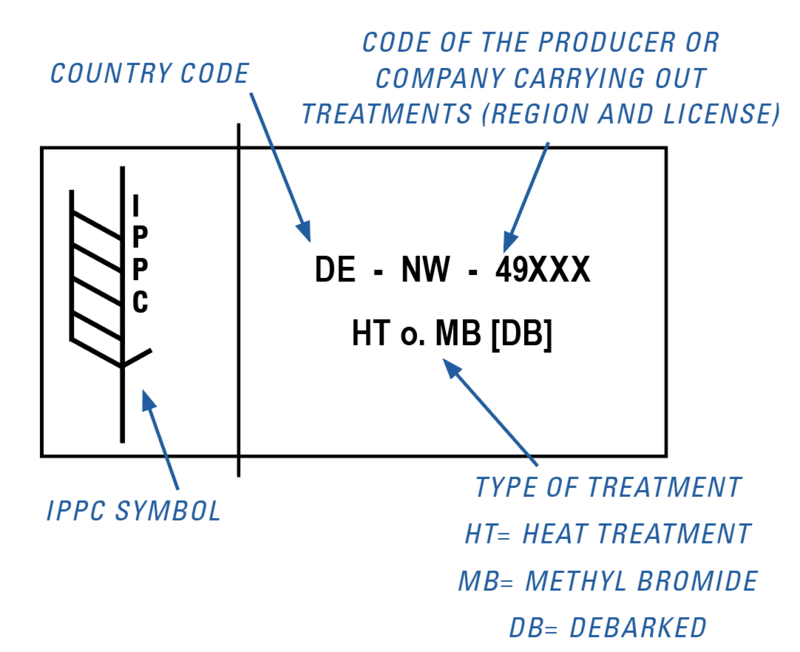
Country codes and type of treatment indicated on IPPC/ISPM 15 pallet markings sometimes point to suspect pallets, but not always.
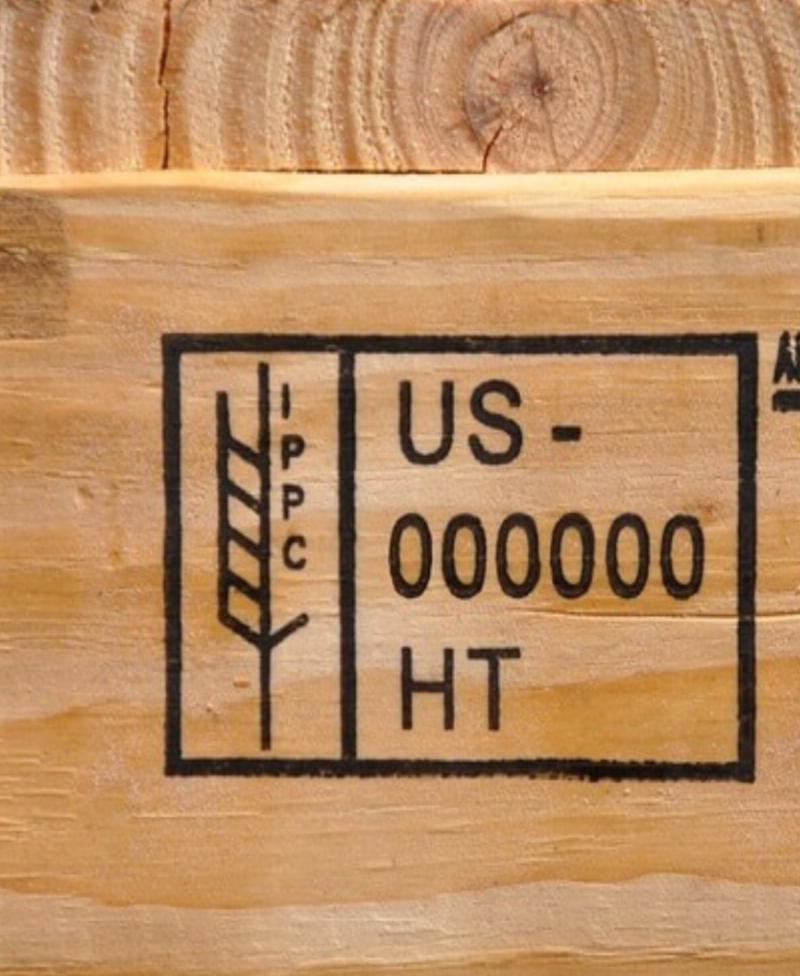
IPPC/ISPM 15 pallet markings indicating a North American origin and heat treatment do not guarantee that a pallet is haloanisole-free.
Why is Harvest a Critical Time?
Haloanisoles are extremely soluble in ethanol. When airborne haloanisoles get in contact with a wine, they readily dissolve into it.
During harvest, a quick and easy way to unwillingly introduce haloanisoles into wine is by performing a pump-over with aeration, or when using venturis. Indirect contaminations may also happen from hoses or winemaking supplies exposed to halolanisole-contaminated air: they may later contaminate wine getting in contact with them.
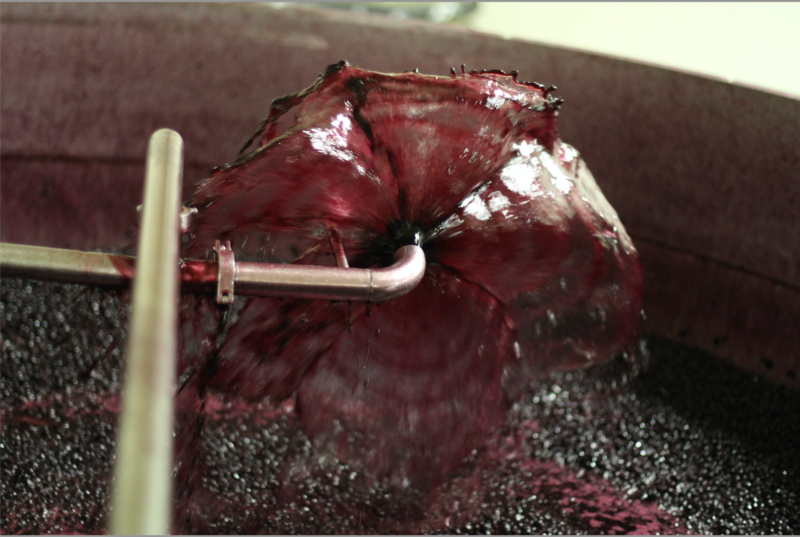
Airborne haloanisoles readily contaminate wine during pump-overs.
What Can I Do About It?
In any case, whenever TCA or TBA-like odors are noticed on supplies or pallets, remove them from the premises without delay. In order to confirm the presence of TBA, TBP, or other halogenated compounds, a variety of materials such as cardboard, plastic wraps and wood can be sampled and brought to ETS for analysis. Always feel free to contact us to discuss a course of action.
It is also important to test for airborne haloanisoles using “atmosphere traps”. Haloanisole levels measured with the help of these traps are directly indicative of the risk of wine contamination. Even in the absence of suspected contamination, checking airborne haloanisoles is advisable, at least once a year, especially at the beginning of the harvest season.
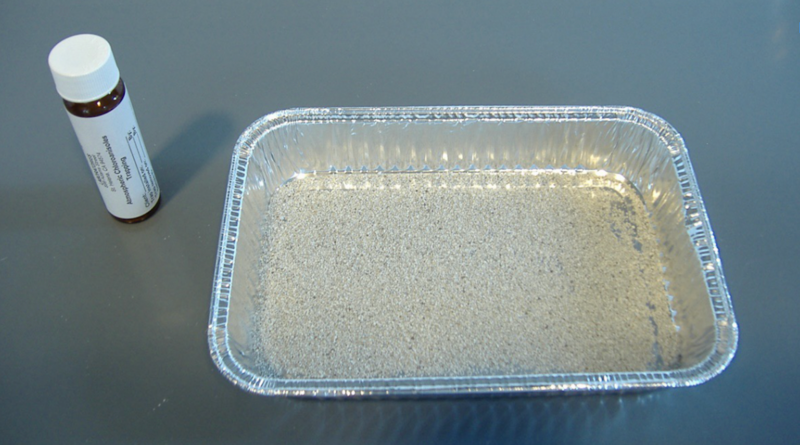
Measuring airborne haloanisoles with “atmosphere traps” is prudent at the beginning of the harvest season.
Resources
- 2,4,6-TRIBROMOPHENOL AND OTHER SIMPLE BROMINATED PHENOLS - P.D. Howe, S. Dobson, an H.M. Malcolm. 2005. Concise International Chemical Assessment Document 66 retrieved on 09/18/2024
ST. HELENA, Calif., (August 2024) – ETS Laboratories is proud to announce a significant milestone in the company’s history: the 25th work anniversary of Dr. Eric Hervé, Research Scientist, Benoit Largeteau, Technical Operations Coordinator, and Ascencion Ayala, Sample Logistic and Client Support Specialist. This remarkable achievement reflects not only their unwavering dedication and exceptional contributions, but also the company’s commitment to nurturing and retaining top talent.
Since joining ETS in 1997, Dr. Eric Hervé has been an integral part of the organization’s growth and success. Initially, Hervé joined the team to conduct a cork research program, but since then he has developed new analyses, conducted applied research programs, and investigated wine flavor and taint issues. Hervé’s innovative approach and relentless pursuit of excellence have played a crucial role in the success and growth of ETS Laboratories.
Benoit Largeteau joined ETS Laboratories in 1999 as a seasonal harvest intern through the CAEP exchange program and decided to stay and make Napa Valley and ETS his home. While Benoit began his career at ETS performing routine production analysis, he is now a primary client liaison at ETS and is a member of the quality team maintaining ETS’ high quality standard.
“I’ve enjoyed working at ETS because of the passion that Gordon & Marjorie [Burns] have. They’ve educated us about customer service, data quality and working with the state of the art instrumentation. What I know about wine chemistry, I learned it here through the years with my co-workers,” said Largeteau.
Ascension Ayala also joined ETS in 1999. He began is ETS journey as a technician in the GCMS department. Over the years Ayala has had many roles in the company, he’s completed training in microbiology and PCR analysis, but also become an integral part of the ETS sample logistics team. He also plays a role on the data review team, manages purchasing, and more. Additionally, Ayala helps coordinate the daily courier service ETS offers to their clients.
“Having had a close relationship with Gordon and Marjorie [Burns] since almost the beginning, has helped me enjoyed working for ETS for 25 years. I can honestly say, I have come to know Gordon and Marjorie almost as much as I know my own parents,” Ayala said.
“We want to thank Eric, Benoit and Ascension for their many years of hard work, dedication, and loyalty. Their contributions have been an inspiration to the ETS team and an integral part of the company's success. We are looking forward to working the next 25 years with them,” Marjorie Burns, co-owner, said.
About ETS Laboratories
ETS Laboratories is an independent, ISO-accredited lab that has provided innovative analytical services to support the art of winemaking since 1978. ETS offers a complete toolkit of analytical tools and expertise to support every aspect of the winemaking process, including the industry's largest selection of A2LA-accredited analyses, with more than 40 methods and 15 technologies accredited to ISO 17025:2005 ETS supports wineries worldwide and is headquartered in St. Helena, CA, with satellite locations in Paso Robles, CA; Healdsburg, CA; Newberg, OR; and Walla Walla, WA.
We are excited to announce that our digital Harvest Guide 2024 is out now. We look forward to working with you again this harvest!
Click here to view the complete guide!