
January 8, 2026
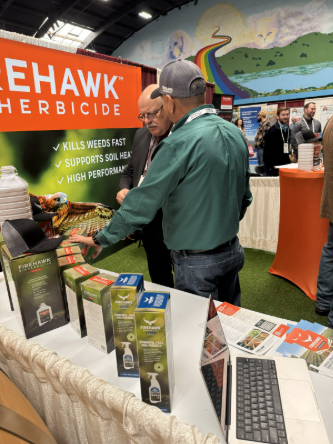
FireHawk® Bioherbicide made its first appearance at the North Coast Wine Industry Expo on December 3 at the Sonoma County Fairgrounds, joining wine industry professionals from across Napa, Sonoma, Mendocino, and Lake counties for a full day of conversation and connection.
As a first-time exhibitor, FireHawk attended the WIN Expo with a simple goal: to listen, learn, and better understand the priorities shaping vineyard and grower decision-making across the North Coast. At the booth, the team showcased FireHawk® Bioherbicide Super Concentrate, engaging growers and vineyard managers in discussions around contact weed control and application considerations.
Hosted by Wine Industry Network, WIN Expo continues to be a key gathering point for the region’s wine community, bringing together growers, vineyard managers, and industry partners through a robust trade show and educational program.
Throughout the day, conversations reflected the practical realities vineyard teams face. Managing vegetation efficiently, working within tight labor windows, and evaluating tools that fit into established programs were recurring themes. While every operation is different, a shared focus emerged around clarity, consistency, and reliable field use.
“Land care professionals expect performance they can rely on,” said Frank Glatz, CEO of Contact BioSolutions. “Consistency matters when you are managing demanding vegetation control jobs.”
For FireHawk, the experience reinforced the value of being present in industry spaces such as WIN Expo, not to lead with claims, but to engage in meaningful dialogue. FireHawk was pleased to participate for the first time and looks forward to continuing these conversations in the seasons ahead.
Additional information about FireHawk® Bioherbicide is available at https://www.firehawkbioherbicide.com, as well as through the WIN Marketplace.
In North Coast vineyards, under-vine vegetation management is a constant consideration. Among the most common challenges growers face are fast-growing broadleaf weeds that compete for water and nutrients and can quickly dominate vine rows if not addressed at the right time.
For vineyard owners and managers, the goal is not just control, but consistency in outcomes. Solutions must work within existing programs, allow crews to stay on schedule, and deliver visible results on existing vegetation without introducing long-term soil activity.
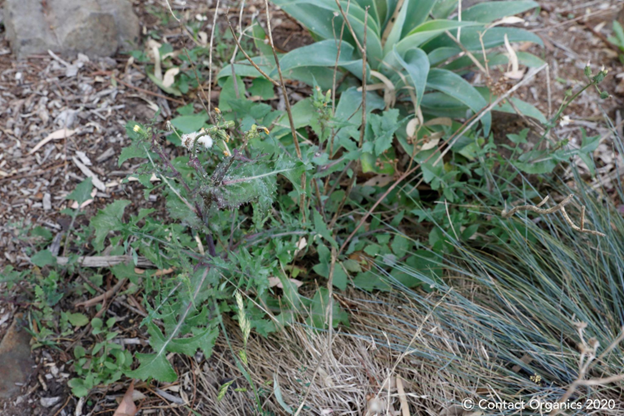
In this representative vineyard scenario, sow thistle was present under the vine during active growth. The weed pressure was typical of what many Sonoma County growers encounter during the season, particularly in blocks where regular under-vine management is required to maintain vine health and accessibility.
FireHawk® Bioherbicide Super Concentrate is a non-selective, contact, foliar-applied herbicide designed to control existing vegetation. It works on contact, damaging only treated green tissue and delivering visible effects within hours. Because it is not translocated and has no residual soil activity, it targets only the vegetation present at the time of application.
For vineyard operations, this contact mode of action supports targeted under-vine applications and clear expectations around observed results. Growers can evaluate results visually and plan subsequent passes based on field observations.
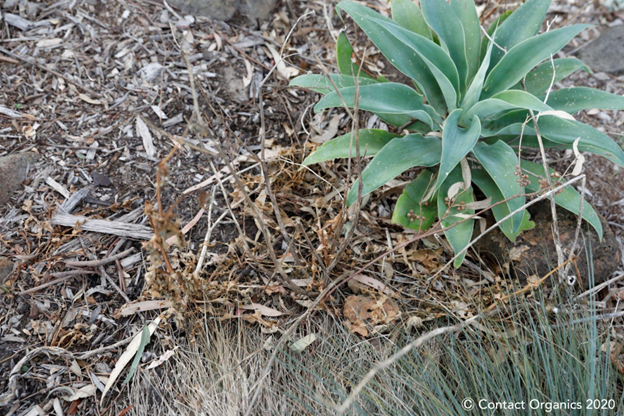
Following application, visible desiccation of the existing weed was observed under the vine. The before-and-after contrast highlights what many vineyard managers prioritize when selecting a weed control tool: clear results, consistent contact activity, and compatibility with standard vineyard operations.
Sow thistle is a familiar challenge across the North Coast, and managing it effectively requires timing and tools that align with real-world conditions. Contact weed control plays a role in that approach by focusing on existing growth and supporting efficient vegetation management during the season.
For vineyard owners navigating ongoing weed pressure, the focus remains on solutions that fit within their programs and function as intended under field conditions. This before-and-after example reflects how contact weed control can be used as part of a broader under-vine management strategy, delivering visible results on existing weeds while supporting operational clarity.
To learn more about FireHawk® Bioherbicide and how contact weed control can be incorporated into vineyard management programs, visit www.firehawkbioherbicide.com or explore FireHawk on the WIN Marketplace.
 For many North Coast growers, Fleabane has gone from an occasional nuisance to a persistent challenge. Once it takes hold between rows or drip lines, it competes with young vines for moisture, slows canopy growth, and creates long-term pressure that can be costly to manage later in the season.
What’s catching many growers off guard right now is timing. Fleabane does most of its damage before spring even begins. By the time it becomes tall, fibrous, and woody, mechanical removal struggles, contact herbicides lose effectiveness, and regrowth surges after bud break.
Why Fleabane Persists
Unlike many annual weeds that fade with summer heat, fleabane germinates and seeds aggressively over winter, forming low mats that harden into upright stalks by early spring. That’s why post-harvest through dormancy (Q4) is often the most strategic time for control, not April or May when vineyard crews are already stretched across canopy management and irrigation.
FireHawk Bioherbicide: A Shift in Weed Control
Across Sonoma and the broader North Coast, growers are moving away from long-residue herbicides near root systems and irrigation lines. They’re seeking non-residual options that:
• Deliver fast, visible results
• Reduce seed pressure going into spring
• Avoid herbicide residues in soil
• Fit into non-residual or regenerative production systems
FireHawk Bioherbicide is a fast-acting, non-selective, contact herbicide that provides burndown of many broadleaf and grassy weeds by desiccation. Because it has no residual soil activity, it can be integrated into vineyard weed-management programs where soil sensitivity and flexibility matter most.
Where Bioherbicides Fit
Non-residual bioherbicides are increasingly being used as part of integrated weed-management programs—especially for perimeter rows, under-vine strips, valve boxes, and other sensitive areas where conventional chemistry is less desirable.
FireHawk works by desiccating plant tissue on contact. For best results, apply to young, actively growing fleabane before it becomes mature or woody. Repeat applications may be needed as new weeds emerge.
To learn more about using bioherbicides in vineyard weed management, visit:
firehawkbioherbicide.com/pages/weed-guide