
Variable Rate Fertigation Made Simple!
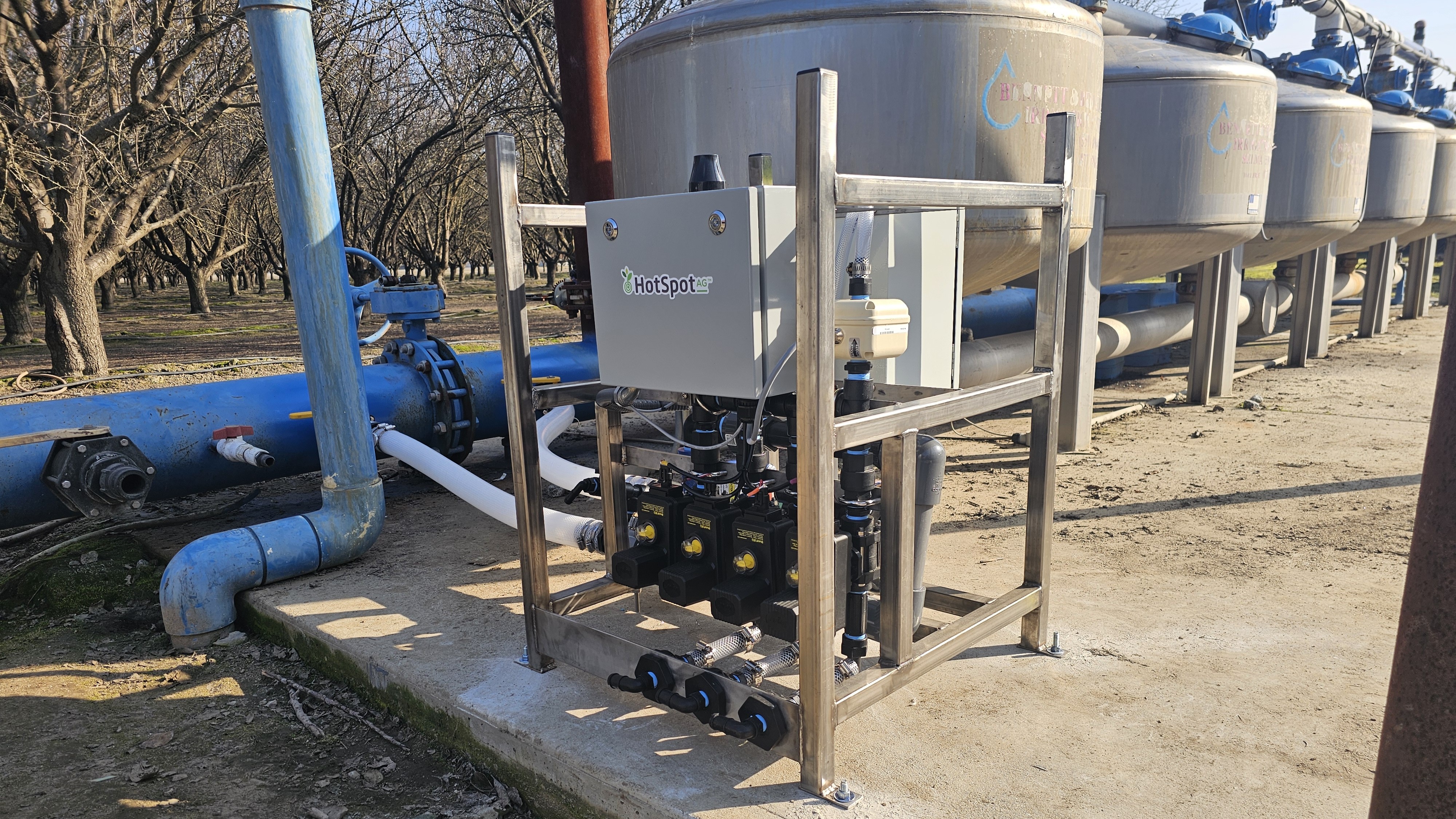
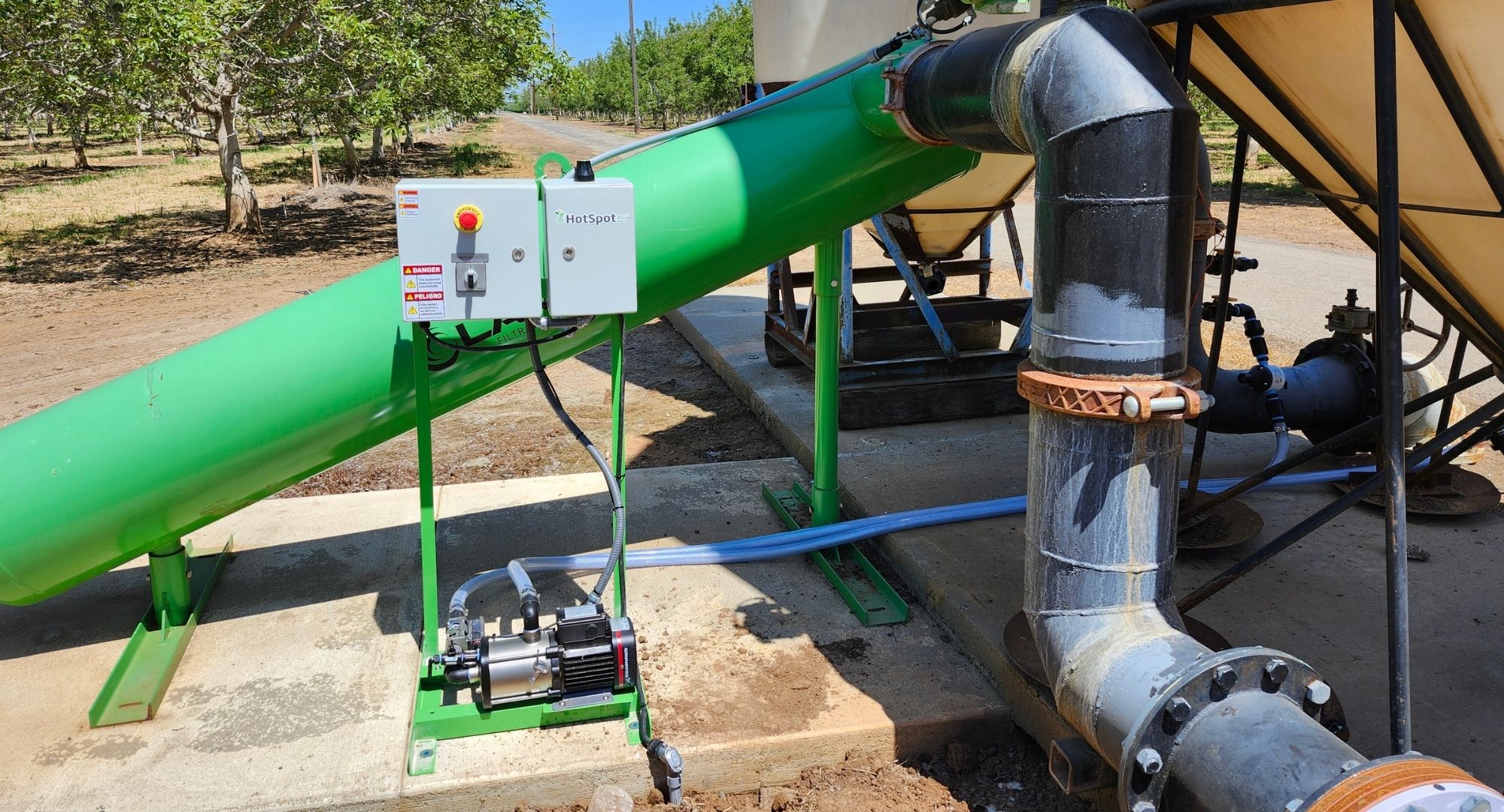
The HotSpot AG Tri-Channel Venturi Skid helps growers simplify and streamline fertigation operations without sacrificing precision. Users will gain consistent nutrient delivery and a more affordable alternative to traditional multi-channel injection systems.
Designed for Growers with Multi-Channel Injection Needs
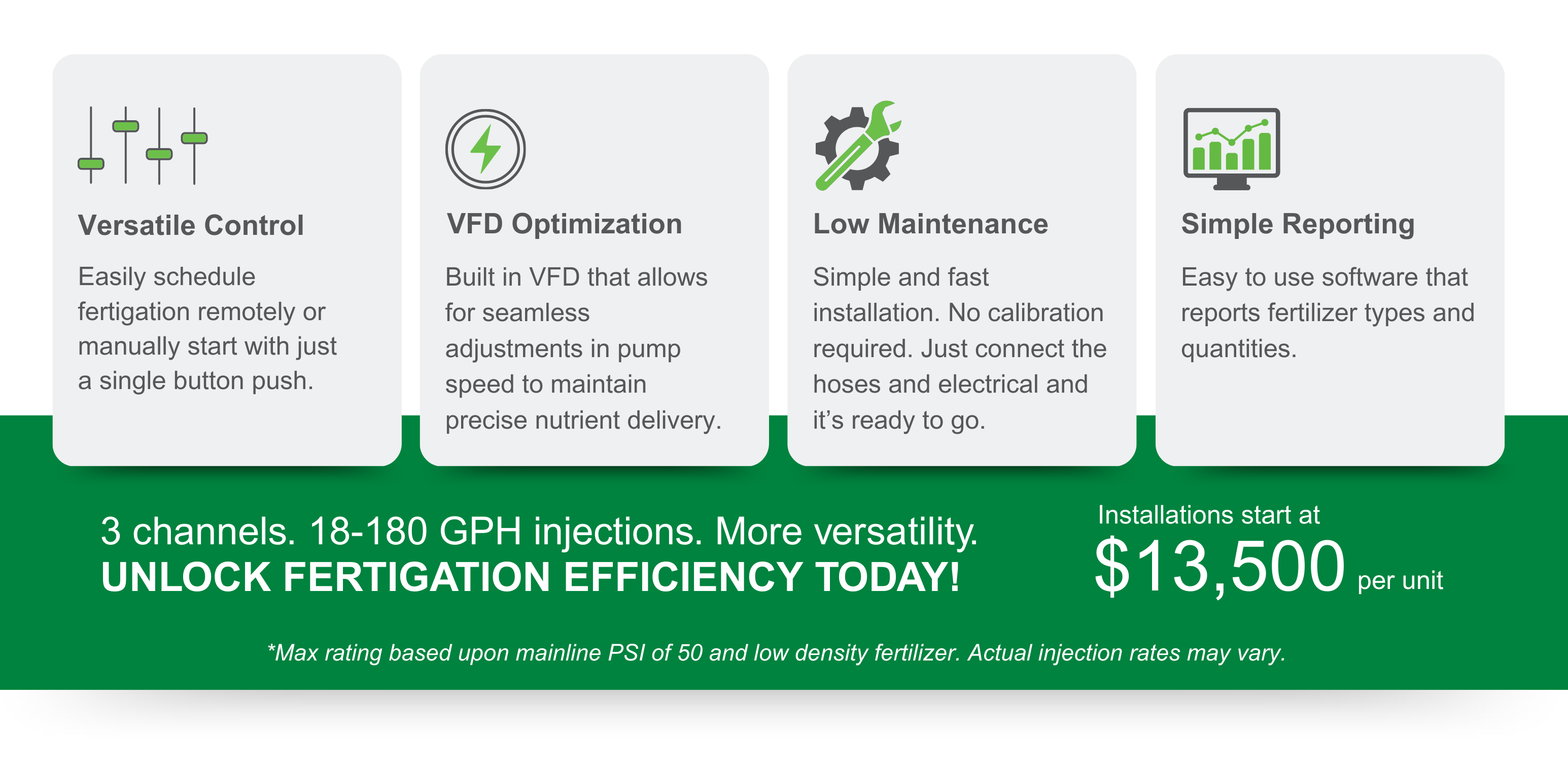
- Inject one material at a time between the range of 18 to 180 GPH (will vary based upon material density)
- Three separate channels for precise control of multiple products
- Simply connect hoses and power to get started
- High reliability with self flushing sequence of venturi, flowmeter, and manifold before and after each injection
- More affordable than traditional multi-injection systems
Gain Confidence, Not Complexity
The Tri-Channel Venturi Fert Skid offers simple, consistent performance with fewer field visits and minimal upkeep. It’s the smarter way to inject nutrients or treat water while giving you precision, reliability, and peace of mind in every irrigation cycle.
Contact our team to learn how the Tri-Venturi can fit your system.
559-376-0263 | info@hotspotag.com | www.hotspotag.com
or

HotSpot AG is excited to welcome World Ag Expo attendees to our Training Center for an educational session as part of this year’s World Ag Expo Tours on February 10th. The tour stop offers attendees a chance to learn how growers utilize innovative HotSpot AG solutions to support best practices in water conservation through irrigation automation and optimize nutrition management with automated variable rate fertigation injection skids.
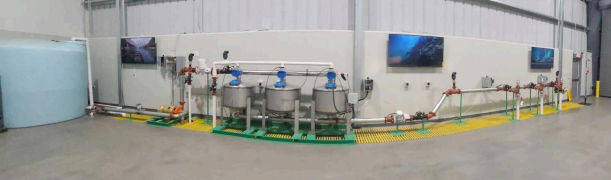
Guests will be given an exclusive opportunity to witness a live demonstration and see how the HotSpot AG technology seamlessly executes complex irrigation and fertigation schedules with just a touch of a button. Within the Training Center, a condensed layout of the irrigation pipeline offers viewers a unique opportunity to see firsthand how the HotSpot software communicates in real-time with equipment out in the field.
When you visit the training center, you can expect:
- Water savings through precise scheduling
- Energy reduction with pump and VFD optimization
- Improved labor efficiency through remote control
- Fertilizer savings through variable rate fertigation injections
- Support for regulatory compliance and reporting
- Real time software navigation, customized dashboards, alarms, and built-in fail safes
- Live Training Center demonstrations showing how HotSpot connects pumps, valves, reservoirs, and field equipment into one interconnected system available at your fingertips
Ticket sales for the official tours are nearly sold out, but HotSpot AG is extending the invitation to those who may not be attending the Expo to see the latest irrigation and fertigation solutions in person. Private Training Center visits will be tailored to your vineyard’s needs as we explore the full benefits of HotSpot AG’s remote monitoring and automated solutions.
How to reserve your private tour:
To learn more or to reserve a time to visit the HotSpot AG Training Center, please contact:
Cassie Braswell
(559) 670-0987
Customer Success Manager
We look forward to hosting you and continuing the conversation around smarter, more sustainable water management for your vineyards!
Continuous fertigation is gaining traction among growers who want to promote yield and preserve crop quality. This practice involves delivering smaller, steadier doses over the course of the crop season. Instead of applying large nutrient loads at select times during the season, maintaining a consistent injection rate that aligns closely with the crops natural uptake patterns can result in waste production and support improved crop quality and yield. In some cases, applying smaller doses within individual irrigation events can also be beneficial, but the primary value comes from season-long nutrient delivery based on the crops demand.
Field Observations and Operational Benefits
Growers are reporting a wide range of benefits from adopting continuous fertigation. For instance, almond grower Nathan Heeringa has noted improvements in almond development and overall performance when fertilizer is delivered in smaller, consistent doses. This method aligns with his broader experience that careful water and nutrient timing plays a significant role in supporting crop quality.
"By using this technology, I was able to reduce my total nitrogen use by about 10%, and my petiole samples still showed more than adequate nitrogen levels." -Nathan Heeringa
It’s important to point out that continuous fertigation is not just about agronomy; it is also about day to day practicality. Delivering nutrients in smaller increments reduces the risk of over-application and improves the nutrient efficiency, which contributes to better return on investment. At the operational level, growers report less labor required for application, timing, and overseeing fertigation events. Many also see the added value in having clear accountability between what was prescribed and what was actually applied. This ensures that nutrient plans and resources are executed efficiently.
Continuous fertigation can be done manually or with automation. However, without automation it is time intensive and can be difficult to accurately manage. If nutrient delivery is synchronized with irrigation automation, the need for manual starts or stops of applications is eliminated, allowing dedicated staff to be assigned to other tasks. Over the course of a season, these efficiencies add up and result in a noticeable increase in production and quality.
Supporting Continuous Fertigation with Automation
For many operations, the success of continuous fertigation depends on the technology that controls it. HotSpot AG provides the monitoring, automation, and flow-based control needed to carry out continuous fertigation reliably, even when labor is limited or irrigation schedules vary.
HotSpot’s platform supports continuous fertigation by:
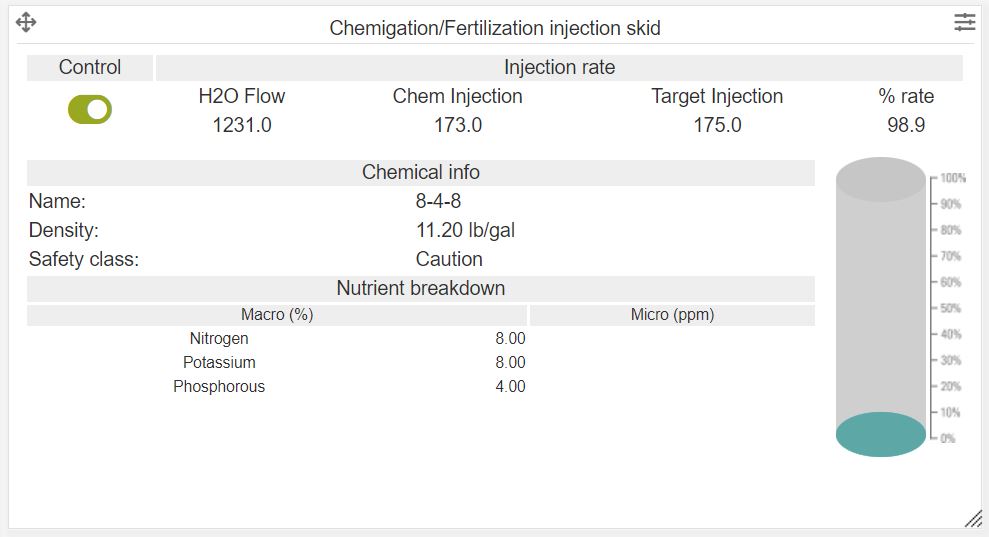
- Variable Rate Injection, allowing growers the ability to inject based upon the crop type, nutrient demands, and soil type.
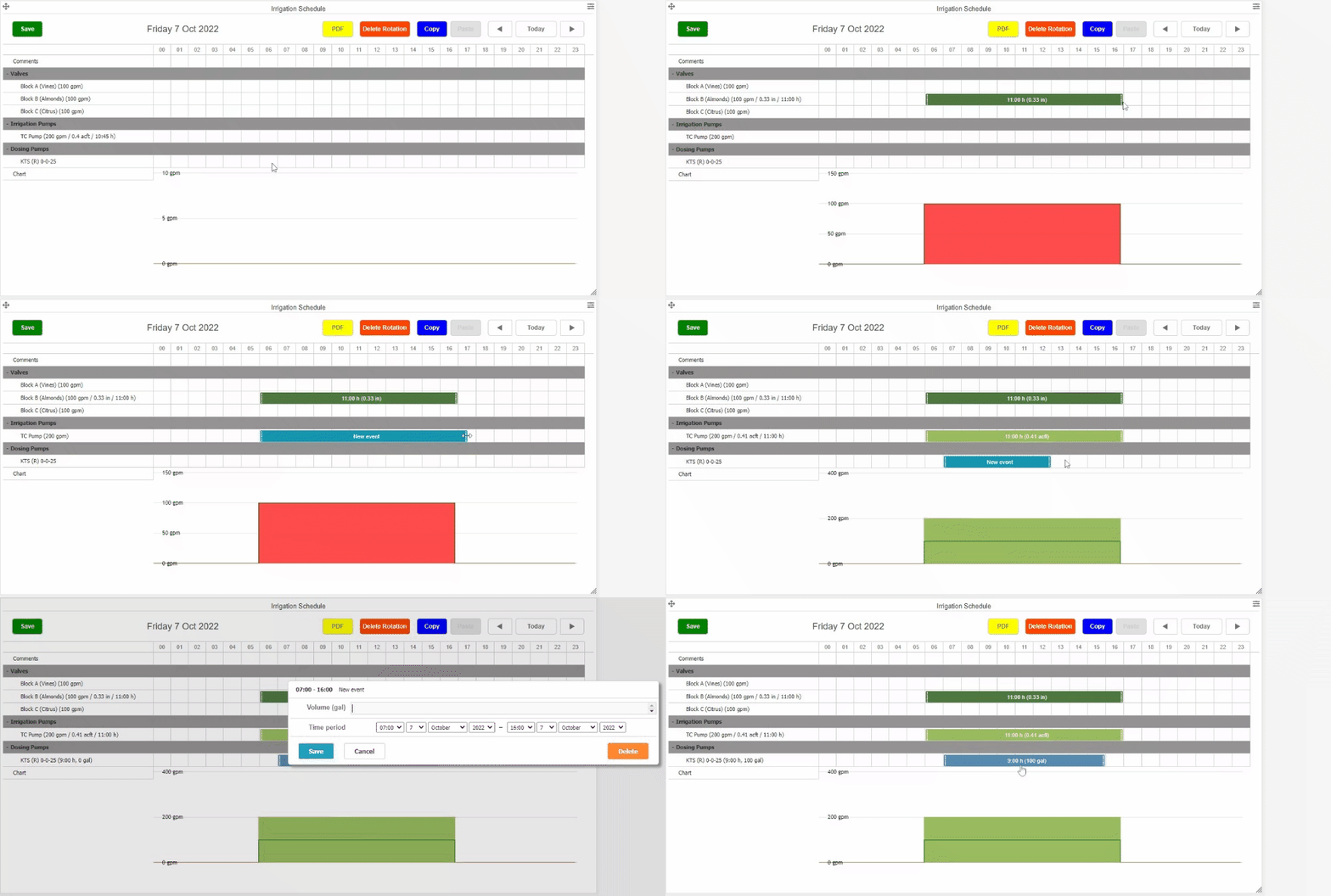
- Allowing growers to remotely schedule fertigations across any irrigation cycle without being physically present at the pump or valve.
- Providing real-time visibility into the fertigation skids performance so growers can verify that their plan is executing as expected.
- Maintaining detailed historical logs that help growers review application timing, seasonal patterns, and nutrient usage for planning future programs.
- When paired with HotSpot AG’s irrigation automation software, continuous fertigation becomes retrofitted to existing equipment, making it more accessible and easier to manage between injection and irrigation schedules.
These capabilities take much of the complexity out of continuous fertigation. Instead of relying on manual adjustments, growers gain a consistent and predictable application method that fits seamlessly into their irrigation workflow.
What Experts Are Saying…
Industry experience continues to reinforce that continuous fertigation is most effective when the right operational tools are available. Devin Clarke of Unbound Ag has spent years working alongside growers to refine how continuous fertigation is deployed in real-world conditions, with a focus on aligning nutrient strategy with the systems that carry it out.
"We have been actively defining proper deployment of continuous fertigation for the last 7 years. We have documented consistent improvements in water and nutrient use efficiency, disease reduction, productivity, and net profitability. The key is matching the agronomy and the operational enablement."
"One key value driver for the HotSpot system is also the ease of use for even novice users of digital technology."
The Verdict
Continuous fertigation offers growers a practical strategy to enhance nutrient efficiency, bolster crop quality, and lessen operational burdens. By precisely aligning nutrient delivery with crop demand, growers achieve consistent, measurable outcomes without increasing total input usage. When coupled with dependable automation and monitoring technologies, continuous fertigation is not only viable but integrated seamlessly into operations. This provides growers with the increased assurance in the decisions that ultimately determine the yield and quality of the coming season.
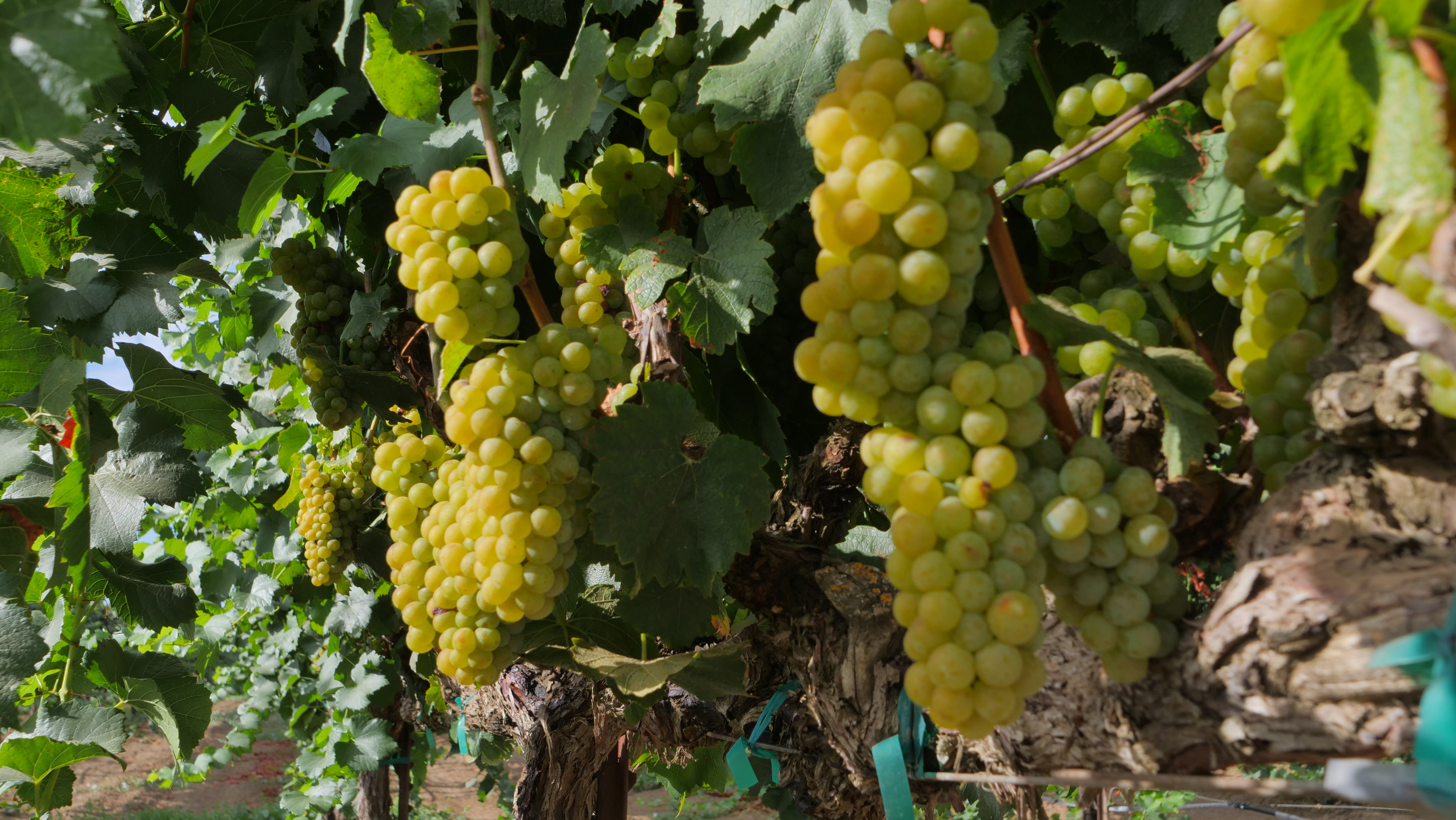
With the conclusion of harvest, it’s easy to shift focus from irrigation. The crops are in, and the season’s busiest time is nearly wrapped. However, the irrigation practices in the immediate post-harvest weeks are crucial for next year’s growth, yield, and quality.
Market conditions often tighten budgets, labor availability decreases, and water allocations may already be stretched thin from the season. At the same time, crops are still active beneath the soil line, requiring care to build root strength and store nutrients for the year ahead. Balancing limited resources with the ongoing needs of the crop can feel like a gamble, especially when every decision impacts next year’s performance.
How HotSpot AG Helps in Practice
Reliable irrigation automation makes all the difference. HotSpot AG’s systems were designed with the understanding that every farm has unique characteristics, such as older pumps, intricate irrigation layouts, and specific site challenges that don’t conform to a standard solution. HotSpot seamlessly integrates with existing grower infrastructure, eliminating the need for expensive overhauls.
After harvest, irrigation may not demand the same frequency as peak season, but it remains critical for root health, nutrient storage, and preparing crops for dormancy. The challenge is that labor is scarce, and no one wants to dedicate hours to managing water sets when crews are already reduced.
This is where HotSpot AG makes life easier:
- Automated Fertigation: Automate fertigation in tandem with irrigation schedules. Field level reporting of nutrient units and gallons applied when paired with pump, and valve control.
- Automated Pump and Valve Control: Schedule irrigations remotely and ensure water is applied at the right time without extra labor. water gets applied at the right time, even if no one is on site.
- Soil Moisture Monitoring for Root Health: Track active root-zone conditions with soil sensors to fine-tune light irrigations, protect soil structure, and support crop resilience into the next season.
- Reservoir and Tank Automation: Monitor and refill levels automatically to prevent costly overflows or shortages. This leads to a reduction waste, costs, and surprise issues.
Visualizing the Full System
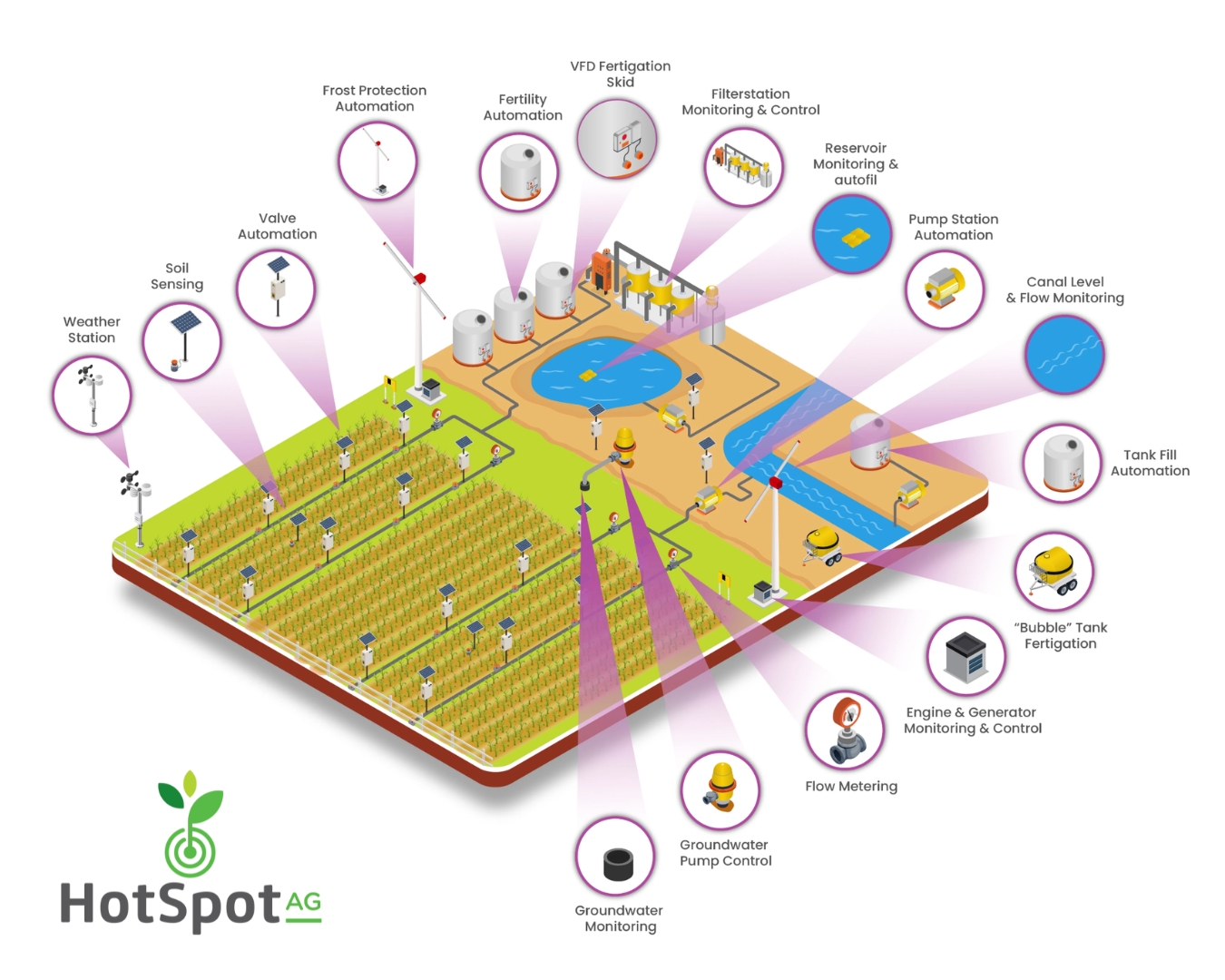
Post-harvest irrigation is about precision, not volume. Figure 1 gives a 360 degree look of pumps, valves, reservoirs, soil sensors, engine vitals, weather data, and more all in one place. This visibility makes it simple to schedule light irrigations for root health, remotely execute nutrient management programs, monitor frost risks, and track reservoir levels without extra field visits. Historical data adds context, helping growers adjust strategies for the next season. With the entire system connected, post-harvest water management becomes efficient, consistent, and stress-free.
Transparency for Better Planning
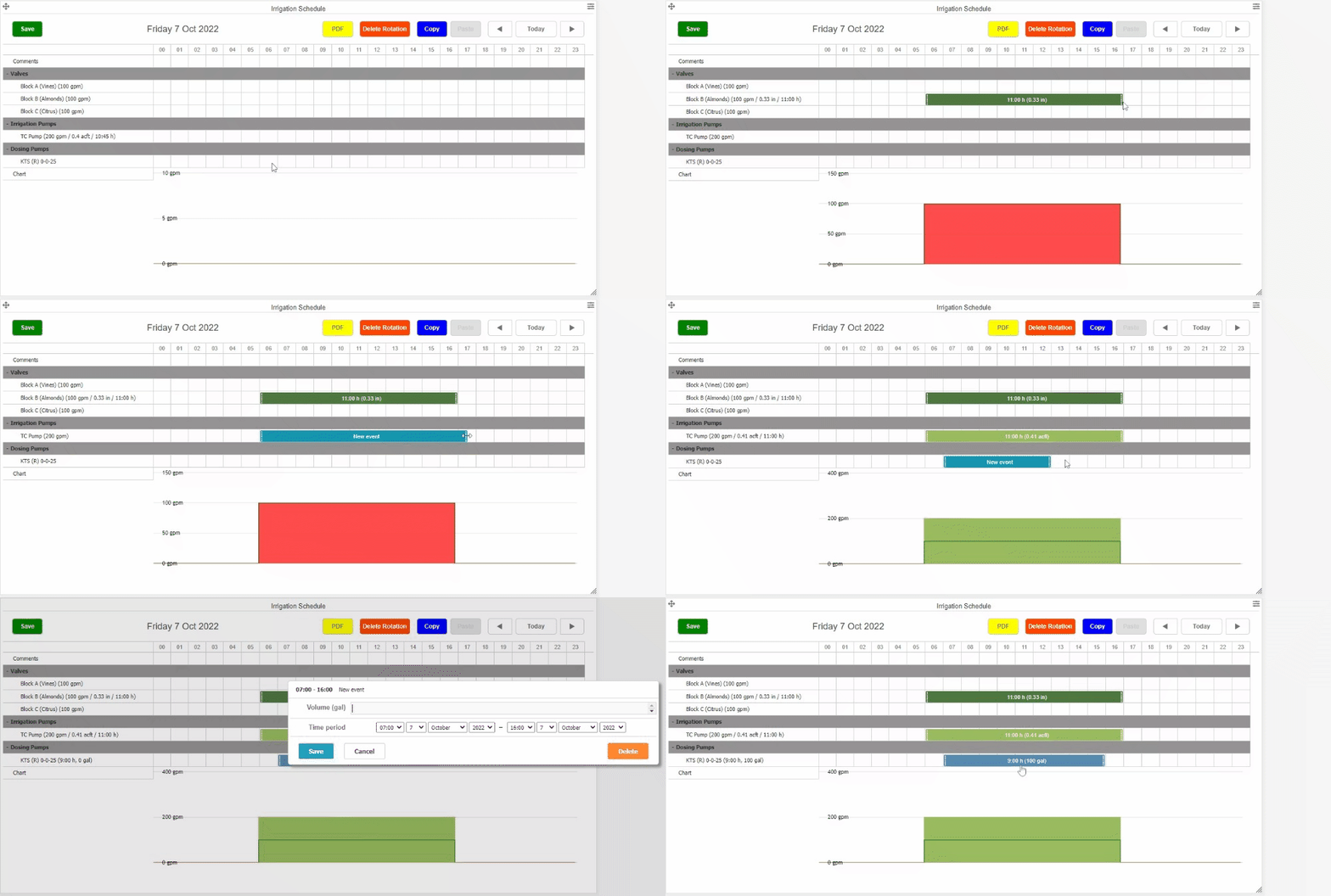
Having full visibility into irrigation operations provides growers with the confidence to plan ahead instead of reacting to problems as they arise. With access to real-time and historical data, growers can map out irrigations days or weeks in advance. This transparency reduces the risk of overlap or missed sets, helps align irrigation with labor and equipment availability, and makes it easier to balance water use within allocations. In practice, it turns irrigation from a reactive task into a strategic part of planning for the seasons ahead.
When is the right time to adopt?
While it may seem counterintuitive to invest in irrigation technology at the end of the season, the post-harvest period is when long-term returns are set in motion. Even modest improvements in off-season irrigation can prevent root damage, protect yield potential, and reduce costly inputs like fuel, labor, and fertilizer. By putting tools in place now, growers not only safeguard next year’s crop but also position themselves for measurable savings and efficiency gains from day one of the new season.
The payoff?
Peace of mind knowing that while labor, energy, and water are in short supply, each resource is used where it will have the greatest impact. After harvest, this precision supports healthier root systems, better nutrient storage, and ultimately, a stronger start to the next growing season.
Harvest may be winding down, but the groundwork for next year begins today.
Want to see your potential ROI? Use our complete ROI Calculator to estimate savings on water, energy, and labor — and see what data-driven irrigation can do for your operation.
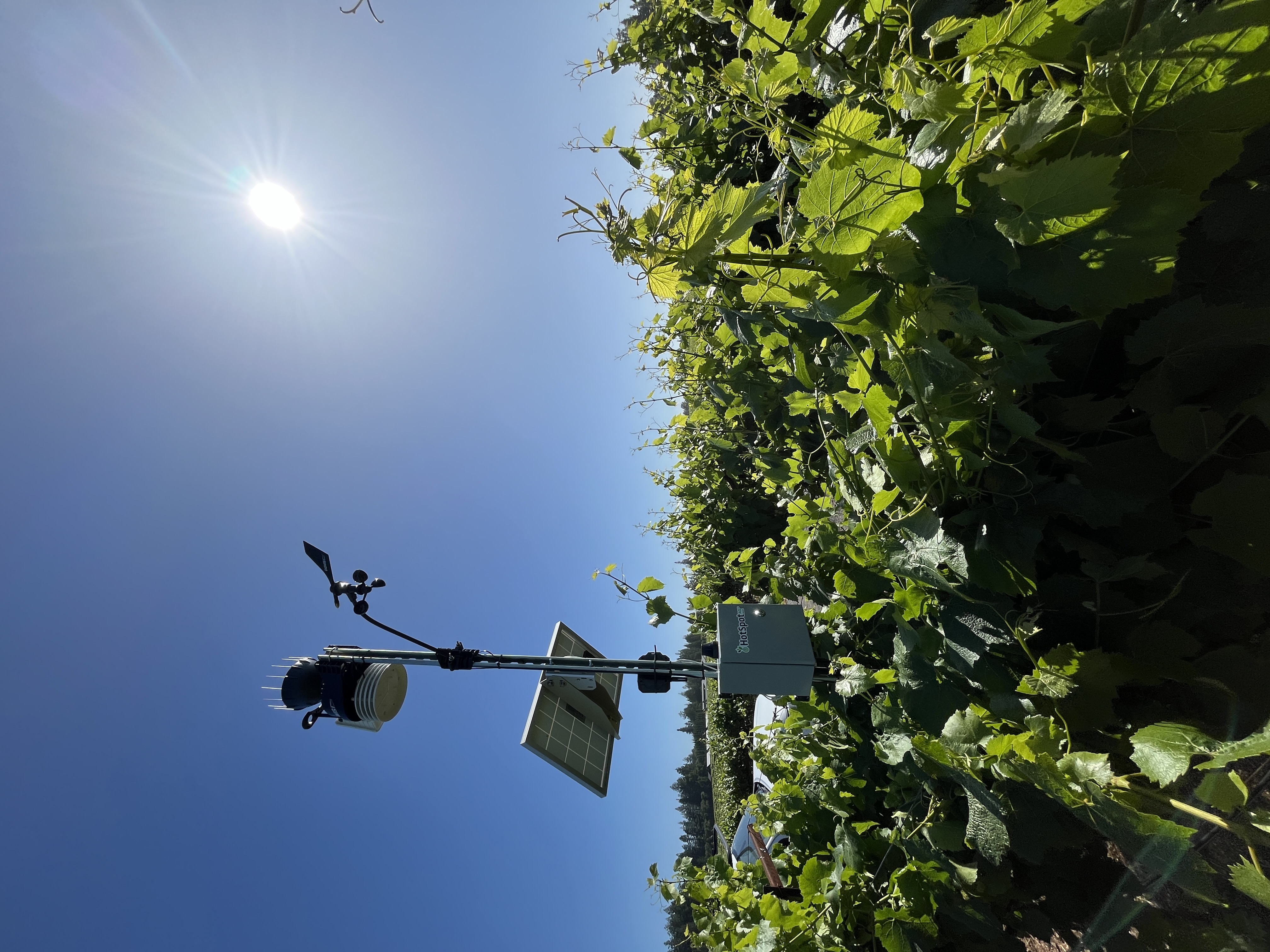
Weather’s not the only thing we’re tracking at HotSpot AG.
California growers know fire season is year-round, and with harvest underway, you’ve already got a lot on your plate. That’s why our advanced monitoring technology works in the background and keeps watch for you! Receive real-time text, phone, or email alerts when the conditions you set need your attention.
📊 With historical data logged every 10 minutes, you can look back days, weeks, or even seasons to plan smarter for what’s ahead.
🔥From unhealthy air quality warnings that help keep crews safe, to heat alerts that remind your team when it’s time to hydrate and pause, we’re here to support your operation in extreme conditions!
Your harvest doesn’t stop for the weather, and neither do we.
Stay safe. Stay growing. 🌱
Efficient irrigation starts with understanding exactly how much water your crop is using and how much it really needs. That’s where evapotranspiration (ET) comes in: the combined loss of water through evaporation (from soil and surface) and transpiration (used by the crop). By matching irrigation to ET, growers can reduce waste, improve yields, and make smarter use of limited water resources. With SGMA (the Sustainable Groundwater Management Act) now in full effect across California, it is more important than ever that growers irrigate with precision and are able to prove it with efficient record keeping.
If you’ve ever asked yourself: “How much of my irrigation is actually reaching the root zone?” You’re not alone. This article breaks down how soil moisture monitoring and real-time irrigation control using HotSpot AG tools can give you clear, actionable answers.
Monitoring Soil Moisture and Irrigation
While evapotranspiration (ET) tells you how much water your crop is using, soil moisture sensors reveals in real time what’s actually available in the root zone. Without this data, irrigation decisions are based on guesswork, which can lead to water stress, disease, pests, or runoff. With the technological advancements in agriculture, growers are able to utilize monitoring solutions to view data remotely from a phone, tablet, or computer. As with HotSpot AG, growers are able to utilize real-time monitoring and control tools to apply the right amount of water at the right time. These systems empower labor to focus on high value tasks, cut energy costs, and enable fast responses to shifting weather or crop conditions.
Beyond day-to-day decisions, it’s necessary to record historical irrigation data. This data is essential for improving future strategies, forecasting yields, and maintaining compliance with water use regulations. Without ag tech like HotSpot AG, this level of tracking would be time-consuming, meticulous, and difficult to manage.
How HotSpot AG Supports Smart Irrigation
Identifying soil moisture trends is only the beginning when it comes to effective irrigation management. Equipping your operations with the necessary tools to act on recorded data is what drives real results. HotSpot AG simplifies the process with intuitive monitoring and irrigation controls, allowing growers to integrate soil moisture and water use data into a customized irrigation schedule.
Below you will find three chart examples comparing soil moisture to irrigation records and what those patterns can tell us.
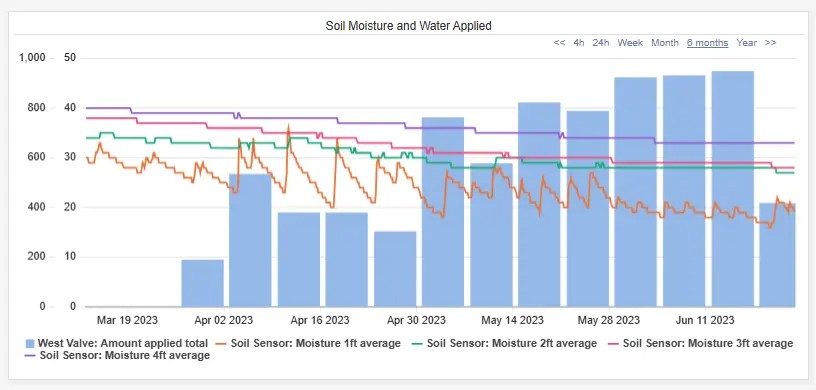
Example 1: Data from the soil sensors placed at 12”, 24”, 36”, and 48”, indicate a gradual drop in soil moisture over the course of several months with an increase in total applied water. This is a healthy indication of plant growth and increased transpiration. Because the soil moisture data does not indicate soil saturation, the grower is confident in knowing that the added irrigation amount is not being wasted.
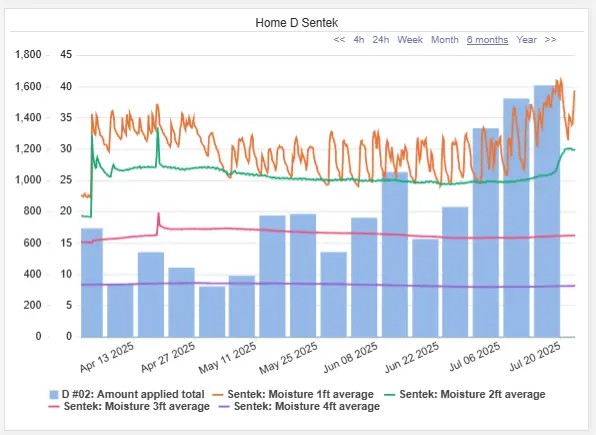
Example 2: This example highlights refilling the soil profile in a 9-year-old pistachio orchard. From May through July 1st, the block followed a Regulated Deficit Irrigation (RDI) approach, applying 60% of ETc to manage early-season growth. As the crop approached nut fill, a critical stage for yield, the agronomist intentionally increased irrigation.
Soil moisture data showed a clear response at the 12” and 24” depths, confirming that the additional water was reaching the active root zone. This approach ensured the trees had access to adequate moisture during a high-demand period, while still maintaining efficient water use earlier in the season.
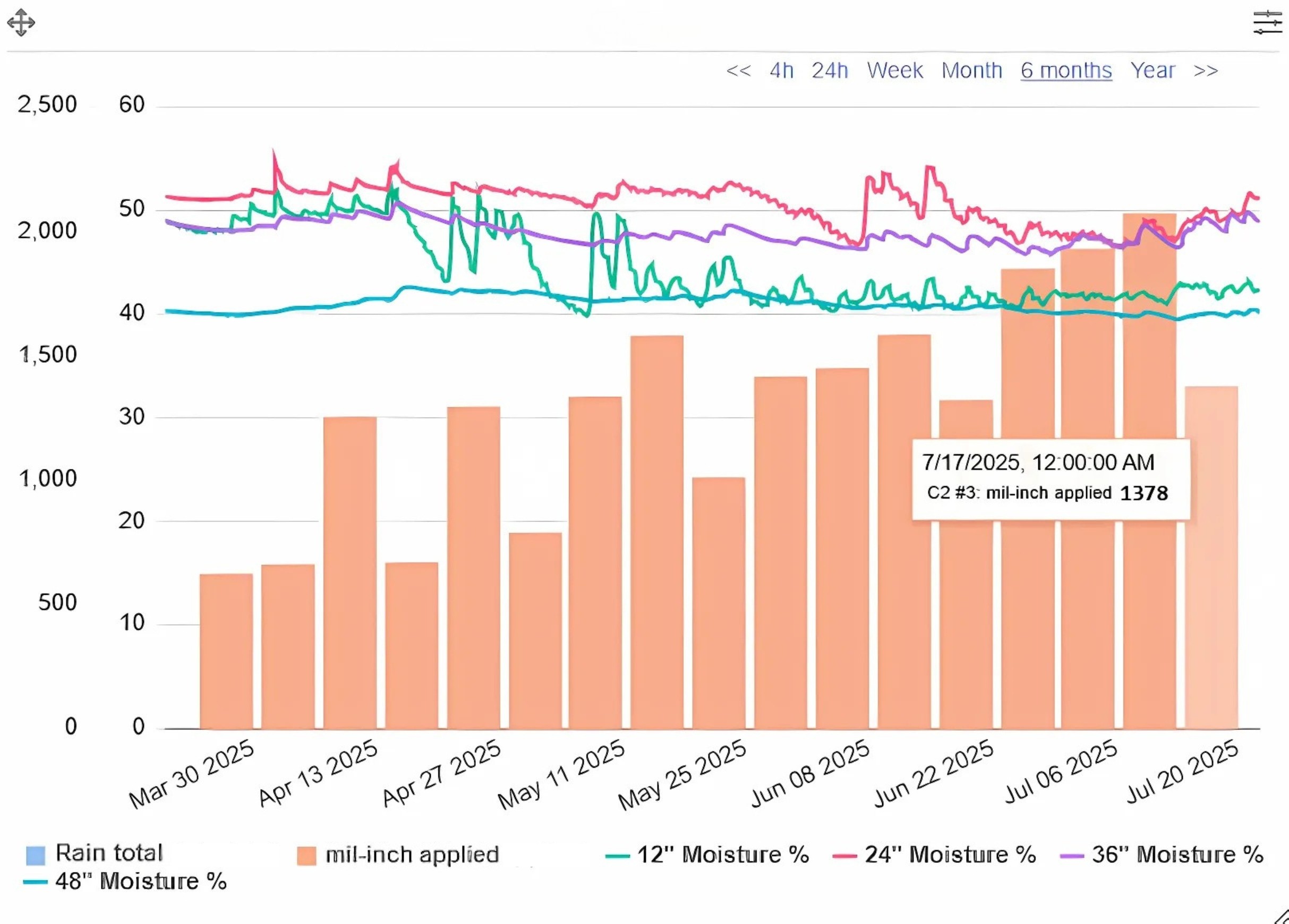
Example 3: Here, the grower is able to achieve fairly consistent field saturation by tailoring irrigation applications throughout the beginning of the season. The top 12” decreases from mid May to early June as soil surface temperatures rise and stabilize with increased irrigation.
By analyzing historical soil moisture trends alongside past irrigation events, growers gain a clearer understanding of how their crops have responded to water applications over time. This allows them to dial in current irrigation strategies based on what has worked under similar conditions, rather than relying on assumptions or trial-and-error. It becomes significantly easier to justify seasonal investments in irrigation infrastructure, labor, or scheduling when the data directly supports how those choices impact yield, water efficiency, and return on investment.
Uncovering the Cost of Soil Moisture Monitoring
At HotSpot AG, we believe that data-driven irrigation should be both accessible and scalable. Whether you’re looking to monitor a single zone or an entire operation, our soil moisture monitoring packages are built to match the unique needs of each grower
We offer flexible options, such as the 36″ Sentek Drill and Drop Soil Moisture Sensor for $1,400 and the 48″ version for $1,700. For added precision, drip line pressure sensors can be integrated for $290 to measure actual water applied.
HotSpot’s soil monitoring solutions are supported by our TAC-Box, with installations starting at $2,499. Final pricing is determined following a site evaluation to ensure the system is tailored to your farm. Our goal is to deliver practical, cost-effective solutions that generate real returns through improved water efficiency, labor savings, and stronger crop performance.
AgTech solutions such as HotSpot AG can turn sensor data and irrigation logs into actionable insights. By tracking your trends and irrigation records, the grower can see whether their irrigation schedule is keeping up with ET. With a system like HotSpot that can unify data on all fronts, growers can manage water with more efficiency, reduce labor and energy costs, and improve crop performance simply and with confidence.
Ready to maximize your irrigation efficiency? HotSpot AG makes it easy to integrate soil moisture and irrigation data, helping you make smarter water decisions and keep pace with ET. Get a customized, no-obligation estimate today.
Want to see your potential ROI?
Use our complete ROI Calculator to estimate savings on water, energy, and labor — and see what data-driven irrigation can do for your operation.
A case study on using irrigation automation to conserve water, cut energy use, and elevate vineyard performance.
CHANDON has consistently demonstrated innovation in environmental practices, resource efficiency, and community engagement, setting a new benchmark for sustainable viticulture. The California Green Medal Awards were established in 2014 to recognize vineyards and wineries that lead the industry in the areas of environment, economic development and social equity. As we all work towards a more sustainable future of agriculture, this recognition highlights the effort of vintners and winegrape growers striving to protect the environment and enrich the community.
CHANDON’s 2025 California Green Medal Environment Award
CHANDON’s Carneros vineyards are irrigated using a combination of surface water and reclaimed water sourced from the City of Sonoma, while the Yountville site relies primarily on recycled water from the winery’s own wastewater treatment system. These strategic decisions have allowed CHANDON to virtually eliminate groundwater use for irrigation—saving thousands of dollars annually and supporting broader efforts to address the ongoing groundwater crisis in both the Sonoma and Napa basins.
In addition to the choice of water source, CHANDON’s irrigation efficiency is exemplary. With a signiï¬cant emphasis on irrigating the proper amount, CHANDON combines advanced technology with visual scouting to determine irrigation needs. When irrigation events are required, CHANDON’s staff schedules the irrigation amounts within the HotSpot AG interface, enabling them to irrigate at the most beneï¬cial times. The resulting irrigation data is then compiled and exported to AgCode to compare planned versus actual usage. This automation streamlines their reporting process and enables real-time reï¬nement of upcoming schedules.
As a result of this meticulous approach, CHANDON has averaged 12 inches of applied water per season over the past three growing seasons (2022-2024) at their Yountville location—saving an exorbitant amount of water and subsequent energy costs.

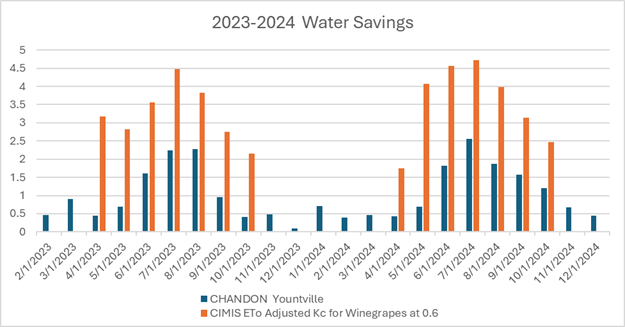
This chart shows HotSpot AG Irrigation Data from CHANDON Yountville applied amounts compared to CIMIS ETo with a crop coefficient (Kc) of 0.6 for Napa Valley winegrapes.
CHANDON’s sustainability strategy includes aggressive energy efficiency goals. Both the Yountville and Carneros sites employ Variable Frequency Drives (VFDs) to optimize pump operation, ensuring uniform water distribution despite varying terrain elevations. VFDs adjust the motor’s frequency and voltage—controlling ramp-up and ramp-down during operations, which not only improves efficiency but also reduces energy consumption. By integrating these systems with HotSpot AG’s scheduling capabilities, CHANDON further minimizes energy use by operating irrigation during off-peak Time-of-Use hours, effectively lowering costs and reducing environmental impact. PG&E savings when operating outside of TOU.
“You not only encouraged us but also help us presenting supporting data from HotSpot AG. I hope you also feel this award as yours as well.” Says Carlos Danti, Winegrowing Director at Chandon.
In today’s challenging wine market, growers are looking for ways to reduce costs while appealing to consumers who value sustainably sourced products. Coming from farming, HotSpot AG understands that true sustainability must include profitability—because protecting the land long-term means staying in business to do so. Our advanced irrigation and fertigation automation helps growers streamline routine tasks and empower their teams to focus on higher-level decision-making, enabling them to do more with limited resources.
If you’re looking to reduce inputs, boost efficiency, and gain a competitive edge through sustainability—HotSpot AG is here to help. Let’s talk about how you can apply these same tools to meet your goals and lead the industry forward just like CHANDON is doing.
A collaboration built on expertise
As water regulations tighten and operational costs rise, growers face increasing pressure to conserve water, reduce expenses, and maintain sustainability. HotSpot AG and PumpMan have joined forces to bring revolutionary solutions to winegrape growers throughout Northern California. This collaboration provides winegrape growers with a vast arsenal of tools needed to streamline irrigation pump management, ensuring confidence and reliability of their equipment.
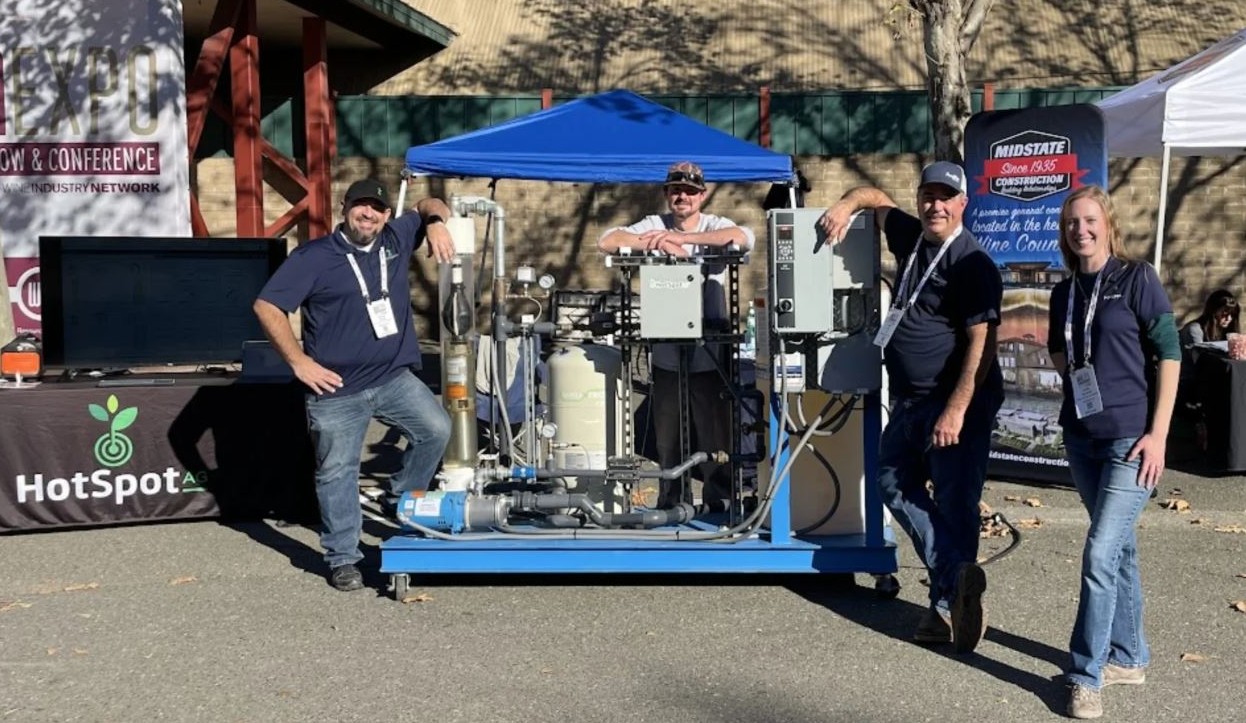
HotSpot AG has reinvented the game with their revolutionary solutions that allows users to remotely control, schedule, and monitor their irrigation systems in real time. Vineyard managers are able to track and adjust operations from anywhere, anytime, in one dashboard. PumpMan, with over 50 years of expertise in the pump industry, has established itself as Northern California’s trusted leader in pump system services. Specializing in the repair, retrofitting, and design of pump systems for residential, agricultural, commercial, and municipal applications, PumpMan Norcal provides end-to-end service ensuring that pumps are running at peak efficiency. Together, these technologies empower growers with better visibility into their systems, allowing them to make data-driven decisions that optimize performance and prevent costly breakdowns.
“When things are working, no news is good news! And then it’s just hearing when things are wrong and I’m able to make phone calls or, more often than not, figure out what’s going on before I even show up to site or even if I have to show up to site.” – Willy Binsfeld when describing the time savings with HotSpot. Instead of reacting to system failures, growers can now anticipate issues before they arise, reducing costly repairs and needless service visits. With backgrounds rooted in farming, HotSpot and PumpMan understands the challenges that growers face everyday. By combining industry expertise with revolutionary technology, this partnership delivers practical, scalable solutions that improve pump efficiency and reduce operational stress.
Learn expert backed strategies and witness a virtual demonstration of HotSpot's innovative technology!
In case you missed it, you're still able to be part of the conversation about smarter, efficient, and sustainable practices to protect your vineyards. For more information on efficient irrigation solutions and to connect with our team, visit us at hotspotag.com.
Making the Most of Limited Water Supply
Precision Ag in Action – Automating Irrigation & Fertigation for Sustainability and Profitability
Event Type: Webinar
Date: 4/17/2025
Join CAWG and HotSpot AG for an exclusive live demonstration in Slayback Vineyards showcasing the latest advancements in automation for precision agriculture! In this webinar, HotSpot AG will explore how cutting-edge irrigation and fertigation technologies empower winegrape growers to optimize water use, enhance nutrient efficiency, and improve vineyard sustainability—all while boosting profitability.
What You’ll Learn:
- How smart irrigation enhances vine health and yield while reducing water and energy usage.
- The role of precision fertigation in optimizing nutrient application based on varietal, and crop demand throughout the growing season.
- First-year insights from industry expert, Kaan Kurtural, on implementing automation; including best practices, and key takeaways.
- How real-time data and automation are shaping the future of vineyard management.
Don’t miss this unique opportunity to see automation in action and get expert insights on the future of precision agriculture!
Speakers
- Cassie Braswell - Customer Success Manager, Hotspot AG
- Kaan Kurtural - Kurtural Vineyard Management
April 17, 10am PT