Impresstik Labeling Systems North America LLC

121 Willowbend Court, Napa, CA, United States of America, 94559

Labelling may seem like a simple final step in production, but advances in automation are changing this crucial process. From robotic applicators to AI‑enabled vision systems, the future of labelling is smarter and more efficient than ever.

Why Automation Matters

Consumers demand accurate information and perfectly applied labels. Automation reduces misalignment and downtime, delivering consistent results even at high speeds. This section explores the business case for automated labelling systems: improved throughput, reduced rework, and better resource utilisation.

Key Technologies Shaping Labelling

  • Robotic arms and collaborative robots (cobots) – enabling flexible, multi‑axis labelling applications.
  • Vision systems and sensors – checking label position, print quality and barcodes.
  • IoT integration – allowing remote monitoring, predictive maintenance, and data‑driven optimisation.
  • Modular designs – enabling quick changeovers and scalable configurations.

Benefits for Manufacturers

Producers face unique challenges: strict regulations, diverse packaging formats, and increasing SKU counts. Automation helps meet these challenges with precision and reliability. Impresstik’s engineered systems are built to handle local conditions and comply with national standards.

Implementation Considerations

Moving to automation requires planning. Manufacturers must consider existing line integration, staff training, and maintenance. This section offers practical advice: start with a pilot project, engage your operators early, and work with an experienced partner who understands both engineering and compliance.

Future Directions

Looking ahead, AI and machine learning will refine label placement and detect defects in real time. Sustainability will drive the development of eco‑friendly materials and energy‑efficient machines. Localised production may also spur demand for flexible, small‑footprint systems.


Automation is not a luxury; it’s a competitive necessity. Investing in smart labelling now will pay off through efficiency, compliance, and customer trust. 

Contact Impresstik to discuss how automated labelling can modernise your line.

00

Labels do much more than identify a product. They communicate ingredients, allergens, safety warnings, and branding. When they’re wrong or poorly applied, the consequences are serious.

Why Labels Matter

Consumers rely on labels for everything from nutritional information to batch numbers. Clarity builds trust; errors erode it. In highly regulated industries like pharmaceuticals, a misprinted or misapplied label can lead to recall or fines.

Building Trust Through Quality

High‑quality labels signal professionalism and care. Durable materials, crisp printing, and precise placement create a positive impression. They also reduce waste and rework. Investing in reliable labelling equipment shows your commitment to quality.

Common Compliance Pitfalls

  • Missing allergens or ingredient details
  • Inconsistent print quality or faded text
  • Labels obstructing barcodes or tamper‑evident seals
  • Wrong label on the wrong product

Regular audits and modern equipment help avoid these issues. Machines with integrated printers, sensors, and software can verify label presence and legibility.

The Impresstik Difference

Our local engineers understand regulations and build systems to meet them. We work closely with clients to ensure each machine supports compliance, from variable data printing to complete traceability.

Conclusion

Labelling is a critical component of brand trust and legal compliance. High‑quality, consistent labelling safeguards your reputation and customer safety. 

Contact Impresstik to discuss how compliant labelling solutions can protect and promote your brand.

00

Introduction

Sometimes the biggest obstacle to growth isn’t a lack of leads, staff shortages, or supply chain issues — it’s the equipment on your production floor. If your labelling setup is no longer keeping up with demand, it could be quietly costing you time, money, and opportunities.

Here are five clear signs your labelling system might be holding you back — and how you can fix it.

1. You’re Experiencing Frequent Downtime

Every time your labeller stops, your entire production line stops. If you're dealing with breakdowns, misfeeds, or sensor issues more than once in a while, it's a sign that your machine isn’t coping — or wasn't built for your current output.

What to Do:
Look for systems designed for durability and high throughput. Impresstik machines are engineered to run reliably under pressure, with servicing and parts available locally.

2. Changeovers Are Costing You Hours

If your team is spending more time switching between SKUs than labelling products, you’re losing efficiency and output. Older machines or generic models often don’t account for the reality of short-run jobs or frequent changes.

What to Do:
Modular or quick-change components can dramatically reduce downtime. Our systems are built with flexibility in mind — allowing for fast adjustments without the need for full resets or specialist tools.

3. Your Labels Are Misaligned, Wrinkled, or Inconsistent

Visual inconsistencies can damage brand credibility and lead to product recalls or repackaging. Even slight misalignments can be costly when they happen across hundreds or thousands of units.

What to Do:
Advanced servo controls, stable tensioning systems, and operator-friendly touchpoints help ensure consistent labelling every time. Ask us how we’ve helped other clients fix this exact issue.

4. Your Labelling Isn’t Keeping Up with Production Speed

Maybe you’ve upgraded other parts of your line — fillers, conveyors, packaging — but your label applicator is still chugging along at yesterday’s pace.

What to Do:
Upgrade to a system matched to your real-world output goals. Impresstik’s high-speed options are built for industries where uptime matters, like beverage, pharma, and FMCG.

5. You Can’t Get Support When You Need It

If you're stuck waiting days for a reply, or weeks for spare parts to arrive from overseas, it's a problem — especially when it stops production.

What to Do:
At Impresstik, we build and service everything locally, with experienced technicians ready to help.

Bonus: You're Hesitating to Take on Bigger Orders

If you're turning away work or dreading new contracts because you know your labelling system can’t handle the load — that's a red flag.

What to Do:
Let’s talk about scalable solutions. We can review your current setup and recommend systems that can grow with your business, without overcapitalising upfront.

Conclusion

If your labelling machine is lagging behind, it’s time to ask some honest questions. A modern labelling setup isn’t just about speed — it’s about reliability, adaptability, and setting your business up to grow with confidence.

At Impresstik, we help businesses like yours move forward with labelling systems that just work. No hard sell. Just smart engineering and straight answers.

Learn More

00

The labelling industry is no stranger to change. Each year, new regulations emerge that impact how businesses package and label their products. These changes often stem from government updates, industry standards, and consumer expectations for transparency and safety. For 2025, several key regulatory updates will require businesses to adapt their labelling practices to ensure compliance and maintain consumer trust.

In this article, we’ll explore the upcoming regulatory changes, why they matter, and how your business can stay ahead of the curve. From ingredient transparency to sustainability requirements, here’s everything manufacturers need to know to navigate labelling regulations in 2025.

Why Regulatory Compliance in Labelling Matters

Labels play a critical role in product communication. They inform consumers about what’s inside the packaging, how to use the product safely, and whether it aligns with their values (e.g., organic, cruelty-free). Regulatory compliance ensures that labels meet these requirements while protecting consumers and preventing misleading claims.

Non-compliance can lead to significant consequences, including:

  • Fines and Penalties: Regulatory bodies impose hefty fines on businesses that fail to meet labelling standards.
  • Product Recalls: Inaccurate or non-compliant labels may require costly recalls, damaging your brand’s reputation.
  • Loss of Consumer Trust: Customers expect accurate, transparent labelling. Failing to meet their expectations can result in lost loyalty and revenue.

By staying updated on regulatory changes, your business can avoid these risks and position itself as a trustworthy and responsible brand.

Key Regulatory Changes in 2025

Here are some of the most important labelling regulations set to take effect in 2025. These updates affect industries such as food and beverages, pharmaceuticals, cosmetics, and more.

1. Enhanced Ingredient Transparency

Consumers are demanding more detailed information about product ingredients, and regulatory bodies are responding. For 2025, there will be stricter requirements for ingredient disclosure, particularly in the food and cosmetics industries.

Key Changes:

  • Allergen Labelling: Mandatory clear identification of allergens, including new allergens added to the regulatory list.
  • Substance Origins: Requirements to disclose the origin of specific ingredients, such as whether they are animal-derived or synthetic.
  • Simplified Language: Labels must use easy-to-understand terms instead of complex chemical names.

How to Comply:

  • Audit your current ingredient lists to ensure they meet new requirements.
  • Use layman-friendly language to improve accessibility for consumers.
  • Partner with labelling experts, such as Impresstik, to ensure your labels meet these standards.

2. Sustainability and Environmental Claims

Sustainability is no longer optional—it’s expected. New regulations will require businesses to back up their environmental claims with evidence, ensuring labels accurately reflect the product’s eco-friendly credentials.

Key Changes:

  • Proof of Claims: Labels such as “recyclable,” “compostable,” or “carbon-neutral” must be supported by verifiable data.
  • Standardised Icons: The introduction of standardised recycling and sustainability icons for better consumer understanding.
  • Packaging Material Disclosures: Clear identification of packaging materials and instructions for proper disposal.

How to Comply:

  • Review your sustainability claims and ensure they align with regulatory guidelines.
  • Include precise information about recycling or disposal methods.
  • Work with a supplier like Impresstik to adopt sustainable labelling materials, such as biodegradable adhesives and recycled papers.

3. Digital Labelling and QR Codes

Digital labelling is gaining traction as a way to provide consumers with additional information without cluttering physical labels. In 2025, new guidelines will govern the use of QR codes and other digital solutions on product packaging.

Key Changes:

  • Mandatory Digital Links: In certain industries, such as pharmaceuticals, QR codes will be required to link to product safety information.
  • Accessibility Standards: QR codes must comply with accessibility standards, ensuring they are scannable by all consumers, including those with disabilities.
  • Data Privacy: Digital labels must protect consumer data and comply with privacy regulations.

How to Comply:

  • Incorporate QR codes into your labelling designs and test them for functionality.
  • Ensure digital content linked to QR codes is accurate, up-to-date, and accessible.
  • Use secure platforms to manage digital labelling data.

4. Labelling for Export Markets

If your business exports products, it’s essential to stay informed about international labelling standards. In 2025, several countries are introducing new labelling requirements that may differ from local regulations.

Key Changes:

  • Language Requirements: Labels must be available in the official languages of the destination country.
  • Health Warnings: Certain products, such as alcohol and tobacco, may require new or updated warning labels.
  • Regional Standards: Compliance with region-specific certifications (e.g., EU Organic, USDA Organic).

How to Comply:

  • Research labelling requirements for your target export markets.
  • Design labels that can be easily adapted for multiple regions.
  • Leverage Impresstik’s expertise in creating export-compliant labelling solutions.

Best Practices for Staying Ahead of Regulatory Changes

Navigating regulatory updates can be complex, but adopting proactive strategies can make compliance more manageable. Here are some tips to help your business stay ahead:

1. Conduct Regular Audits

Review your current labelling practices to identify gaps and areas for improvement. This includes auditing ingredient lists, sustainability claims, and international compliance.

2. Invest in Flexible Labelling Solutions

Choose labelling machinery that can adapt to new requirements, such as adding QR codes or accommodating larger labels for additional information.

3. Partner with Experts

Work with labelling specialists like Impresstik, who stay informed about regulatory updates and can provide guidance on compliance.

4. Stay Informed

Subscribe to industry newsletters, attend trade shows, and participate in workshops to stay up-to-date on labelling regulations.

How Impresstik Can Help

At Impresstik, we understand the challenges businesses face in meeting regulatory requirements. Our custom labelling solutions are designed to keep you compliant while enhancing your product’s appeal. Here’s how we can support your business:

  • Tailored Solutions: Custom-built labelling systems that adapt to your needs.
  • Sustainability Expertise: Eco-friendly materials and designs to meet environmental standards.
  • Regulatory Knowledge: Decades of experience navigating industry regulations across multiple sectors.

Conclusion

The labelling landscape is constantly evolving, and 2025 brings significant changes that businesses cannot afford to overlook. From ingredient transparency to sustainability claims and digital labelling, staying compliant requires proactive planning and expert support. By understanding these updates and implementing best practices, your business can ensure compliance, build consumer trust, and stay ahead in a competitive market.

Ready to navigate the future of labelling with confidence? Contact Impresstik today to learn how our solutions can help you meet 2025’s regulatory challenges with ease.

00

The labelling industry has always been at the intersection of engineering excellence and technological innovation. In 2025, advancements in labelling machinery are setting new benchmarks for efficiency, precision, and sustainability. These innovations are designed to meet the growing demands of modern businesses, from high-volume manufacturers to boutique brands looking for custom solutions. Let’s delve deeper into the groundbreaking developments shaping labelling machinery this year.

1. Fully Automated Systems

Automation has been a driving force in manufacturing for years, but in 2025, labelling machinery is reaching new levels of sophistication. Fully automated systems, like Impresstik’s Webmaster 2100, offer seamless operation with minimal human intervention.

Key features of automated systems:

  • Twin-Roll Feeds: Allow for uninterrupted production by automatically switching rolls without downtime.
  • Self-Diagnostic Tools: Advanced sensors monitor the machine’s performance, alerting operators to potential issues before they disrupt operations.
  • Versatility: These systems can handle a wide variety of label types and materials, making them suitable for diverse industries such as pharmaceuticals, food, and beverages.

Why it matters: Automation not only increases productivity but also reduces human error, ensuring consistent, high-quality labelling even at scale.

2. High-Speed Labelling for Large-Scale Production

For industries like beverages and consumer goods, where speed is critical, new labelling machines are delivering unparalleled performance. The latest high-speed systems can process over 200 units per minute without compromising precision.

How it works:

  • Servo-Driven Motors: These provide precise control over label application, even at high speeds.
  • Real-Time Adjustments: Machines can adapt to changes in label size, shape, or material mid-operation.
  • High Throughput with Accuracy: These machines maintain exact placement of labels, reducing waste and rework.

Why it matters: High-speed labelling ensures that production lines run efficiently, helping businesses meet tight deadlines and high demand.

3. Flexible and Customisable Machinery

Gone are the days of one-size-fits-all labelling machines. In 2025, flexibility and customisation are at the forefront of innovation. Modern labelling systems are designed to adapt to the specific needs of each business.

Examples of flexibility:

  • Multi-Purpose Applicators: Machines that can label various container types, from bottles to irregularly shaped packages.
  • Adjustable Settings: Easily switch between different label sizes, shapes, and materials with minimal downtime.
  • Modular Design: Add or remove components as your business needs change, ensuring the machine grows with your operations.

Why it matters: Customisable machinery gives businesses the agility to respond to market trends and expand their product offerings without investing in entirely new systems.

4. Energy-Efficient Designs

Sustainability isn’t just about the labels—it extends to the machinery itself. Manufacturers are incorporating energy-efficient features into their designs, aligning with global efforts to reduce carbon footprints.

Energy-efficient innovations:

  • Low-Power Motors: Advanced motors consume less energy while maintaining high performance.
  • Recyclable Materials: Machines are being built with components that can be recycled at the end of their lifecycle.
  • Reduced Waste: Precision engineering minimises label and material waste during production.

Why it matters: Energy-efficient machinery not only lowers operating costs but also helps businesses meet sustainability goals.

5. IoT and Smart Connectivity

The Internet of Things (IoT) is transforming labelling machinery into smart systems that integrate seamlessly with broader manufacturing processes. IoT-enabled machines offer real-time data insights and enhanced control.

Applications of IoT in labelling:

  • Performance Monitoring: Sensors track metrics like speed, accuracy, and downtime, helping operators optimise performance.
  • Predictive Maintenance: Machines can identify wear-and-tear issues before they escalate, reducing unexpected breakdowns.
  • Remote Control: Operators can adjust machine settings remotely, streamlining operations and saving time.

Why it matters: IoT integration enhances operational efficiency, reduces maintenance costs, and ensures that production lines are always running smoothly.

The Impresstik Advantage

At Impresstik, we pride ourselves on staying ahead of the curve. Our custom-built labelling machinery incorporates the latest innovations, ensuring that our clients are equipped with cutting-edge tools to meet their unique needs. From fully automated systems to energy-efficient designs, we provide solutions that are as adaptable as your business.

How to Future-Proof Your Production Line

Innovation in labelling machinery is not just about keeping up—it’s about staying ahead. Here are some steps to ensure your business benefits from these advancements:

  1. Evaluate Your Needs: Identify gaps in your current production line and explore how new technologies can address them.
  2. Invest in Versatility: Choose machinery that can adapt to different products and materials, ensuring long-term value.
  3. Partner with Experts: Work with a trusted provider like Impresstik to customise a solution that aligns with your goals.

Ready to upgrade your labelling process? Contact Impresstik today to learn how our innovative machinery can transform your production line for 2025 and beyond.

https://www.impresstik.com/news/innovations-in-labelling-machinery-whats-new-in-2025

00

Investing in a labelling machine can be a significant decision for a business owner. Labelling machines offer several benefits, including reduced production time, increased accuracy, and consistency in labelling. 

But choosing the most suitable labelling machine can be difficult, especially for individuals who are inexperienced in the industry. Before buying a labelling machine, there are a few crucial factors to think about, which will be covered in this article.

Labelling Requirements

The first thing to consider before investing in a labelling machine is your labelling requirements. Every business has unique labelling needs, and it's essential to determine what type of labels you need to produce. 

Some labelling machines are designed to print and apply barcodes, while others are designed for product labelling. Consider the size, shape, and material of the products you will be labelling to determine which machine is best suited to meet your needs.

Production Volume

The labelling machine you choose must be able to handle the volume of labels you need to produce. If you have a high volume of labels, you may need a machine that can print and apply labels quickly. 

You may need a machine with a large label roll capacity to avoid frequent downtime for label roll changes.

Labelling Accuracy

Labelling accuracy is another essential consideration when choosing a labelling machine. The accuracy of your labelling machine can impact your product quality, brand reputation, and compliance with regulatory requirements. 

Make sure the machine you choose can apply labels accurately and precisely every time.

Ease of Use

The ease of use of a labelling machine is another critical factor to consider. A labelling machine that is difficult to operate can lead to production delays, errors, and increased training costs. Choose a machine that is easy to operate and requires minimal training to get started.

Maintenance and Support

Labelling machines, like any other piece of equipment, need routine maintenance to function at their best. Before investing in a labelling machine, consider the maintenance requirements and the availability of support from the manufacturer. 

Select a machine that is simple to maintain and comes with dependable manufacturer assistance.

Cost

The cost of a labelling machine is another essential consideration. The cost of labelling machines varies, so it's crucial to pick one that has the capabilities you require for a price that works with your budget. 

When making your choice, take into account the total cost of ownership, which includes maintenance, repairs, and replacement parts.

Integration with Existing Equipment

If you have other equipment in your production line, consider the compatibility of the labelling machine with your existing equipment. Choose a machine that can integrate seamlessly with your other equipment to avoid production delays and downtime.

Regulatory Compliance

If your products are subject to regulatory requirements, such as food or pharmaceutical labelling regulations, it's essential to choose a labelling machine that can help you comply with these requirements. 

Look for machines that can print and apply labels with accurate information, including lot numbers, expiration dates, and other required information. Make sure the machine you choose can be easily configured to comply with any changes in regulations. 

Compliance is essential for maintaining your brand name and avoiding expensive fines.

Labelling Machine Types

There are various different kinds of labelling machines, each with special characteristics and advantages. Some common types include the following:

  • Pressure-Sensitive Labelers: These machines use pressure to apply self-adhesive labels to products.
  • Sleeve Labelers: These machines use heat to shrink plastic sleeves onto containers, creating a 360-degree label.
  • Print and Apply Labelers: These machines can print and apply labels in one step, making them ideal for high-volume production.

Choose the labelling machine that best suits the demands of your company after weighing the advantages and disadvantages of each model.

Conclusion

A labelling machine purchase is a substantial choice that calls for careful consideration of a number of elements. A well-chosen labelling machine can help streamline your production process, reduce errors, and improve your overall product quality. 

You may make a decision that will ultimately be beneficial to your organisation by keeping these factors in mind.

Upgrade your labelling process with an automatic labelling machine from Impresstik! As a pioneer and specialist in labelling solutions, we build custom labelling machinery for various industries such as food, beverage, electronics, animal health, nutriceuticals, wine, beer, spirits, cosmetics, and general FMCG prime labelling. 

Don't settle for manual labelling anymore. Contact us today to learn more!

https://www.impresstik.com/our-blog/investing-in-a-labelling-machine
00

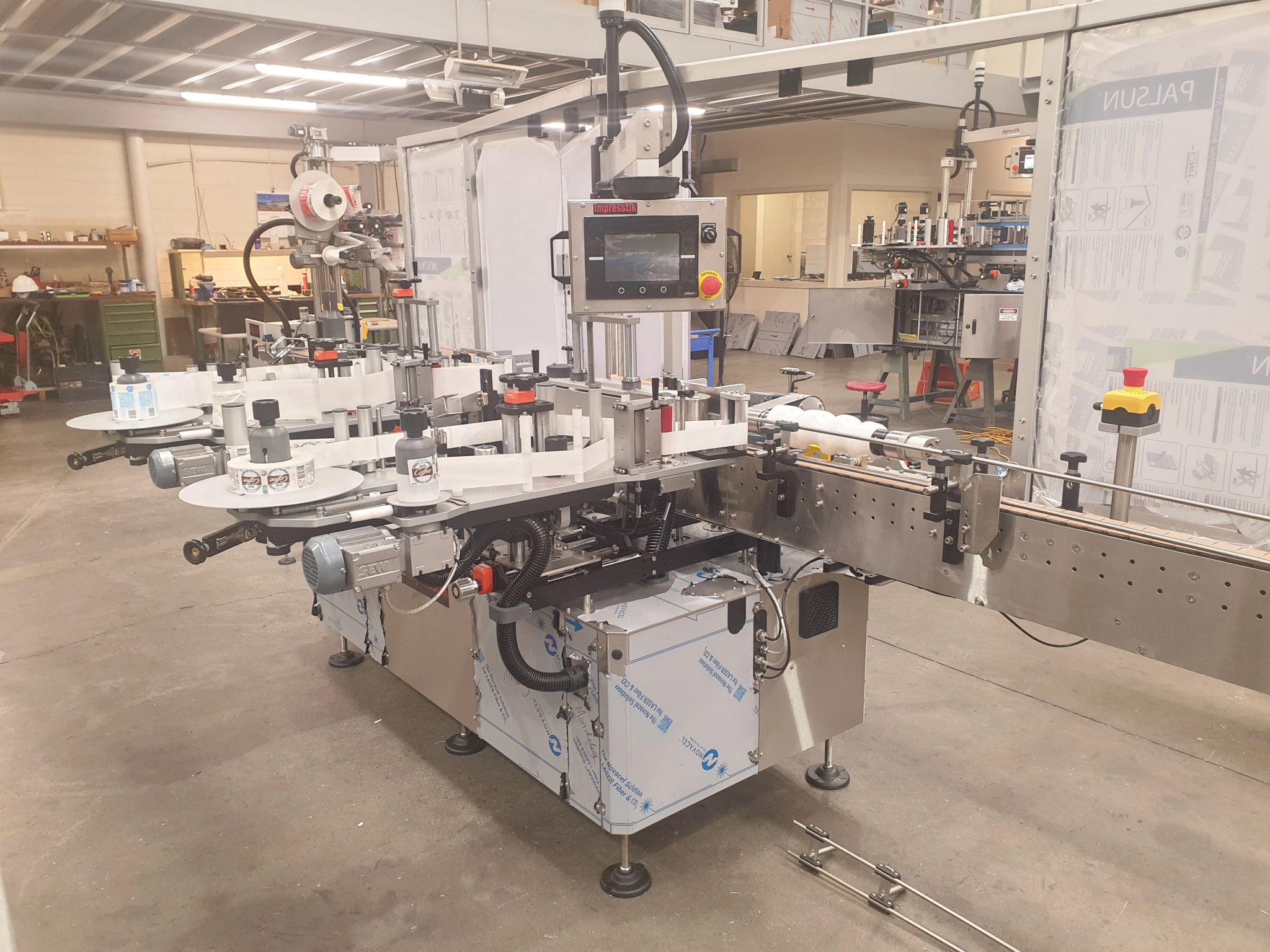
Are you a customer who needs a solution to label your round products at good production rates 100% of the time? Yes? Then look no further.

We have recently built a new line for a very good customer who has, as a result, now available a 100% uptime, zero-downtime, round bottle Impresstik machine. This machine is right handed, meaning is suits label rolls in copy position 3.

It's got everything you need to run fast and reliably, and super accurately, CONTINUOUSLY!!! Like, non stop. Features include:

- Full conveyor system with VSD control and Impresstik adjustable rails, with end zones prepared for flush side transfer
- Feed-scroll infeed system with 2x scroll tooling, including quick connect/disconnect couplings (tool-less)
- 2x vacuum wrap belts, each with their own rotary encoder for dispense sync, and each with separate vac pumps and vacuum bleed units for full control
- 2x high speed labelling stations with 0.4kW servo-drives, VSD controlled web waste rewind systems, fully synchronised to vac belt encoder units, and smart end of reel detection system
- Intelligent zero-downtime interchange between stations, based off end of reel conditions
- High end Mitsubishi PLC control system and touch screen HMI
- Integrated line control system
- High end product detection sensors, optimised for PET filled bottles.

It will be service prior to delivery, full set of manuals, setup sheets and installation and training support available.

To learn more please email one of our technical sales team at sales@impresstik.com.
 

00

If you're like most business owners, you want to keep your costs down. One way to do this is to bring your packaging and labelling in-house. By doing this, you'll save money on labour costs, shipping fees, and more. Here are 5 reasons why you should bring your packaging and labelling in-house:
1. You'll save money on labour costs. 

As any business owner knows, labour costs can quickly add up. One way to reduce these costs is by packaging and labelling products in-house. Not only will this save on the cost of hiring external labour, but it will also give you more control over the quality of your finished product. In addition, in-house labelling can be a great way to create a more personalised product. By including your company logo or branding on the label, you can ensure that your products stand out from the competition. So if you're looking to save on labour costs, in-house packaging and labelling is the way to go.

2. You'll be able to control the quality of your packaging and labelling. When you outsource your packaging and labelling, you're putting the quality of your product in someone else's hands. You might not be able to control the materials they use or the way they print your labels. This can lead to inconsistency in the look of your product and, ultimately, damage your brand. By packaging and labelling in-house, you have complete control over every aspect of the process. You can choose the materials you use, ensuring that they're high quality and fit with your brand. You can also design your labels in-house, so they're exactly how you want them. And, if there are any issues with printing or production, you can address them immediately. In-house packaging and labelling give you the control you need to produce a high quality product that reflects well on your brand.

3. You'll be able to customize your packaging and labelling to match your brand. 

This can help you to create a strong and consistent brand identity that will appeal to your target market. In addition, labelling in-house gives you greater control over the quality of your labels, which is important for creating a professional look. Finally, by labelling in-house, you'll be able to save money on labelling costs. Overall, packaging and labelling in-house offer many advantages for businesses that want to create a strong and recognizable brand.

4. You'll be able to ship your products faster if you package and label in house. 

With an in-house labelling system, you can print labels on demand, eliminating the need for costly pre-printed inventory. In addition, you'll be able to customise your labels to meet the specific needs of your product, ensuring that your customers can easily identify and track your shipments. And because you'll be in control of the labelling process, you can be sure that your products will always be correctly labelled and neatly packaged, helping to ensure a smooth and efficient shipping process.

5. You'll save time and hassle in the long run. 

If you're running a business, labelling can be an essential part of your operations. In-house labelling can save you time and hassle in the long run, and it can also give you more control over your products. In-house labelling allows you to customise your labels to meet your specific needs, and it also gives you the ability to create labels on demand. As a result, you'll be able to save time and money by labelling your products in-house. And because you'll have more control over your labels, you'll be able to ensure that they're accurate and error-free. So if you're looking for a way to save time and money, in-house labelling is the way to go.

As you can see, there are many benefits to packaging and labelling your products in-house. If you're looking for ways to save money and time, while also increasing the quality of your product, consider investing in a labelling system for your business. At Impresstik Labelling Systems, we offer a variety of high-quality options to choose from. Contact us today to find out more about how we can help you achieve your labelling goals.

https://www.impresstik.com/news/5-reasons-you-should-bring-your-packaging-and-labelling-in-house

00

With over 50 years of experience within the labelling industry, Impresstik has a rich history worth sharing. Get to know more about our company, including who we are, what we do, and just some of the fascinating projects we’ve had the pleasure of working on in the past.

It All Started in 1972…

Impresstik was founded in 1972 right here in Australia. Over the past 50 years, our company has grown to become one of Australia’s largest and most reputable suppliers of roll-fed pressure-sensitive labels and label application equipment. We’re also highly regarded as one of the leading manufacturers of self-adhesive labels and labelling machines within the country.

The Impresstik Group consists of three divisions, including Impresstik Labels, Impresstik Systems, and Impresstik Hi – Dec, which provides contract labelling and packaging services.

In 2018, The Impresstik Group was acquired by Print Media Group (PMG). In the past few years alone, we have grown to be a significant print and logistics specialist with extensive manufacturing, warehousing, and distribution facilities across Australia.

Manufacturing takes place at our two purpose-built locations using cutting-edge technology, including Macquarie Park and Seven Hills—both of which are located in Sydney, Australia. We’re the only company in Australasia that manufactures both components locally and markets both machinery and labels as a 'whole solution' bundle.

Our Labelling Machinery

At Impresstik, there are no “one-size fits all” options. We provide custom-built self-adhesive labelling machines that are created to a client’s specifications and can be crafted for any industry.

From bottle labelling, pharmaceuticals, and cleaning supplies to uniquely shaped containers and bottles— our team can find the solution to suit any company’s labelling machinery needs. It’s this focus on innovation, engineering excellence, and customer service that puts Impresstik at the forefront of our industry.

Our Commitment to Sustainability

From our humble origins in the early 70’s, Impresstik has always had the desire to leave a positive mark on the world around us—including through a focus on sustainable practices.

Just some of our current and long-standing initiatives to reduce waste include waterless offset printing; reducing our use of solvents; partnering with supplier programmes like UPM Raflatac for subtract materials; separating water recycling for plate making wash out; using and promoting PET backing liners with recycling properties; utilising state-of-the-art presses with reduced setup and set down, reduced labour usage, and therefore reduced energy use; and ensuring our quality systems are in line with ISO 14001 requirements.

Our Past Projects

Throughout our half a century of operation, we’ve had the pleasure of working on some incredible projects with cutting-edge companies.

Take Norco, for example, which is a 100% Australian farmer-owned dairy co-operative. Norco was established in Byron Bay in NSW back in 1895 and currently has 326 active members on 203 dairy farms in northern New South Wales and south-east Queensland.

Impresstik Labelling Systems commissioned a milk bottle labelling machine at Norco’s Raleigh site in NSW. The machine contains four servo-driven, high-speed labelling stations with an auto interchange feature that can label at speeds of over 200 bottles per minute. The auto interchange feature allows the line to run at 100% uptime without having to stop to change label rolls.

Just some of the other exciting projects we’ve worked on recently include providing a 2000VAC-HP system to The Collective—one of New Zealand’s leading yoghurt companies—as well as supplying an entry level wine bottle labelling system with dual dispensing stations to a company in California.

It’s incredibly rewarding to see our innovative labelling machines leave our soil to assist passionate businesses near and far.

At Impresstik, we guarantee that all areas of our clients' label packaging project are properly managed, including design, label application, print processes, trade logistics, consumer handling, recycling, and sustainability.

If you’re looking for a custom-built self-adhesive labelling machine designed to meet your specifications, contact our team to see how we can help. Together, we’ll establish parameters, work to your budget, and consult with all related parties (including design teams, other supporting and packaging suppliers, and internal / external manufacturing teams) to deliver a solution to suit your labelling machinery needs.

00

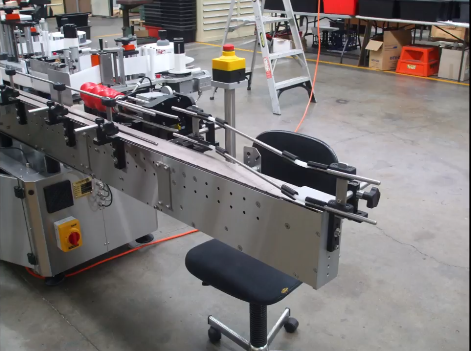
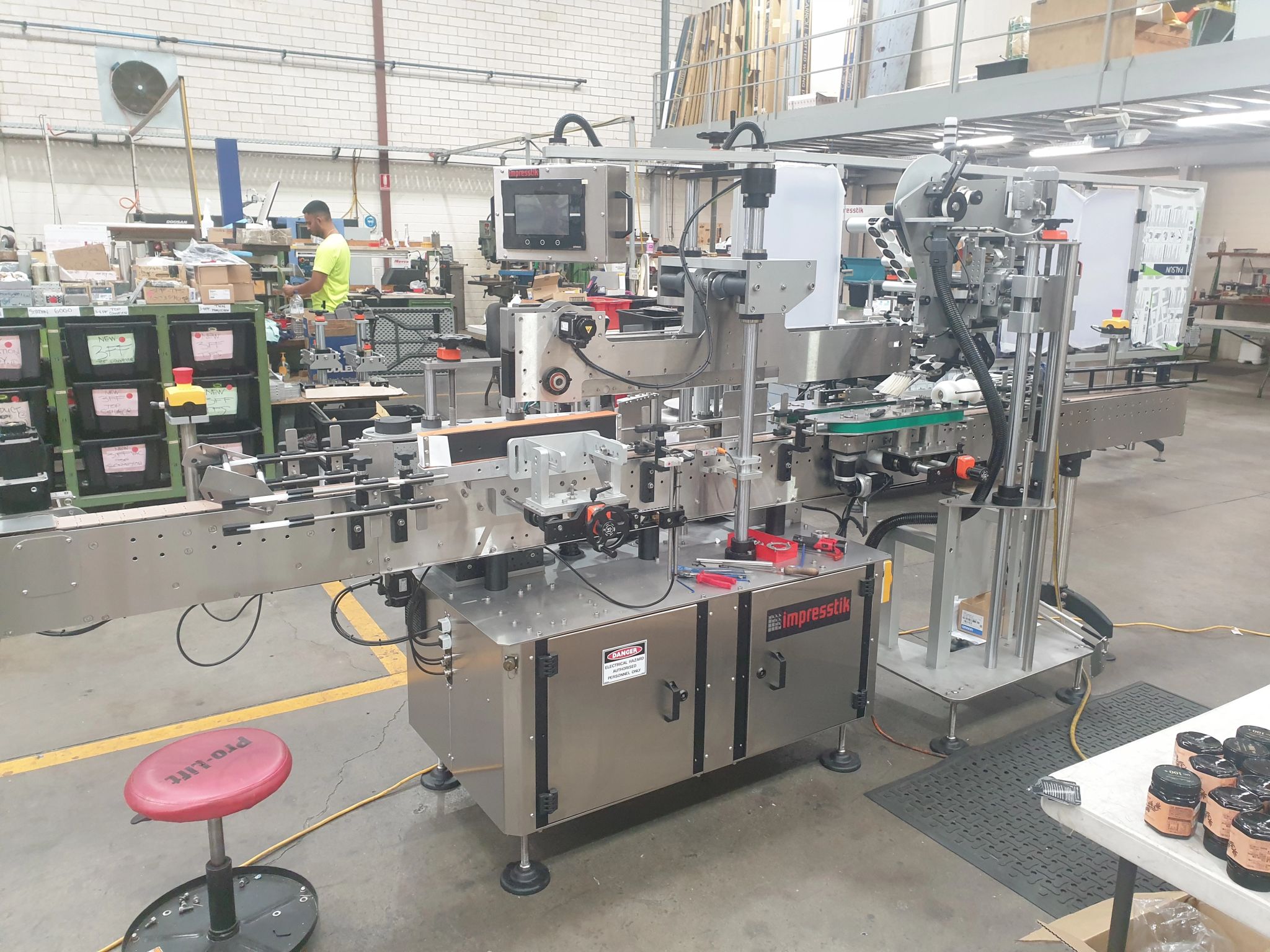
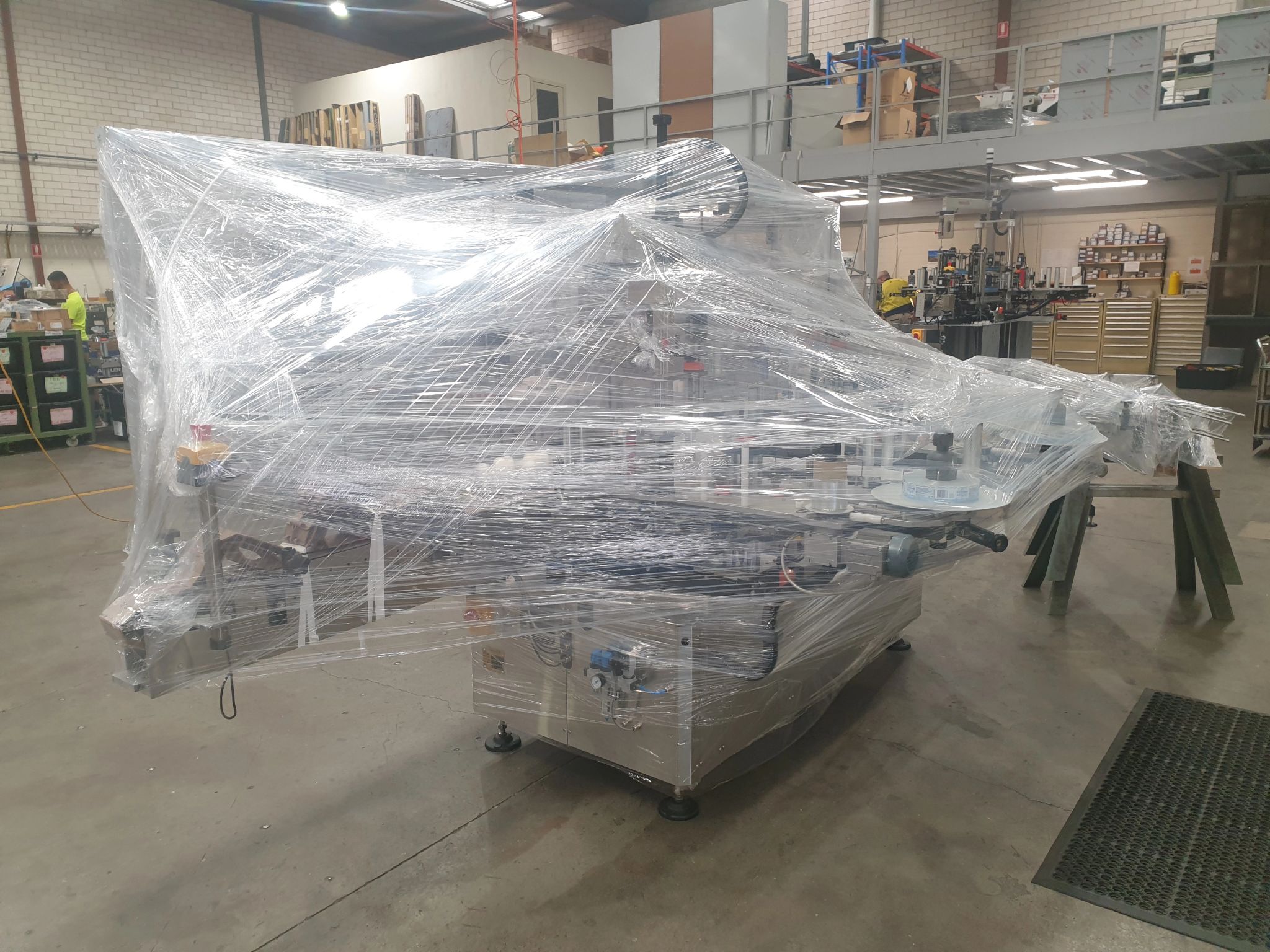
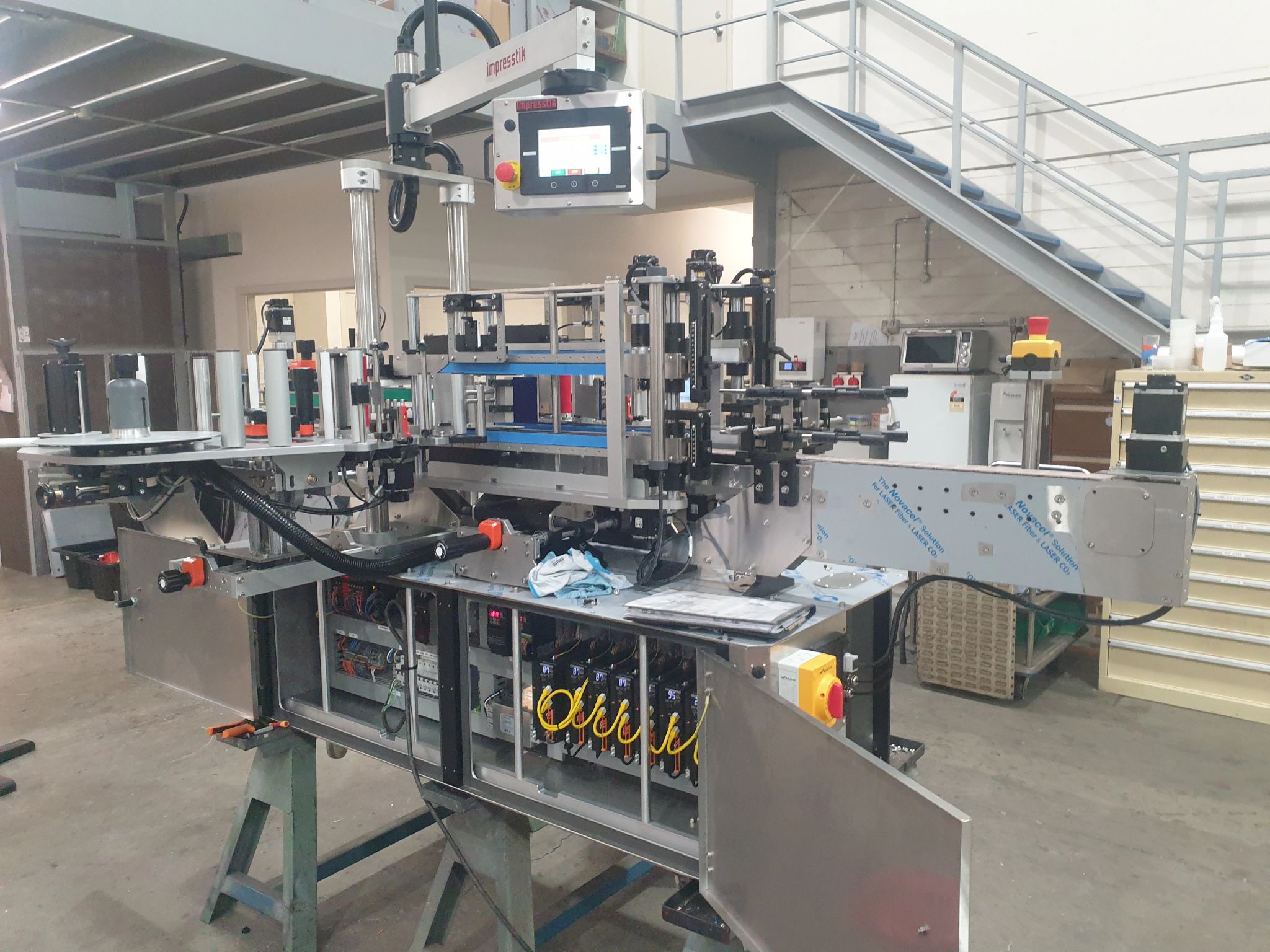
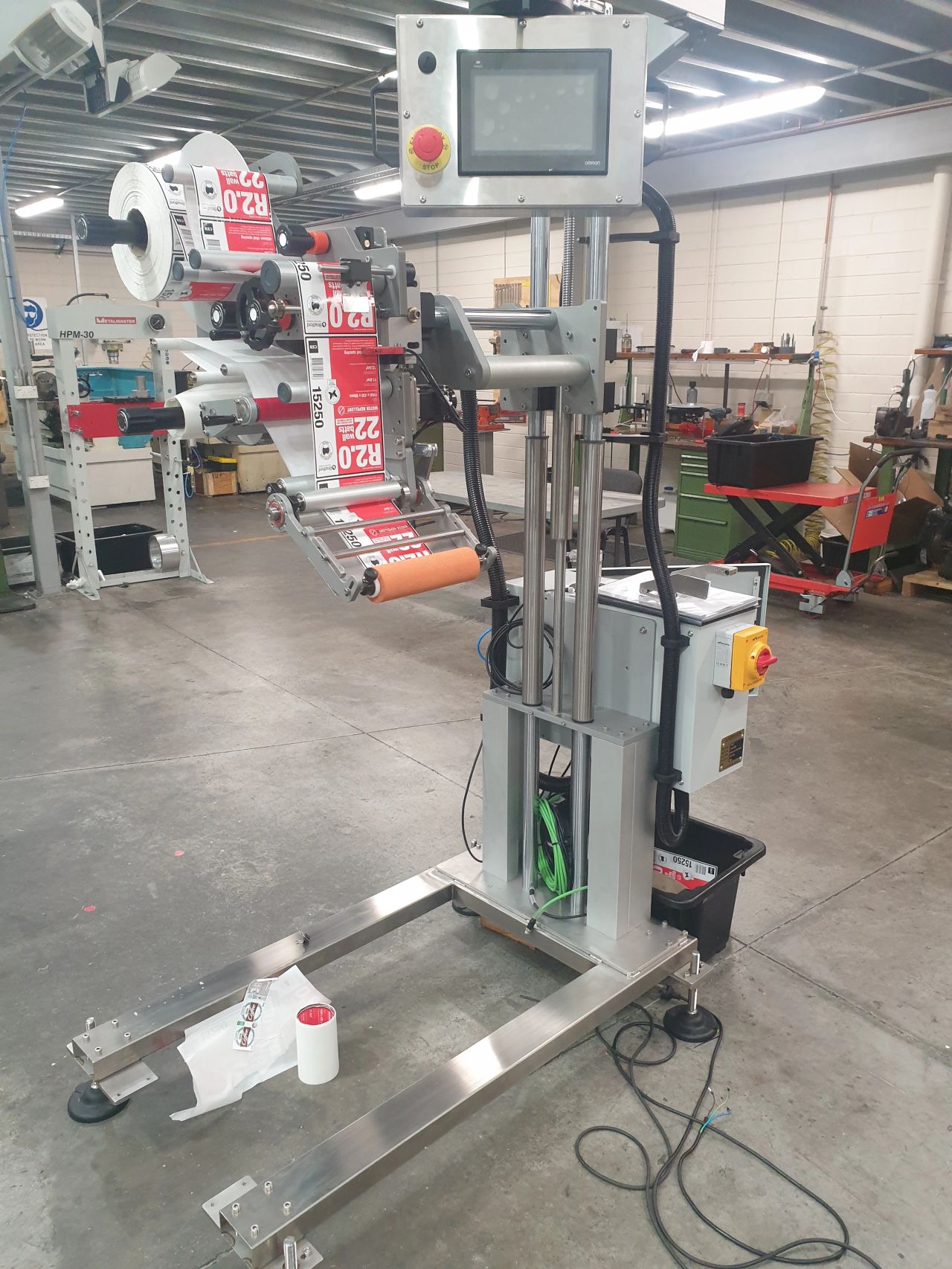
Busy start to the year with machines at different stages of their build. Some coming to completion, some going through customer testing and some ready to ship.

Exciting times!

00