
myWineClubApp™ - Agency Partner Plan
Wine Marketing Agencies Are Quietly Claiming a New DTC Communication Channel
Something unusual is happening in wine marketing.
While much of the industry continues to wrestle with declining response rates, unreliable email deliverability, and growing SMS fatigue, a new pattern is emerging behind the scenes: wine marketing agencies are beginning to secure strategic positions around an entirely new DTC communication channel.
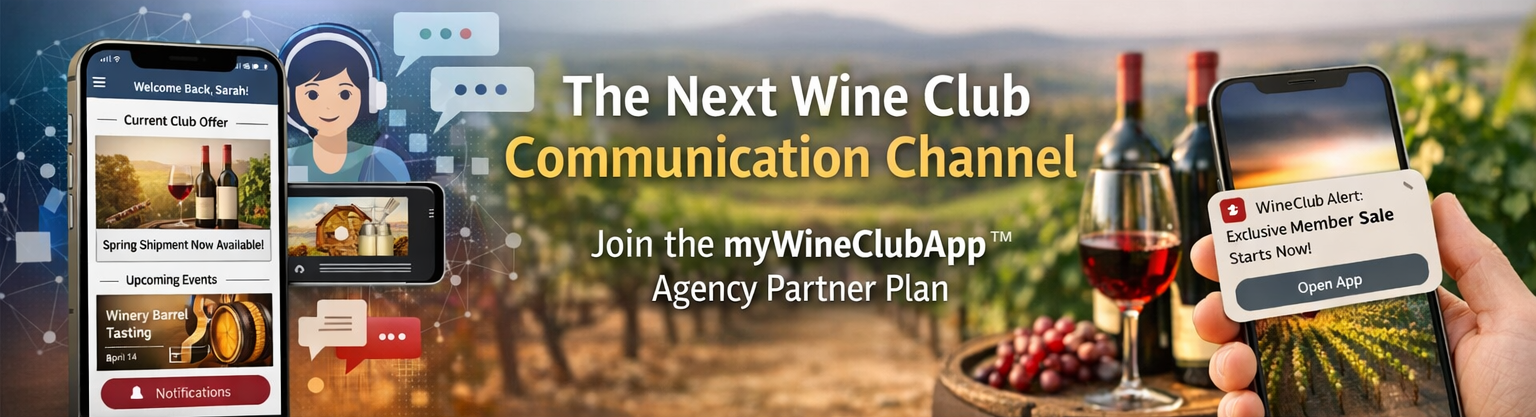
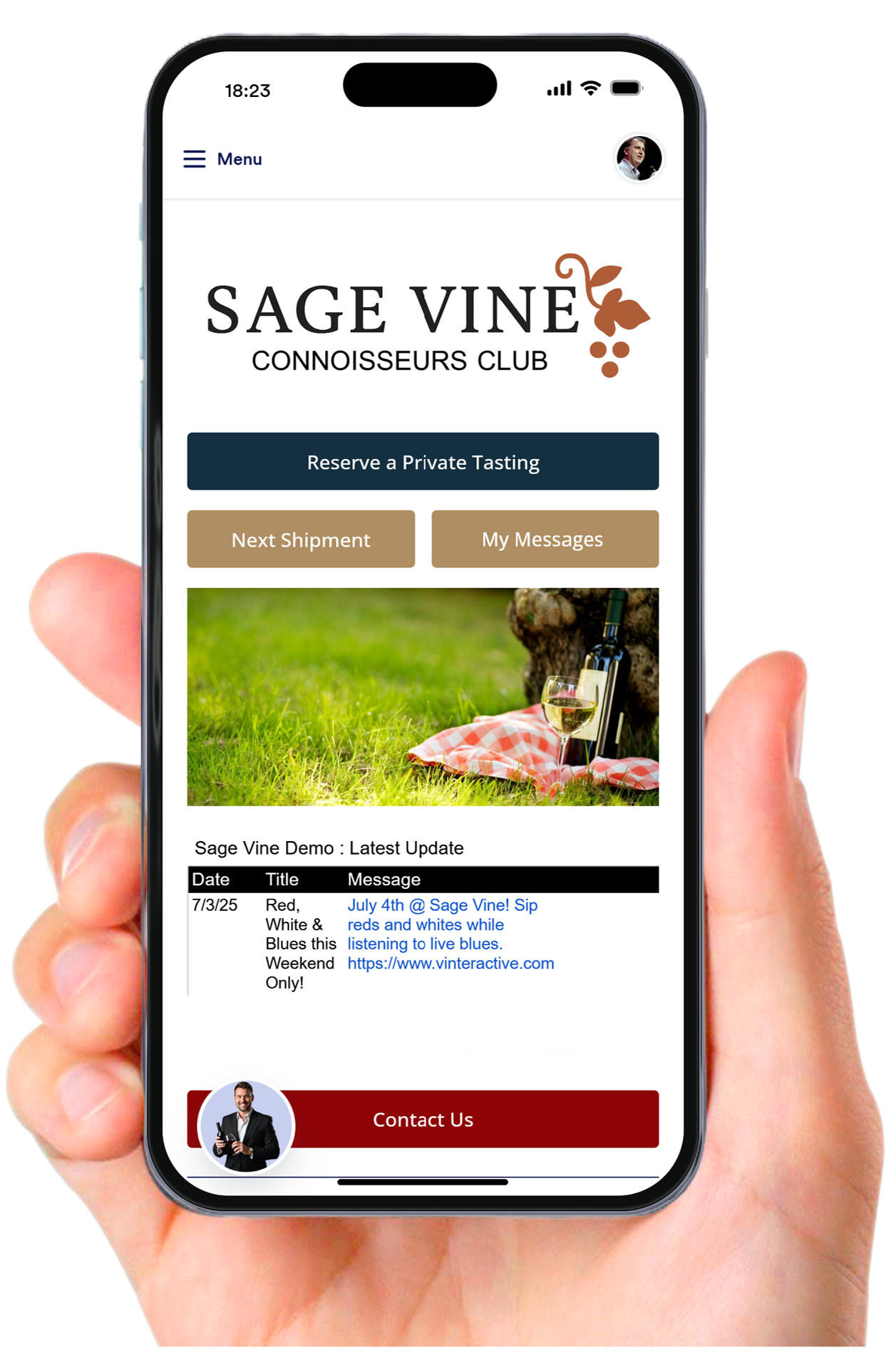
The channel is myWineClubApp™ — a patent-pending, preference-based messaging platform designed specifically for modern wine clubs.
 Why myWineClubApp?
Originally developed as a direct solution for wineries struggling with fragmented customer communications, myWineClubApp has quickly drawn attention from agencies who recognize a larger opportunity: helping their winery clients establish a persistent, brand-owned presence on consumers’ phones while reducing dependence on traditional channels.
Unlike conventional email and SMS strategies that can be compromised by carrier limits & filtering, myWineClubApp enables wine brands to deliver targeted in-app and push notifications based on consumer-selected preferences, creating a more reliable and less intrusive engagement model.
For agencies, the implications are significant:
- A differentiated service offering for DTC-focused clients
- A modern retention and loyalty tool for wine clubs
- A new category of branded digital assets that wineries can actually afford
- Early-mover advantage in an emerging communication channel
Learn More
Interest accelerated following recent demonstrations at the Unified Wine & Grape Symposium and the Oregon Wine Symposium. Leading agencies have already benefited from the myWineClubApp Agency Partner Plan, recognizing both the client value and strategic benefits of simplifying DTC marketing communications.
myWineClubApp is a production-ready platform designed to deploy quickly, integrate cleanly into existing winery workflows, and solve a problem every DTC marketer understands: how to reliably reach loyal customers without overwhelming them.
As wineries increasingly seek alternatives to crowded and unpredictable messaging channels, agencies are uniquely positioned to lead that transition.
Those moving early are not simply adding another tool to their stack — they are helping define how wine club communications evolve.

Beyond SMS & Email: 2 Proven DTC Channels for More Wine Sales in 2025
New Direct Mail Strategies & Affordable Mobile Apps Deliver Quick Wins
As we barrel into OND — the most critical sales quarter for wine brands — many DTC marketing teams are staring down a sobering reality: sales are slumping, inboxes are saturated, and SMS campaigns are losing steam.
The two primary direct marketing channels most wineries rely on — email (used by 85% of brands) and SMS (used by 15%) — are showing serious signs of fatigue. Promotional emails are increasingly buried in spam folders, and just last week, some of the industry’s leading SMS providers urged wineries to limit their use of SMS this holiday season due to deliverability concerns.
So what now?
If you’re a wine marketer looking for incremental sales this year without taking big risks, it’s time to revisit two proven channels that have quietly regained their edge: direct mail and affordable mobile apps.
📬 Direct Mail: The Comeback Kid of DTC Marketing
 Direct mail — the very first channel I used to succeed as a budding direct marketer — isn’t dead; it’s just been hibernating while trendy digital channels burned through their novelty.
According to new research published in the Fall 2025 MIT Sloan Management Review, “How Direct Mail Delivers in the Age of Digital Marketing”, direct mail is reemerging as a powerful complement to digital marketing, especially in industries plagued by consumer fatigue and rising digital ad costs.
Here’s why direct mail deserves a second look:
Higher engagement: Unlike emails that vanish in seconds, physical mail lingers — on kitchen counters, coffee tables, and wine racks. It’s tactile, memorable, and often shared.
Better analytics: Thanks to new attribution tools, marketers can now tie direct mail campaigns to online behaviors, making ROI tracking easier than ever.
Digital synergy: Brands like Warby Parker, Free People, and even Amazon are using direct mail to amplify their digital campaigns — not replace them.
For wineries, this is a golden opportunity. Most wine club members belong to multiple clubs and are drowning in promotional emails. A well-designed postcard or mini-catalog can cut through the noise and drive incremental purchases — especially when paired with a QR code or personalized URL that links directly to your online store.
CASE IN POINT
A recent MIT study analyzed the results of over 50 marketing campaigns that deployed direct mail and popular digital channels to generate sales of a broad range of consumer goods. Not only did direct mail reduce customer acquisition costs, but consumers who received direct mail generated more revenue per order and made more repeat purchases compared to those who received digital alternatives.
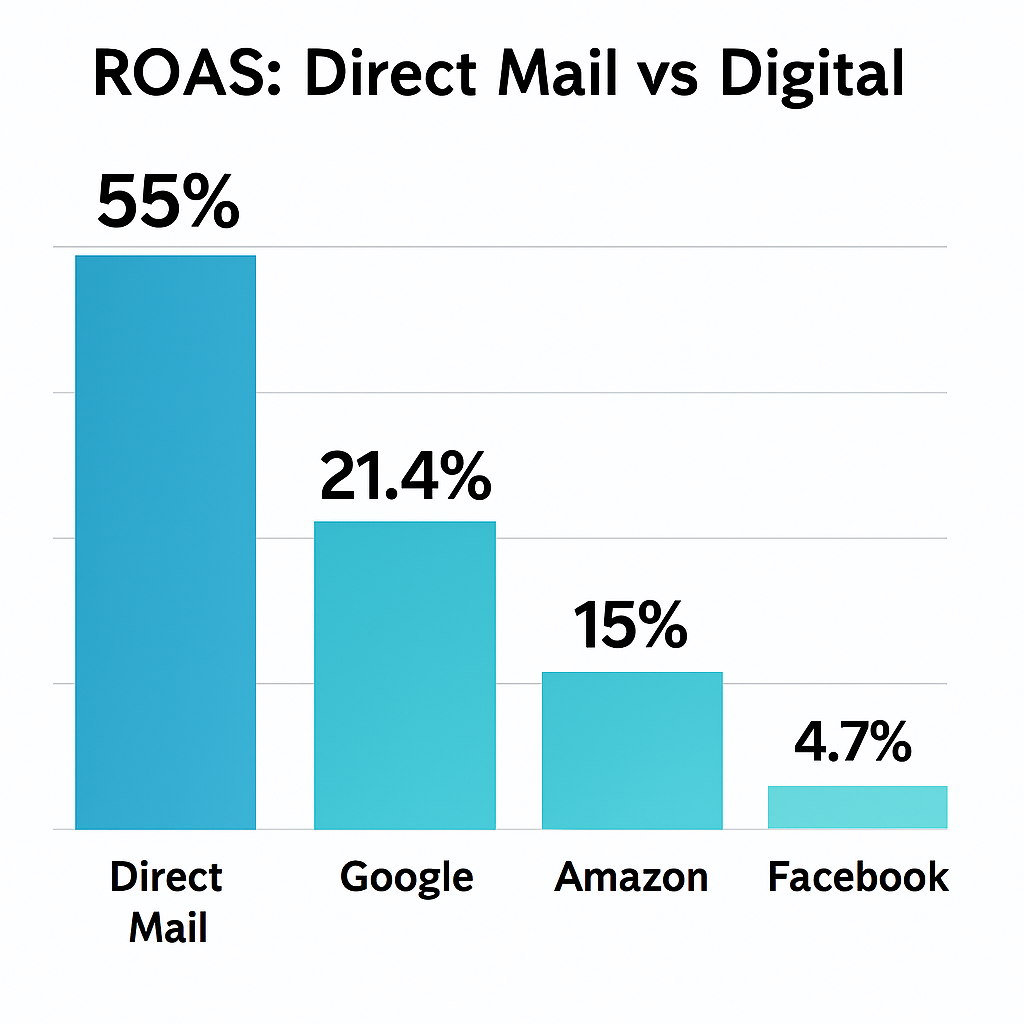 MIT Sloan Management Review - Fall 2025
📱 Mobile Apps: New Tech Finally Makes Winery Apps Affordable
Leading national brands have long understood the power of mobile apps. Having your brand’s icon on a customer’s home screen is like owning prime real estate in their digital life.
But until recently, the steep cost of entry — often $100K+ for development and thousands more in maintenance — made mobile apps a non-starter for most wineries.
Enter Progressive Web Apps (PWAs).
PWAs are lightweight, browser-based apps that behave like native mobile apps — without the App Store gatekeeping or hefty price tags. They install in seconds and can send push notifications, display personalized offers, and streamline wine club communication.
Why PWAs matter now:
Speed to launch: Branded PWAs can be live in under a week.
Affordability: Pre-built solutions, such as myWineClubApp, start at under $100/month, while DIY solutions cost even less.
Direct access: In-app offers and push notifications bypass email filters and SMS fragility, delivering offers straight to your best customers’ phones.
Better consumer engagement:
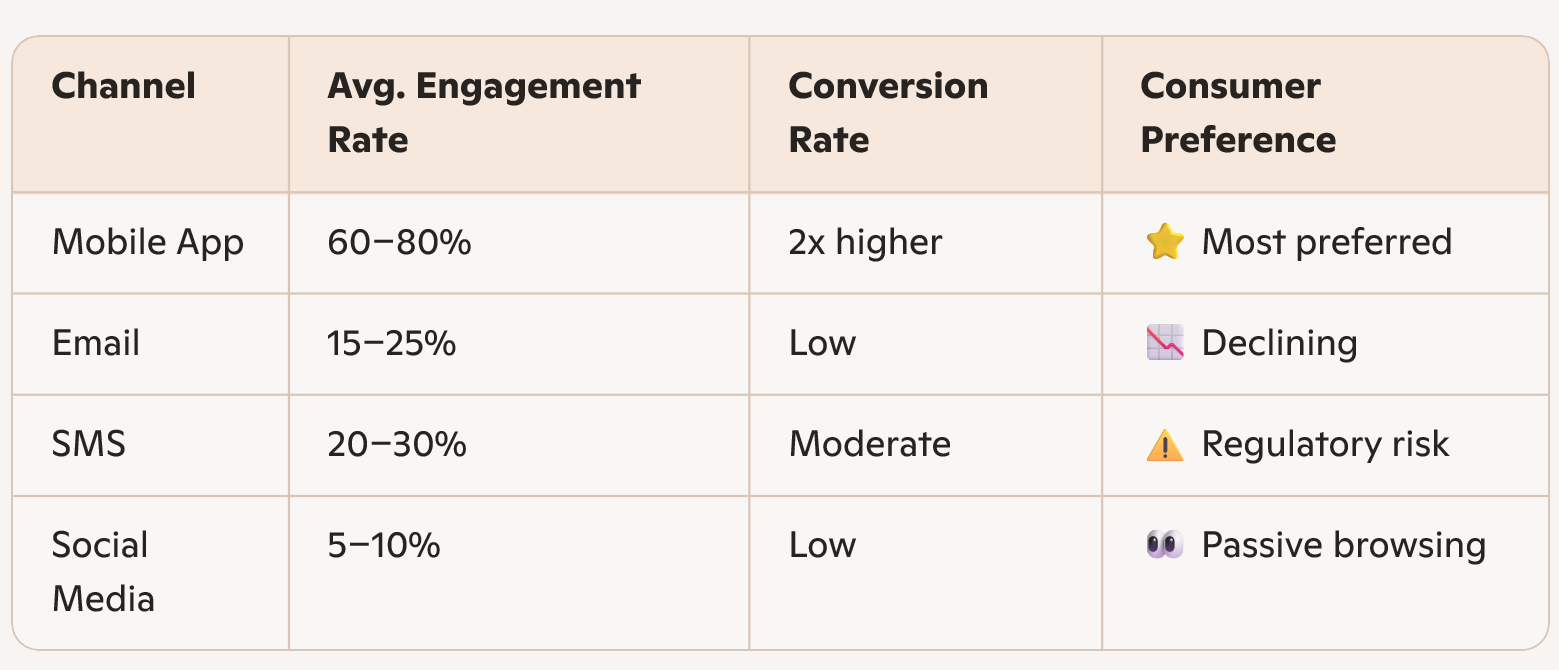 VinterActive Research Summary - 2025
🎯 Final Thoughts & Next Steps
If your OND sales plan relies heavily on email and SMS, and you’re not 100% certain you’ll meet your sales goals, perhaps it’s time to hedge your bets and try something new. Direct mail and mobile apps aren’t just viable — they’re proven, affordable, and easy to implement.
Here’s what you can do today:
Direct Mail: Work with a local printer or online service to create a holiday postcard or mini-catalog for your wine club members. Include a QR code or personalized URL as your call-to-action. Keep it simple, seasonal, shippable, and trackable.
Mobile App: Explore pre-built PWA solutions like myWineClubApp, or build your own PWA from scratch. You could have your brand on your members’ phones by next week — and start sending push notifications well before the Thanksgiving holiday.
Whether you’re looking to boost holiday sales or future-proof your DTC strategy for 2026, these underused DTC marketing channels offer a proven way to stand out, reconnect, and convert sales prospects into incremental revenue in 2025 and beyond.
Happy Selling!
ABOUT THE AUTHOR
Bryan St. Amant, founder and CEO of VinterActive, holds an MS in Business Management from M.I.T. and a BS in Mechanical Engineering from U.C. Berkeley. He’s built expert systems for governments, tech giants, and wine marketers. His award-winning work has been featured in books, magazines, and seminars, including CFO Magazine, Inc., CNN Money, eMarketing Magazine, Integrated Direct Marketing, Direct Marketing Association, Grapevine Magazine, Wine Marketing Report, Wine Business, and the Wine Industry Network.
The Perils of Using AI to Replace Entry-Level Jobs
EXCERPT FROM: AI Wine Marketing News by VinterActive
 Perhaps you’ve read the headlines about entry-level workers struggling to find jobs due to the rise of AI.
And especially if cash flow is tight, it’s mighty tempting to target entry-level jobs that might be done at lower cost by AI assistants controlled by seasoned marketers.
On the other hand, Harvard Business Review warns:
“Replacing entry-level jobs with AI may harm long-term competitiveness by eliminating critical training grounds for future leaders.” — Harvard Business Review
What does that mean for wine business managers?
As you probably know, AI works best as an assistant, not a replacement.

So, if you don’t have entry-level marketers learning from your experienced leaders, what do you do when senior leaders move to greener pastures?
The answer is to challenge leaders to identify repetitive work that AI can reliably perform.
Then, both entry-level staff and senior managers can focus on higher-value tasks that require human intelligence to succeed.
To learn more, see the source: https://hbr.org/2025/09/the-perils-of-using-ai-to-replace-entry-level-jobs
GRAB YOUR FREE SUBSCRIPTION NOW
ABOUT THE AUTHOR
Bryan St. Amant, founder and CEO of VinterActive, holds an MS in Business Management from M.I.T. and a BS in Mechanical Engineering from U.C. Berkeley. He’s built expert systems for governments, tech giants, and wine marketers. His award-winning work has been featured in books, magazines, and seminars, including CFO Magazine, Inc., CNN Money, eMarketing Magazine, Integrated Direct Marketing, Direct Marketing Association, Grapevine Magazine, Wine Marketing Report, Wine Business, and the Wine Industry Network.
Boost Holiday Wine Club Sales with a Mobile App
Ready in 7 Days
 Let’s not beat around the bush…
Direct-to-consumer (DTC) wine sales are down, and fewer wine country visitors fill our tasting rooms. So, this holiday season, all eyes are on wine club sales.
But you already know there’s a problem.
Many of your best customers complain that they “never see your emails.” And the growing costs and complexity of SMS can overwhelm any wine marketing team.
So how can you win this game?
Your Secret Weapon: A Custom Wine Club App
Email still matters. It’s great for long-form content, images, or receipts. But between spam filters and overcrowded inboxes, you’re lucky if 50% of your club members see your pick-up reminders, deadlines for customizing shipments, or special holiday sales offers.
And even if you text your club members, many of your best customers won’t opt in.
That’s why leading brands turned to branded mobile apps over a decade ago. Chances are, you have one of their apps on your phone now.
For companies like Sephora, Starbucks, Target, and Amazon, the superior customer engagement and incremental sales generated by mobile apps made them worth every penny they paid for them.
Sephora: App users spend 2x more than non-app users; drives 50%+ of digital sales
Starbucks: App users visit 2x more often; mobile orders = ~25% of U.S. transactions
Target: App users engage with promotions and loyalty features 3x more often
Amazon: Over 70% of customers use the mobile app; app users convert at higher rates
But with development costs averaging $100-$200K to build a mobile app, wine club apps were out of the question for most wineries, until now.
myWineClubApp™ - Custom Wine Club Apps starting @ $99/mo
For decades, I’ve made it my business to discover affordable marketing technologies that can help my friends and neighbors in the wine industry.
First, it was email, then ecommerce, mobile websites, social media, and SMS. But, like most DTC marketers I know, I’ve always wished small brands could afford their own mobile apps.
Apparently, some wishes come true!
When I first encountered a Progressive Web App, I instantly realized this affordable technology, combined with personalized consumer messaging, could provide even the smallest wineries many of the same benefits currently enjoyed by the world’s most successful brands.
That’s when I got to work building myWineClubApp™.
An Affordable Solution to a Real Problem
Q: How can wine club members act on sales messages they never receive?
A: The answer is they can’t…
But by using web-app technology, your wine club messages never get routed to a spam folder or quarantined by an SMS carrier, so customers using your app instantly receive every message you send directly to their home screen.
No email filters, no software to learn, no SMS compliance headaches, and no surprise bills at the end of the month.
And here’s the kicker… If you want a custom wine club app for your brand, you can have one in less than 7 days – just in time for you to crush your OND sales goals.
 A New Channel for a New Era
We didn’t just build an app. We built a communication platform designed for the realities of 2025:
Shrinking attention spans
Rising compliance costs
Fragmented customer journeys
myWineClubApp is how small wineries stay visible, relevant, and profitable – especially when the old channels stop working.
If you’re a wine club manager staring down OND with a shrinking list and a broken toolkit, we’re here to help.
Let’s make sure your best customers never miss another message.
Your Invitation to Profit from myWineClubApp
I built myWineClubApp for wineries and wine club managers who care deeply about their members, their craft, and their communities.
If you’re feeling the inbox squeeze or see club performance wobble because messages go missing, I’m happy to show you a calmer path.
If you’re a forward-thinking wine marketer, we invite you to join our crew.
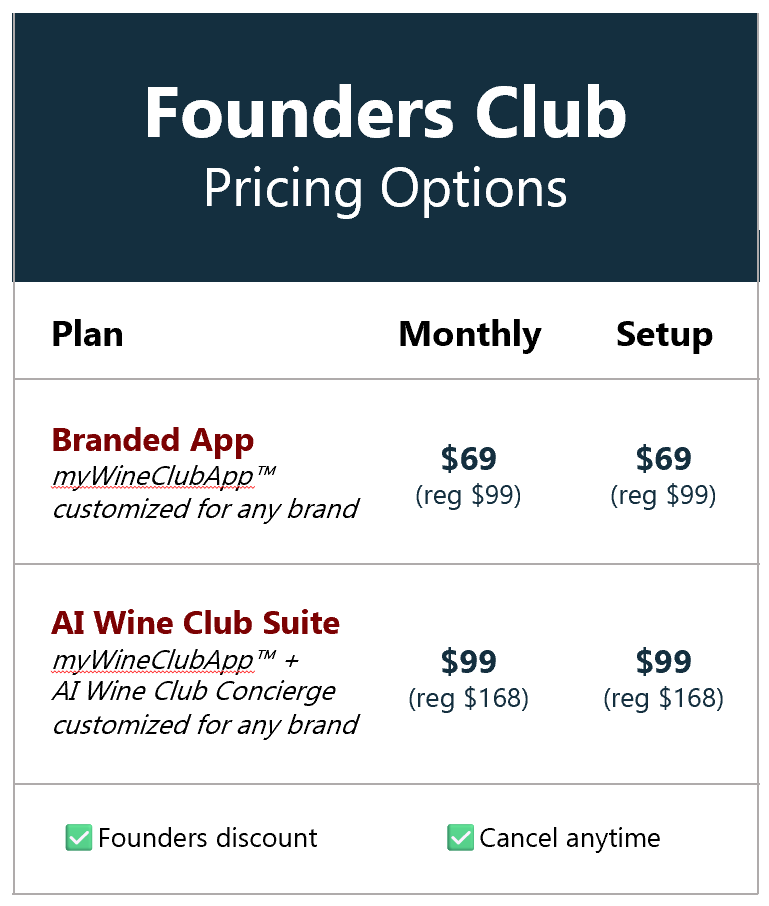
 Join our Founders Club to experience a better way to engage club members. Be one of the first to delight your best customers and profit from your own wine club app while your competitors are still on the sidelines.
Or try our Instant Demo to decide if a simple, reliable, member-first communication channel would lower your blood pressure and raise your sales conversions this holiday season.
Because the right messages, delivered the right way at the right moment, still provide enormous value to everyone.
That’s the heart of effective DTC marketing, and that’s the secret of myWineClubApp™.
Happy Selling!
ABOUT THE AUTHOR
Bryan St. Amant, founder and CEO of VinterActive, holds an MS in Business Management from M.I.T. and a BS in Mechanical Engineering from U.C. Berkeley. He’s built expert systems for governments, tech giants, and wine marketers. His award-winning work has been featured in books, magazines, and seminars, including CFO Magazine, Inc., CNN Money, eMarketing Magazine, Integrated Direct Marketing, Direct Marketing Association, Grapevine Magazine, Wine Marketing Report, Wine Business, and the Wine Industry Network.
Texas Just Changed the Rules for SMS Marketing
Here's What DTC Wineries Need to Know
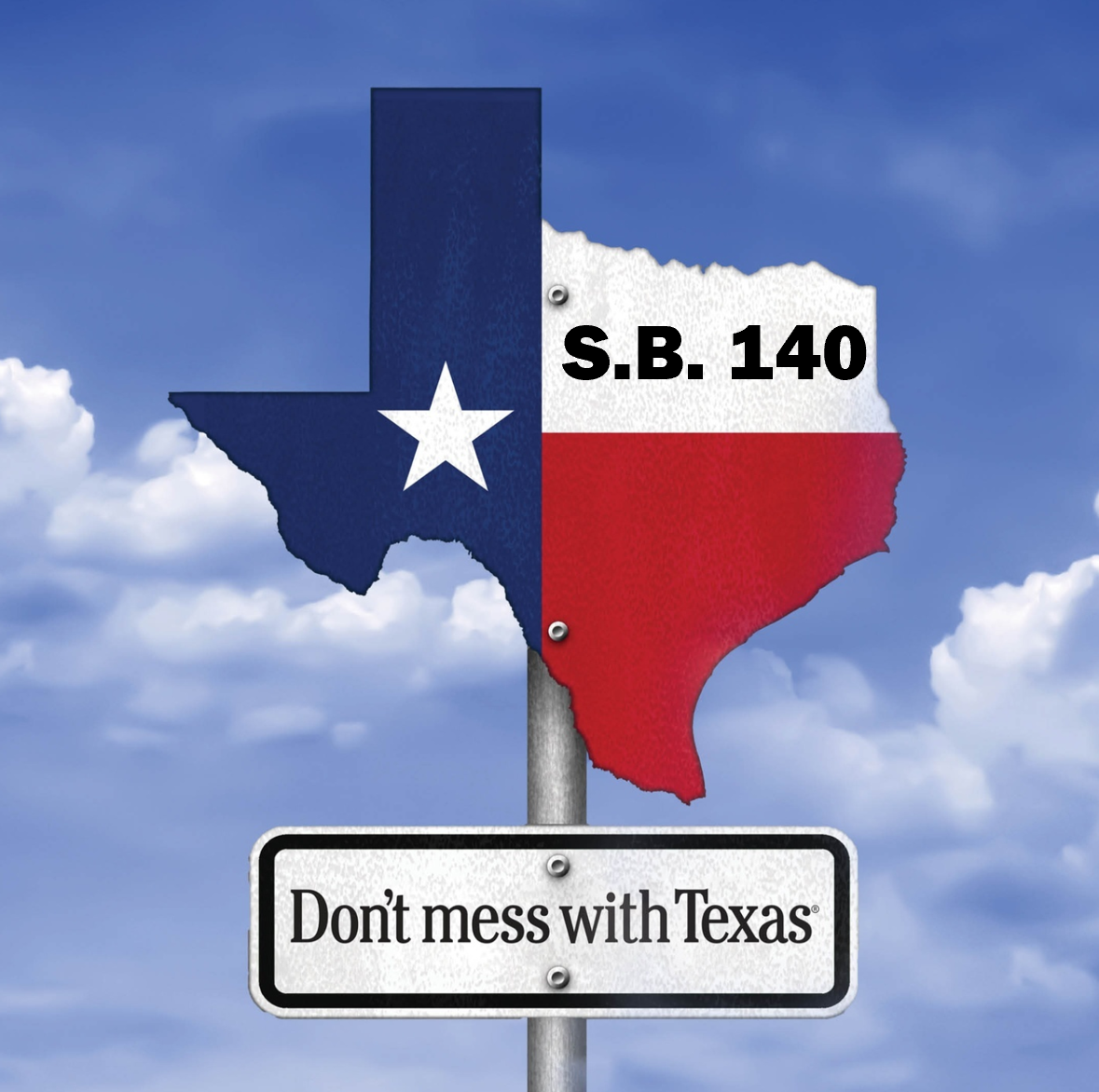 If you’re a U.S. winery using SMS marketing -- or even just considering it -- you need to know about a new Texas law that quietly went into effect on September 1, 2025.
Senate Bill 140 (S.B. 140) expands the state’s telemarketing laws to include promotional text messages, and it applies to any business texting Texas residents, regardless of where that business is located.
For small, family-owned wineries already navigating a shrinking market, this law could introduce new compliance risks, legal exposure, and operational headaches.
And while I’ve long been an advocate for SMS wine marketing, we can no longer recommend it for most wineries unless they’re either exempt from S.B. 140 or have a customer base concentrated in Texas.
Let’s break down what’s changed -- and what you can do about it.

⚖️ What S.B. 140 Actually Says
S.B. 140 updates the definition of “telephone solicitation” to include SMS, MMS, and RCS messages. That means promotional texts now fall under the same rules as telemarketing calls, including:
Quiet hours (no unsolicited texts during restricted times)
Mandatory registration with the Texas Secretary of State
$10,000 bond or surety requirement
Quarterly compliance reporting
Private enforcement rights, allowing individuals to sue violators directly
Each violation can trigger fines up to $5,000 -- and yes, that includes businesses outside Texas.
🧩 Who’s Most at Risk?
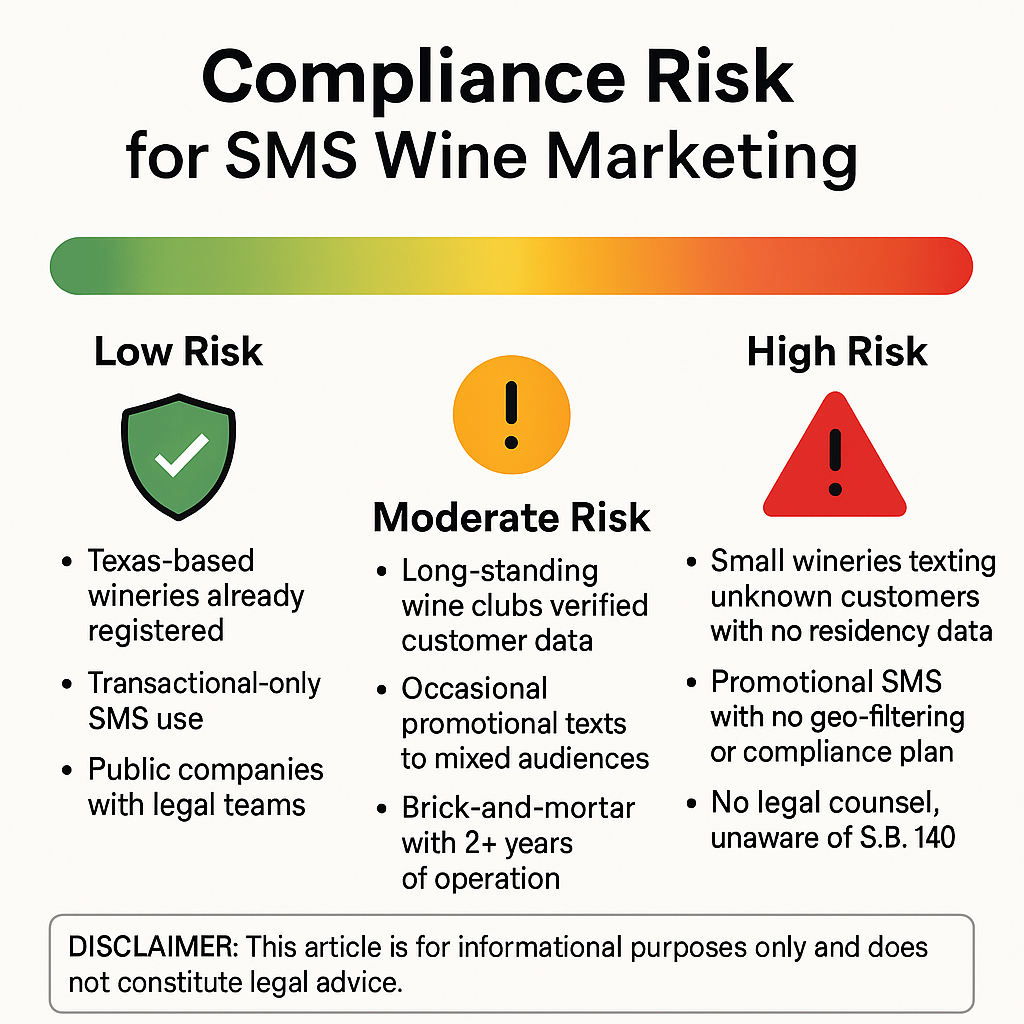
Only about 14% of U.S. wineries currently use SMS marketing. Of those, some are:
Based in Texas (compliance is a no-brainer)
Publicly traded or long-established (may qualify for exemptions)
Using SMS only for transactional messages (less affected)
But many small wineries fall into a gray zone. They’re texting loyal customers, unaware that a Texas resident on their list could trigger legal exposure.
And here’s the kicker: area codes and shipping addresses don’t prove residency. Unless you’re collecting verified state-of-residence data, you can’t be sure you’re not texting someone in Texas.
🧠 Exemptions Exist -- But They’re Tricky
S.B. 140 includes exemptions for:
Businesses contacting current/former customers under the same name for 2+ years
Subscription-based sellers (e.g., wine clubs)
Brick-and-mortar businesses operating for 2+ years
Certain regulated/licensed entities
But these exemptions aren’t automatic. You’ll need to evaluate your business model, message content, and customer relationships carefully. And if you’re unsure, talk to a lawyer -- preferably one licensed in Texas.
💸 The Cost of Compliance
If you want to keep texting Texas residents, you’ll need to:
Register with the state ($200/year)
Post a $10,000 bond (or pay ~$100/year for a surety bond)
Submit quarterly reports
That’s not outrageous -- but it’s a new layer of cost and complexity. And for wineries already cutting expenses, it may not pencil out.
🧨 The Real Risk: Predatory Enforcement
This law also opens the door to ADA-style shakedowns, where out-of-state lawyers target small businesses with lawsuits over technical violations. Even if you have a solid defense, legal costs and time drain can be devastating -- especially if you don’t have a Texas attorney on retainer.
🚪 What You Can Do Right Now
- Consult your compliance officer or attorney to confirm your risk level vs. your need to use text marketing.
- If you've already complied with S.B. 140, follow the rules, keep texting, and hope for the best.
- If you're not exempt from the law, consider the costs and benefits of complying with S.B. 140.
- If you're not exempt from the law, also consider other proven ways to communicate directly with loyal customers, using email, direct mail, or affordable mobile apps customized for wine marketing.
🍷 Final Thought
S.B. 140 doesn’t have to be a crisis. But it is a wake-up call.
If you’re one of the 14% of wineries using SMS, take a moment to assess your exposure, review your exemptions, and decide whether this channel still makes sense for your business.
And if you’re not using SMS yet? Maybe that’s a blessing in disguise.
Let’s keep selling wine. Let’s keep it legal. And let’s keep small wineries thriving -- no matter what laws get thrown our way.
Happy Selling!
P.S. Be thankful we're not in the lab-grown meat business; on the same day S.B. 140 went into effect, Texas made it illegal to "manufacture, process, possess, distribute, offer for sale, or sell cell-cultured protein.
**DON'T MESS WITH TEXAS**
myWineClubApp™ Delivers Club Notifications Instantly
Custom Wine Club Apps starting @ $69/mo
Pricing starts at $69/mo 🔥🔥🔥 If your wine club members complain they don't receive your emails, this message is for you. 🤗
You are not alone...
Roughly 50% of your emails are devoured by spam filters. Too many critical wine club messages aren't reaching your best customers...disappointing them and you.
What's a wine merchant supposed to do?
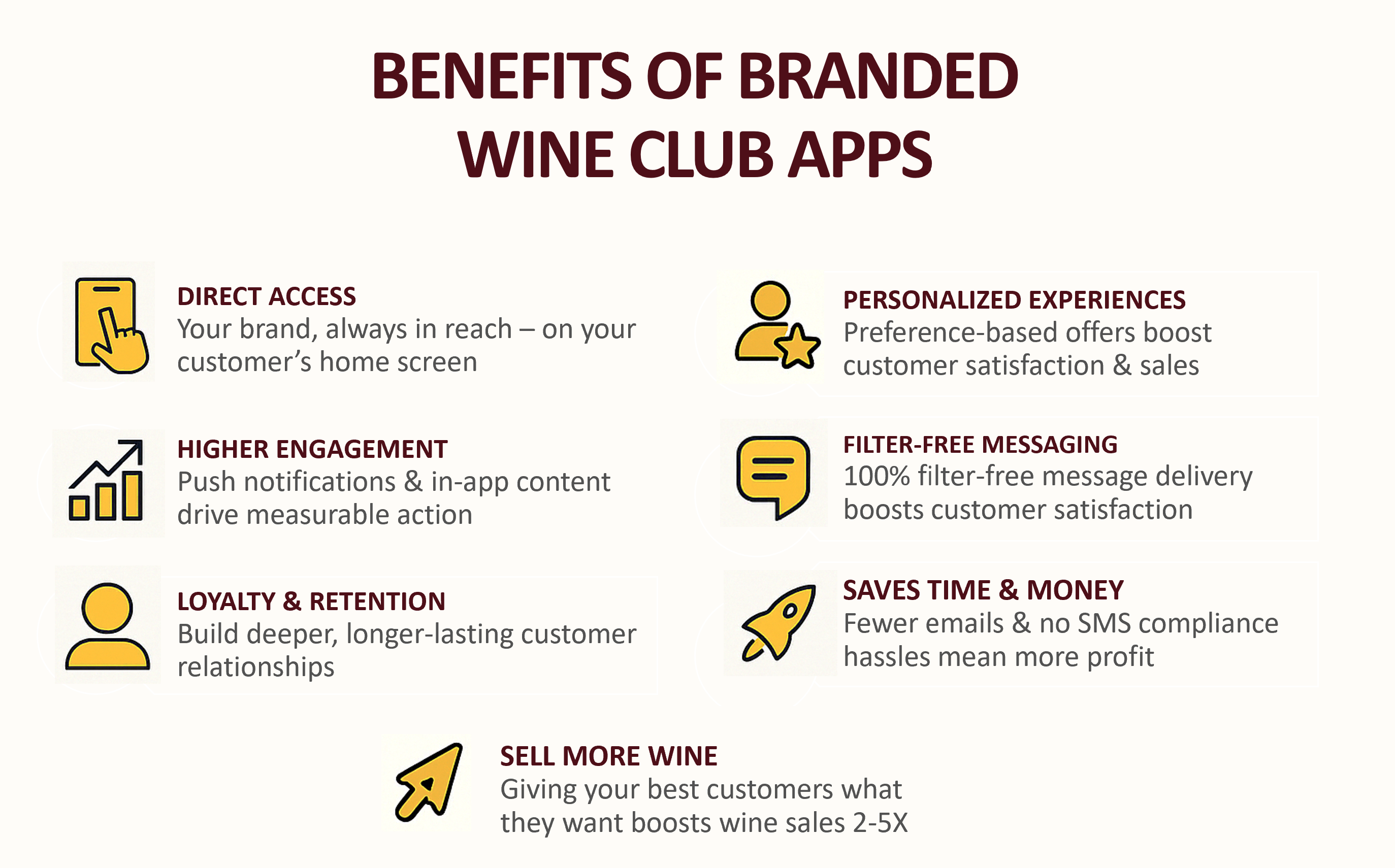
Here's a solution: myWineClubApp™ -- the world's first wine club web app delivering 100% filter-free messages directly to your best customers' phones.
No email spam filters. No SMS compliance hassles.
Just relevant club news delivered directly to your customers' home screens using an affordable mobile web app customized for your brand.
Trusted by leading brands from Starbucks to Nike, mobile apps provide a direct communication channel to your best customers. And now, even the smallest wine brands can offer their customers the convenience of a mobile app built just for them.
So, now what's a wine merchant supposed to do?
Check out myWineClubApp™ before your competitors do...
Happy Selling!
Bryan St. Amant
VinterActive LLC
https://www.vinteractive.com/wine-club-communication-app
Wine Club Communication Breakthrough!
Revolutionary Wine Club Messaging App
Pricing starts at $69/mo 🔥🔥🔥If your wine club members complain they don't receive your emails, this message is for you. 🤗
You are not alone...
Roughly 50% of your emails are devoured by spam filters. Too many critical wine club messages aren't reaching your best customers...disappointing them and you.
What's a wine merchant supposed to do?
Here's a solution: myWineClubApp™ -- the world's first wine club web app delivering 100% filter-free messages directly to your best customers' phones.
No email spam filters. No SMS compliance hassles.
Just relevant club news delivered directly to your customers' home screens using an affordable mobile web app customized for your brand.
Trusted by leading brands from Starbucks to Nike, mobile apps deliver a direct communication channel to your best customers. And now, even the smallest wine brands can offer their customers the convenience of a mobile app built just for them.
So, now what's a wine merchant supposed to do?
Check out myWineClubApp™ before your competitors do...
Happy Selling!
Bryan St. Amant
VinterActive LLC
https://www.vinteractive.com/wine-club-communication-app
Design Your Own Custom AI Concierge for FREE
Affordable pricing starts @ $69/mo

Websites, not tasting rooms, are the first point of contact for most consumer journeys.
Still, too many merchants greet website visitors with pretty pictures and pushy pleas to share personal contact info before they’re welcomed with any semblance of hospitality.
That’s why VinterActive created an AI Winery Concierge -- a multi-channel chatbot -- trained in the art and science of delivering attentive, personalized customer service 24/7.
Why Add an Affordable AI Concierge to Your Team?
| KEY BUSINESS BENEFITS | KEY MARKETING FEATURES |
|
|

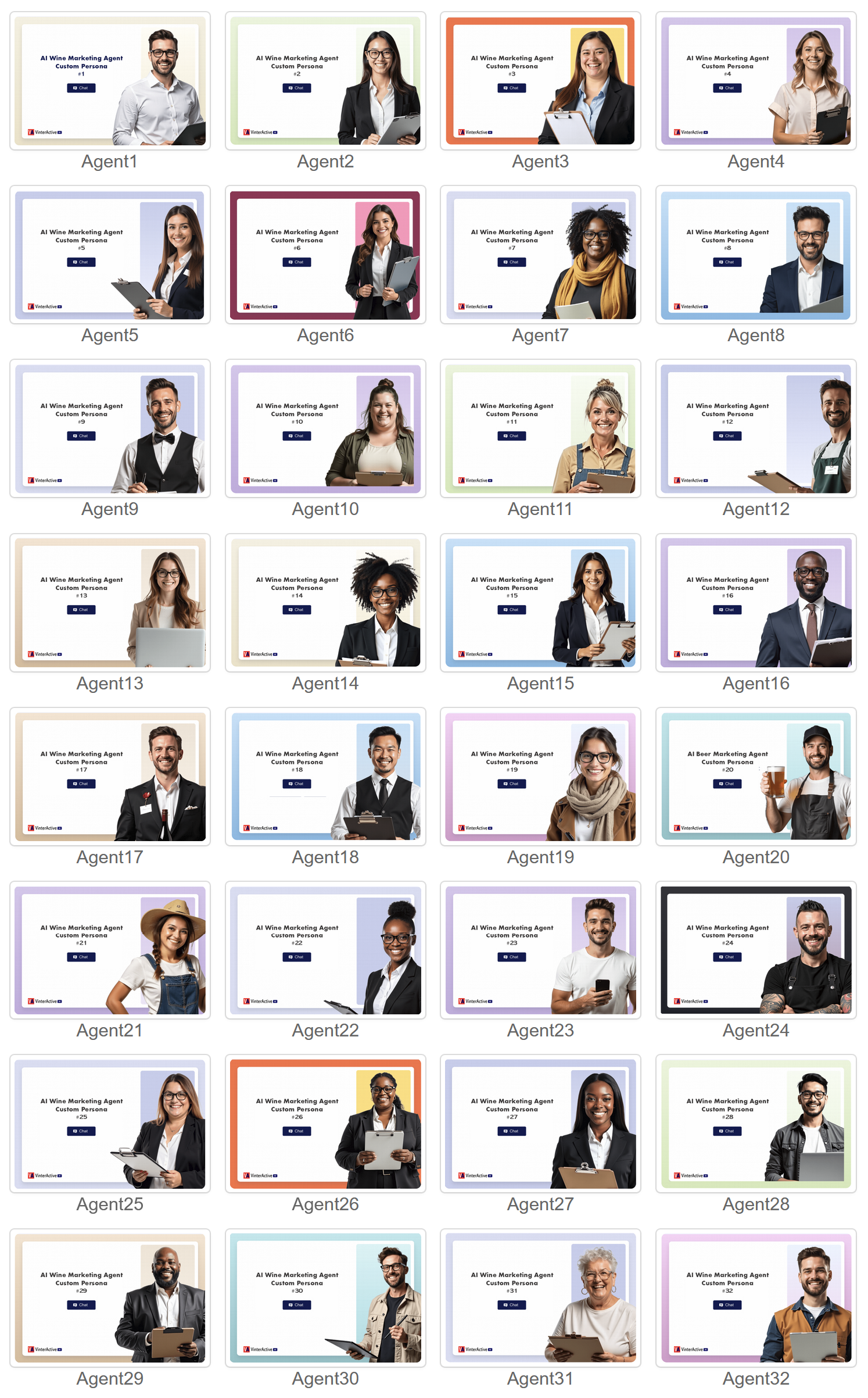 Custom Agent Personas
Express Your Unique Brand
From your agent's name, to job title, conversation style, and appearance, VinterActive AI Agents are ready to support any brand or any vibe.
Choose from a diverse selection of pre-built agent personas, or make your own.
Our step-by-step onboarding process makes it easy to design and train your ideal AI assistant.
Why use an online concierge?
The same reason you pay tasting room staff...to sell more wine!
ABOUT THE AUTHOR
Bryan St. Amant, founder and CEO of VinterActive, holds an MS in Business Management from M.I.T. and a BS in Mechanical Engineering from U.C. Berkeley. He’s built AI-powered systems for governments, tech giants, and wine marketers. His award-winning work has been featured in books, magazines, and seminars, including CFO Magazine, Inc., CNN Money, eMarketing Magazine, Integrated Direct Marketing, Direct Marketing Association, Grapevine Magazine, Wine Marketing Report, Wine Business, and the Wine Industry Network.