


Ten Ways Wineries Can Evolve From Selling Bottles to Creating Experiences That Resonate With a New Generation.
If I told you a winery just opened with no vineyard, no winemaker on staff, and no interest in talking about terroir… would you visit? What if I told you it had a silent disco in the barrel room, a drag brunch series, and a 3-month waitlist for a zero-proof pairing menu?
Those wineries exist. And they’re thriving. Because for a new generation of visitors, the wine isn’t the reason—it’s the reward. It’s not about what you pour anymore. It’s about how you make people feel.
And we used to excel at this. But then we woke up one day… and it wasn’t working like it used to. The same offers stopped converting. The same messages started falling flat. The same visitors didn’t come back. And it’s not because we got worse at what we do. It’s because the customer changed. What they want. How they behave. Where they show up. Why they buy. So, the question now isn’t “What went wrong?” It’s “Who are we selling to today?”
Let’s review what they’re looking for. Each of the ten shifts is followed by a prompt or question you can take back to your team. Something to spark discussion at your next staff meeting, leadership retreat, or even just your next walk through the tasting room. Because these ideas aren’t just concepts—they’re invitations to rethink, reframe, and reimagine what your guest experience could look like.
Value #1: Options
Yesterday’s consumer appreciated simplicity. At retail, they picked from what was on the shelf. At the winery, they chose between red or white. In the club, they got the winemaker’s selection—and were happy to receive it. A choice between two or three options? That felt like luxury. But today’s consumer—especially Millennials and Gen Z—lives in a different world entirely. They’ve grown up in an economy of limitless choice.
Take Shein, for example—often cited as a Gen Z favorite. At any given time, that website features over 600,000 products. And they add up to 10,000 new styles per day.
That’s not a product catalog. That’s an infinite scroll buffet. And that behavior—scroll, sort, save, swap, filter, build your own—isn’t just how they shop for clothes. It’s how they expect to interact with everything. They want control. They want flexibility. And they want to feel like they’re curating an experience that fits them—not adapting themselves to yours.
So what does that mean for wine? It means the pre-set flight might not cut it. It means the fixed club shipment may feel impersonal. And it means our biggest opportunity isn’t just what we offer—but how we let them choose it. Flexibility is no longer a perk. It’s the expectation. And the brands that bake in choice—from tastings to tiers to tech—are the ones that will feel modern, relevant, and worth coming back to.
Discussion Questions for Your Staff & Management:
- What alternative formats or alcohol levels can we offer?
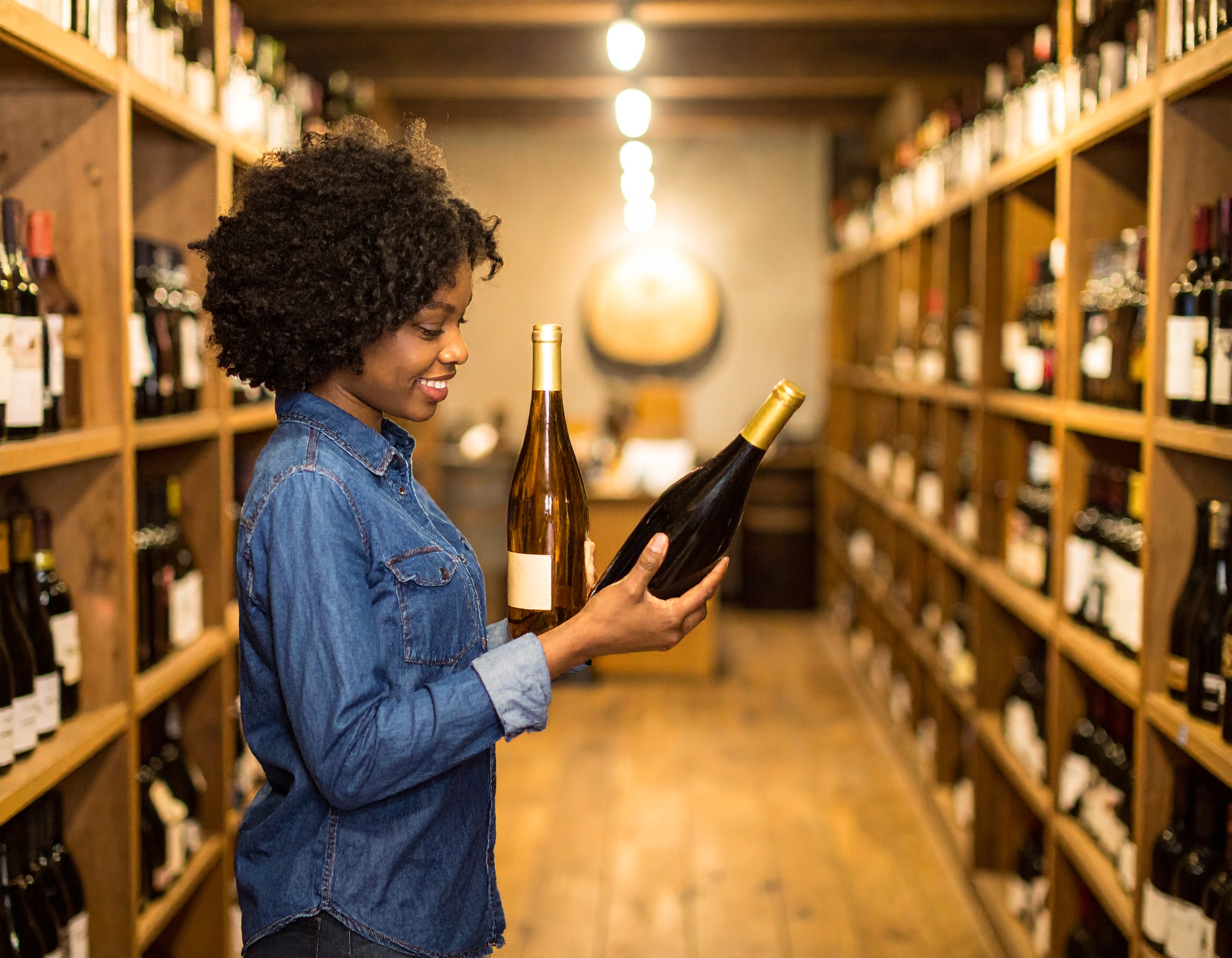
- Are we inclusive of no/low options, or do we still assume everyone wants a full pour of14% Cab?
Value # 2: Discovery & Trial
Yesterday’s consumer wanted to find a favorite. Today’s consumer wants to keep discovering. The internet never ends—so neither does their scroll. Algorithms, ads, and endless options mean there’s always something new to try. Loyalty? Why? Why would you buy the same thing twice when there is so much to try?
But that has also emboldened us. Trying a new wine doesn’t feel risky anymore—it feels exciting. Discovery is the experience. It’s not the step before loyalty—it replaces it. So if we want to stay relevant, we have to make exploration part of our offer: Rotating flights. Limited drops. Unexpected pairings. Something worth coming back for—not just rebuying. Because when novelty is everywhere, same-old won’t stand out.
Discussion Questions for Your Staff & Management:
- How easy is it for someone to explore our wines without committing to a full bottle or joining the club?
- Could we offer mini bottles, samplers, or “try before you buy” packs?
Value #3: Convenience
In the past, access was the ultimate goal. When you had to order things through catalogs or go to your local store to see if “that thing” you saw in a magazine was available in your area, having an inside track to products was important. Now, it’s pretty much useless. You don’t need special access. If money’s no object, you could have a bottle of Mouton Rothschild delivered to your door by dinner.
Access isn’t hard anymore. What’s hard is making it easy. Today’s luxury is convenience. It’s speed, simplicity, and control. DoorDash, Prime, one-click checkout—that’s what consumers expect. Not a complex tasting room booking form or a club order via phone call. If the experience is clunky, it doesn’t feel premium—it feels outdated – and, honestly, rude. Convenience isn’t about cutting corners. It’s about respecting time.
And the brands that make it easy? They’re the ones who feel worth staying with.
Discussion Questions for Your Staff & Management:
- Can guests book, buy, and learn from us with ease?
- Are we mobile-friendly, quick to respond, and available when people are actually looking?
Value #4: Value Alignment
Today’s consumer isn’t just buying what you sell. They’re buying why you sell it. They want to know your values—up front. What do you believe in? How do you treat people? What’s your environmental footprint?
Because for them, product quality and brand values are intertwined. An amazing wine that feels ethically tone-deaf? Hard pass. A halfway decent wine from a brand that shares their values? Instant heart emoji. Especially with younger consumers, purpose drives purchase. They want brands that reflect their worldview—not just their palate. So if you’re not telling people what you stand for, don’t assume they’ll stick around to figure it out. Because today, clarity is currency. And silence is a story, too.
Discussion Questions for Your Staff & Management:
- Do our brand values show up in our experience-not just in copy, but in behavior?
- Would someone browsing our site or walking into our tasting room know what we stand for?
Value #5: Self-Expression
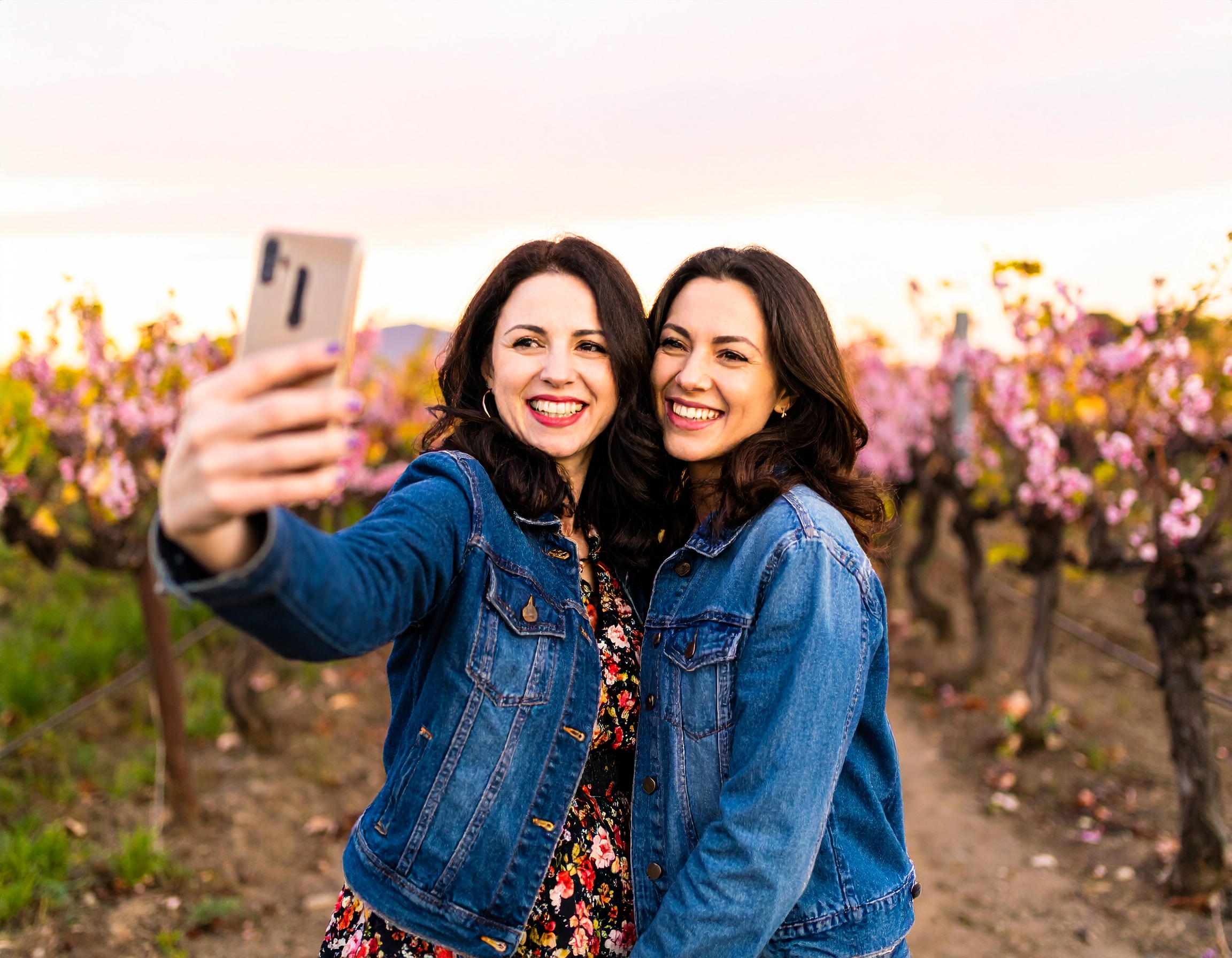
It’s easy to dismiss posting online as vain or superficial. But for younger generations, it’s how they connect. How they communicate. How they belong. A post isn’t just a picture. It’s a statement. “This is who I am. This is what I value. This is where I’ve been.”
And when they choose to share your winery, your experience, your wine—it’s not random. It means your brand aligns with their identity. That’s powerful. So, if the space you create doesn’t offer moments worth capturing…you’re missing a major opportunity to be part of their story. Because for today’s consumers, if it’s not shareable, it’s forgettable. And being seen on their feed might matter more than being remembered in your CRM.
Discussion Questions for Your Staff & Management:
- Does our winery give people something to connect with and share?
- Are we offering moments and messaging that reflect their identity-not just ours?
Value #6: Education Without Ego
Education used to be the core of the winery experience. We told visitors how wine is made. Why our soil matters. What flavors to find in the glass. And while that worked for generations who came to learn, today’s guests come to explore. Education implies hierarchy: “I know something you don’t.” Rules. Correct answers. A right way to taste.
Exploration is different. It’s open. Personal. It says, “Let’s see what you discover.” Modern consumers don’t want to be corrected. They want to be included. So if we trade the lecture for a conversation, we don’t lose authority. We gain engagement. Because the best experiences today don’t feel like school. They feel like discovery.
Discussion Questions for Your Staff & Management:
- Are we making wine more approachable or more intimidating?
- How can we reframe our story so it invites rather than lectures?
Value #7: Community & Belonging
For previous generations, discovering something special was a private thrill. A tucked-away winery. A hard-to-find bottle. A quiet restaurant. The instinct was to protect it. To keep it close. Because having access meant having an edge.
But today’s consumer is wired differently. The first instinct isn’t to hide the experience—it’s to share it. To tag a friend. Post a photo. Spread the word. Why? Because for this generation, joy is amplified through connection. Sharing isn’t about showing off—it’s about pulling others in. Community is the new currency. And that means creating spaces, products, and moments that feel worth passing on. If your brand gives people something to share, it gives them a way to belong. And belonging is a much stronger bond than exclusivity ever was.
Discussion Questions for Your Staff & Management:
- What are we doing to create a sense of welcome and shared experience beyond a transaction?
- Are we building a community-or just a customer list?
Value #8: Transparency
Today’s consumers are savvy—and skeptical. Especially online, where everything can be filtered, staged, or Photoshopped. And if every image is too perfect, every bottle too polished, every person too posed…it starts to feel like a façade. The result? Disconnection. Distrust. A scroll-past, not a double-tap.
Transparency isn’t just a virtue—it’s a strategy. It builds trust. It signals confidence. And it’s one of the fastest ways to stand out in a crowded, curated world. Show your team. Show your process. Show the messy harvest days, not just the golden-hour tastings. Because consumers don’t expect perfection anymore. They expect honesty. And when they see themselves reflected in your story, they’re far more likely to want to be a part of it.
Discussion Questions for Your Staff & Management:
- Are we clear and open about how we make our wine, how we price it, and what’s inside? Or are we still hiding behind wine-speak and vague terms?

Value #9: Emotional ROI
Picture your customer.
She’s working full-time. Maybe raising kids, managing a household, checking in on aging parents. Her phone never stops buzzing. Her weekends are booked out. Her to-do list is a mile long. And still—she carves out time, gets in the car, and drives an hour out of the city to come to your event.
That’s not casual. That’s a commitment.
She could’ve gone to brunch, taken a nap, or stayed home and done nothing—which sounds pretty great, honestly. Instead, she picked you.
So when she leaves your tasting room and heads back down the highway, she’s asking herself one question: ”Was it worth it?” Was it meaningful? Memorable? Did she feel welcome—not just as a buyer, but as a person? Because that’s Emotional ROI. It’s not about the wine—it’s about how the whole experience made her feel.
If the answer is yes, she’ll come back. She’ll tell her friends. She’ll bring them next time. If not? She won’t complain. She just won’t return. And you won’t even know you lost her.
Discussion Questions for Your Staff & Management:
- What emotional payoff does someone get from visiting us? Do they feel joy, wonder, connection, or just… meh?
Value #10: Frictionless Access
Yes—we’ve said access isn’t the crucial selling point it used to be. And it’s true: rare wine, limited clubs, remote locations—they don’t carry the same cachet anymore.
But let’s be clear: access still matters. It’s just… expected.
Today’s consumer assumes they can get what they want, when and how they want it. Not because they’re entitled—but because that’s the world they live in. They can book a cabin, schedule a haircut, and buy a car—all from their phone, in minutes. So if buying your wine, visiting your tasting room, or joining your club feels complicated? You’re not exclusive—you’re inconvenient. Frictionless access isn’t about removing effort. It’s about removing unnecessary effort. Make it simple. Clear. Mobile-friendly. Immediate.
That’s the new luxury.
Because the minute someone must call, wait, or wonder? You’ve lost them to someone who made it easier.
Discussion Questions for Your Staff & Management:
- Where are the hidden barriers in our experience?
- What small points of friction, online or in person, could be costing us future fans?
Don’t just file these ideas in a folder. Use them. Add to them. Argue with them. That’s how real change starts.
We are not in a wine recession. We are in a wine realignment. The future isn’t less wine. It’s wine in a new context. Let’s stop selling bottles—and start creating reasons for customers to show up, stay longer, and come back.

The word “brand” is notoriously difficult to define in marketing. If we were talking about a ranch brand—the kind seared onto livestock to signify ownership—that’s easy to understand. But in marketing, a brand is not a physical thing. It’s a symbolic construct. It’s not the label on the bottle or the winery’s logo or even the product itself. Rather, it’s the entire perception a consumer holds in their mind about your company, your wine, your people, and everything you collectively represent.
A brand is a conceptual identity that differentiates you from your competitors. It can be shaped by your name, your origin story, the design of your label, the personalities involved in your winery, your tasting room experience, your packaging, your email tone, your partnerships, or even how you respond to a customer complaint. All these elements come together to form the intangible yet powerful idea of your brand. It is, quite literally, everything that signals who you are and why someone should care.
The Brand Illusion — and Its Real-World Value
So why do marketers spend so much time discussing something that isn’t technically real? Because the effects are very real. Trust in a brand drives buying behavior. According to a 2021 report by Salsify, 90 percent of consumers said they are willing to pay more for a product from a brand they trust. And in a study by Deloitte Digital and Twilio, 68 percent of surveyed consumers reported they had spent more with a trusted brand—on average, 25 percent more. This isn’t just theoretical. Every year, major consulting firms and publications like Forbes and Newsweek publish lists of the most trusted brands. These aren’t obscure B2B companies or trendy startups. They’re names like Coca-Cola, Kleenex, and Whirlpool—brands that have become synonymous with quality, consistency, and confidence. In categories like health, beauty, and especially food and beverage, trust is essential.
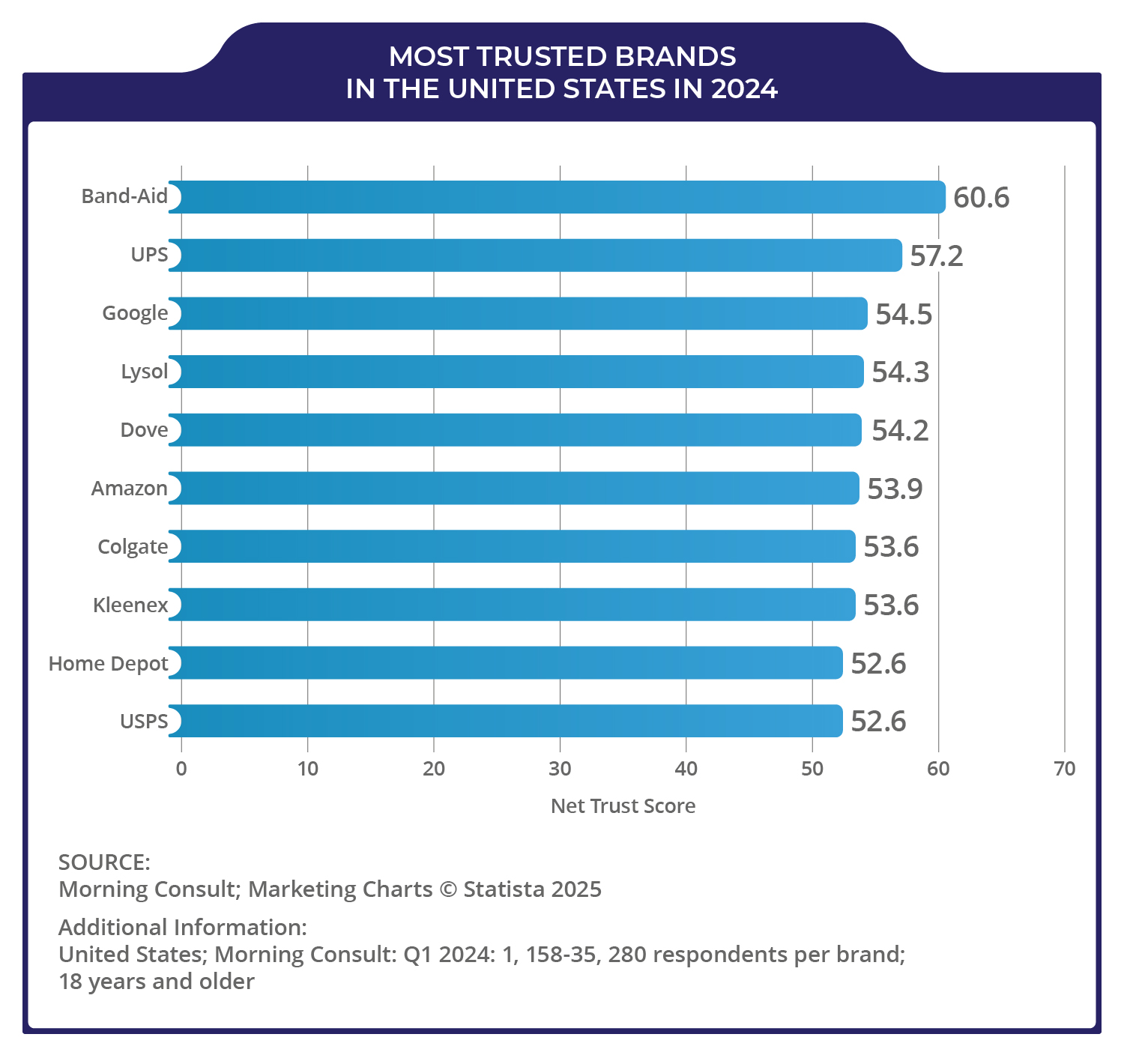
Food and beverage, in fact, ranks as the most trusted industry in the U.S. According to Morning Consult’s 2022 study, 72 percent of adults expressed some level of trust in the sector. That number climbs to 84 percent among Baby Boomers and 82 percent among high-income consumers. For comparison, trust among Millennials is 67 percent, and among Gen Z, it’s just 62 percent. These generational and socioeconomic differences remind us that brand trust is not universal—it must be nurtured and earned within each target group.
The idea that a collection of products, messaging, and people can form something consumers trust enough to put into their bodies is no small feat. In wine, where the product is sensory and the market is crowded, that trust can decide between a sale and a pass.
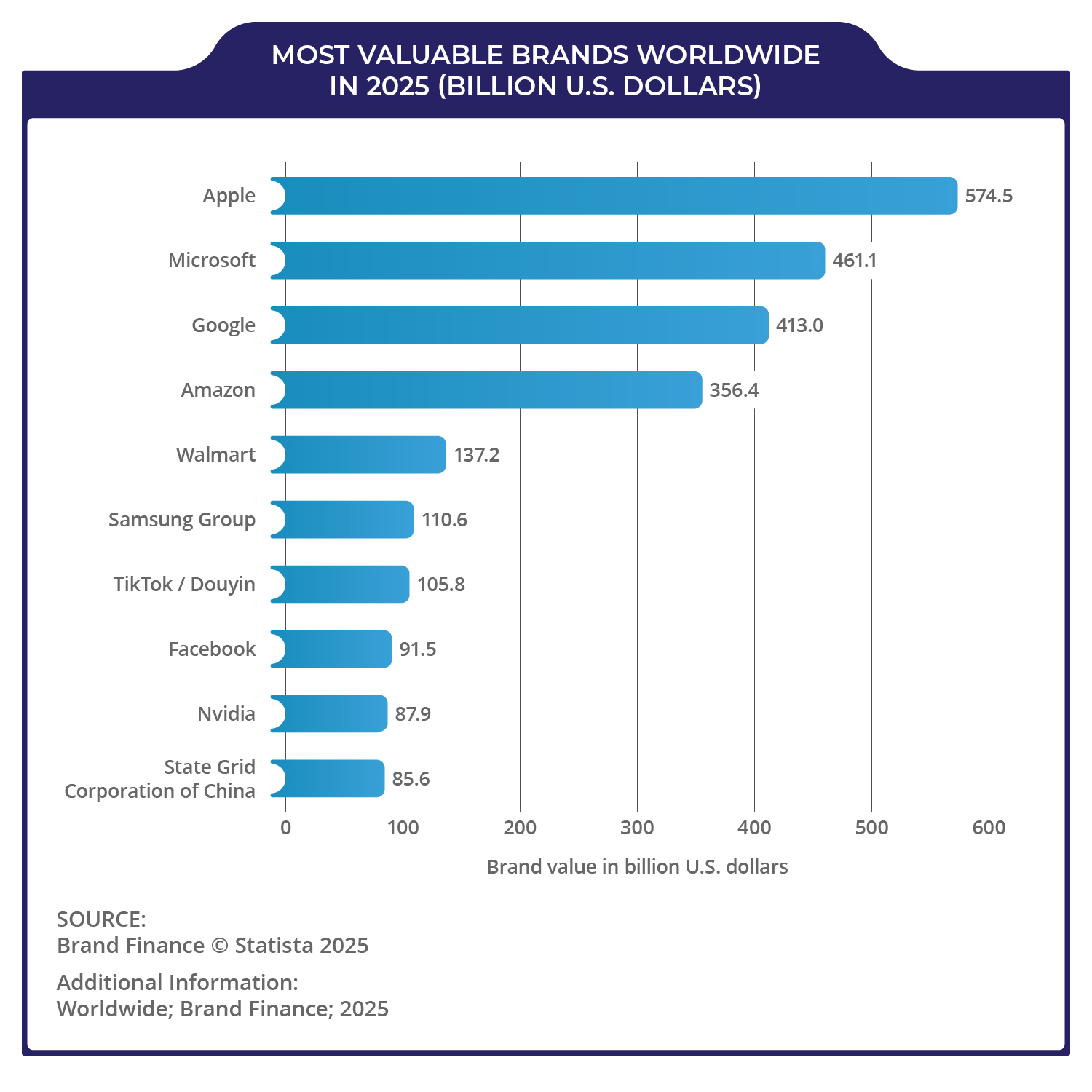
Make no mistake—this intangible identity has tangible value. Consider when Joe Wagner sold the Meiomi brand to Constellation Brands in 2015. Nothing tangible transpired: no winery, vineyards, or staff. What Constellation bought for $315 million was a name, a label, and a loyal following. They bought the brand. The value placed on these intangible assets of a brand is referred to as Brand Equity.
That’s the power of branding.
People Buy Brands, Not Products
Your brand includes your product, but it is not your product. This crucial distinction often gets blurred, especially in industries like wine, where so much attention is given to what’s in the bottle. The reality is that consumers rarely buy based on technical attributes alone. They buy based on what they feel the product represents. They buy based on brand.
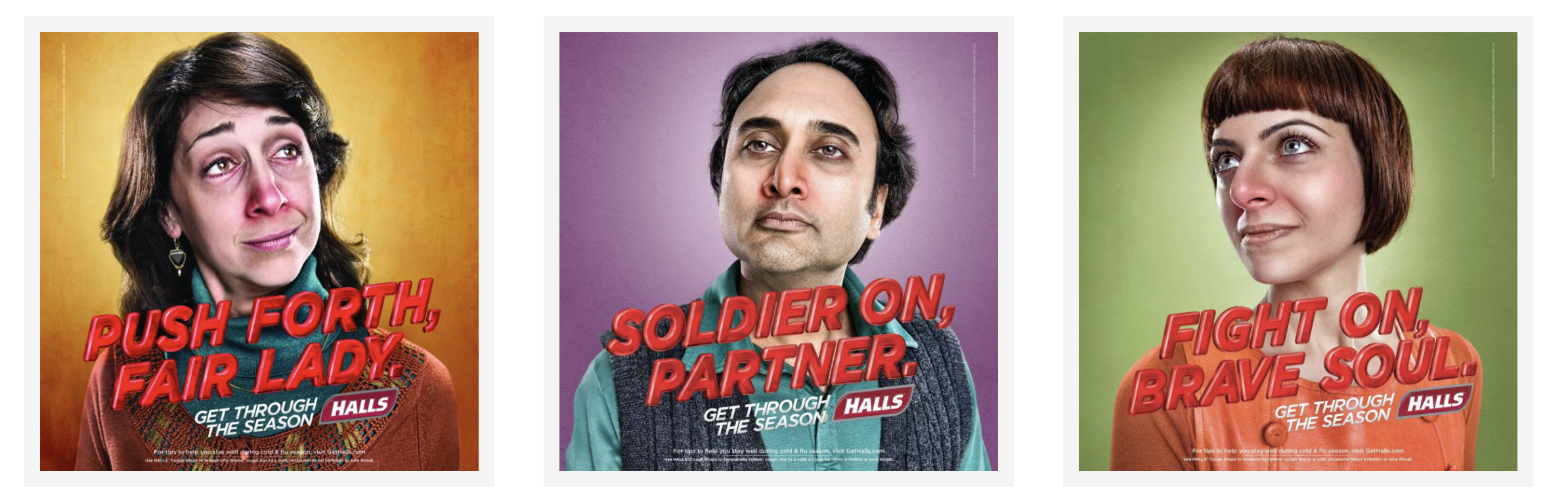
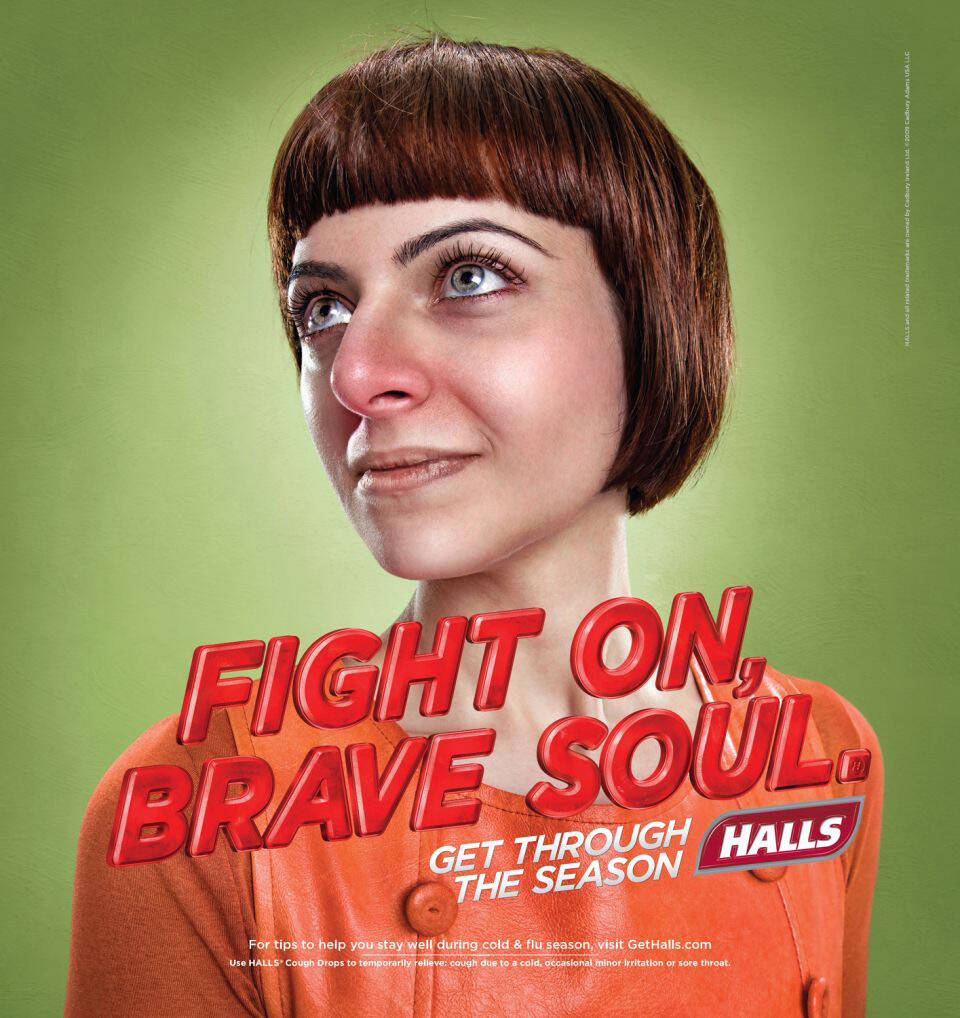
Consider Halls. Technically, it’s a British brand of mentholated cough drops, now owned by Mondelēz International. That’s the company. But that’s not why people grab a pack of Halls at the drugstore when they’re sick. And if we were to describe the product the way we often do in wine—focusing on precise formulation—we’d say something like: “This is a 5.8 milligram lozenge with lemon flavoring, containing 16.1 mg of menthol and 8.1 mg of eucalyptus globulus leaf essential oil.”
Informative? Maybe. Persuasive? Not even close.
Halls doesn’t sell ingredients. It sells empowerment. The brand message is clear: we know you’re indispensable to your family, workplace, and life. A cold shouldn’t stop you, and Halls won’t let it. It promises to clear your symptoms so you can keep going. That’s the brand. And it’s working—Nielsen reports Halls’ sales grew more than 32% in 2023, a surge not driven by a change in formula, but by a clear and resonant brand promise.
This is the essence of brand power. People don’t buy what a product is. They buy what it means. They buy it because of how it makes them feel, how it fits their life, and what it says about them. Brands create shorthand for decision-making, simplify the overwhelming, and reinforce identity. That’s true in cough drops, and it’s absolutely true in wine.
So… How Do You Protect (and Strengthen) Your Brand Right Now?
Here are a few no-nonsense steps you can take this week to make sure your brand’s identity doesn’t slip into witness protection:
- Google Yourself (and Don’t Flinch).
What comes up first? Your website? Yelp? A two-year-old event listing? Your digital first impression is your storefront — make sure it says what you want it to. - Audit Your Touchpoints.
Look at your website, social feeds, emails, tasting notes, signage, even your Wi-Fi password. Do they all sound like the same personality? If not, your brand’s having an identity crisis. - Define What You Aren’t.
Everyone wants to be “premium,” “authentic,” and “approachable.” Snooze. Get real about what makes you different — and what doesn’t fit your vibe. That’s where clarity (and memorability) live. - Protect the Visuals.
Your logo, colors, and photography are your visual handshake. Don’t let them be distorted, stretched, pixelated, or used on a mauve background because someone “thought it looked nice.” Create a style guide and guard it like a secret recipe. - Train Your Team to Be Brand Ambassadors.
Every person pouring, posting, or answering an email is your brand. Make sure they know how to represent it — and reward them when they do it well. - Listen. Constantly.
Brands aren’t built in boardrooms; they’re built in the wild. Track reviews, social comments, and customer emails. They’ll tell you what your brand actually means out there — not just what you hope it does.
The Bottom Line
Your brand is the most valuable asset you own — even if it never shows up on a balance sheet. It’s perception, emotion, and memory all wrapped into one name. It’s what turns a tasting into loyalty, a label into a lifestyle, and a sale into advocacy.
So don’t just make great wine. Make a great impression — again, and again, and again.

I spend an embarrassing amount of time every January reading year-end recaps, trend reports, and “culture in review” pieces. It’s part professional habit, part curiosity, part doomscrolling with a notebook. But as I started flipping through 2025 retrospectives, something felt… off.
Not alarming.
Not exciting.
Just oddly muted.
Nothing was shouting. Nothing felt particularly sharp. Even the topics that usually come with big opinions seemed softened, neutralized, turned down a few notches.
So I pulled the thread.
And the more I looked, the more I began noticing the same quiet signals emerging in places that had no connection to each other: design trends, language, social behavior, media content, fashion, and even travel preferences. Different industries. Different audiences. Same emotional temperature.
Meh.
Which led me to a question I couldn’t shake:
Is this increasing indecisiveness a new form of rebellion? A sign of boredom? Or are we just culturally drained in a world that requires constant outcry, conviction, and commentary?
Because what I kept seeing wasn’t outrage or disengagement; it was something more subtle—an actual preference for neutrality, comfort, and choices that don’t demand much emotionally. Not exactly apathy, but more like strategic restraint.
Once you start looking for it, the pattern is hard to ignore.
Cloud Dancer: Are We So Tired We Can’t Even Pick a Color?
Pantone is a worldwide authority on color that offers a standardized language through its Pantone Matching System. Since 1999, it has chosen a Color of the Year to represent the link between global culture and design trends, impacting everything from fashion to interiors to branding.
The 2026 Color of the Year is 11-4201, Cloud Dancer. Which is to say: white.
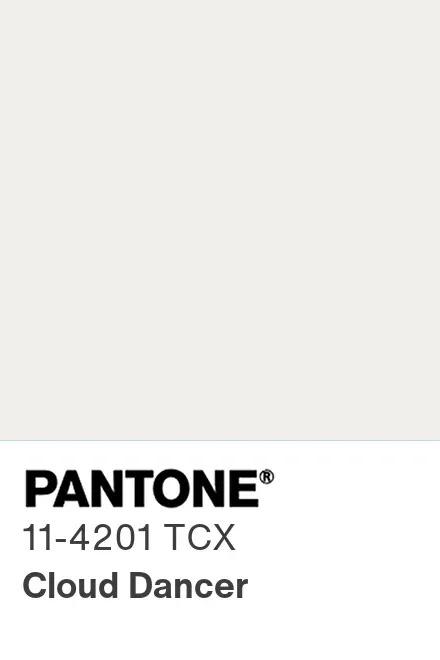
That might not sound radical until you realize it’s the first time a white shade has ever been chosen in the history of the program. Pantone’s explanation is predictably soothing — Cloud Dancer is meant to evoke calm, clarity, and quiet reflection in a “noisy world.”
My first reaction wasn’t calm.
It was: White? Really?
Are we so overwhelmed — so cautious — that we can’t even commit to a color anymore? Is white a thoughtful response to cultural overload, or a polite way of opting out altogether? A blank canvas sounds appealing in theory, but it also lacks a point of view.
As a creative, I love color. Color has always been about mood, identity, and expression. It’s how we signal taste, emotion, and even rebellion. I’m all for generous whitespace, but choosing white as a central cultural symbol feels less like a statement and more like a pass — or perhaps a refusal to engage in the discussion at all.
But maybe that is the point.
In a world where every choice feels loaded, even color can feel like taking a side. White doesn’t offend. It doesn’t provoke. It doesn’t require explanation. It’s safe, neutral, and comfortable. The visual equivalent of saying, let’s not make this harder than it needs to be.
Whether Cloud Dancer suggests thoughtful restraint or cultural timidity probably depends on your mood. However, it’s difficult to ignore what it communicates: a shared desire to step back, soften the edges, and avoid bold declarations — even in something as low-stakes as “what’s your favorite color”.
Dictionary.com’s Word of the Year Isn’t a Word
If Pantone’s color choice feels like a cultural sigh, Dictionary.com’s Word of the Year for 2025 feels like a shrug.
The winning entry? “6-7.”
It’s not a real word and has no official meaning. It’s just a pair of numbers that serve more as a tone indicator—meh, so-so, middling, lukewarm—rather than language. It spread quickly on TikTok and other social platforms because it perfectly expressed a kind of emotional neutrality that many younger people already felt and were expressing without passion.
In fact, so many people searched for “what does 6-7 mean?” that it really reveals everything you need to know about its emotional economy.
Think about that for a moment. A “word” that hardly means anything becomes Word of the Year because people are using it to describe how they feel about… everything.
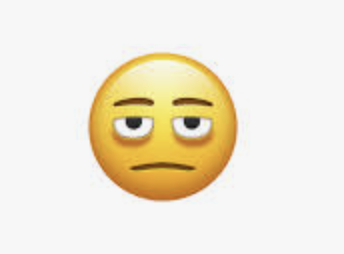 And if you need further evidence that this is a trend, the World Emoji Awards (yes, it exists) gave its “most popular new emoji” award (yes, it’s a thing) to “Face with Bags Under Eyes” as the most popular emoji of 2025.
This is ambivalence turned into not only language, but symbols. Not clarity. Not ardor. Just a gentle meh.
That’s not laziness. It’s emotional insolvency.
TikTok Trends: The Beige Flag Phenomenon
If cultural ambivalence had a mascot on social media, it might be the “beige flag.”
A playful counterpart to the dreaded red flag, a beige flag refers to behaviors that aren’t bad— just not exciting either. Mildly underwhelming. Emotionally neutral. Perfectly fine.
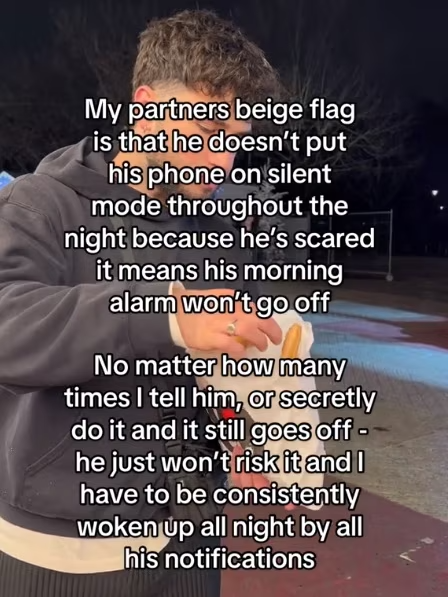
(TikTok: cassandrapalumboo)
People aren’t mocking beige flags. They’re celebrating them.
The beige flag indicates low emotional tension. It’s like lukewarm coffee with a splash of oat milk — comfortable, steady, and unlikely to cause conflict or require vulnerability.
But there’s another way to read it. Is beige really neutral? Or is it a softer form of resistance?
Endless agreeableness. No strong preferences. No genuine stance. These traits avoid conflict, but they also prevent connection. Beige flags can feel safe — but they can also be quietly passive-aggressive in their refusal to show they care loudly about anything at all. It’s passive disengagement. Saying whatever works and meaning I’m not invested enough to be bothered.
What makes this interesting is that it’s not just about dating culture. It’s about how we’re learning to manage intensity. In a culture that values calm, likability, and low drama, beige becomes socially acceptable armor. Emotional neutrality isn’t just tolerated — it’s becoming a coping strategy. One that helps people stay present without revealing too much.
Why We Keep Tuning into The Office
Have you noticed how many channels now air years of the same TV shows back-to-back? Full start-to-finish rewinds. Not nostalgia nights — just entire eras on repeat.
Streaming platforms are experiencing a strong comeback of older TV shows and classic content, with much of the viewing time spent rewatching familiar favorites or discovering them for the first time. According to NRG’s syndicated Future of Series research, nearly 60% of total TV viewing on streaming services is dedicated to older content — shows people already recognize.
Despite countless new choices, viewers opt for what feels familiar.
There are a few reasons for this. Familiar shows are easy. They lower anxiety. They require less mental effort. You know who will disappoint you. You know who will redeem themselves. You know what happens with Ross and Rachel — and that’s part of the appeal.
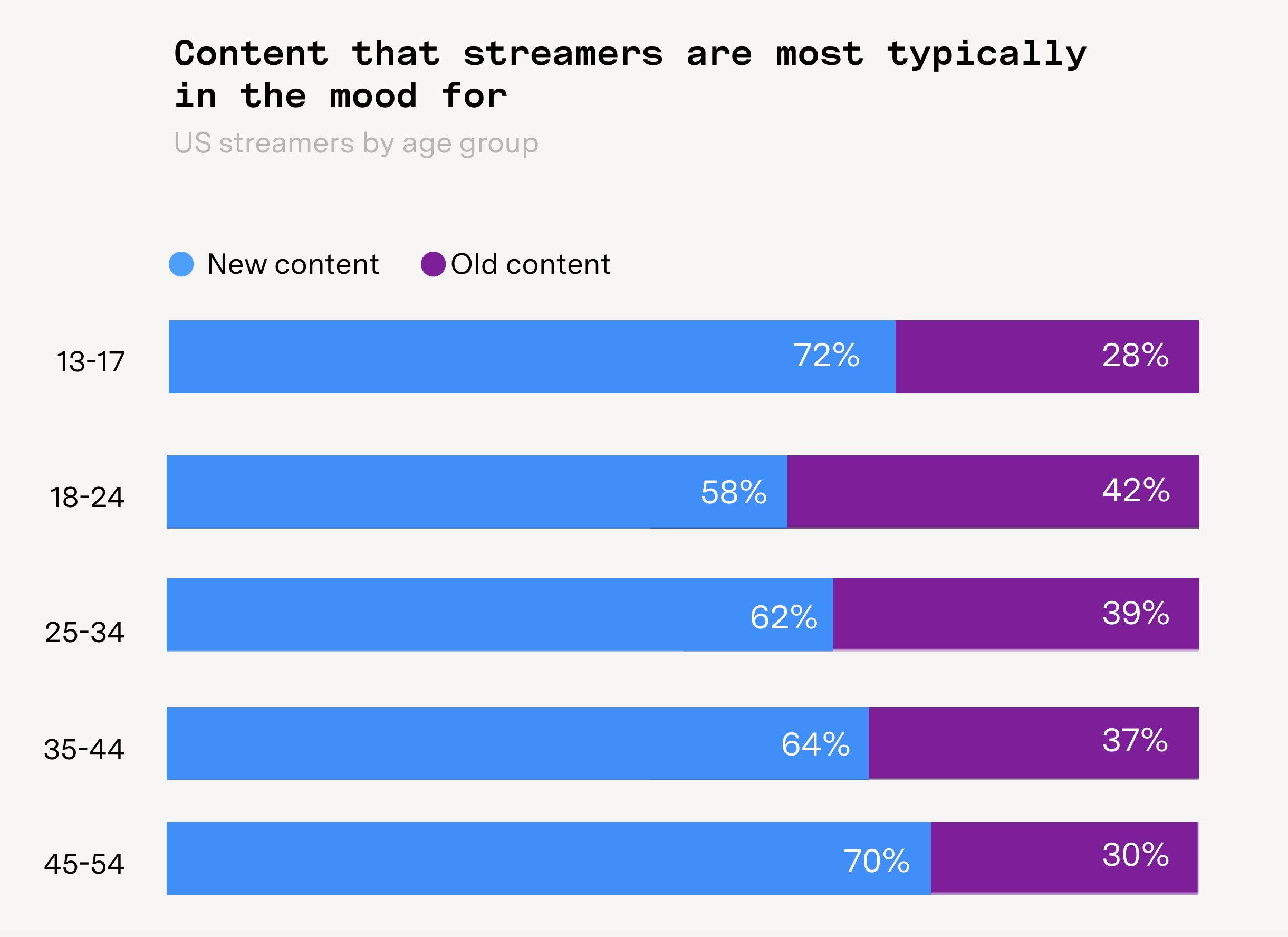
(Source: NRG’s syndicated research Future of Series)
Nostalgia plays a role, but this isn’t just a phenomenon limited to Gen X or Millennials. Gen Z also has a strong interest in “older” content — especially shows from the 2010s that already feel safe, familiar, and emotionally accessible.
There’s also a practical reason: older series are complete, with multiple seasons. No waiting, no cliffhanger anxiety. They’re perfect for binge-watching, half-watching, or playing quietly in the background while life goes on.
Psychologists highlight another aspect: familiar shows serve as emotional comfort food. They ease cognitive load, calm stress, and offer predictable emotional rhythms that new content can’t provide. You’re not watching to be surprised. You’re watching to feel in control.
This isn’t about avoiding risk; it’s about managing it.
It’s easier to rewatch a favorite sitcom than to commit to a prestige drama that demands attention, interpretation, and emotional stamina. Comfort viewing isn’t laziness — it’s efficiency. Cultural self-care. Emotional cost-cutting.
So What Does All This Add Up To?
What this truly highlights is that ambivalence isn’t unintentional — it’s adaptive.
People aren’t disengaging because they don’t care. They’re disengaging because caring too much, too often, is draining. Whether it’s choosing white as a color, using “6-7” to describe how you feel, embracing beige flags, or looping the same TV shows on repeat, the impulse is the same: to minimize emotional risk while staying connected.
Ambivalence, in this context, isn’t indifference. It’s preservation.
And once you view it as a coping mechanism instead of a flaw, the pattern stops seeming passive and begins to appear deliberate.
So What Does This Mean for Marketers?
For years, the common wisdom — and I’ve promoted this too — was that transparency, bold positioning, and value-driven storytelling were the way to go. People connect with people, not products. They want brands with values that feel authentic.
That part is still true.
What’s changed is how those values land.
We’re no longer in a moment where louder is better. Today:
- Too much intensity feels overwhelming
- Too many choices breed skepticism
- Forced conviction triggers suspicion
Consumers aren’t asking brands to go silent. They’re asking them to be clear without drama, specific without agitation, human without theatrics.
They don’t want to be convinced. They want to be understood.
That means embracing clarity and consistency. Making life simpler, not more difficult. Not dull — confidently straightforward.
Here’s what that can look like:
- Saying “here’s what we do and why,” without a manifesto
- Offering quality and transparency, without hyperbole
- Respecting time and attention instead of demanding emotional labor
In a culture where ambivalence signals strength — not failure — brands that embrace intentional simplicity may connect more deeply than those pursuing loud differentiation.
Here’s the question this cultural moment forces us to ask:
- Are we too indifferent to care passionately anymore?
- Or have we just become more selective with our emotional investments?
I lean toward the latter.
Maybe ambivalence isn’t retreat. Maybe it’s reallocation — of attention, energy, and engagement — toward what truly matters, in ways that don’t demand constant volume.
Pantone provided us with a blank canvas.
Dictionary.com responded with a shrug.
TikTok offered us neutral flags.
And our viewing habits brought us comfort.
These aren’t signs of collapse. They’re signs of selective engagement.
And that’s worth paying attention to.

The New Year has often been seen as a marketing reset. New goals, new mindsets, new opportunities. However, by the time Q1 arrives, many brands still rely on superficial “New Year, New You” messages that no longer match how consumers actually behave in January, February, and March.
In 2026, the opportunity isn’t to shout louder about resolutions—it’s to align your brand with how people are realistically thinking, spending, and socializing in the first quarter. According to multiple consumer studies, roughly 80% of New Year’s resolutions fade by mid-February, yet spending habits, social rituals, and emotional priorities continue well beyond January. That gap is where smart marketing lives.
For wine brands, Q1 isn’t about reinventing but staying relevant. The most effective early-year messaging connects with consumers by addressing their desire for connection, value, simplicity, and meaningful experiences that don’t feel indulgent or excessive.
Below are five New Year consumer trends shaping Q1 behavior—and how wineries can align their messaging, campaigns, and content to stay top of mind long after January 1.
1. Reprioritizing Time with Family and Friends
Despite all the talk about self-improvement, one resolution consistently ranks at the top year after year: spending more time with the people who matter. In fact, post-pandemic research continues to show that consumers prioritize shared experiences over material possessions, especially in the first quarter when social calendars are lighter and routines reset.
For wine brands, this is a chance to shift messaging from “special occasion” wine to everyday connection. Q1 campaigns should highlight how wine naturally fits into weekly dinners, casual gatherings, and small celebrations—not just holidays or milestones.
Content ideas might include:
- “Weeknight Pairings” instead of formal dinner parties
- Messaging around reconnecting after the holidays
- Highlighting tasting rooms as relaxed gathering spaces, not destination-only experiences
The goal isn’t to sell more wine—it’s to position your brand as part of the rituals that help people reconnect and relax after a hectic year-end.
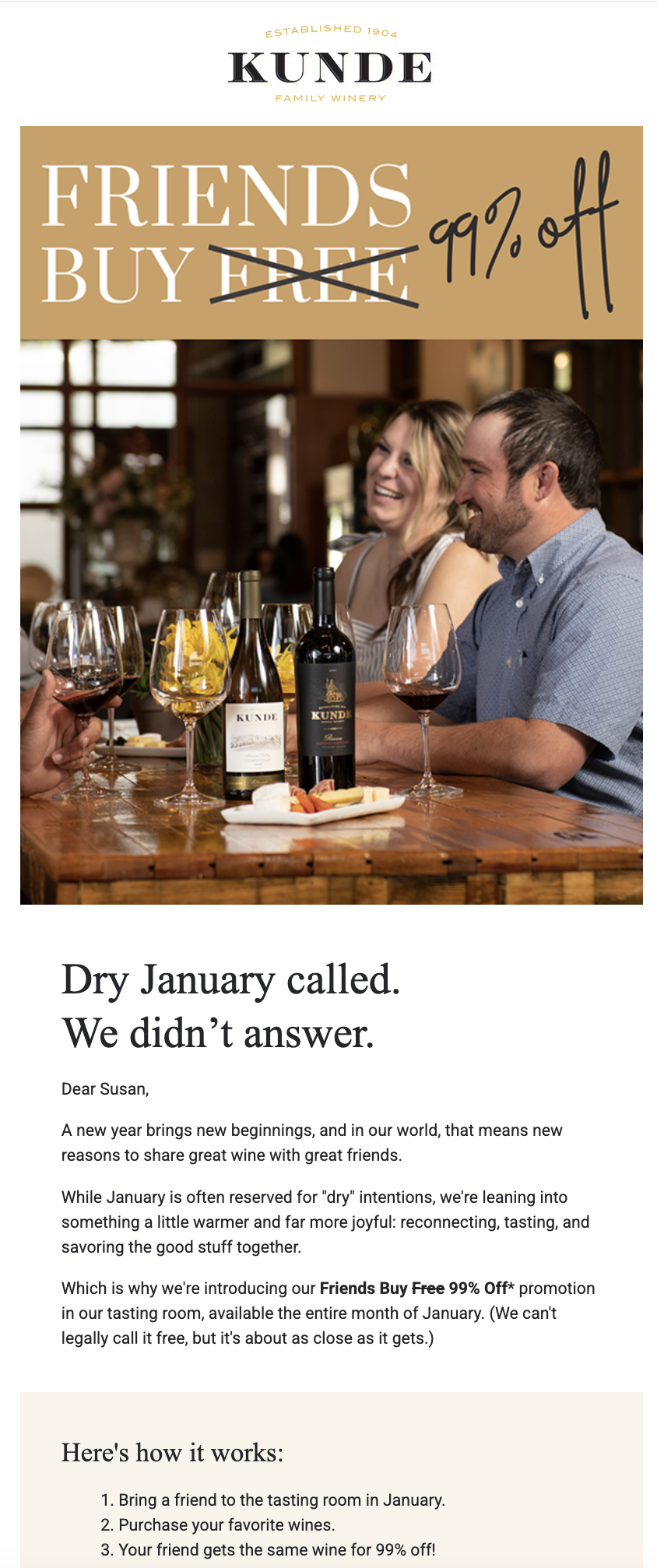
2. Learning as Leisure, Not Obligation
Learning a new skill remains a popular New Year goal, but the tone has shifted. Consumers are less focused on mastery and more interested in low-pressure enrichment. According to adult learning research, hobbies linked to enjoyment and social interaction have notably higher follow-through rates than skill-building related to performance or productivity.
This makes wine education a natural fit for Q1—if positioned correctly.
Rather than framing wine knowledge as expertise, wineries should present it as:
- Curious
- Accessible
- Enjoyable</li>
Q1 marketing can highlight blending workshops, tasting flights with educational prompts, behind-the-scenes content, or virtual tastings that feel optional, not instructional. The core message: learning about wine is something you get to do, not something you have to do.
In early 2026, brands that make education feel fun and social—not aspirational or intimidating—will stand out.
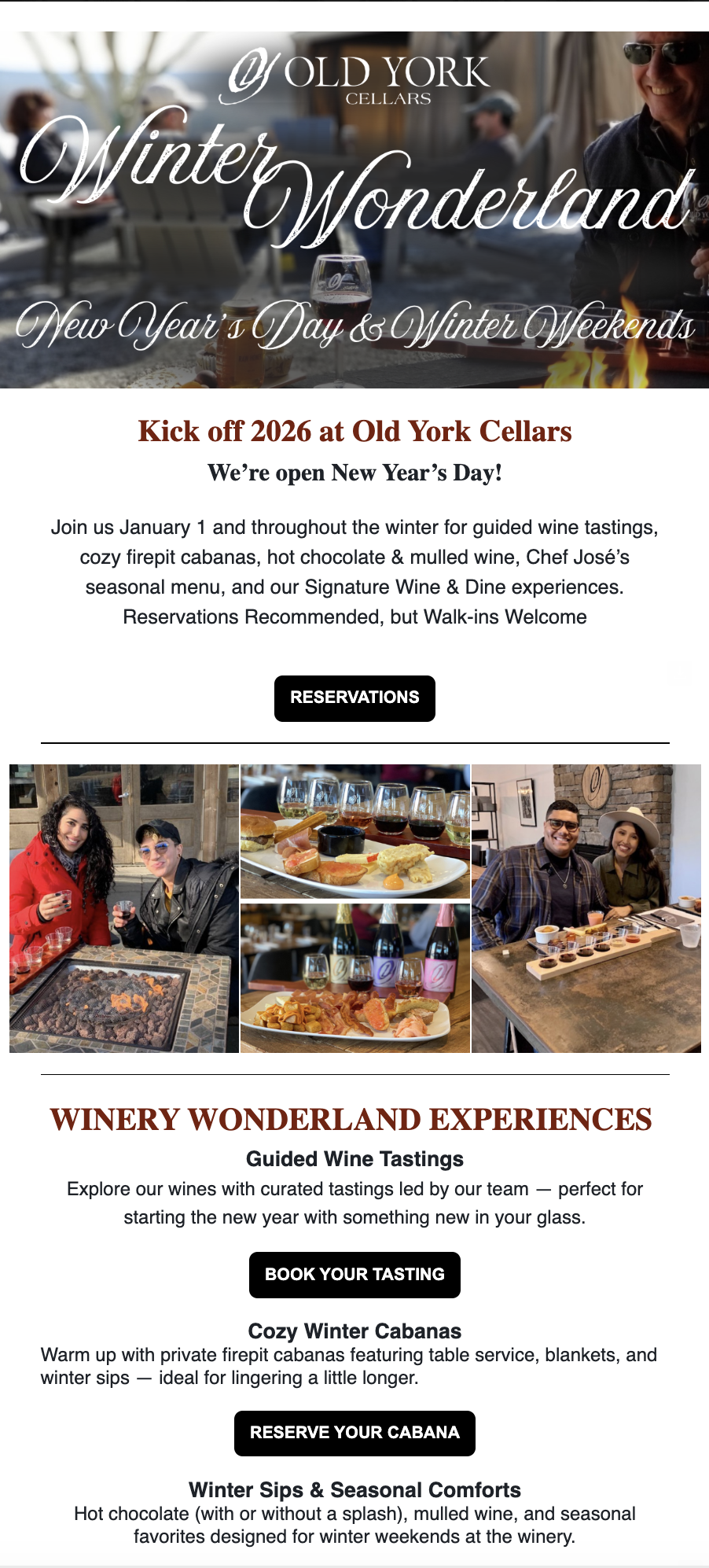
3. Simplification, Not Sacrifice
Minimalism and decluttering continue to shape consumer behavior, but today’s version isn’t about deprivation. Instead, it’s about making intentional choices. Consumers prefer fewer options, clearer value, and purchases that feel justified.
This directly impacts how wine should be marketed in Q1.
Rather than promoting abundance or variety, wineries can emphasize:
- Curated selections and variety
- Limited releases with a clear purpose
- Wine clubs framed as simplification tools, not commitments
Research shows that consumers are more likely to buy when choices are clearly presented and emotionally justified. Q1 is the ideal time to reinforce the idea that one exceptional bottle—or one carefully designed shipment—is better than many forgettable ones.
Messaging should emphasize confidence and clarity: “You don’t need more. You need the right choice.”
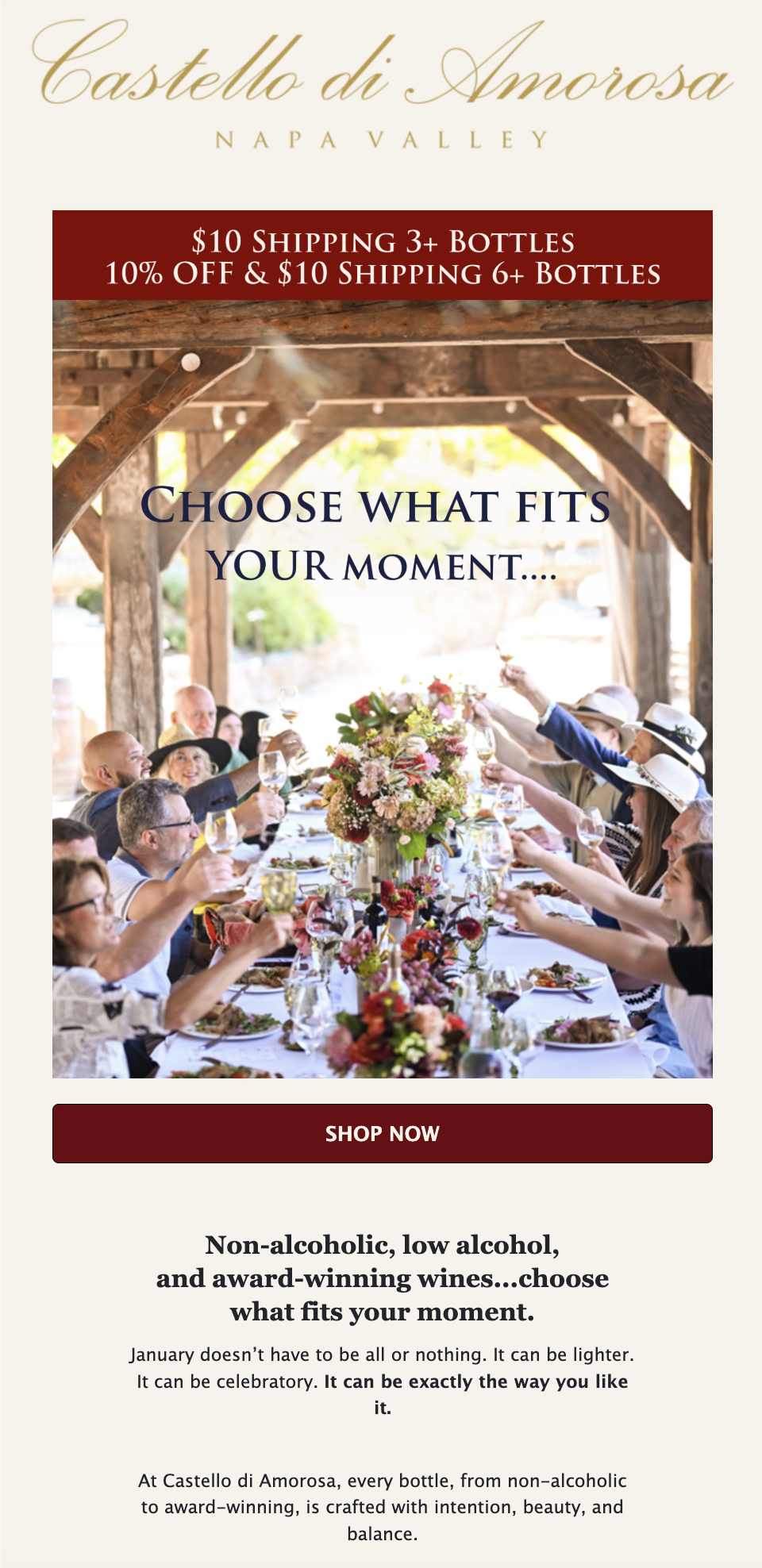
4. Authentic Connection to Culture and Craft
As trust in mass marketing continues to decline, consumers are increasingly drawn to brands with a clear point of view and authentic stories. This is especially true at the beginning of the year, when people reassess not just their habits but also their values.
Wine is uniquely positioned here. Every winery has built-in cultural capital—place, people, tradition, innovation—but too often these stories are buried or overcomplicated.
Q1 marketing should bring those stories forward in simple, human ways:
- Who made this wine, and why
- What values guide how it’s grown and produced
- How the winery fits into its local community
According to branding studies, brands seen as authentic outperform competitors in both loyalty and willingness to pay. Storytelling early in the year builds emotional equity that benefits long after Q1 is over.
5. Financial Mindfulness Without Guilt
Economic caution continues to influence early-year spending, but consumers are not abandoning pleasure—they are redefining it. In 2026, financial mindfulness is less about cutting indulgences and more about selecting ones that feel worthwhile.
Wine fits squarely into this mindset when positioned correctly.
Rather than apologizing for the purchase, Q1 messaging can:
- Highlight value and popularity relative to cost
- Frame wine as an affordable luxury compared to dining out or travel
- Promote bundles, loyalty perks, or flexible club options
Studies consistently show that consumers are more willing to spend when they understand the value story behind a purchase. In Q1, reassurance is more important than urgency.
Turning Trends into Q1 Strategy
As Q1 begins, the brands that stand out aren’t those chasing quick fixes; they are the ones connecting with how people truly feel at the start of the year. January through March is a time of emotional reset. Consumers are tired, more selective, and much more sensitive to messaging that feels genuine rather than overly aspirational. According to research from the IPA and Nielsen, campaigns that prioritize emotional relevance are up to twice as effective as those focused mainly on rational messaging, leading to stronger long-term brand growth and recall. In other words, how your brand makes someone feel is more important than what you ask them to do.
For wine brands, this is an important reframing. Q1 isn’t about motivating transformation—it’s about offering familiarity, reassurance, and small moments of pleasure that feel earned, not indulgent. When your marketing aligns with connection, intention, and value, you’re no longer competing for attention during a crowded resolution cycle. You’re earning a place in consumers’ everyday rituals.
Resolutions may fade by February, but emotionally resonant brands don’t. When Q1 messaging reflects real priorities and real life, it sets a tone that carries through the rest of the year—building trust, loyalty, and relevance long after the New Year glow wears off.

WHY DEMOGRAPHICS STILL MATTER IN WINE
At first glance, it may seem logical to take a broad approach to wine marketing—after all, shouldn’t the goal be to sell wine to anyone who’s willing to buy it?
Not exactly.
In practice, marketing to “everyone” is a fast track to appealing to no one. You water down your message, misfire your tactics, and wind up wasting both budget and energy trying to reach people who were never going to buy from you in the first place. Smart marketing is selective, not scattershot. And that’s where demographics come in.
At their core, demographics are just the quantifiable details about your customers—things like age, gender, income, education, and marital status. But in the hands of a capable marketer, demographics become strategic tools. They help decode how different consumers make decisions, what cultural cues they respond to, and how best to approach them with offers they’ll actually care about.
Wine, with all its history, nuance, and ritual, may be universally loved—but not uniformly understood. That’s why understanding the demographics of your audience is one of the most important investments a winery can make. Not in the abstract, but in the applied: how different generations buy, what they value, and how to speak their language.
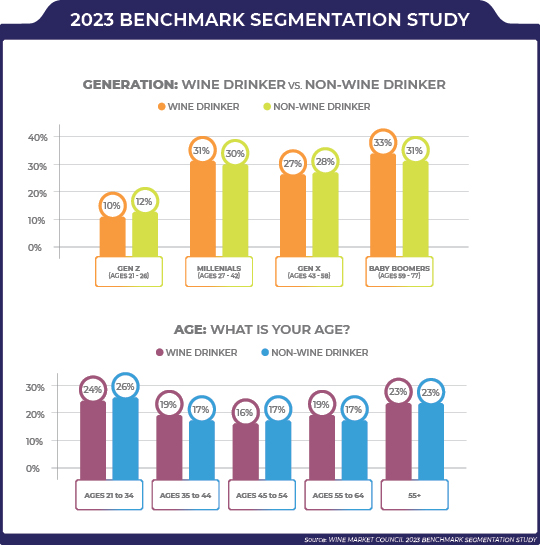
Age isn't just a number—it's a strategy.
Among all demographic variables, age remains one of the most predictive indicators of consumer behavior in the wine space. Your 67-year-old customer and your 27-year-old customer may both enjoy Chardonnay—but the stories, channels, and experiences that led them to that bottle couldn’t be more different.
So how do you use this knowledge?
You start by recognizing that each generation brings a unique set of preferences, priorities, and expectations to the table. These differences are shaped not just by age, but by shared cultural context—what technology they grew up with, how they were marketed to as teens, and how they define things like quality, authenticity, and value.
Here’s a breakdown of how different generations engage with wine—and what your winery should do about it.
Here’s a breakdown of how different generations engage with wine—and what your winery should do about it.
The Silent Generation (born 1928–1945): The loyal traditionalist.
While their presence in the market is shrinking, their loyalty is unwavering. The Silent Generation prefers reliability over novelty and is far more likely to value a long-standing relationship with a winery than to chase the latest release.
They tend to gravitate toward established varietals, classic packaging, and consistent pricing. Most importantly, they still respond to print. Think newsletters, phone calls, and handwritten notes—not push notifications.
Action Step: Reinforce value and familiarity. Printed materials, bundled discounts, and a personal touch go a long way.
Baby Boomers (born 1946–1964): The experience-driven collectors
Boomers are the architects of modern wine culture in the U.S. They invented the wine tasting as vacation activity. They made critic scores a thing. They turned mailing lists into badge-worthy status symbols. For much of the past three decades, they were the ones buying the library vintages and signing up for vertical tastings with religious fervor.
But time changes habits. As they approach retirement, Boomers are buying less and moderating more. They still want quality and ritual—but they also want convenience and value.
Action Step: Focus on smaller format options, curated selections, and loyalty programs that emphasize connection over exclusivity. They still appreciate prestige—but they now appreciate sensible pricing just as much.
Generation X (born 1965–1980): The forgotten powerhouses
Gen X is frequently left out of marketing conversations. This is a mistake.
Despite their smaller size, Gen Xers are in their peak earning years, and they value quality and reliability in their purchases. They’re skeptical by nature—raised in an era of economic uncertainty and cultural disillusionment—and they’re not easily swayed by flash or trend.
They also exist at the intersection of analog and digital. They read emails and engage with apps. They’re on social media, but they also like printed tasting notes. They’re pragmatic, fiercely independent, and allergic to anything that feels like a sales gimmick.
Action Step: Speak directly and respect their intelligence. Offer clear value, consistent product quality, and customer service that rewards loyalty without fluff. Combine digital convenience with occasional analog moments.
Millennials (born 1981–1996): The values-driven explorers
Millennials are the largest consumer cohort in U.S. history, and they’ve been quietly reshaping wine culture for years. Where Boomers sought status, Millennials seek alignment. They care less about Robert Parker scores and more about soil health. They want transparency, flexibility, and values that match their own.
They are also deeply influenced by visual storytelling. Experiences matter—but only if they’re worth posting. They prefer inclusive, approachable brands that make wine feel less like a secret society and more like a good party.
Action Step: Show your work. Be transparent about sourcing and sustainability. Ditch the formality and engage authentically on digital platforms. Offer flexible wine club options and behind-the-scenes storytelling. And yes, your label design matters—don’t let it look like a Word doc from 2003.
Generation Z (born 1997–2012): The unfiltered futurists
Gen Z isn’t just digital-first—they’re digital-only. If your website isn’t optimized for mobile, if your online store takes more than five seconds to load, or if you’re still asking people to download PDFs to join your club… you’ve already lost them.
This generation values fun, flexibility, and visual relevance. They will try your wine if it appears in a trending video. They will buy it if the branding makes them feel something. But they won’t stay loyal unless you earn it—every time.
And they have no patience for old rules. They like slushies, canned wines, pet-nats, sweet reds, and anything that gets people together. They’re not here for tradition. They’re here for the moment.
Action Step: Prioritize mobile, visual storytelling, and interaction. Think sampler drops over verticals. Think memes over mailing lists. Your wine club should feel like a community, not a contract.
A note on the underage (for now) Generation Alpha
Gen Alpha is still pre-legal-drinking-age, but they’re already influencing your customer base—through their Millennial parents. They’re the reason your tasting room has crayons and juice boxes now. And they’ll be of legal age by 2034.
Smart wineries are thinking ahead: creating family-friendly experiences, building tech infrastructure, and embracing sustainability initiatives now—so when Gen Alpha gets here, you’re already fluent in their expectations.
In summary: Choose your audience before you choose your campaign
Marketing to everyone is marketing to no one. Demographics, and particularly generational cohorts, give you a powerful filter for your strategy. They tell you who your audience is, where they’re most comfortable, what they care about, and how to speak to them in a way that resonates.
So the next time someone says “our wine is for everyone,” feel free to politely disagree—and then ask them which generation actually signs the credit card slip.
P.S. This blog is based on decades of research, but we’ll never pretend it’s the final word. People are complex. Trends shift. If you’ve seen different behavior from your own customers or cracked the code on reaching Gen Z through interpretive dance and Instagram stickers, we’d love to hear it. Knowledge is meant to be shared—preferably over a glass of something interesting.

HOW TO KEEP YOUR BRAND TOP OF MIND WHEN CUSTOMERS ARE DROWNING IN HOLIDAY EMAILS
The inbox in December isn’t a communication tool—it’s a full-contact sport. Every brand, from the global megastore to the local dog bakery, is shouting their way into people’s attention span with flashing subject lines, endless exclamation points, and “40% OFF” hysteria that blurs into static. Consumers don’t read; they scan for relief.
According to Mailjet’s 2024 BFCM report, holiday email volume jumps nearly 80% between Thanksgiving and Christmas, while average open rates drop to 13–15%—a statistical cry for help. But the real problem isn’t quantity—it’s tone. Every brand is talking at their audience instead of with them. The louder the messaging, the less people listen. Leading with prices and panic doesn’t inspire trust; it triggers fatigue.
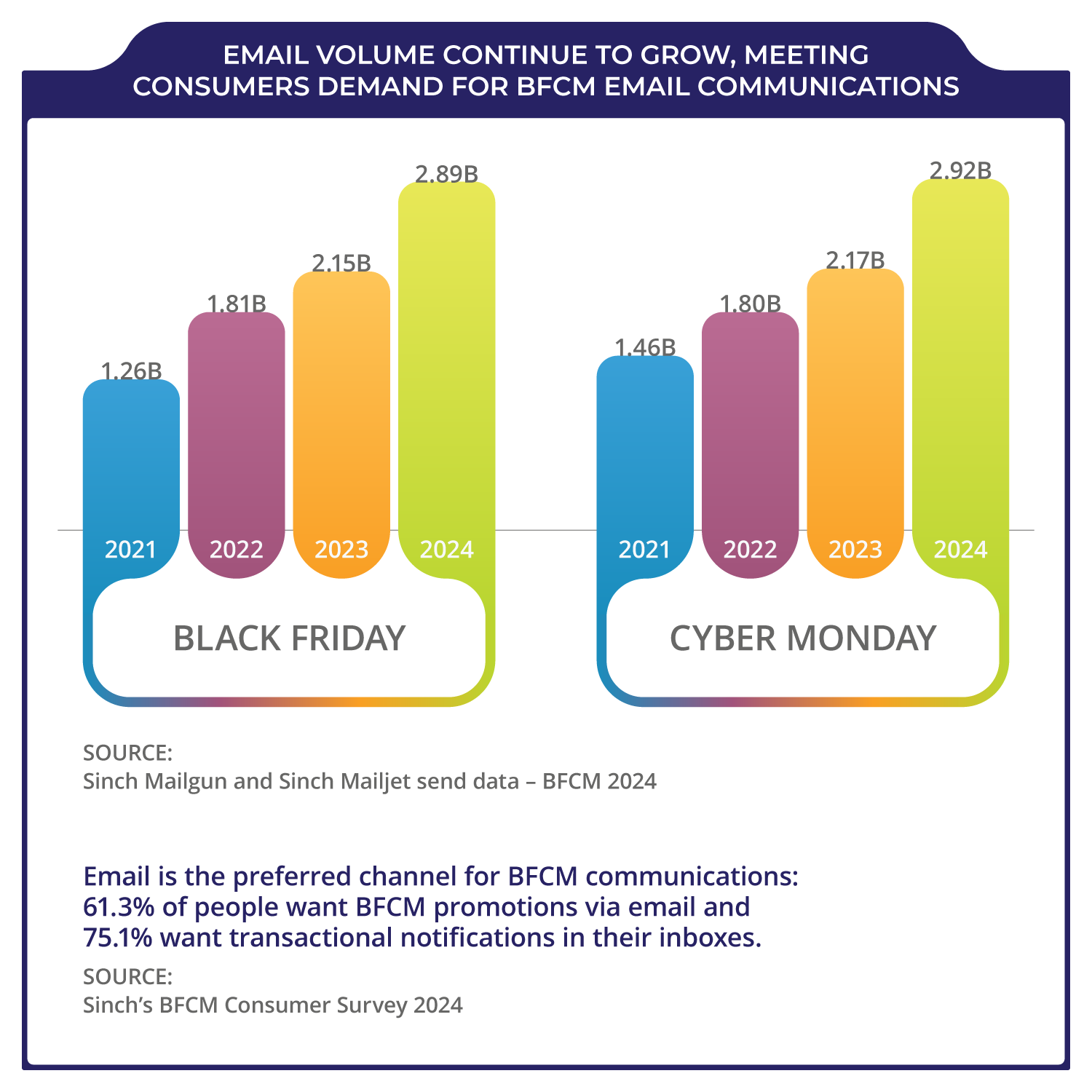
That’s your opportunity. The brands that win the inbox aren’t the ones who yell the loudest—they’re the ones who sound human. In a season where everyone is trying to sell, you stand out by communicating. A well-crafted email that feels like a conversation—grounded in empathy, clarity, and timing—can still stop a scrolling thumb cold.
YOUR SUBJECT LINE AND SENDER ARE YOUR FIRST IMPRESSION—USE THEM WISELY
Your email has three seconds to make a first impression. Before your content even loads, three decisions determine whether it lives or dies: the sender name, the subject line, and the teaser (preheader) text.
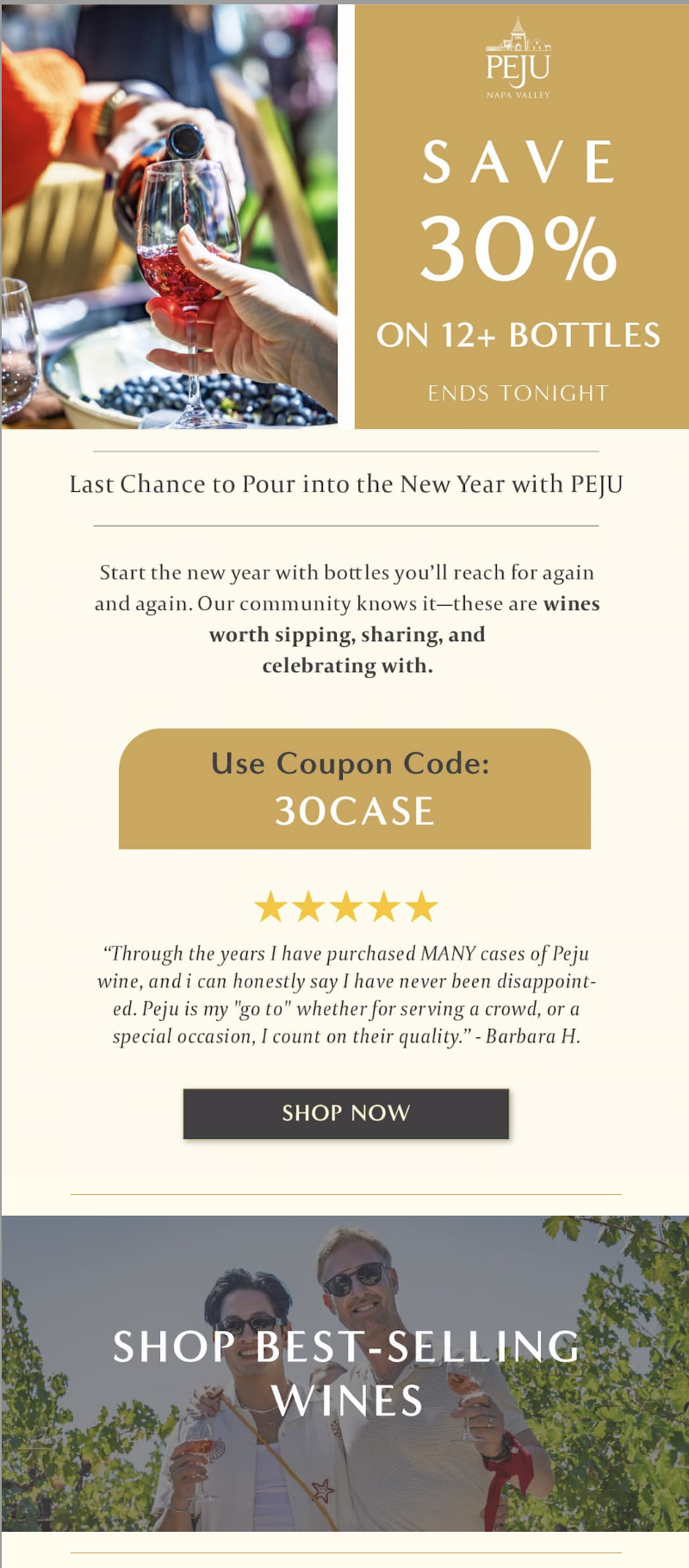
Sender name: It should always be the winery, not a person or a department. “From: Peju Winery” builds credibility. “From: Sarah at Peju” feels like a cold pitch. The name needs to evoke authority and trust at a glance.
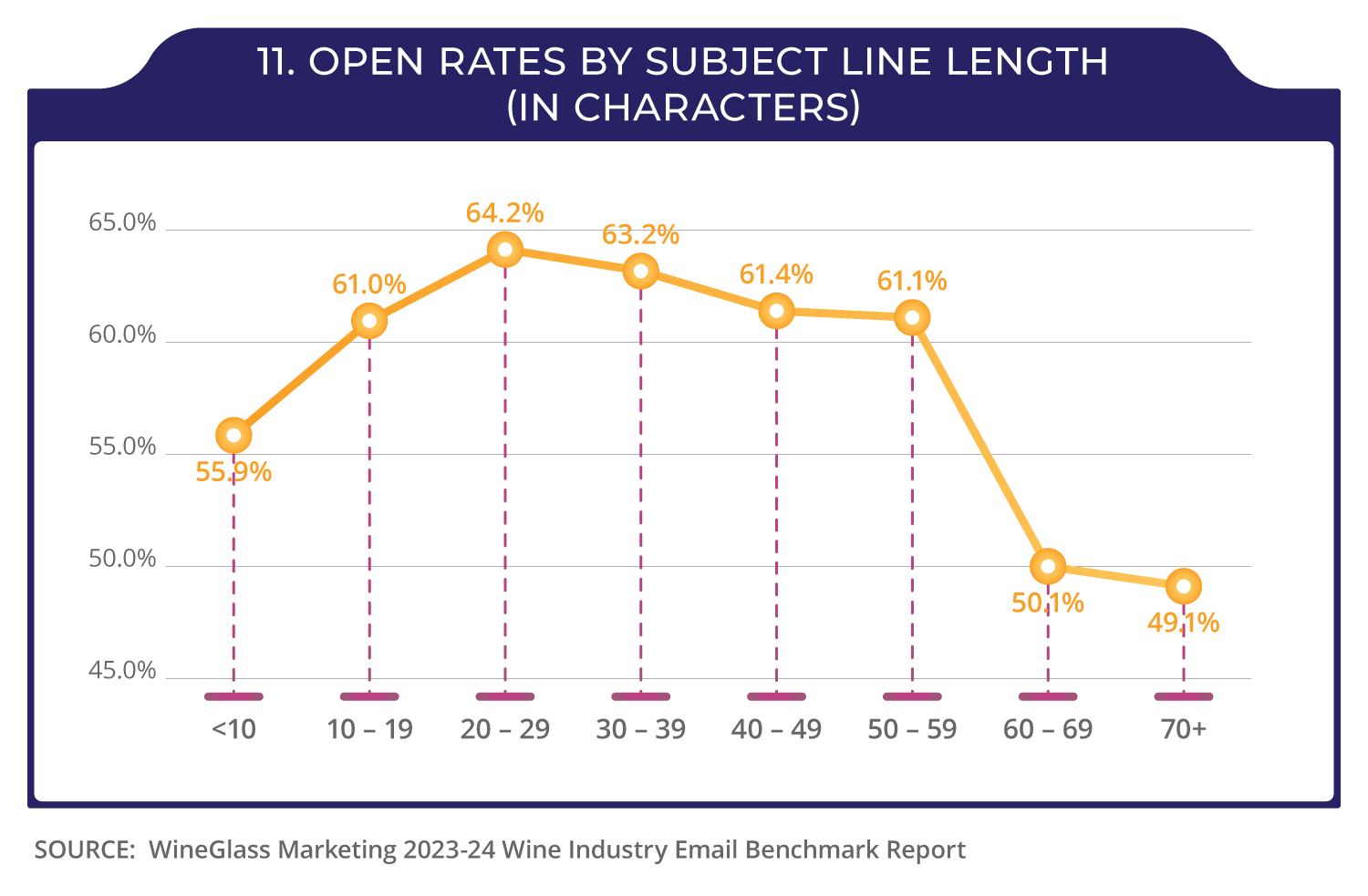
Subject line: This is where most brands implode. The temptation is to cram urgency, emotion, and discount all at once. Don’t. Subject lines work best when they’re concise, conversational, and useful. Our 2024 benchmark study showed that after 59 characters results fall off a cliff – so keep it brief.
Examples that work:
- “Your host gift, handled—ships by Dec 18.”
- “A bottle worth opening together.”
- “Last day for guaranteed delivery—make it sparkle.”
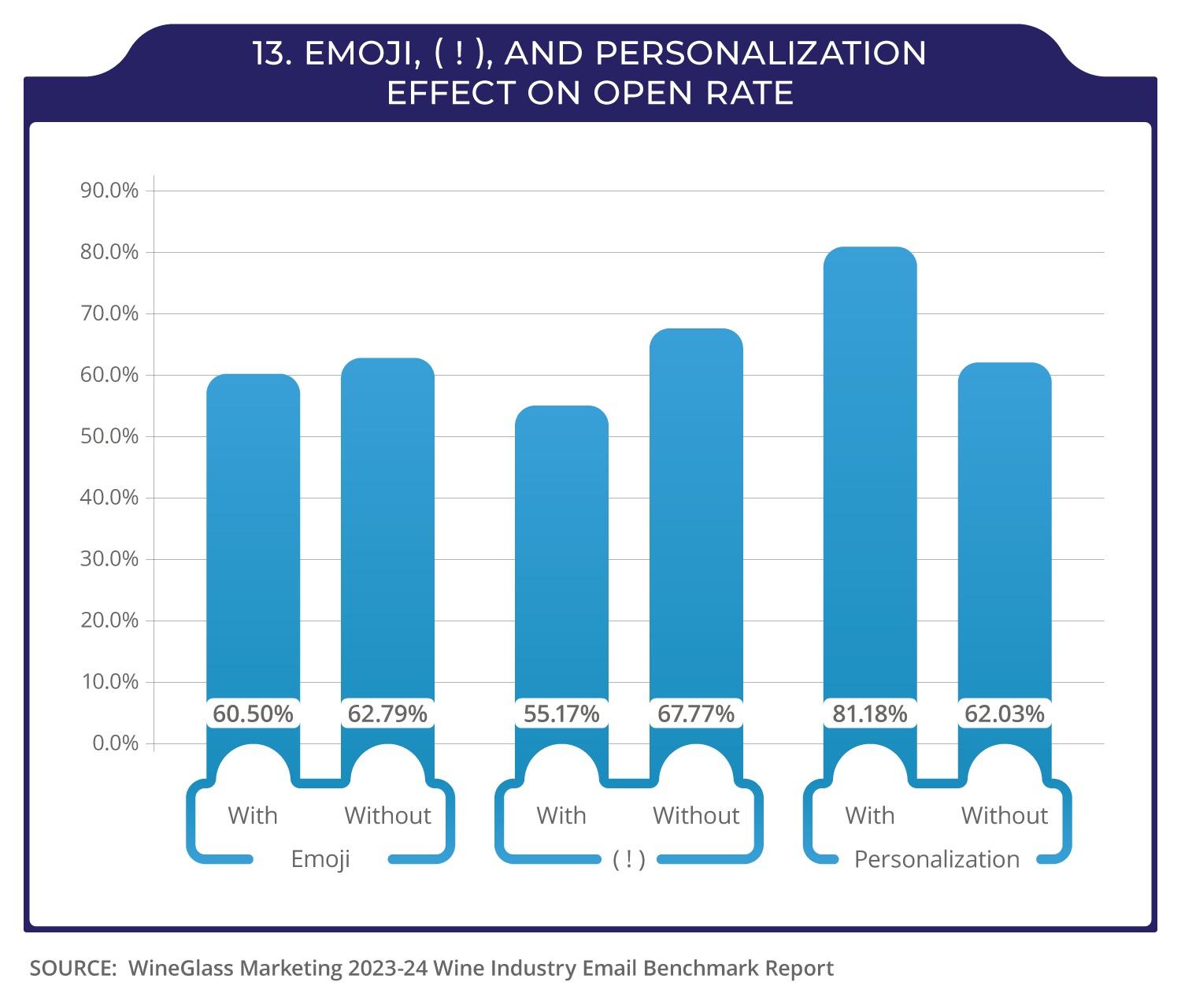
Each is specific, grounded, and human. According to GetResponse’s 2024 benchmark report, subject lines with time-based or personalized language lift open rates by 22%. Our own benchmarks shows that yelling, in fact, doesn’t work. Subject lines without an exclamation mark (!) saw 23% greeter open rates that subject lines with one.
Teaser (preheader) text: It’s the unsung hero of open rates. The teaser should extend the subject line, not repeat it. If your subject says “Gift Sets Ship Free This Week,” your teaser should say “Send a bottle they’ll actually want to open.”
Subject + preheader = a complete thought. Together, they create the emotional and functional hook that gets you opened in a sea of sameness.
DYNAMIC CONTENT, SMART SEGMENTATION, AND KNOWING YOUR NUMBERS
Once you’ve earned the open, the content needs to feel personal—and that means segmentation and data awareness.
You can’t talk to everyone the same way. Club members aren’t first-time buyers. A loyal Cabernet drinker doesn’t need to be told you have a Rosé. Use dynamic content to adjust messaging and visuals automatically: feature different products, incentives, or even shipping reminders based on the recipient’s history.
But personalization is meaningless if your product mix doesn’t meet customer needs. Know your average order value (AOV)—and build gift sets around it. If your AOV is $95, have one option at $75, one near $100, and one around $125. This creates natural “upgrade” moments while giving shoppers confidence they’re choosing the right level of generosity.
Offer variety by price tier, not by chaos: “Gifts Under $75,” “Collector’s Sets,” and “For the Table.” When customers are stressed, simplicity converts.
GetResponse found that targeted and segmented campaigns generate up to 60% higher revenue than generic blasts. The bottom line: fewer, smarter sends that match intent.
STARTING DECEMBER 2: TURNING THE NOISE INTO STRATEGY
Let’s assume the calendar reality: it’s Tuesday after Thanksgiving, and your audience is exhausted. They’ve been hit with five days of deals, countdowns, and faux urgency. Your move now is not to join the shouting but to pivot to relevance.
From here on out, the tone shifts from hype to help.
- Week 1 (Dec 2–6): Lead with reassurance. Highlight clear shipping deadlines, elegant gift options, and peace-of-mind language. “Order by Dec 15 for guaranteed arrival” performs better than “LAST CHANCE.”
- Week 2 (Dec 9–13): The emotional pivot. Focus on meaning: “Wines that bring everyone to the table.” People are looking for heart, not hustle.
- Week 3 (Dec 16–20): Local pickup, gift cards, and time-sensitive perks. Urgency returns, but keep it dignified—precision, not panic.
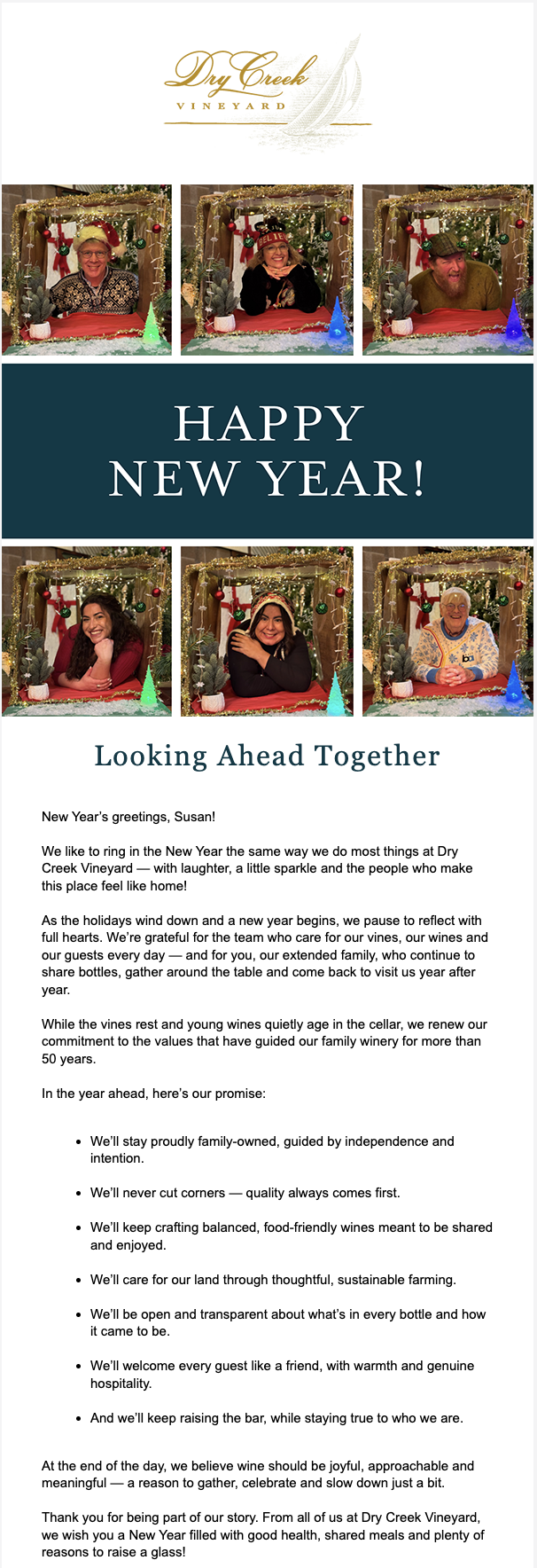
- Week 4 (Dec 21–31): The thank-you window. “A Toast to You” or “From Our Cellar to Your Table” closes the season gracefully while teeing up New Year’s campaigns.
Your audience doesn’t need another email yelling “Buy Now.” They need one that helps them feel competent, calm, and on schedule. If you send thoughtfully during this period, you’ll avoid fatigue and train your audience to associate your emails with useful timing rather than background noise.
THE CAMPAIGN NEEDS A THEME, NOT A PULSE OF PANIC
The most common mistake wineries make is building a series of emails instead of a campaign with a story. A string of emails isn’t a campaign—it’s clutter. Consumers don’t experience your December emails as separate communications; they experience them as an ongoing conversation. Cohesion creates memory, and memory drives action. Think in themes, not tactics.
Pick one story arc and build around it:
- “The Gift of Together” – highlight shared meals, connection, and gratitude.
- “From Our Cellar to Your Table” – pairing stories, limited releases, and recipes.
- “Twelve Days of Sparkle” – a countdown celebrating different reasons to open bubbles.
- “Now Everyone’s Included” – show the range of your offerings from low alcohol to bold reds.
Each send becomes a chapter – not a new pitch. Same tone, same design family, same emotional through line. This makes your emails recognizable, even when unopened—and that visual recall is what keeps your brand top of mind when everyone else blurs together. Anchor the visuals, tone, and copy so they evolve but remain recognizable. That consistency builds familiarity, and familiarity builds conversion.
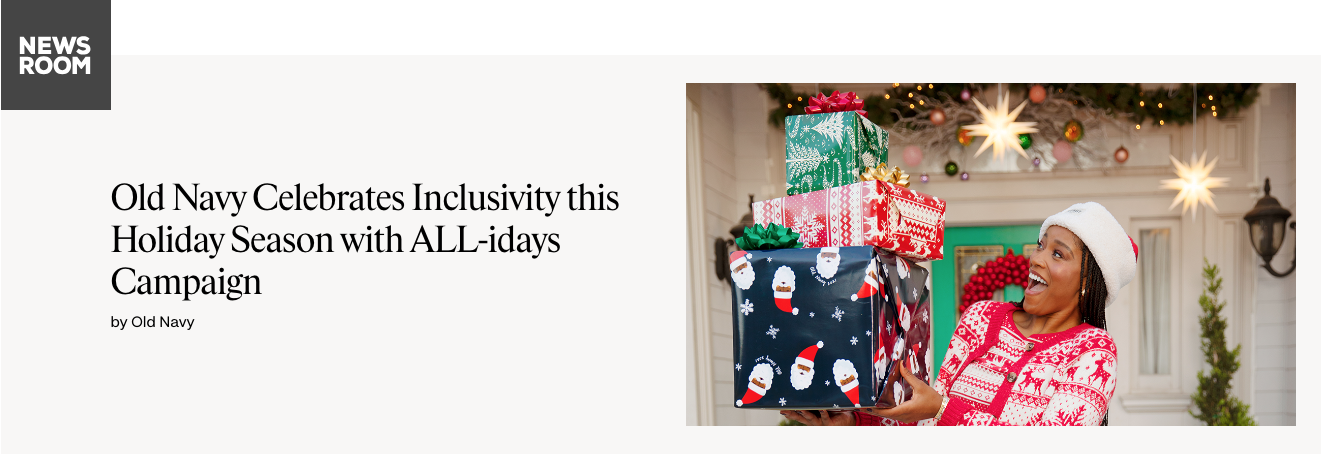
A great example of a cohesive campaign theme in action comes from Old Navy’s Happy ALL-idays initiative. Rather than releasing a string of disconnected promotions, Old Navy built an entire narrative around inclusion, joy, and cultural representation. Every element—from its Inclusive Santa Activation to its Santa BOOTcamp and diverse media creative—connects back to one central idea: reimagining the holidays to celebrate everyone’s traditions. The result isn’t just a campaign; it’s a movement that aligns brand values, storytelling, and community engagement. Even the product line—the skin-tone Santa Jingle Jammies and multi-cultural patterns—serves the story. For wineries, the takeaway is clear: a holiday campaign should stand for something larger than sales. When your content, offers, visuals, and tone all orbit one meaningful theme, your brand earns attention not because it’s loud, but because it’s consistent, intentional, and human.
WRITE FOR HUMANS, NOT ALGORITHMS
Holiday fatigue is real. Audiences are emotionally overextended, multitasking, and tired of being sold to. The average person receives over 120 marketing emails per day in December, but relevance still cuts through. According to Campaign Monitor’s 2024 data, customers who open even one personalized email are 6× more likely to purchase again.
That’s your cue: stop chasing volume and start building meaning. Holiday email marketing is not about yelling louder—it’s about speaking clearly when others have lost their voice.
So stop pitching and start conversing. Write copy that sounds like a person—not a press release. Replace “Act Now” with “Raise a Glass.” Use sensory language—flavor, warmth, ritual. Remind people that wine isn’t a transaction; it’s an experience.
And keep it brief. The average mobile user gives your email eight seconds before deciding whether to engage or delete (Campaign Monitor, 2024). Those seconds decide your revenue.
RESTRAINT IS THE NEW AGGRESSION
You don’t outshout competitors; you outthink them. Sending every day to everyone doesn’t create impact—it creates mutiny.
Re-engagement campaigns before the holiday rush pay off. Clean your list before the holidays. Remove disengaged contacts. Suppress those who haven’t opened in six months. Even trimming 10–15% of inactive addresses can lift open rates several points, improving deliverability when you need it most. The takeaway: pruning isn’t loss—it’s strategy.
Then pace yourself. Send relevant, segmented messages that align with intent. In December, quality frequency beats sheer volume every time.
MEASURE LIKE YOU MEAN IT
Data isn’t decoration—it’s direction. During the holidays, you’re not looking for perfection; you’re looking for trends.
Here’s where your numbers should land in Q4:
- Open rate: 25–30% (minimum 20% during peak weeks).
- CTR: 3–6% for segmented campaigns.
- Revenue per email: $0.30–$0.50 baseline; $1+ for high performers.
If your numbers are off, don’t guess—diagnose. Are you hitting the right audience? Are you sending too often? Is your design driving attention to your CTA or away from it?
Stop measuring vanity metrics. The only KPI that matters is whether your emails make money without damaging your brand voice.
KEEP TALKING AFTER THE CHAMPAGNE POPS
Most wineries go silent after Christmas. That’s a waste of momentum. Plus, customers are relaxed, reflective, and—if your product hit the mark—open to deepening the relationship. So, the post-holiday period is ripe for conversion—the recipients who just tasted your wine are the warmest leads you’ll ever have.
Follow up with a “Thank You” or “Here’s How to Enjoy the Bottle You Received” message. Invite them to join your club or subscribe for exclusive releases. The “New Year, New Cellar” moment sells itself.
Campaign Monitor’s 2024 report shows that post-holiday open rates climb as high as 28%—because the noise is gone and attention is back. Your January ROI depends entirely on how you close December.
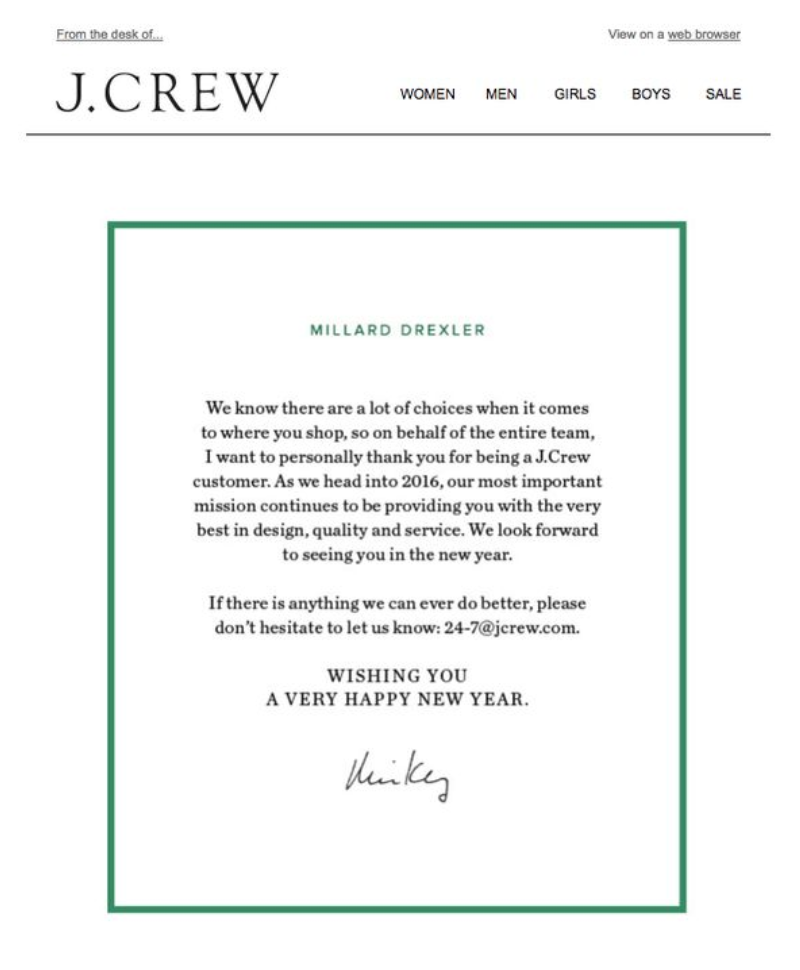
THE HARD TRUTH
You’re not competing with other wineries. You’re competing with Amazon, Sephora, and the dopamine hit of instant convenience. The inbox is your only equalizer.
The brands that win the holiday season understand that relevance isn’t about shouting louder—it’s about sounding real. When your message feels like a breath of calm in an inbox full of chaos, it earns attention.
Because in the end, the quiet, confident voice that knows its audience always outperforms the brand that’s still yelling “BUY NOW.”
THE HOLIDAY EMAIL PLAYBOOK, CONDENSED
- Lead with a trustworthy sender and a strong, specific subject line.
- Align subject and teaser text for a complete, compelling thought.
- Personalize dynamically and design for your AOV tiers.
- Start smart on December 2—pivot from hype to help.
- Build a campaign theme, not a stack of one-offs.
- Write for humans with brevity, emotion, and calm confidence.
- Keep cadence disciplined; prune your list.
- Measure what matters and learn fast.
- Follow up post-holiday to turn giftees into customers.
- Compete with noise by sounding unmistakably you.
If your winery’s emails make someone pause, breathe, and click “open” in the middle of December chaos—you’ve already won. That’s not luck. That’s strategy, empathy, and a little bit of creative rebellion.

If your winery’s December felt like a sugar high followed by a January hangover, congratulations—you’re in the club. The holiday season brings out the best and worst of wine marketing. We see a flurry of emails, social posts, pop-up bundles, and panicked “last chance for shipping!” reminders that make even Santa unsubscribe. But behind all that glitter and noise sits something actually useful: data.
And data, unlike mistletoe or tinsel, ages beautifully—if you know how to use it.
Day 1: The Ghost of Open Rates Past
Let’s start with the easy one. You sent fifteen emails between Thanksgiving and New Year’s, and shocker—open rates dropped after the first week. This isn’t your subscribers turning into Grinches; it’s list fatigue. Consumers are bombarded with messages from every brand they’ve ever accidentally clicked “subscribe” on.
The fix: cut your frequency, not your revenue. Segment your list by engagement level and tailor cadence accordingly. Your frequent buyers can handle three or four messages a week. Everyone else? One great offer, not five mediocre ones. Quality over quantity—just like wine.
Day 2: The “Average Order Value” Wake-Up Call
If your AOV dropped during the holidays, you probably leaned too hard on discounts or failed to upsell. A 15% off coupon feels generous until you realize it tanked your margins and didn’t grow your cart size.
Instead of racing to the bottom, bundle smartly. Create curated sets with built-in perceived value: Holiday Reds for the Table, New Year’s Sparkling Trio, “Save Me From My In-Laws” Sampler. Offer shipping incentives instead of percentage cuts. You’ll preserve your pricing integrity and give customers a reason to spend more.
Day 3: The Email Cadence Conundrum
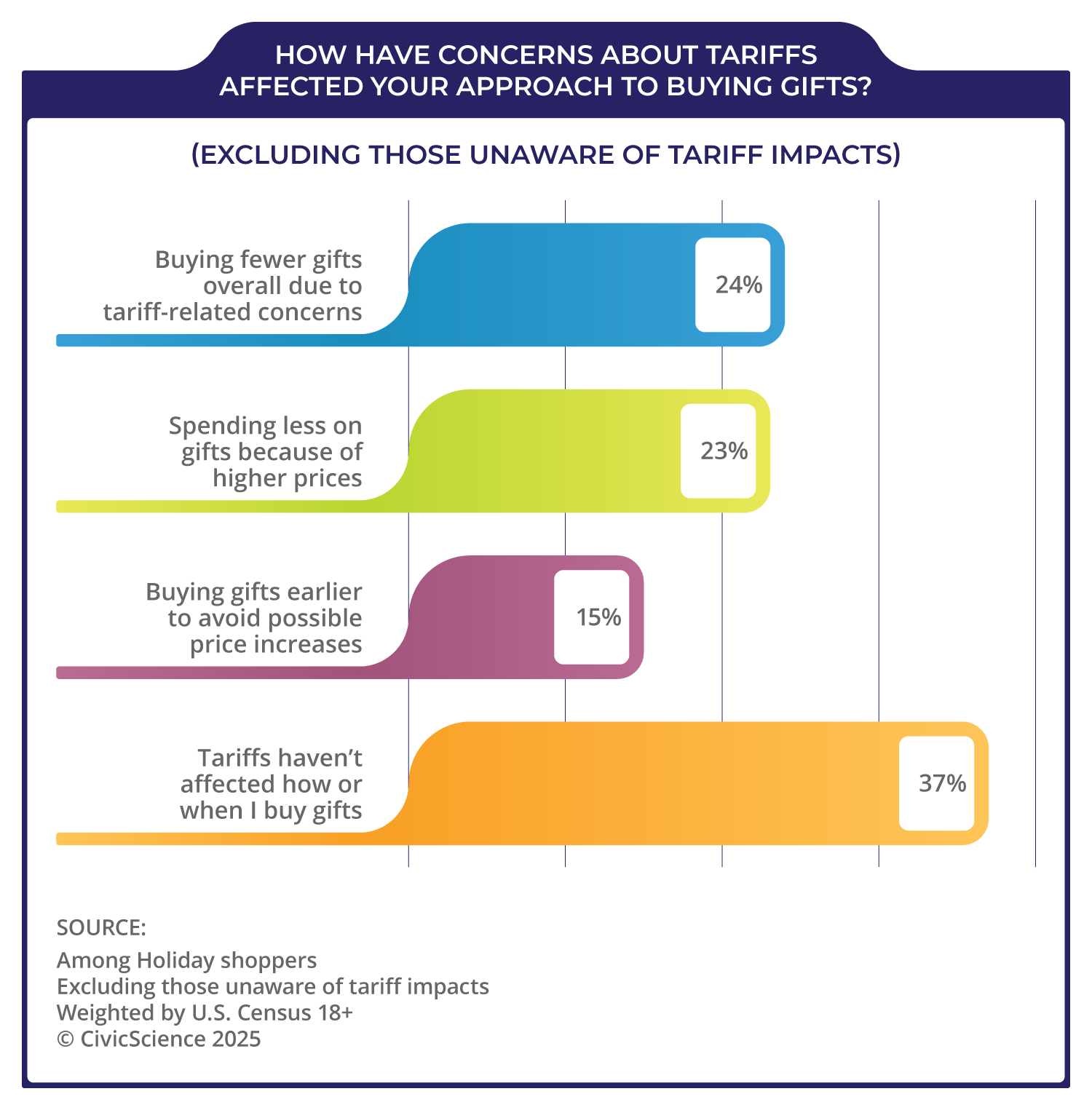
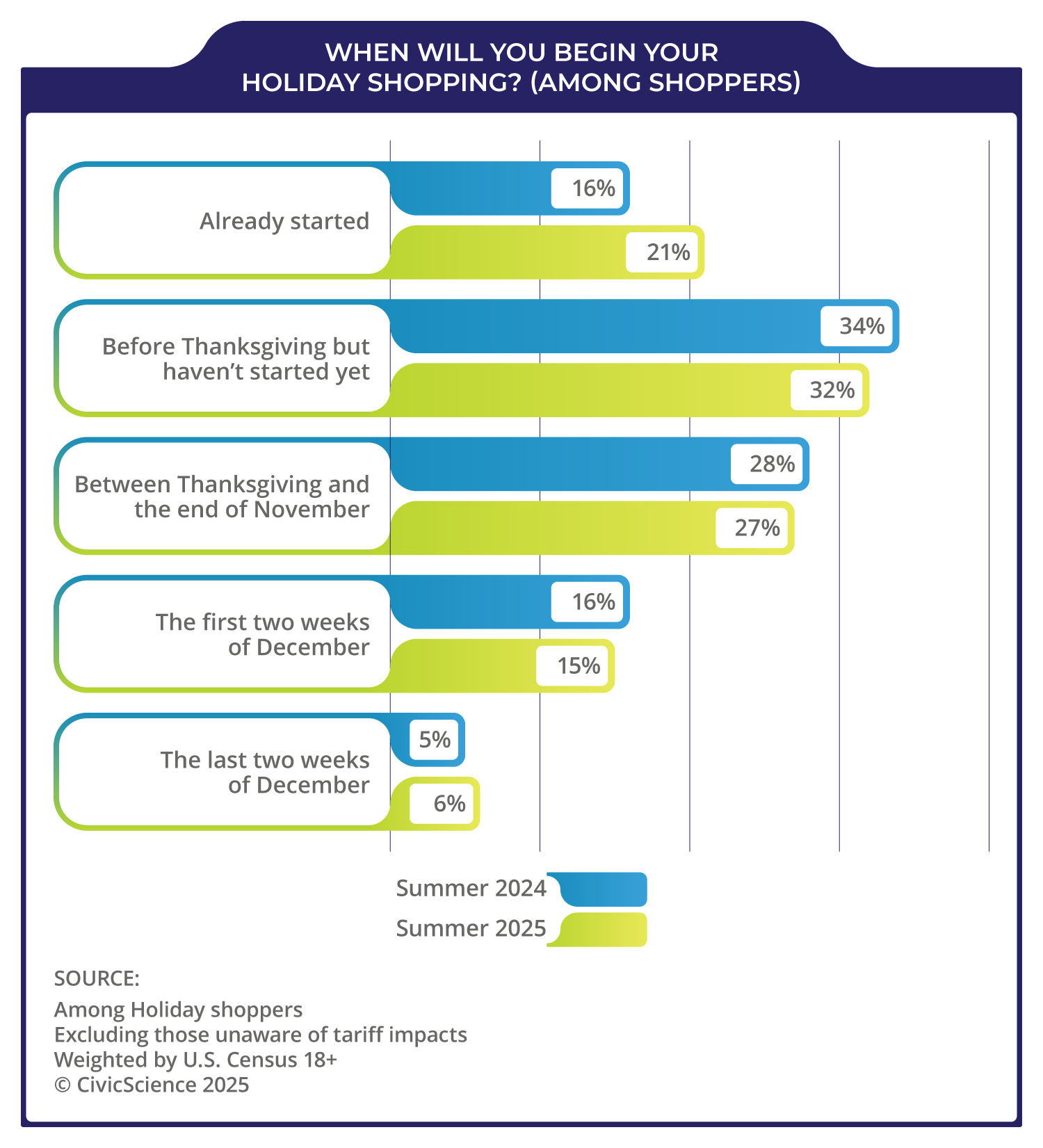
Timing matters. Most wineries either cram everything into a two-week blitz or wait until December 15 to panic. Both are amateur moves. Your audience shops early, often during Cyber Week, and again right before last ship dates.
Build a three-wave approach:
- Late November: Gift ideas, wine club upgrades, and “beat the rush” offers.
- Mid-December: Shipping deadlines, local pickup reminders, last-call urgency.
- Post-holiday: “You survived” re-engagement campaigns that turn giftees into new customers.
Day 4: The Wine Club Missed Opportunity
If your wine club members didn’t spend more in December, that’s a red flag. Your club is your warmest audience, yet most wineries treat them like they’re done buying. Wrong. They’re your easiest upsell—especially for magnums, limited editions, and gift memberships.
Target them with “member-exclusive” offers that actually feel exclusive. A bonus bottle, early access to a library wine, or gift wrapping that doesn’t look like you ran out of tissue paper. Give them a reason to brag about being in your club.
Day 5: The Lazy List Hygiene Lesson
Here’s an unpopular truth: not everyone who gets your emails should still be getting them. If your bounce or unsubscribe rate went up last December, your list hygiene is to blame. Sending to disengaged addresses hurts deliverability for everyone.
Before you launch this year’s holiday push, run a re-engagement campaign. Ask dormant contacts if they still want to hear from you. If they ghost you again, remove them. Your future open rates—and your sender reputation—will thank you.
Day 6: The Social Media Mirage
You probably boosted a few posts, ran a “giftable wines” carousel, and got… crickets. Social media during the holidays is a feeding frenzy of ads, and wineries are up against bigger budgets and louder visuals.
Instead of throwing money into the void, invest in retargeting. Use Meta to reach people who visited your site or opened your emails but didn’t purchase. It’s cheaper, more focused, and—brace yourself—actually measurable.
Day 7: The Shipping Deadline Debacle
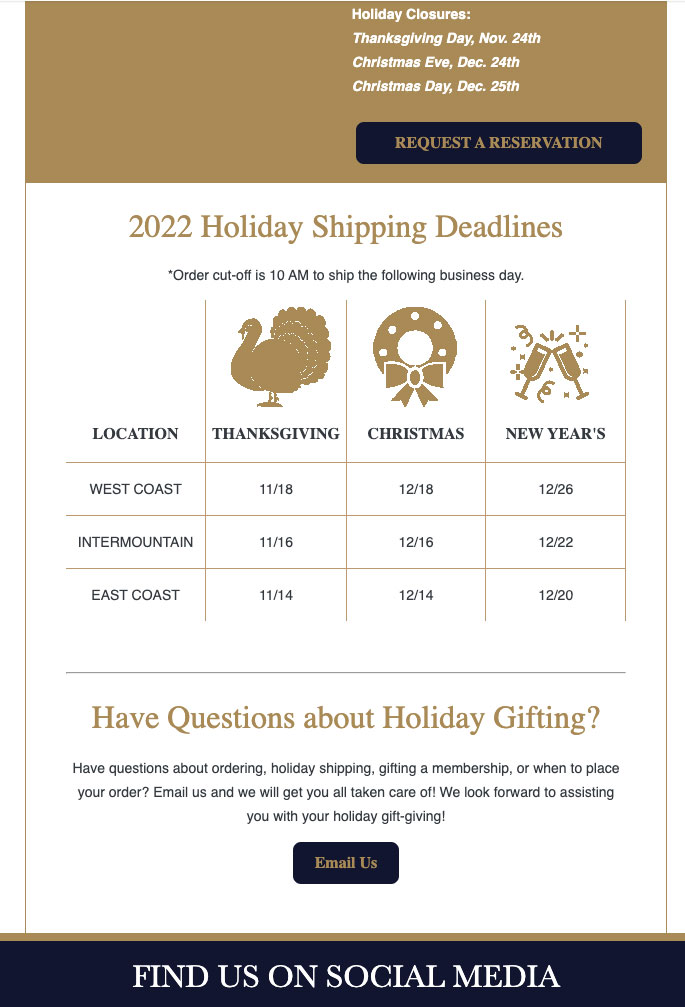
If half your customer service emails last December began with “Will it arrive by Christmas?”, you need a clearer shipping strategy. Display cutoff dates prominently, automate reminders, and consider adding an expedited option for the procrastinators.
And for your own sanity, don’t promise what your fulfillment team can’t deliver. No one wants to field angry calls from someone whose Pinot missed the party.
Day 8: The Overlooked Landing Page
Where did your traffic actually land? If you sent email clicks to your homepage instead of a focused holiday page, you made your customers work too hard.
Create a dedicated destination that’s easy to shop: clear bundles, clean design, and concise copy. Remember, customers aren’t browsing; they’re hunting. Every click between the email and the checkout is a chance for distraction—or worse, abandonment.
Day 9: The Discount Dependency Detox
If your customers only buy when you discount, congratulations—you’ve trained them that way. The holidays shouldn’t be a race to the cheapest bottle. Instead, use scarcity and storytelling to justify value.
Feature “limited holiday releases,” showcase behind-the-scenes vineyard shots, or tell the story of a vintage year. Make it emotional, not transactional. Customers will pay full price for something that feels personal.
Day 10: The “One and Done” Syndrome
You pulled off a decent December campaign, then went silent in January. Classic mistake. The post-holiday lull is prime time for cultivating repeat buyers.
Set up an automated thank-you sequence. Offer a “treat yourself” sale for giftees or a winter food pairing email that nudges them back. Keep momentum going before they move on to Dry January and start making bad decisions involving kombucha.
Day 11: The Forgotten Analytics Dashboard
You know what’s worse than bad performance? Not knowing why it was bad. If you didn’t set up UTM tracking or campaign tags last year, you wasted valuable insight. This year, track every click, open, and sale by source.
You can’t optimize what you don’t measure. And if your idea of analysis is “it felt busy,” then maybe let someone else drive the sleigh next season.
Day 12: The Hard Truth—You’re Not Competing with Other Wineries
You’re competing with everything else people can gift online. You’re not fighting the tasting room down the road; you’re fighting Amazon’s shipping speed, Target’s convenience, and Sephora’s loyalty points.
That means your marketing needs to feel more personal, more intentional, and far more human. Wine is a gift of emotion—connection, celebration, care. If your campaigns don’t make people feel that, your cabernet’s just another SKU in a sea of red.
Final Pour
The holidays aren’t about luck; they’re about preparation. The data sitting quietly in your CRM, POS, and email reports holds the map to better sales. Start your planning now. Audit what worked, fix what flopped, and build a smarter cadence before the lights go up again.
Because nothing says “happy holidays” like a clean database, a healthy profit margin, and an inbox full of customers who still want to hear from you in January.
Meta Ads, Miracle Results

If your holiday Meta ads felt like lighting money on fire in a festive candle, that’s not because social is dead. It’s because your targeting and flighting were built for wishful thinking, not gifting intent. The fix isn’t magic. It’s method. You can absolutely turn Meta into a gift-selling machine between Thanksgiving and New Year—if you understand what actually drives intent and how to spend wisely when every other brand on earth is screaming for attention.
What follows is a ruthless, winery-specific playbook for the six-week window between Thanksgiving and New Year that prioritizes intent, protects margin, and leans on real benchmarks instead of folklore.
First, reality: volume is there, but it clusters
Holiday ecommerce keeps breaking records, with online spend hitting roughly $241.4B from Nov 1 to Dec 31 and mobile responsible for the majority of transactions. (Adobe Newsroom) Translation: your customers are buying on their phones while pretending to watch Hallmark movies. Cyber Week was massive, and Christmas Day was peak-mobile. Plan for that.
Meta pricing pressure in Q4 has stabilized compared to the ugly swings of prior years. CPMs were roughly flat to up low-single digits year over year in Q4 2024, with pricing pressure strongest in December. (MediaBeast) Plan for a bump as shipping cutoffs approach.
Benchmarks are not commandments, but they’re useful guardrails. Recent aggregator data places median Meta CTR around the high-1% range, with food and drink conversion rates among the better performers (roughly low-to-mid 2% reported in some datasets). (AI CMO) Treat these as directional, not destiny. Your creative, offer, and audience quality will move the needle more than “industry average.”
The targeting stack that doesn’t waste budget
1. Your Audience Isn’t “Everyone”
Meta’s algorithm can predict a lot of things—but it can’t read your winery’s wishful thinking. “People who like wine” is not a target audience; it’s a population segment roughly the size of Europe.
Start small and sharp:
- 7–14 Day Website Visitors: People who actually looked at your gift sets or sparkling wine pages.
- Cart and Checkout Abandoners: Those are sales that slipped through your fingers; go get them back.
- Past Buyers Who Sent Gifts or Shipped to Multiple Addresses: They already self-identified as your December heroes.
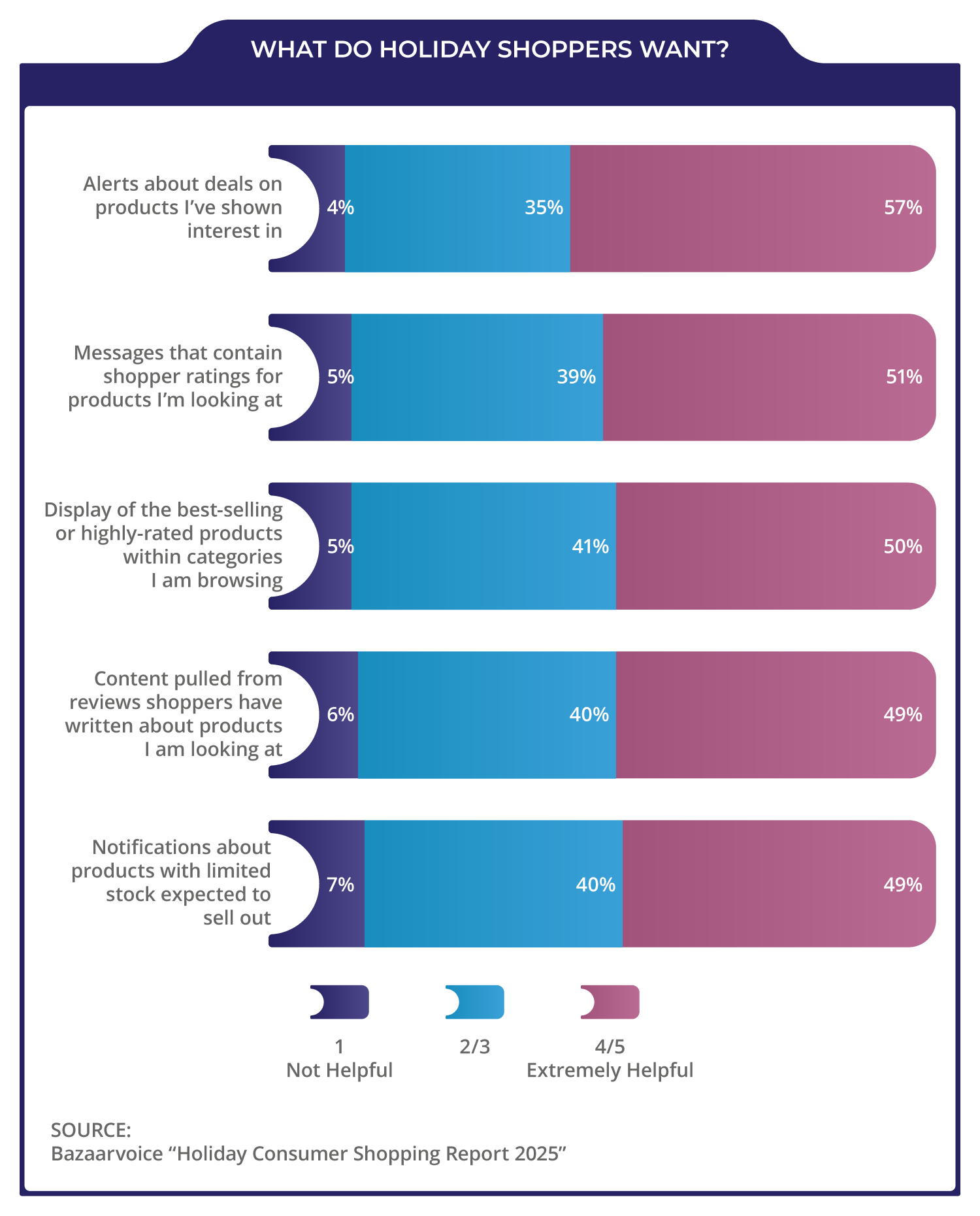
These are high-intent audiences. Then, clone them—literally. Use Meta’s Lookalike Audiences to find similar users. A 1–2% lookalike of gift purchasers tends to deliver the best results before the algorithm gets lazy with scale.
Holiday campaigns are about efficiency, not reach. You’re buying precision, not fame.
2. Retarget Like You Mean It
This is where the real ROI hides. During the holidays, buyers don’t act linear—they browse, compare, forget, and then panic-buy after seeing a reminder at 11:37 p.m.
Set retargeting windows that match that behavior:
- 1-Day: Cart abandoners get an immediate “Still need that gift?” message.
- 7-Day: Broader site visitors see urgency copy—“Ships by Dec 18!” or “Limited sets left.”
- 14-Day: Warm audiences get reintroduced to bundles, shipping perks, or local pickup options.
Meta reports that retargeting campaigns regularly outperform cold traffic by 2–3x in return on ad spend. The catch? They only work when your creative reminds people why they almost purchased. If your ad feels like déjà vu, it’s wasted spend.
3. Advantage+ Shopping, with adult supervision
Advantage+ is Meta’s polite way of saying, “Let us drive, you just pay for the gas.”
It’s Meta’s automated ad system—specifically Advantage+ Shopping Campaigns (ASC) for ecommerce—that uses machine learning to handle what used to require human finesse: audience targeting, placement, and creative testing. You load in your catalog, set your budget and objectives, and Meta’s algorithm dynamically decides who sees what, where, and when.
Advantage+ Shopping (A+) can simplify the mess in Q4 if you give it a sane product set and let it learn for at least 7 days. Use it to blend prospecting and remarketing, but guard your merch with exclusions:
- Exclude extreme low-margin SKUs.
- Pin holiday bundles, sparkling, and “giftable red” sets as your featured catalog items.
- Watch audience overlap with your manual retargeting; if A+ steals too much last-click credit from your surgical retargeting, cap or separate it.
Meta’s own case studies show cost-per-purchase improvements during holiday promos using A+ Shopping. Anecdotal, yes, but consistent with the platform’s AI favoring dynamic creatives and broader signals in peak season.
4. Creative that signals “gift” in one second
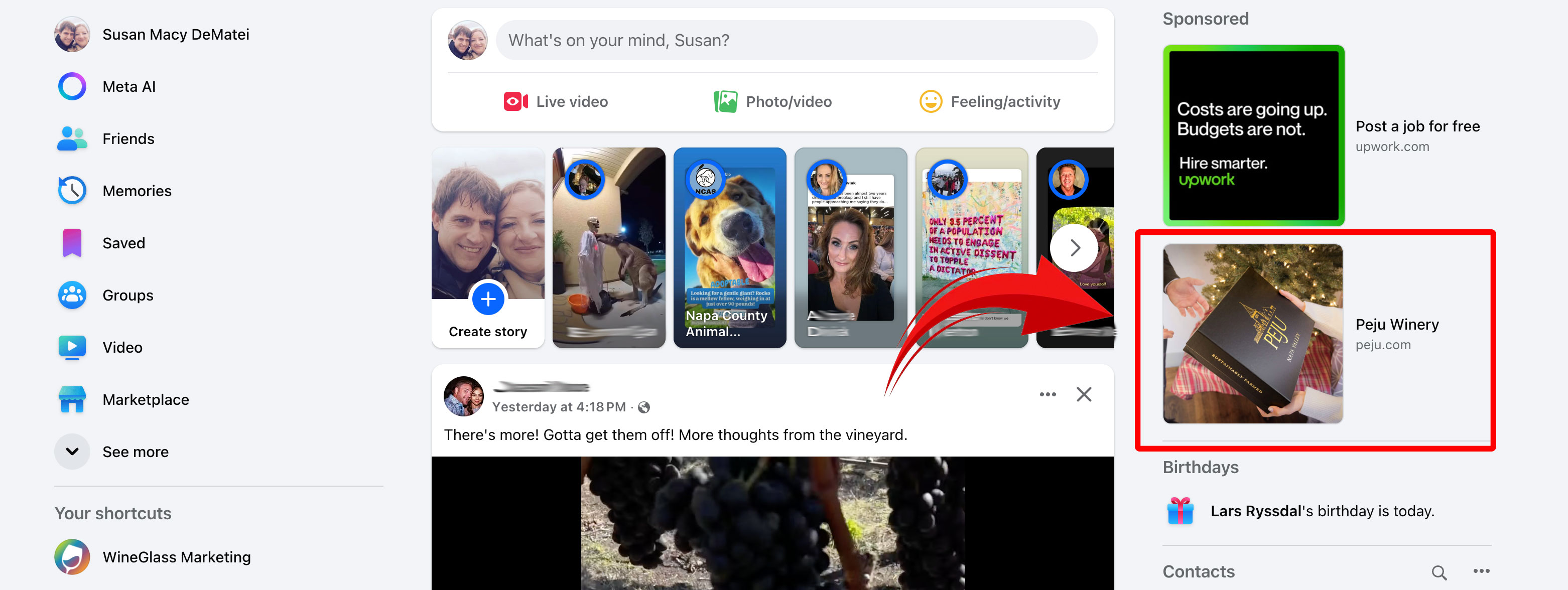
People scroll fast. You have a second to say, “this is a gift, and it will arrive on time.”
- Visuals: boxes, ribbons, card enclosures, multi-bottle sets, a “ship by Dec X” badge.
- Copy: “Arrives by Dec 20 in most states,” “Send to their door,” “Gift wrap available.”
- Formats: Reels/Stories for thumb-stopping motion; image carousels for bundles and price tiers; catalog ads for breadth.
Meta ads that signal “gifting” in the first frame see click-through rates nearly double the generic lifestyle versions (WordStream, 2024). Because no one wants to decode your brand aesthetic while panic-shopping on a phone.
5. Offers that lift AOV without wrecking margin
Everyone loves a good deal—until it eats your profit and trains your audience to wait for the next one. The trick is value stacking instead of discount stacking.
Try these:
- Free shipping thresholds: “Orders over $150 ship free.”
- Gift wrap add-ons: A small cost for big perceived value.
- Tiered perks: “Spend $200, get a magnum upgrade.”
Your average order value (AOV) will rise, and you’ll preserve your brand’s dignity. Remember: you’re not Amazon. You’re selling emotion—wine that feels thoughtful, not discounted.
6. Follow the Holiday Rhythm
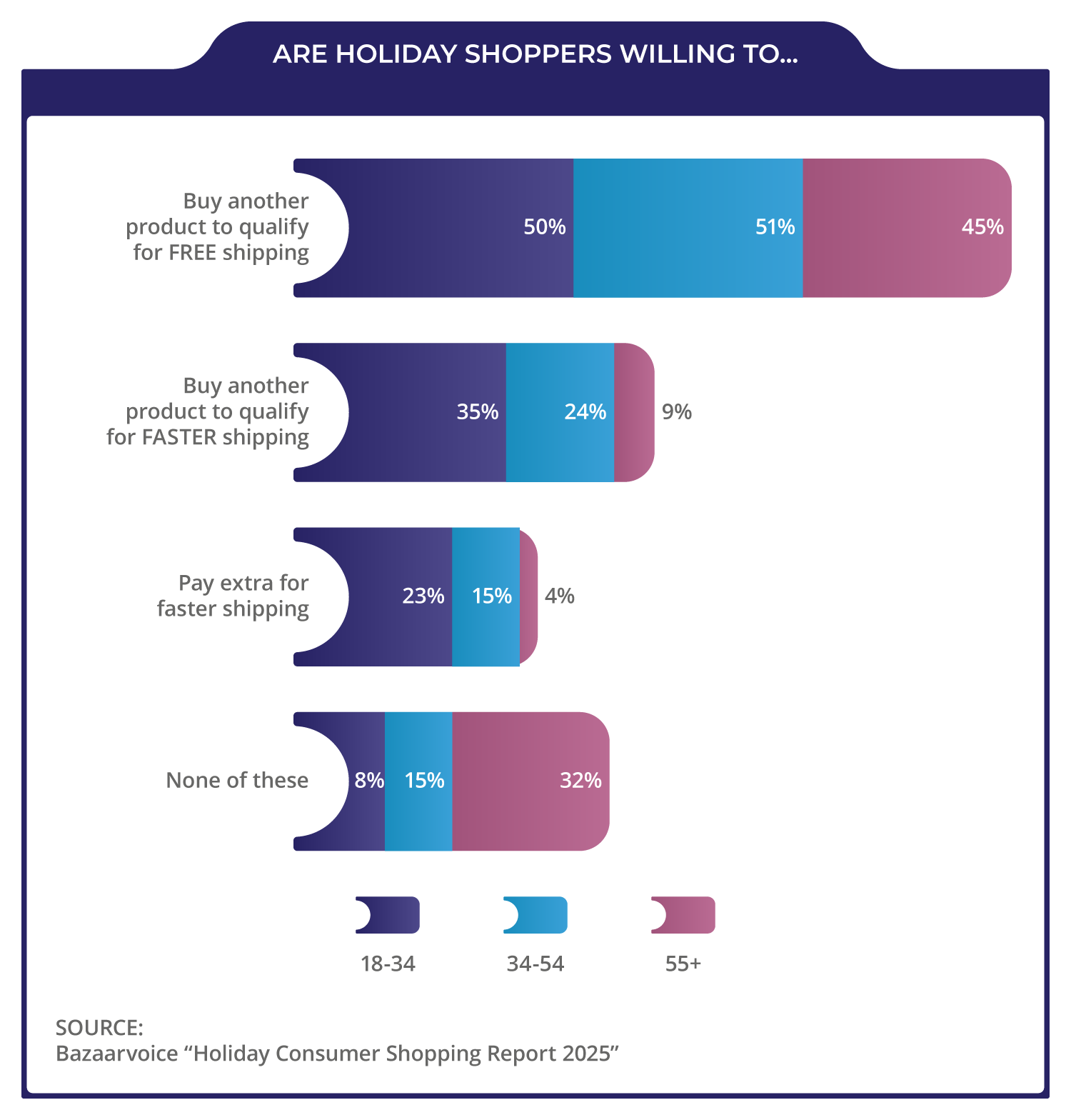
If you treat December like one long ad push, you’ll burn through budget faster than a candle at a tasting room party. Consumer intent spikes and drops in waves.
- Wave 1 – Thanksgiving to Cyber Monday:
The awareness phase. Hit gift sets, sparkling bundles, and early-bird perks. CPMs are high, but shoppers are primed. - Wave 2 – December 5–15:
The conversion zone. Push shipping cutoffs, urgency, and limited editions. Focus 60% of your budget here; Meta ad costs are high, but intent is peaking. - Wave 3 – December 16–24:
Gift card and local pickup season. Retarget like mad. CPMs rise but ROAS holds because urgency is through the roof. - Wave 4 – December 26–New Year’s:
Don’t go dark. “Treat yourself” campaigns and New Year’s sparkling ads turn recipients into new customers.
7. Budgets, guardrails, and when to step off the gas
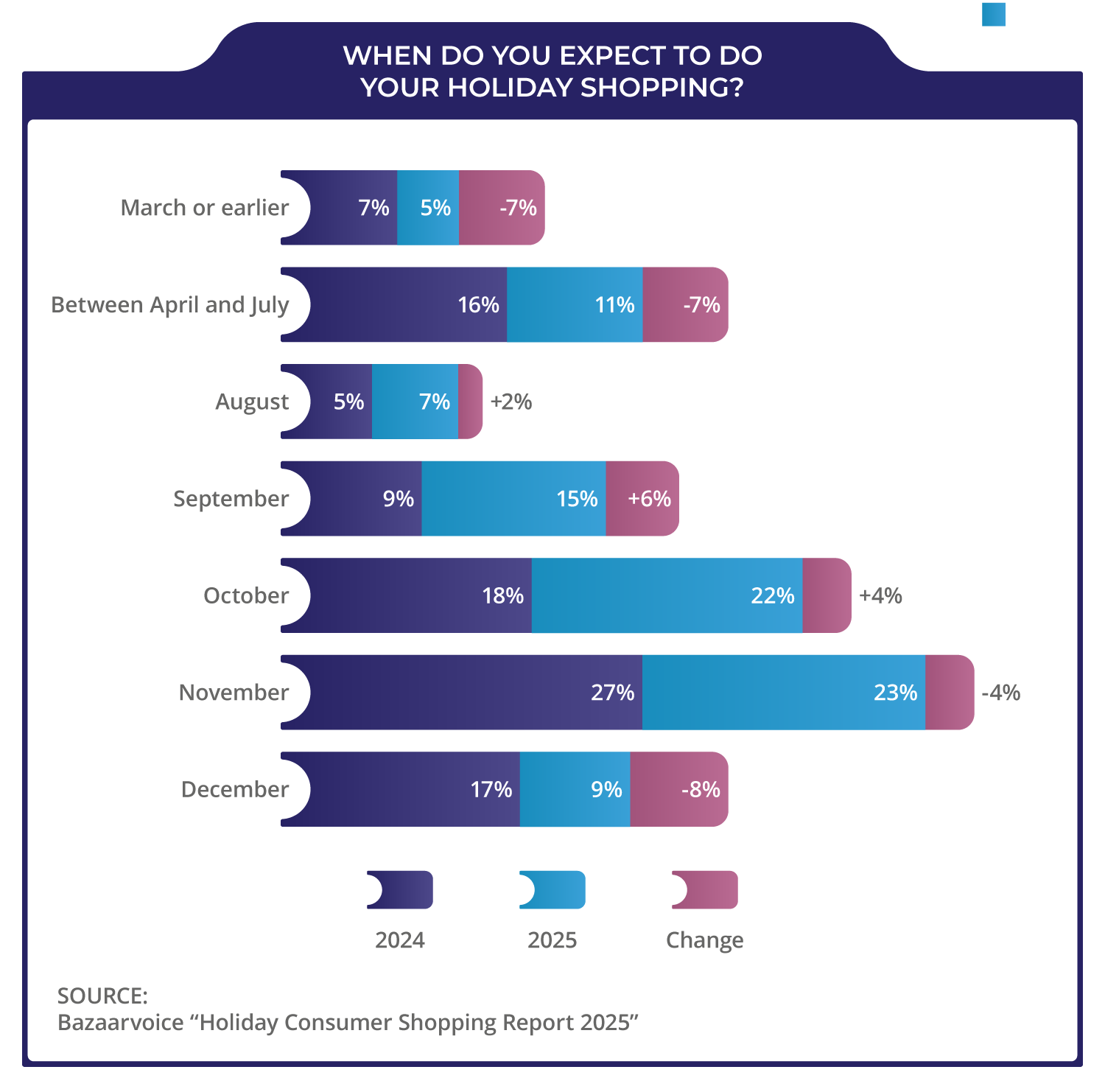
- Budget elasticity: plan +30% surge funds for 72 hours around Cyber Monday and for the 4 days before your last ship cutoff. If ROAS holds and inventory is healthy, deploy. If it doesn’t appear to be working, pivot to gift cards/pickup.
- Frequency sanity: in small geographic market or with remarketing, cap ad frequency to avoid burning your list. If frequency > 5 and CTR < 0.8% on a retargeting set, rotate creative or shrink the window. Benchmarks vary, but sub-1% CTR on warm audiences usually signals fatigue.
- Attribution hygiene: tag everything with UTMs by offer and audience. Don’t celebrate Meta-reported ROAS if Google Analytics and Commerce7 tell a different story. The point is cash, not dashboards.
8. Track Like a Cynic, Adjust Like a Scientist
If you’re still measuring “success” by likes or comments, it’s time to graduate. The benchmarks are straightforward:
- CTR: Aim for 1–2%. Under 1% means your creative is boring.
- Conversion rate: 2–3% is solid for food and beverage.
- ROAS: $3–$4 for every dollar spent is realistic; anything above that deserves champagne.
Tag everything. UTM every link. And decide what your single source of truth is when you receive different results from Google, Meta and your eCommerce. When the data looks weird, take the time to investigate.
9. Your Best Customers Aren’t Done Buying
Wine club members are your easiest upsell. Yet most wineries ignore them in December, assuming their holiday shopping is done. Big mistake.
Create member-only bundles, early access, or packaging perks that make them feel special. If your club list isn’t buying gifts from you, they’re buying from someone else.
Some ideas:
- Club-adjacent gifting: Upload a list of members who historically buy gifts or ship to multiple addresses. Show them exclusive giftable sets with member-only packaging upgrades.
- Sparkling as the spear: Use sparkling to acquire, then retarget into still bundles. It’s the category shoppers already associate with gatherings and New Year’s.
- Recipient retargeting: Drop a card in every shipped gift with a QR to a “Thanks for the gift” landing page + welcome offer. Build a recipient custom audience to retarget during Dec 26–Jan 15.
- Content that earns the click: Short videos of unboxing, bottle close-ups with gifting context, and “ships by Friday” overlays. No vineyards at sunset. It’s December. Show the gift.
10. Keep the Conversation Going After Christmas
The party doesn’t stop at shipping cutoffs. The people who received your wine as gifts are now your next audience. Include a QR code or card that says, “Loved your gift? Here’s where to get more.”
Run a light retargeting ad in early January—call it the “New Year, New Favorite Winery” campaign.
The Smart Winery Holiday Playbook (In Case You Skimmed Everything Above)
- Build lookalike audiences now.
- Remarketing is always your best ROAS
- Use the tools provided – try Advantage+
- Include creative that’s unmistakably giftable.
- Offer value, not desperation discounts.
- Time your budget around intent waves.
- Plan your spend around key buying times.
- Measure what matters, not what flatters.
- Don’t forget your loyal list.
- Don’t vanish after December 25
Holiday Meta ads aren’t about luck. They’re about timing, targeting, and empathy for the frazzled human holding a credit card at 11 p.m.
If you treat your campaigns like a strategy instead of a sprint, you’ll stop hoping for miracles—and start creating them.

A WINERY GUIDE TO AVAILABLE RESEARCH
You know what’s better than spending ten grand on a focus group where Jan from accounting tells you your wine label “feels aggressive”? Doing your homework first. And no, we don’t mean journaling your feelings over a glass of Pinot. We mean secondary research—the overlooked, underloved MVP of marketing insight.
While everyone else is out there reinventing the wheel with a clipboard and a budget they don’t actually have, smart marketers are quietly unlocking industry goldmines using data that’s already been collected. It’s like discovering your neighbor’s Wi-Fi is open and they happen to stream all the same shows you like—only more legal.
Let’s break down this not-so-secret weapon.
THE BOUGIE STUFF: COMMERCIAL SUBSCRIPTION DATA
If you’ve got champagne dreams and a caviar budget, welcome to the gated community of NielsenIQ, IRI, Forrester, and Gartner. These firms offer beautifully packaged data dashboards that track everything from how Sauvignon Blanc is trending in Boise to whether Gen Z is ghosting Google Shopping.
Want to see how your Cabernet stacks up nationwide? Nielsen’s retail scan data can show that—across regions, stores, or even by bottle size if you’re into that sort of thing. Forrester? They’ll tell you how TikTok is reshaping wine buying behavior while your cousin is still trying to get a post to go viral.
Use this if: You’re selling wine in more than one zip code and your accountant doesn’t flinch at four-figure invoices.
Fun Fact: The global wine market is projected to grow to $528 billion by 2028, and commercial providers are the first to spot the signals of who’s driving that growth (Statista, 2024).
THE BUDGET-CONSCIOUS BINGE: AFFORDABLE AGGREGATORS
Don’t have Kardashian-level cash? No problem. Enter Statista, eMarketer, and Mintel Snapshots—the Netflix of marketing data. For a few hundred bucks, you get enough charts to wallpaper your entire pitch deck. Plus, Statista’s infographics make it look like you know what you’re doing, even if you’re pulling this together during your third espresso.
You won’t get the granularity of custom tracking, but you will get reputable, vetted data summaries from a buffet of sources. Enough to sound smart in meetings? Absolutely.
Use this if: You’re a small-to-mid-sized winery with a solid curiosity streak and a limited research budget.
Stat to Steal: As of 2023, 34% of U.S. wine drinkers said they frequently consult online sources before choosing a wine (Wine Intelligence, 2023 via Statista).
THE GLORIOUS FREE-FOR-ALL: PUBLIC DATA SOURCES
Ah yes, the thrift store of research—where the savvy find gems and the lazy get overwhelmed. We’re talking U.S. Census Bureau, USDA, Bureau of Labor Statistics, and even local chambers of commerce. Want to know how many millennials live within driving distance of your tasting room? The Census has you covered. Curious what tourists are spending per visit in your AVA? That’s probably buried in some dusty PDF from the regional tourism board.
Then there’s industry gold like the Silicon Valley Bank State of the Wine Industry report, academic studies from UC Davis, and that one random Cornell paper you found while Googling “why don’t Gen Z drink Merlot.”
Use this if: You’ve got time, patience, and the ability to read past the executive summary.
Hot Tip: The 2024 SVB report warns that wine consumption is declining among younger adults—and we all know ignoring Gen Z is a long-term losing strategy.
THE POINT: WORK SMARTER, NOT JUST LOUDER
Secondary research won’t tell you what your tasting room visitors think of your new cheese board. But it will help you figure out whether they’re part of a national movement toward charcuterie minimalism (yes, that’s a thing). It can also save you from investing in a new canned wine line just as the trend crests.
And let’s be honest—if you’re going to try to sell $48 rosé in a market flooded with $12 competitors, you better have data to back up your magic.
TL;DR (BUT YOU REALLY SHOULDN’T)
Secondary research is not optional homework—it’s the strategic shortcut no one talks about enough. It’s fast, often free, and when done right, it’s your best bet at making marketing decisions that don’t come back to haunt you.
So before you start commissioning focus groups, maybe spend a few hours Googling, downloading, and spreadsheeting your way into brilliance.
Or just call us. We already did the reading.
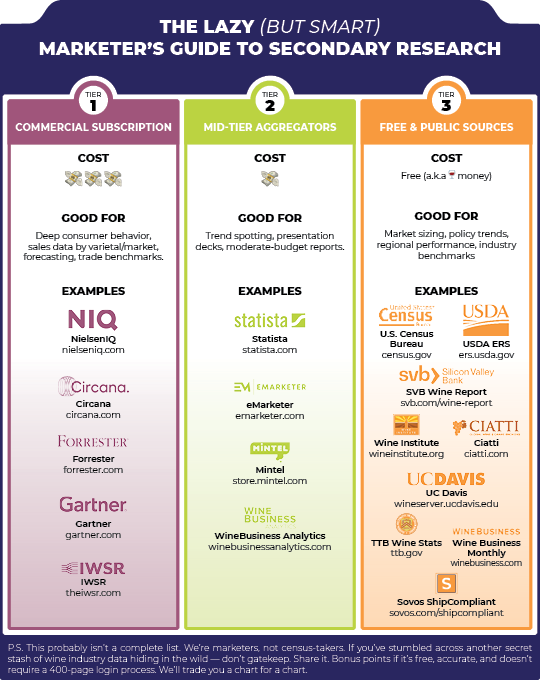
P.S. This probably isn’t a complete list. We’re marketers, not census-takers. If you’ve stumbled across another secret stash of wine industry data hiding in the wild—don’t gatekeep. Share it. Bonus points if it’s free, accurate, and doesn’t require a 400-page login process. We’ll trade you a chart for a chart.

LAST-MINUTE WAYS TO SUPPORT WINE AND JOIN COME OVER OCTOBER
Come Over October launched in 2023 with a simple but powerful premise: wine has connected people for 8,000 years, and October is the month to honor that. The campaign invites us to slow down, gather with friends or family, and make wine the centerpiece of togetherness.
In just one year, it’s grown from a spark to a movement. Thousands have embraced the idea, from consumers hosting casual dinners to wineries, retailers, and restaurants using the campaign to remind people that wine isn’t just a beverage—it’s a culture, a history, and a human connection poured into a glass. For the industry, it’s a chance to reframe wine as essential, not optional, in modern life.
The wine industry needs this now more than ever. The pressures are piling up. Research from Stanford and other institutions is eroding the belief that “wine is good for your heart”, and the U.S. Surgeon General has recommended warning labels on alcohol products about cancer. Meanwhile, consumption overall is slipping: in the U.S., only 54 % of adults now report drinking—a record low—while a majority believe moderate drinking is harmful to health. (Gallup) Younger generations are drinking less, turning to non-alcoholic or low-alcohol alternatives, or rejecting wine’s image as stuffy or irrelevant. Combined, these trends pose a threat to demand, consumer trust, and long-term growth. Come Over October is a counterweight, a chance to reframe wine as part of living, not just a drink under fire.
HOW WINERIES CAN STILL JUMP IN
Even if your calendar isn’t full of October activations, there are plenty of nimble ways to get involved. The beauty of Come Over October is that it doesn’t require elaborate planning—it’s about sparking connection and making wine the centerpiece. Here are some fast, high-impact ways to weave the campaign into what you’re already doing:
-
- Ship the Story
Every box you send out this month can carry the Come Over October message. Add a simple postcard to club shipments or DTC orders, encouraging customers to invite friends over, open your wine, and create a shared moment. Include a QR code to a downloadable “host invite” or pairing guide so they can make their gathering feel special.
- Taste with a Twist
Bring the campaign to life in your tasting room. Table tents or signage highlighting Come Over October invite visitors to see your wines not just as tasting pours, but as conversation starters. Take it one step further by creating an October-only “host pack”—a curated 3- or 6-bottle bundle positioned as perfect for sharing with friends this month.
- Turn Social into Socializing
Encourage user-generated content with a simple incentive. Ask visitors and club members to post their Come Over October gatherings, tag your winery, and use the campaign hashtag. Sweeten the deal with a raffle—whether it’s a winery hat, a set of branded glasses, or even a complimentary tasting. The more photos in the feed, the stronger the movement feels.
- Events in a Box
Suppose you don’t have time to organize a gathering, equip your customers to host their own. Share a downloadable “Host Kit” with a suggested playlist, easy recipes, and conversation prompts. A little effort on your part helps make their evenings feel curated and memorable.
- Keep the Language Alive
Simple touches, such as in emails, tasting notes, or signage, can amplify the message. A line like, “Wine has always been the excuse—the reason is being together,” keeps your brand aligned with the heart of the campaign without overcomplicating things.
- Partner for Amplification
October is the perfect time to align with restaurants, shops, or local artisans. Provide campaign language and assets they can use on menus, shelf talkers, or displays. Every shared touchpoint amplifies the collective message.
- Ship the Story
AND THE BEST PART – THE MATERIALS ARE ALREADY BUILT FOR YOU – AND FREE! DOWNLOAD HERE

WHY IT MATTERS
Come Over October isn’t just another campaign window—it’s an industry-wide reminder of why wine matters. At a time when headlines are shouting about health risks, younger generations are hesitant to adopt wine, and consumption is slipping, we need to double down on the story wine has told for 8,000 years: it brings people together.
The good news? October isn’t over. You can still get your winery into the conversation, whether it’s with a simple email, a bundle, a table tent, or a social post. Every touchpoint helps anchor wine as culture, not just product.
So don’t sit this one out. Raise a glass, invite people in, and make sure your customers do the same. Because Come Over October isn’t about a single winery or a single bottle—it’s about all of us, keeping wine relevant, shared, and alive.