Filter Post Type
NewsVideoProductEventLink
Sort:
Relevance
1–10 of 24
July 27, 2021
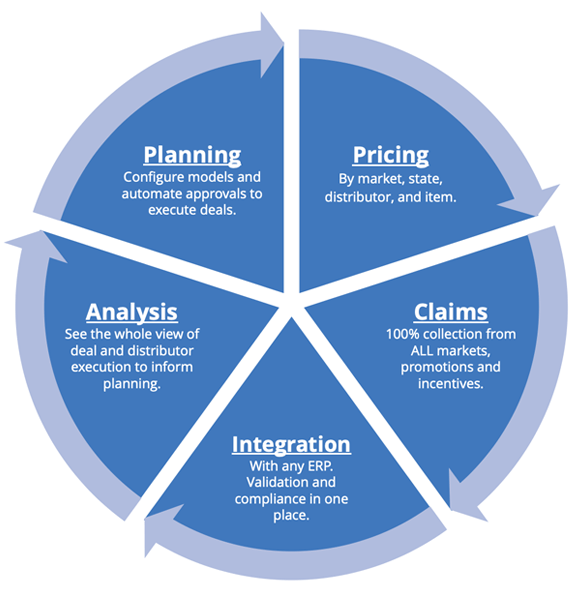
Perhaps you’ve seen the hype around ‘full-cycle’ promotions management and you’re wondering— what exactly does that mean? From managing depletion allowances and processing billbacks to steering distributor sales incentives for success, three-tier wineries and importers must focus beyond pricing alone to stay profitable, efficient, and competitive. That’s because pricing is only one piece of the trade spend and promotions cycle. Traditionally, wineries had to rely only on third-party depletion data for chargeback invoice reconciliation. The problem is that only covers 70% of the pricing visibility you need. What about the actual data from invoices? How do you get insight into the entire range of promotions such as BTG spend, free goods, incentives, and samples? How do you integrate all that data with your financial management or ERP solution and leverage it for accurate analytics and promotions planning? Enter full-cycle margin management, the latest
10
With finance endlessly hunting and pecking for data while sales scrambles for approvals on their ‘gut’ guess for the best pricing models and incentives with a distributor, it’s no wonder that planning and executing successful promotions are often a WAG. The problem is – while you can get lucky or play mediocre odds on accidental wins, only accessible data, accurate numbers, visibility into performance, and the ability to execute quickly in the market can help you turn the dials on consistent, repeatable profitability through promotions. It’s time to implement and execute on the Three in Three rule. What is the Three in Three rule exactly? It’s a tried and true, simple, three-step looped approach to promotions in the three-tier wine industry: Track Plan Automate. To elaborate, this means, you need to: Centralize and govern collecting the outcomes of absolutely trade programs and promotions, such as by-the-glass (BTG), depletion allowa
00
February 22, 2022

Are your three-tier pricing management tools and processes giving you the ability to price your wine and evaluate trade spending correctly? After all, tracking, optimizing, automating, and reporting on all your DAs, trade spending, and promotions is how you’ll stay competitive, protect your brand, and ensure a healthy bottom line. To help you determine if your workflows, infrastructure, or governance allow for efficient and profitable pricing management, Tradeparency’s industry data experts compiled 9 initial questions to ask and answer internally. These will help you reveal where you may have gaps in the complete cycle of your pricing management or what could be preventing you from pricing for profit effectively in the three-tier market: How do you track and analyze approved deals by product, date, region, or distributor? Can your sales managers access price grid reports on-demand? What is your process for handling exception-based managerial approval of new deals? D
00
January 19, 2022

Choosing the Right Wine Pricing Tool | Tradeparency
The profitability and brand integrity of your winery ties to how you manage your pricing. Learn how to select the wine right pricing tool.
00
It’s already 2022, but how your winery or import business approaches pricing and trade spend management might be stuck in Y2K. Good news. It’s not too late to resolve to update and repair your approach to depletion allowances, distributor incentives, and promotions to make this year the most profitable yet. But where do you begin? Commit to tackling these top 3 common pricing issues: Get a handle on everything (ALL of it) gross-to-net: Most wineries focus on depletion allowances and often fall short of getting the whole picture of their product pricing and margin management. But, DAs aren’t the only expenses you need to factor in. Calculations commonly miss sample costs, sales incentives, non-distributor vendors, or expense buckets kept in separate systems. Read Beyond Depletion Allowance: The Top 8 Mistakes Wineries Make With Pricing Management to learn what might be absent from your pricing and margin analysis and how to fix it. Cover the 30% gap in third-
00
December 20, 2021

Tradeparency is happy to announce the latest release of their full-cycle trade promotion management solution: the first-ever system to automate billbacks and depletion allowances between wineries and top national distributors. Read the full press release now.
00
October 19, 2021

Do you have the complete picture of your trade spending? Suppose you’re basing promotion costs off depletion allowances only, or you’ve fallen into one or more of the common traps listed below. In that case, you’re likely losing visibility over a shockingly large portion of the expenses. In the end, that means you don’t truly know how much your wine margins are or if it’s even profitable. Without an accurate breakdown and proper understanding of the actual spend, you miss the opportunity to adjust pricing, plan promotions, or make moves that will turn the dials in your bottom line and brand’s favor. These are the most common mistakes three-tier wineries and import businesses make with wine pricing and expenses: The cost of samples isn’t being accounted for Sales incentives aren’t included in costing and spend calculations Promotion expense types are being bundled Controlled promotional programs aren’t being tracked properly Expense
00
October 29, 2024

What Are Labor Law Postings/Posters? Every employer should be familiar with labor law posting requirements. Postings are required Federal, State, or local regulations regarding employee rights under their employer. Various agencies issue labor law postings to ensure employees receive notice of their rights in the workplace or protocols they must follow. Some common topics in these postings are workplace safety, federal and state minimum wage laws, workplace conduct, and COVID-19 protocols. Depending on the industry or state your company is based in, new postings or the content of existing postings may be updated by their issuing department at any time and often at different intervals. Once their content changes or there is a new posting, employers must display them within specific grace periods to stay compliant. The Department of Labor (DOL) requires employers to display applicable postings at their place of business in an area frequented by all employees. Poster services condens
00

At Andavi Solutions, we interact with a wide array of wine & spirits sales teams. When it comes to those who consistently achieve high levels of sales performance, we’ve discovered 5 habits common to all of those high achievers. 1. They measure what really matters. Everyone is familiar with the “standard” Adult beverage KPIs, such as shipments, depletions, points of distribution, and accounts sold. The best-performing sales teams do not use standard KPIs to measure success; they use them to confirm results. More time and energy are spent on forward-looking metrics (leading indicators), such as: Penetration of target accounts (percentage) Sales per POD in target accounts (velocity) Retention of the best placements (re-order) At-risk accounts (downward trending sales) Account touches (who and how often) Top-performing sales teams are relentless in measuring performance, and the key is having centralized dashboards visib
00
October 25, 2023

The changing landscape of sales Nearly every advancement in professional selling is due to the use of technology. When you fold in the rapid evolution of consumer behavior - such as independent online research and social media - you have a perfect storm that will leave most salespeople bobbing precariously in the wake of forward progress. This article is intended as a wake-up call to all sales professionals in our industry. Salespeople who are comfortable with and proficient in using digital tools will reap significant advantages compared to “traditional” salespeople. The reward for the tech-savvy includes higher productivity and better customer insights. Adaptability is an attribute that will become increasingly prized as time goes on. Traditional versus modern sales methods Historically, most salespeople rely on ‘traditional’ means of selling. We are all familiar with these common methods, such as: Face-to-face appointments with samples in tow Phon
00