
Filter Post Type
NewsVideoProductEventLink
Sort:
Relevance
1–10 of 11

August 18, 2025
After a wet winter and a slow start to spring, California is now experiencing an unusually cool summer. While the extended hang time may sound ideal at first glance, many winemakers are concerned, and for good reason. Persistent cool, damp weather during the growing season brings with it an entirely different set of vineyard and cellar challenges, from disease pressure to delays in ripening. If you haven’t already, it’s time to start thinking about how this season’s cooler conditions may affect your fruit, and how to plan ahead to protect your wine’s quality. What’s the Problem with a Cool Summer? Cooler-than-average temperatures, especially when paired with humidity or late rains, can lead to several problematic outcomes in the vineyard: Delayed Ripening: Grapes take longer to reach phenolic maturity, and sugar accumulation may lag behind flavor development. This can result in unbalanced fruit and longer hang time on the vines. Increased Disease Pressure:
00


Have you tried fermenting on bentonite? Bentonite can be added to the fermentation vessel of any varietal but is particularly beneficial for tank fermented whites and rosés that typically need protein stabilization, especially high protein varietals like Sauvignon blanc, Gewürztraminer, etc… Benefits of fermenting on bentonite include: Early removal of heat unstable proteins (solubility of proteins decrease as alcohol increases) May eliminate some post-fermentation processes Better preservation of aromatics than post-fermentation additions May stimulate fermentation by increasing surface area for the yeast Scott Laboratories’ bentonite, FERMOBENT PORE-TEC, compacts well and leads to lower lees volumes than post-fermentation bentonite treatments Check out our article “Fermenting on Bentonite” to learn more! Article Link: Click Here to Open
10


During a recent fining trial of a problematic wine that was fermented with a problematic yeast, the conversation briefly touched on protein stability and I started reminiscing about the very first blog that I wrote for Laffort South Africa. Said blog post (click here to read it) was about bentonite and its affinity for various proteins or the lack thereof. Bentonite – Jack of all trades, master of some Whether you love it or hate it, this bentonite stuff really is a very versatile oenological additive. For those that are a bit hazy (see what I did there) on the subject, here is a quick recap on what bentonite is and what it does. Bentonite, which is essentially a very useful negatively charged clay, is mainly composed of plates of silicon and aluminium oxide, along with calcium and sodium ions. Upon rehydration, the above-mentioned plates separate, thereby creating a huge surface area that allows the sodium and calcium ions to interact with positively charged heat unstable prote
00
Winemakers have many choices when it comes to fermentation tannins, and choosing the best ones for your wine program can increase the value of your production and play an integral role in your production strategy. ATPGroup offers a comprehensive range of tannins with the optimal combination of quality and value. In red ferments ATPGroup’s Color-Tan helps stabilize color and promotes a broader, smoother tannin profile in full-bodied wines. In conjunction with Tani-Grape it can also help build structure in lots where nature forces a harvest before full maturity. Color-Tan NT is specially formulated to have a gentle impact on light to medium-bodied wines such as Pinot Noir. Color-Tan Thermo is a liquid tannin blended specifically to rapidly stabilize color and provide mouthfeel in reds produced using thermovinification techniques or flash détente. For a hint of oak complexity and increased color stabilization, try the Tani-Heritage. In addition to improved color stabiliz
00
When making white wines, an ounce of prevention really is worth a pound of cure. With any fining process, winemakers must balance the removal of negative characteristics with the inevitable removal of positive ones. Unlike the fining of finished wines, where the flavors and aromatics are set, with juice fining pre-fermentation you are making necessary preventative adjustments before the yeast do their job of driving style. The result is improved aromatics, flavor, and overall quality in your finished wines with a significant reduction in the need for future intervention. This is especially true for things you know you will likely have to deal with later, such as protein instability, astringency, and unwanted color; dealing with them in the juice is always the best option. ATPGroup offers numerous options depending on your specific requirements, but a great place to start is with Phenol-Fine Plus NF. A blend of bentonite, PVPP, and casein, this simple-to-use and highly effective product
00

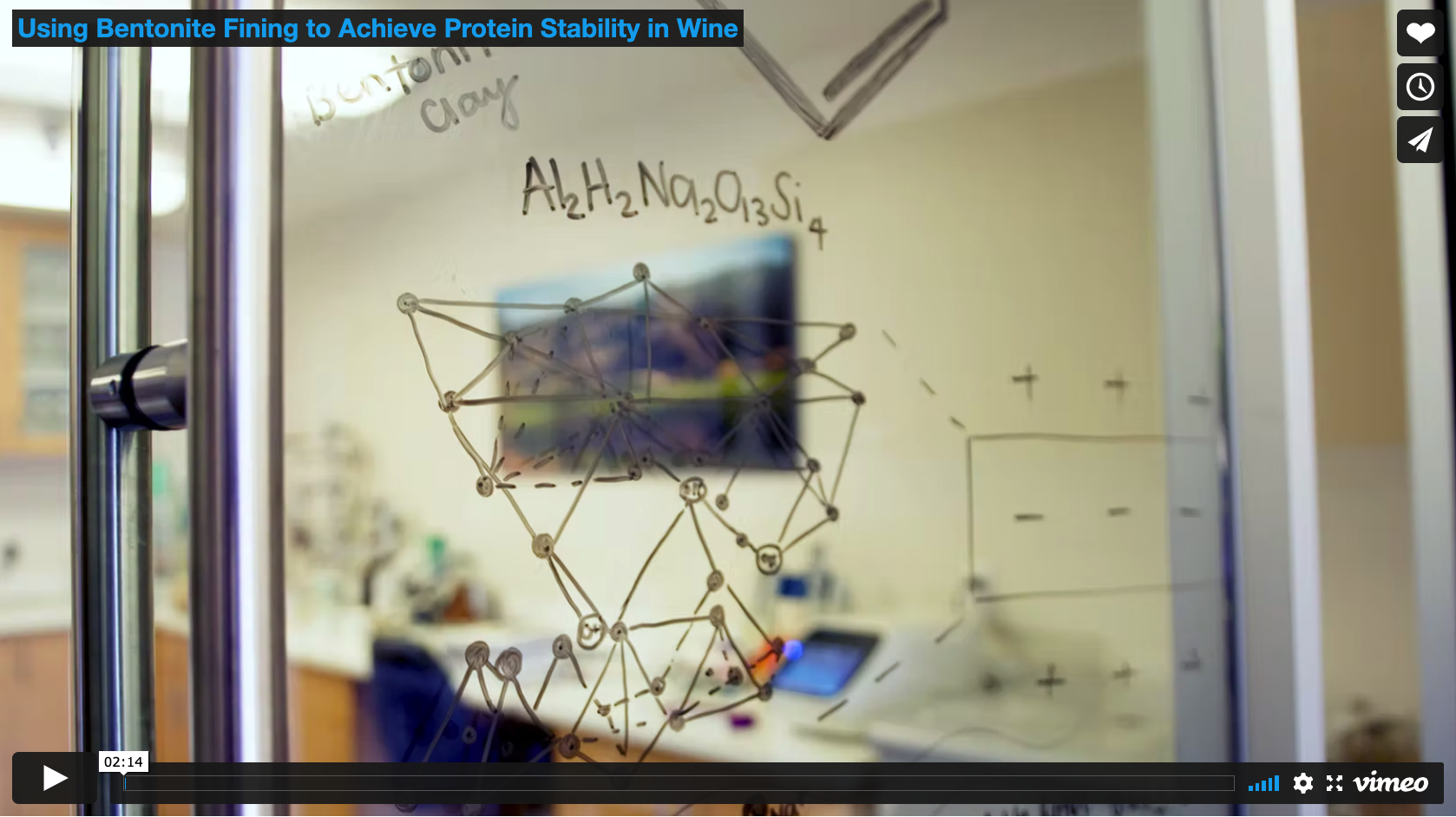
Clarity, or the absence of haze, is a key factor in the appearance of wine, contributing significantly to its commercial value. High temperatures, encountered during transportation or in poor storage conditions, can induce the denaturation of proteins, which then form a suspended haze in a bottle of wine and degrade its value. Bentonite can be used to treat protein instability, acting as a fining agent to pull proteins out of solution before they are bottled. As with many fining agents, bentonite can remove other components that are important to a wine’s sensory properties. Because of this, benchtop trials are encouraged to ensure protein stability in wine without stripping too much of its aromatic compounds through the addition of an appropriate concentration of bentonite. Here at Gravity Analytical Laboratories, turbidity is measured via nephelometer before and after heat exposure to wines treated with varying concentrations of bentonite. If a difference in turbidity greater t
00

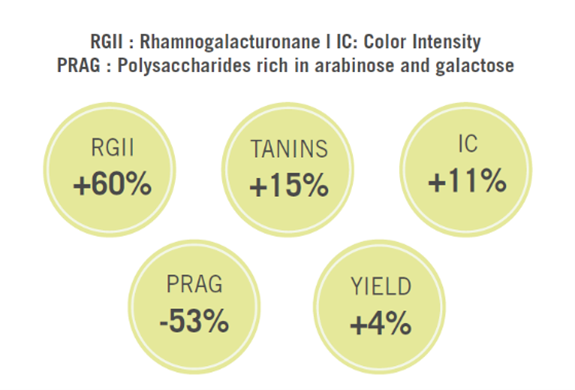
Each grape has its own intrinsic phenolic potential (anthocyanins, tannins) that determines the color and structure of the future red wine. This phenolic potential depends on different factors such as varietal, grape growing conditions, fruit’s maturity, and health conditions. Anthocyanins, responsible of red wine color, are small, water-soluble, and easily extracted. They are highly unstable and able to react fast with other wine compounds resulting in loss of color. Tannins, essential in stabilizing anthocyanins, are typically ethanol-soluble, and so are extracted later in the fermentation. The smallest tannins can be extracted easily, while larger tannins require physical breakage of berry skin cells to allow diffusion into must. Likewise, polysaccharides, which also have a role to play in color stability, get extracted with ethanol formation. In the early part of fermentation, we have abundant anthocyanins with insufficient tannins and polysaccharides to chemically stab
00

Fermenting on bentonite can be tricky! Here's a quick rundown on why we like it and who it's right for. Who should ferment on bentonite? Winemakers making tank fermented whites that need early protein stabilization and preservation of aromatics, especially in high protein varietals or in difficult seasons. Why ferment on bentonite? Early removal of heat unstable proteins (solubility of proteins decrease as alcohol increases) Better preservation of aromatics than post-fermentation bentonite additions May lower overall levels of bentonite needed (compared to post-fermentation treatment levels) FERMOBENT PORE-TEC compacts well and leads to lower lees volumes than post-fermentation bentonite treatments What bentonite? FERMOBENT® PORE-TEC is our recommended bentonite for use during fermentation because of its exceptional purity, good dispersion, effective protein removal, and formation of a stable deposit. When is the best time to add bentonite? Bentonite may be added at any
00
When making white wines, an ounce of prevention really is worth a pound of cure. With any fining process, winemakers must balance the removal of negative characteristics with the inevitable removal of positive ones. Unlike the fining of finished wines, where the flavors and aromatics are set, with juice fining pre-fermentation you are making necessary preventative adjustments before the yeast do their job of driving style. The result is improved aromatics, flavor, and overall quality in your finished wines with a significant reduction in the need for future intervention. This is especially true for things you know you will likely have to deal with later, such as protein instability, astringency, and unwanted color; dealing with them in the juice is always the best option. ATPGroup offers numerous options depending on your specific requirements, but a great place to start is with Phenol-Fine Plus NF. A blend of bentonite, PVPP, and casein, this simple-to-use and highly effective product
00
Fermentation tannins are an integral part of any quality wine production strategy, and ATPGroup is proud to offer a comprehensive range of tannins with the best combination of quality and value available. In red ferments ATPGroup’s Color-Tan helps stabilize color and promotes a broader, smoother tannin profile in full-bodied wines. In conjunction with Tani-Grape it can also help build structure in lots where nature forces a harvest before full maturity. Color-Tan NT is specially formulated for a gentle impact on light to medium-bodied wines such as Pinot Noir. New to the portfolio is Color-Tan Thermo, a liquid tannin blended specifically to rapidly stabilize color and provide mouthfeel in reds produced using thermovinification techniques or flash détente. For a hint of oak complexity and increased color stabilization, try the Tani-Heritage. In addition to improved color stabilization during fermentation, it offers improved complexity and structure when use
00