

The surge in no- and low-alcohol wines is creating exciting opportunities for wineries to reach new consumers. But as many producers are discovering, removing alcohol changes more than just the label. It fundamentally shifts how these wines behave from a food safety standpoint.
In traditional wine, alcohol plays a major role in suppressing microbial growth. Once that protection is reduced or eliminated, the product begins to behave more like a ready-to-drink beverage. This means that microorganisms, including food-borne pathogens such as norovirus, Listeria monocytogenes, and E. coli, are more likely to survive and grow if proper controls are not in place.
Many winemakers are surprised to learn that their existing cleaning and sanitation programs may no longer be sufficient. Higher residual sugar levels, additional processing steps like dealcoholization and blending, and increased handling during filling all create new opportunities for contamination. Controls that worked well for traditional wines, such as sulfur dioxide alone, may not provide the same level of protection in low- or no-alcohol products.
These changes also bring new regulatory considerations. Under FDA and FSMA guidelines, low- and no-alcohol wines are not automatically considered low risk and require a documented hazard analysis along with validated preventive controls, particularly around sanitation.
So what should winemakers be thinking about?
- Are current cleaning and sanitation protocols sufficient without the antimicrobial protection of alcohol?
- Do fillers, valves, and other high-risk areas receive the level of attention they now require?
- Are sanitation procedures validated and properly documented for audit readiness?
- Is there a strategy in place to prevent post-process contamination?
If these questions raise new considerations, you are not alone. Many wineries entering this category are navigating these challenges for the first time.
To help producers confidently address these issues, ATPGroup has developed an in-depth guide to cleaning and sanitation for no- and low-alcohol wines. This practical resource outlines the risks, regulatory expectations, and effective strategies needed to produce safe, stable, and high-quality products. View the guide here: https://atpgroup.com/2026/04/cleaning-sanitation-for-dealcoholized-wines/
Whether you are just beginning to explore low- and no-alcohol wines or looking to refine your existing processes, ATPGroup provides the insights and solutions you need. ATPGroup also offers a full range of cleaning and sanitation solutions, along with a team of experts ready to support your operation with tailored recommendations. For more information on or to schedule a consultation, e-mail the expert at jplato@ATPGroup.com, visit our website at ATPGroup.com, or call (707) 836-6840.
____________________________
ATPGroup was founded as a family business in 1991. Now a leading supplier to the wine, beer, food, and pharmaceutical markets, we strive to provide solutions and create value for our customers in each of the industries we serve. The company offers an unparalleled range of high-quality products and services including winemaking & cellar products, brewery supplies, glassware, cleaning & sanitation solutions, tartaric acid, cream of tartar, and Rochelle salt. Its team is made up of industry veterans, cellar masters, and product specialists who provide technical expertise in their respective fields. With warehouses across the country, the company is strategically located to serve customers throughout the U.S., Canada, and Mexico.
The surge in no- and low-alcohol wines is creating exciting opportunities for wineries to reach new consumers. But as many producers are discovering, removing alcohol changes more than just the label. It fundamentally shifts how these wines behave from a food safety standpoint.
In traditional wine, alcohol plays a major role in suppressing microbial growth. Once that protection is reduced or eliminated, the product begins to behave more like a ready-to-drink beverage. This means that microorganisms, including food-borne pathogens such as norovirus, Listeria monocytogenes, and E. coli, are more likely to survive and grow if proper controls are not in place.
Many winemakers are surprised to learn that their existing cleaning and sanitation programs may no longer be sufficient. Higher residual sugar levels, additional processing steps like dealcoholization and blending, and increased handling during filling all create new opportunities for contamination. Controls that worked well for traditional wines, such as sulfur dioxide alone, may not provide the same level of protection in low- or no-alcohol products.
These changes also bring new regulatory considerations. Under FDA and FSMA guidelines, low- and no-alcohol wines are not automatically considered low risk and require a documented hazard analysis along with validated preventive controls, particularly around sanitation.
So what should winemakers be thinking about?
- Are current cleaning and sanitation protocols sufficient without the antimicrobial protection of alcohol?
- Do fillers, valves, and other high-risk areas receive the level of attention they now require?
- Are sanitation procedures validated and properly documented for audit readiness?
- Is there a strategy in place to prevent post-process contamination?
If these questions raise new considerations, you are not alone. Many wineries entering this category are navigating these challenges for the first time.
To help producers confidently address these issues, ATPGroup has developed an in-depth guide to cleaning and sanitation for no- and low-alcohol wines. This practical resource outlines the risks, regulatory expectations, and effective strategies needed to produce safe, stable, and high-quality products. View guide here: https://atpgroup.com/2026/04/cleaning-sanitation-for-dealcoholized-wines/
Whether you are just beginning to explore low- and no-alcohol wines or looking to refine your existing processes, ATPGroup provides the insights and solutions you need. ATPGroup also offers a full range of cleaning and sanitation solutions, along with a team of experts ready to support your operation with tailored recommendations. For more information on or to schedule a consultation, e-mail the expert at jplato@ATPGroup.com, visit our website at ATPGroup.com, or call (707) 836-6840.
____________________________
ATPGroup was founded as a family business in 1991. Now a leading supplier to the wine, beer, food, and pharmaceutical markets, we strive to provide solutions and create value for our customers in each of the industries we serve. The company offers an unparalleled range of high-quality products and services including winemaking & cellar products, brewery supplies, glassware, cleaning & sanitation solutions, tartaric acid, cream of tartar, and Rochelle salt. Its team is made up of industry veterans, cellar masters, and product specialists who provide technical expertise in their respective fields. With warehouses across the country, the company is strategically located to serve customers throughout the U.S., Canada, and Mexico.
As demand for non-alcoholic wine continues to grow, more producers are exploring dealcoholization as a way to expand their portfolios. But removing alcohol is only the first step. The real challenge lies in what comes next.
Alcohol plays a critical role in a wine’s structure, balance, and sensory expression. Once it is removed, the wine often loses body, aromatic intensity, and overall integration. What remains can feel thin, sharp, and incomplete. To produce a high-quality non-alcoholic wine, winemakers must shift their mindset from simple removal to thoughtful reconstruction.

This process centers around four key areas: acidity, mouthfeel, aroma and flavor, and color. Dealcoholization can concentrate acids, resulting in a sharper profile that requires careful adjustment. At the same time, the loss of alcohol reduces viscosity and mid-palate weight, creating a need to rebuild texture and structure. Aromatics are often diminished during processing, requiring targeted strategies to restore complexity and expression. Even color can be affected, particularly in red wines, where vibrancy may be lost.
Each of these elements must be addressed in balance to create a finished wine that still delivers a complete, enjoyable, and authentic sensory experience. The challenge is not just technical, but stylistic. The goal is to preserve varietal character and drinkability while working within a fundamentally different framework.
There is no single solution. Instead, success comes from understanding how different tools and ingredients can be used together to rebuild the wine from the ground up.
For a deeper look at the key components, formulation strategies, and product solutions available for dealcoholized wine production, visit ATPGroup’s full guide: https://atpgroup.com/2026/03/dealcoholized-wines/
For assistance in optimizing your low- and no-alcohol wine production process, contact your ATPGroup Technical Representative or Enology Products Specialist, call (707) 836-6840, or visit www.ATPGroup.com.
___________________________
ATPGroup was founded as a family business in 1991. Now a leading supplier to the wine, beer, food, and pharmaceutical markets, we strive to provide solutions and create value for our customers in each of the industries we serve. The company offers an unparalleled range of high-quality products and services including winemaking & cellar products, brewery supplies, glassware, cleaning & sanitation solutions, tartaric acid, cream of tartar, and Rochelle salt. Its team is made up of industry veterans, cellar masters, and product specialists who provide technical expertise in their respective fields. With warehouses across the country, the company is strategically located to serve customers throughout the U.S., Canada, and Mexico.
Tartrate stabilization helps keep wines bright, clear, and free of the “wine diamonds” that consumers often perceive as a flaw. While traditional cold stabilization works, it can be time- and energy-consuming, and can affect aromatics and flavor. Today, there are smart, innovative stabilization solutions that eliminate the need for chilling while protecting wine quality and making cellar work easier.
Carboxymethylcellulose (CMC)
CMC is a cellulose-based solution that acts by interfering with crystal growth. While traditional stabilization induces crystal formation, CMC prevents them from developing in the first place. It provides reliable stability without chilling and helps preserve pH, aroma, and flavor. CMC is a strong choice for white and rosé wines where clarity and freshness are priorities.
Acacia Gum
Acacia gum, made from the sap of Acacia trees, coats the tiny tartrate particles so they cannot grow into visible crystals. It also helps protect color, making it especially useful for wines that need both tartrate and color stability.
Product Recommendations:
| Coldstab Cel | Coldstab Color | LGA-20 | LGA-30 |
| CMC solution that stabilizes white and rosé wines by inhibiting tartrate crystal formation. | Granulated gum solution that protects against both tartaric and color instability. | 20% liquid gum solution derived from Acacia Seyal that offers tartaric stability and haze protection. | 30% liquid gum solution derived from Acacia Verek that offers color stabilization and haze protection. |
| Learn more | Learn more | Learn more |
Modern stabilization programs often combine CMC and Acacia gum solutions to deliver comprehensive protection. ATPGroup's Coldstab Cel, Coldstab Color, LGA-20, and LGA-30 can be used individually or together to deliver complete wine stability without compromising quality or filterability.
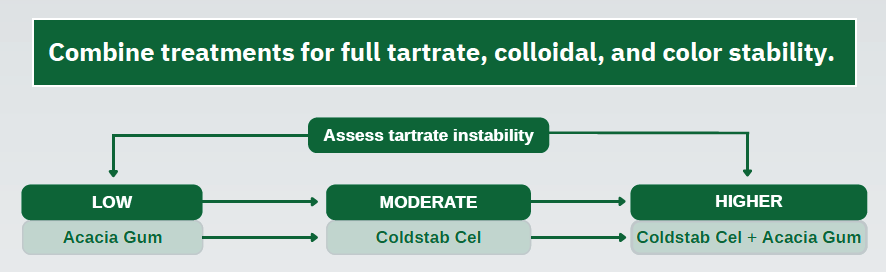
We’ve put together a practical guide to help you choose the right solution for your wine: CLICK TO DOWNLOAD
Bench trials are recommended, and your ATPGroup representative is available to help optimize the best stabilization protocol for your wine. Our solutions are competitively priced and stocked in Windsor, CA for fast, reliable delivery when you need them. For more information, contact your ATPGroup Technical Representative or Enology Products Specialist, call (707) 836-6840, or visit www.ATPGroup.com.
____________________________
ATPGroup was founded as a family business in 1991. Now a leading supplier to the wine, beer, food, and pharmaceutical markets, we strive to provide solutions and create value for our customers in each of the industries we serve. The company offers an unparalleled range of high-quality products and services including winemaking & cellar products, brewery supplies, glassware, cleaning & sanitation solutions, tartaric acid, cream of tartar, and Rochelle salt. Its team is made up of industry veterans, cellar masters, and product specialists who provide technical expertise in their respective fields. With warehouses across the country, the company is strategically located to serve customers throughout the U.S., Canada, and Mexico.
ATPGroup is pleased to announce the addition of Brendan Loftus and Georgetta Dane to its Enology Sales team, reinforcing the company’s commitment to technical expertise, regional support, and long-term partnerships with winery customers.
Brendan Loftus joins ATPGroup as an Enology Sales Representative covering Napa and Lake Counties. A Sonoma County native rais ed in Healdsburg, Brendan studied Enology at Cal Poly San Luis Obispo before spending several years working harvests across major wine regions in both the northern and southern hemispheres. His international experience includes time in Argentina, Chile, Hungary, and other established wine producing countries. He later returned to Northern California, where he most recently worked at Rack and Riddle, gaining broad hands-on experience from grape to bottle.
Georgetta Dane joins ATPGroup as a Sales Representative serving the California Central Coast, Texas, and the Southeast states. She brings more than two decades of winemaking experience to the role, with a  career that spans technical leadership, large scale production, and brand development. She previously held senior winemaking and leadership roles at Golden State Vintners and The Wine Group, where she managed complex production programs and led winemaking teams across multiple brands and varietals. Georgetta holds a Master’s Degree in Fermentation Science and a Bachelor’s Degree in Food Science, offering customers deep technical insight paired with practical cellar knowledge.
With these additions, ATPGroup continues to strengthen its technical sales organization by aligning experienced winemakers and production specialists with regional customer needs. Loftus and Dane will work closely with winery partners to support winemaking decisions, provide product guidance, and deliver practical solutions across all stages of production.
____________________________
ATPGroup was founded as a family business in 1991. Now a leading supplier to the wine, beer, food, and pharmaceutical markets, we strive to provide solutions and create value for our customers in each of the industries we serve. The company offers an unparalleled range of high-quality products and services including winemaking & cellar products, brewery supplies, glassware, cleaning & sanitation solutions, tartaric acid, cream of tartar, and Rochelle salt. Its team is made up of industry veterans, cellar masters, and product specialists who provide technical expertise in their respective fields. With warehouses across the country, the company is strategically located to serve customers throughout the U.S., Canada, and Mexico.
Sparkling wine is one of the most expressive and technically demanding wine styles. Its character begins with the grape variety, the vineyard, and the production method, but the final sensory signature depends heavily on yeast. Yeast acts as the invisible winemaker, shaping aroma, flavor, texture, and bubble structure throughout both primary and secondary fermentations.
Different strains of Saccharomyces cerevisiae behave very differently under the challenging conditions of sparkling wine production. Low pH, increasing alcohol, and high pressure create an environment where only the right strains thrive. Equally important, each strain varies in its ability to create and release the flavor compounds that drive complexity and define style. When secondary fermentation takes place in the bottle and is followed by proper riddling, the yeast has an even greater influence on the final profile.
To help winemakers better understand the impact of yeast selection, ATPGroup conducted a focused trial using three different yeast strains. We evaluated how each strain affected fermentation performance, aromatic development, palate structure, and overall sparkling wine quality.
We invite you to taste the results for yourself at our complimentary WIN Expo 2025 Trial Tasting, where you will have the chance to discuss the findings with our technical team and guest winemaker.
Trial Tasting Details
Date: Thursday, December 4, 2025
Time: 2:00 to 3:00 PM
Location: WIN EXPO at the Sonoma County Fairgrounds - Hall of Flowers (Booth 614)
Details: https://atpgroup.com/atpgroup-win-expo-2025-trial-tasting/
No RSVP is required. Just stop by and join the tasting.
Presenters:
James Roblee, ATPGroup Technical Support Representative Jim began his wine career in the Finger Lakes after graduating from Cornell University. He followed his passion for wine to California, where he held winemaking positions with some of Napa’s biggest and most luxurious brands for over 14 years. Now with ATPGroup, he assists fellow winemakers to find innovative and customized solutions to process obstacles.
Kyle Altomare, Winemaker at Gloria Ferrer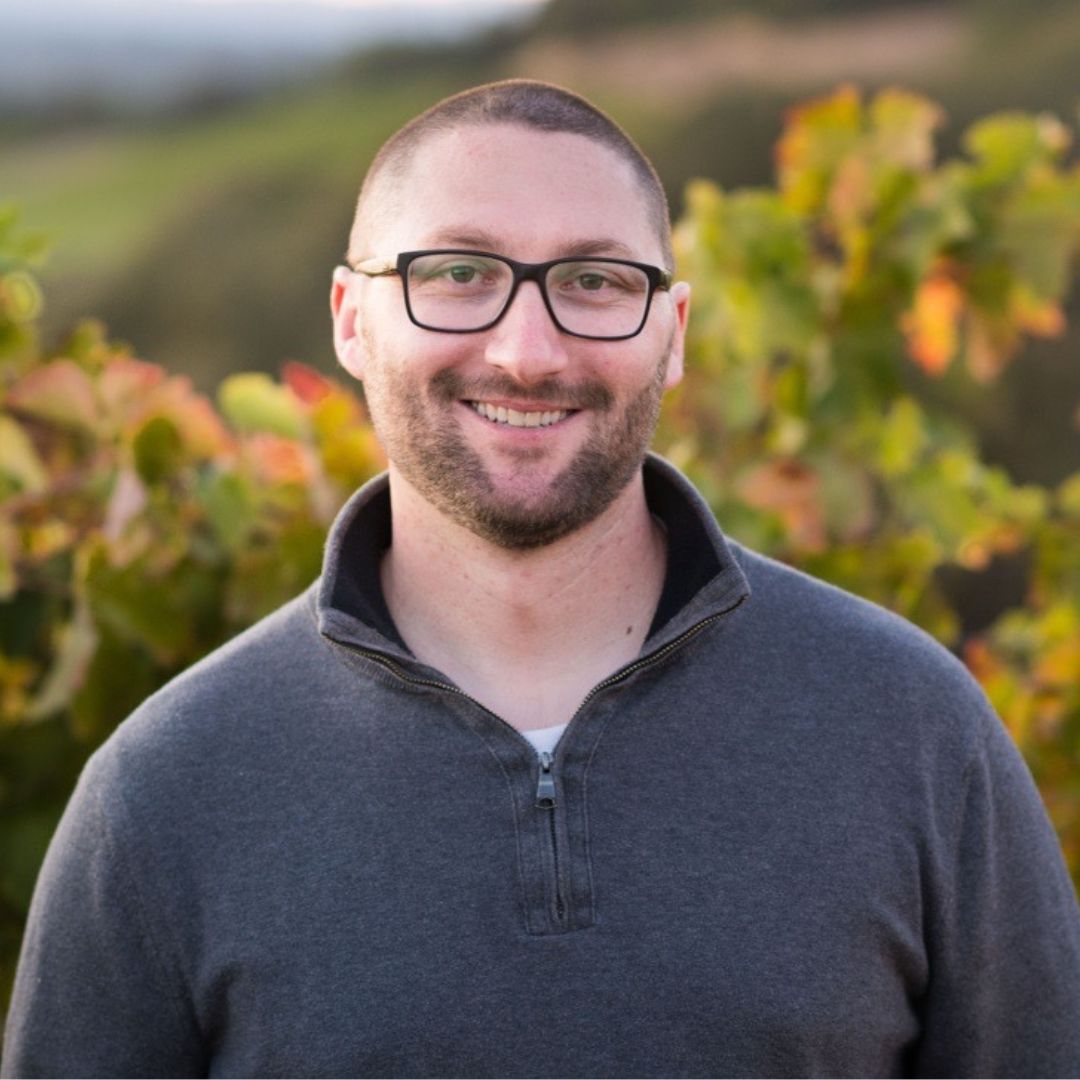 Kyle leads the winemaking team at Gloria Ferrer with a philosophy rooted in his Italian upbringing. The son of a chef, Kyle was raised to “pursue flavor”—to break it down, understand its nuances, and seek balance. This foundational lesson continues to shape his approach to sparkling wine, a category he describes as “crafted, not prescribed—there’s no recipe, only a series of choices. The real work happens in the bottle, not the cellar.” Kyle’s approach is intuitive and human. He listens to the wine and follows the path it wants to take.
Special Registration Offer from ATPGroup
If you have not yet registered for WIN EXPO 2025, we invite you to attend as a guest of ATPGroup. Use promo code ATP245 for a complimentary pass to the trade show floor or $30 off conference sessions. Register here: https://www.wineindustryexpo.com
ATPGroup will also be exhibiting in booth 245 and ready to talk enology products, cellar supplies, filtration, tasting room drinkware, cleaning and sanitation solutions, and everything else you need for your winery operations
____________________________
ATPGroup was founded as a family business in 1991. Now a leading supplier to the wine, beer, food, and pharmaceutical markets, we strive to provide solutions and create value for our customers in each of the industries we serve. The company offers an unparalleled range of high-quality products and services including winemaking & cellar products, brewery supplies, glassware, cleaning & sanitation solutions, tartaric acid, cream of tartar, and Rochelle salt. Its team is made up of industry veterans, cellar masters, and product specialists who provide technical expertise in their respective fields. With warehouses across the country, the company is strategically located to serve customers throughout the U.S., Canada, and Mexico.
Membrane filter cartridges are an essential tool for wine clarity and microbiological stability, but they do not have to be a disposable expense. With the right regeneration practices, wineries can restore flow, maintain sterility, and significantly extend cartridge life, which reduces both cost and waste.
Instead of replacing filters as soon as they show pressure spikes or reduced throughput, regeneration allows winemakers to return a used cartridge to near-new performance. The result is better filtration economics and more predictable bottling runs.
The Case for Regeneration
✔ Restores flow and keeps pressures low
✔ Preserves pore integrity for sterile filtration
✔ Minimizes premature replacement
✔ Reduces landfill waste and supplier spend
✔ Protects wine quality through consistent performance
 Most clogged filters are not worn out. They are simply loaded with colloids, yeast, and fine solids. Regeneration removes that load and resets the membrane.
Typical Regeneration Cycle
Stage | Primary Function |
Gas Blowdown | Clears residual wine from the housing to prevent dilution and residue build-up |
Cold and Hot Water Rinse | Flushes out loose particles and dissolvable solids |
Caustic or Enzymatic Clean | Breaks down proteins, polysaccharides, biofilms, and retained organics |
Thermal or Chemical Sterilization | Eliminates microbial load and ensures a hygienic reset |
Acid Rinse | Neutralizes caustic and brings system pH back near wine levels |
Key Rule: Never store a dirty cartridge. Regenerate immediately after filtration for maximum recovery and longevity.
How Long Can a Cartridge Last?
With proper regeneration, many wineries report 8 to 15 full regeneration cycles per final membrane filter, sometimes more. Service life depends on:
- Upstream clarification, including fining, DE, crossflow, or centrifugation
- Filtration pressure management
- Correct chemical concentration and temperature
- Whether regeneration is performed immediately after use
In short, cartridges rarely fail because of membrane damage. They fail because they are not cleaned correctly or often enough.
Best Practices for Winemakers
1. Treat regeneration as a written SOP, not an optional step.
2. Match cleaning chemistry to wine style and load.
3. Track cycles and operating pressures to catch early performance decline.
4. Train cellar teams to avoid over-pressurizing membranes.
5. Verify sterility regularly. Testing is cheaper than spoilage.
 Regeneration is not just cleaning.
It is the process that keeps pore size, flow rate, and sterility within specification, which directly protects flavor, clarity, and shelf life.
For Eaton Cartridge Users
The principles above should apply to most wine-grade filter cartridges. They are particularly relevant for Eaton Membran PS Wine and PS Plus cartridges, which are designed to be regenerated multiple times while maintaining filtration integrity. ATPGroup supplies these cartridges along with Eaton’s complete line of filtration media and can provide technical guidance on regeneration chemistry and procedures.
For more detailed information on how to maximize the life of your Eaton Membran PS Wine and PS Plus cartridges filters, download our step-by-step guide.
ATPGroup’s team of enologists and technical specialists can help design a filter cartridge management program that works with your cellar workflow. For more information, contact your ATPGroup Technical Representative or Enology Products Specialist, call (707) 836-6840, or visit www.ATPGroup.com.
____________________________
ATPGroup was founded as a family business in 1991. Now a leading supplier to the wine, beer, food, and pharmaceutical markets, we strive to provide solutions and create value for our customers in each of the industries we serve. The company offers an unparalleled range of high-quality products and services including winemaking & cellar products, brewery supplies, glassware, cleaning & sanitation solutions, tartaric acid, cream of tartar, and Rochelle salt. Its team is made up of industry veterans, cellar masters, and product specialists who provide technical expertise in their respective fields. With warehouses across the country, the company is strategically located to serve customers throughout the U.S., Canada, and Mexico.
After a cool growing season, harvest 2025 was sprinkled with unwelcome weather events, making even ripening merely a dream for many winemakers. As fermentation wraps up, the young wines may still express raw or green tannin character, needing time to mellow and come into harmony. Post-fermentation aging and finishing tannins are an essential tool for taming those unruly characters to achieve balance, structure, and true aromatic expression. These post-fermentation tannins refine green or unripe fruit characteristics, improve mouthfeel, and smooth rough edges, to bring the wine back into harmony.
Red Wines: From Green to Graceful
If the winery has the cooperage space and time, extended aging is used to refine rough young red wines. Alternatively, aging tannins address gaps in structure or smooth the perception of green fruit, particularly in this cooler vintage. Carefully selected tannins can build mid-palate weight, stabilize color, and add complexity for a wine that will age gracefully.
ATPGroup offers a broad range of maturation and finishing tannins designed to meet specific stylistic goals:
- The Tani-X range, led by Tani-Heritage, is designed to enhance red fruit and stabilize structure.
- To increase aromatic complexity and body, start with Querca-Tan Rouge from the Querca-Tan line.
White Wines: Freshness and Stability
Tannin additions are not just for red wines; whites and rosés can also benefit from the increased aromatic complexity and fuller mouthfeel that they provide, as well as from inherent antioxidant protection. Low doses of Tani-Grape orQuerca-Tan Blanc help preserve fresh aromatics and overall elegance, especially in wines with shorter aging.
Customized Support for Every Winery
ATPGroup offers a full range of tannins, and our team of experienced winemakers and enologists can help you design a program that fits your winemaking style, budget, and goals. Whether your focus is on rounding green fruit, improving structure, or enhancing freshness, our specialists can help identify the right products and dosages for your specific needs.
For more information or trial samples, contact your ATPGroup Technical Representative or Enology Products Specialist, or visit www.ATPGroup.com.
____________________________
ATPGroup was founded as a family business in 1991. Now a leading supplier to the wine, beer, food, and pharmaceutical markets, we strive to provide solutions and create value for our customers in each of the industries we serve. The company offers an unparalleled range of high-quality products and services including winemaking & cellar products, brewery supplies, glassware, cleaning & sanitation solutions, tartaric acid, cream of tartar, and Rochelle salt. Its team is made up of industry veterans, cellar masters, and product specialists who provide technical expertise in their respective fields. With warehouses across the country, the company is strategically located to serve customers throughout the U.S., Canada, and Mexico.
Every winemaker knows that fermentation is a delicate dance between art and science. Behind every great wine lies a thriving microbial ecosystem—some organisms we invite, others we need to keep far away. Mastering that balance is what separates clean, stable wines from those plagued by faults, spoilage, or inconsistency.
Fermentation: Harnessing the Right Microbes
During alcoholic fermentation, controlling microbial populations ensures your chosen yeast strain dominates the process. This helps achieve a complete and predictable transformation of sugars into alcohol and COâ‚‚ without unwanted by-products that can dull aroma or flavor.
In malolactic fermentation, Oenococcus oeni converts malic acid to the softer lactic acid, reducing sharpness and enhancing mouthfeel. But MLF is also a vulnerable moment: the wine’s natural defenses are low, and spoilage microbes can easily gain ground. When MLF isn’t desired, those bacteria must be inhibited completely to protect the wine’s integrity.
Spoilage Risks During Aging and Storage
Even after fermentation, wine remains susceptible to contamination from a host of microbial culprits:
Spoilage Agent | Activity | Resulting Fault |
Brettanomyces | Converts cinnamic acid precursors into 4-ethylphenol and 4-ethylguaiacol | “Barnyard,” “Band-Aid,” or “horse sweat” aromas |
Acetic Acid Bacteria | Oxidizes ethanol into acetic acid and ethyl acetate | High volatile acidity, vinegary or nail-polish scent |
Lactic Acid Bacteria | Produces biogenic amines and β-glucans | Mousiness, ropiness, or other textural faults |
Wines with lower acidity or alcohol, residual sugar, or no malolactic fermentation are especially at risk. Once spoilage takes hold, the resulting defects can render wine unsellable.
Smart Solutions from ATPGroup
ATPGroup offers a complete toolbox for microbial control from fermentation through bottling. Whether you’re looking to prevent spoilage, stabilize after MLF, or protect delicate styles, our antimicrobials help ensure clean, consistent results.
- Vin-Chito® – A high-molecular-weight chitosan derived from Aspergillus niger, this vegan-friendly, non-allergenic antimicrobial effectively targets spoilage organisms like Brettanomyces, Acetobacter, and Lactobacillus.
- Vin-Lyso – A powdered lysozyme sourced from egg whites that selectively controls lactic acid bacteria in wine. Ideal when biological stability is needed before or after MLF.
- EfferGuard - White effervescent granules of potassium metabisulfite blended with potassium bicarbonate and citric acid that dissolves quickly and releases SOâ‚‚ evenly from top to bottom, making it ideal for applications where mixing isn’t practical.
Because the effectiveness of antimicrobial products depends on factors like pH, alcohol content, and the specific microbes you want to control, your ATPGroup Enology Products Specialist can help tailor a program for your wine.
For more information, contact your ATPGroup Enology Products Specialist or Technical Support Representative, call (707) 836-6840, or visit ATPGroup.com.
____________________________
ATPGroup was founded as a family business in 1991. Now a leading supplier to the wine, beer, food, and pharmaceutical markets, we strive to provide solutions and create value for our customers in each of the industries we serve. The company offers an unparalleled range of high-quality products and services including winemaking & cellar products, brewery supplies, glassware, cleaning & sanitation solutions, tartaric acid, cream of tartar, and Rochelle salt. Its team is made up of industry veterans, cellar masters, and product specialists who provide technical expertise in their respective fields. With warehouses across the country, the company is strategically located to serve customers throughout the U.S., Canada, and Mexico.
That creamy, buttery aroma you sometimes find in a bottle of Chardonnay or other wines is thanks largely to a compound called diacetyl. It's the star player released during malolactic fermentation (MLF), and whether a winemaker wants to emphasize or eliminate it is one of the biggest stylistic choices they make.
Diacetyl is a temporary byproduct of the bacteria's metabolism. It is later reduced into less aromatic compounds, which is why winemakers have to move fast to capture the flavor at its peak. To get a wonderfully buttery wine, the goal is simple: make a lot of diacetyl and then immediately halt its degradation. Here are the key strategies winemakers use to ramp up diacetyl production and keep that creamy character in the bottle:
- Timing is Everything: Inoculate after alcoholic fermentation.
- Wait until the main alcoholic fermentation is finished or almost finished before adding the bacteria. Why? The yeast that did the primary fermentation and the bacteria themselves are very good at eating up diacetyl and reducing it to non-buttery compounds. Waiting until the yeast is dead or dormant allows the diacetyl to build up.
- Conversely, co-inoculating the bacteria at the start of alcoholic fermentation is great to minimize diacetyl.
- Choose the Right Bacteria Strain
- Not all bacteria are created equal. Select a commercial Oenococcus oeni strain specifically known for its potential to be a high diacetyl producer, such as Malo-D from ATPGroup. Choosing bacteria to achieve a specific wine style is similar to choosing a high-flavor yeast for primary fermentation: you have to pick the right tool for the job.
- Stress the Bacteria, But Just a Little
- A slow, slightly stressed MLF favors the accumulation of diacetyl. It sounds mean, but it works!
- Keep it Cool: Conduct the MLF at the lower end of the bacteria's comfort zone (17−18°C or 63−65°F).
- Low pH: A slightly lower pH (e.g., 3.2−3.4) naturally makes the bacteria work harder, which increases the potential for diacetyl.
- A Little Oxygen Helps
- A little stirring or a small introduction of oxygen during the MLF can actually speed up the chemical reaction that converts diacetyl's precursor into the final buttery compound. This subtle technique helps ensure more flavor is created and less is lost to enzymatic reduction.
- The Critical Finish: Stopping the Fermentation Cleanly
- Regularly analyze or sensory-test the wine as it nears the end of MLF. This is when the diacetyl level will be at its peak. Once the perfect buttery aroma is achieved, immediately stop the metabolism of the bacteria.
- This is usually done using a sufficient dose of sulfur dioxide (SO2). However, be advised that sulfur dioxide can bind with diacetyl. Luckily, the reaction is reversible, so even though buttery levels may seem to dip initially, they will return later.
- Clean Up Promptly
- After the fermentation is officially stopped, the wine needs to be racked or filtered off the lees right away. Letting the wine sit on the lees will continue to slowly reduce the diacetyl and diminish the buttery character.
Ultimately, whether you love or hate those buttery notes, their inclusion is up to the winemaker. This stylistic choice can be achieved or avoided by precisely managing strain selection, temperature, timing, and flavor accumulation at the end of MLF to expertly craft a wine that's either rich, creamy, and decadent or crisp, clean, and fruit-forward.
For questions, troubleshooting, or advice, contact your ATPGroup Enology Products Specialist, call (707) 836-6840, or visit our website at ATPGroup.com.
____________________________
ATPGroup was founded as a family business in 1991. Now a leading supplier to the wine, beer, food, and pharmaceutical markets, we strive to provide solutions and create value for our customers in each of the industries we serve. The company offers an unparalleled range of high-quality products and services including winemaking & cellar products, brewery supplies, glassware, cleaning & sanitation solutions, tartaric acid, cream of tartar, and Rochelle salt. Its team is made up of industry veterans, cellar masters, and product specialists who provide technical expertise in their respective fields. With warehouses across the country, the company is strategically located to serve customers throughout the U.S., Canada, and Mexico.