

For most wineries, marketing still follows a familiar path: email campaigns, wine clubs, tasting room experiences, and social media. These channels continue to drive direct-to-consumer sales, but they are also becoming increasingly saturated. Reaching new customers often requires more content, more spend, and more competition for the same audience.
At the same time, another force is shaping consumer behavior at scale—film and television.
A single streaming series can influence travel, dining, fashion, and brand awareness almost overnight. Within those moments, wine is already present. It appears in dinner scenes, celebrations, restaurants, and quiet evenings at home, serving as a natural extension of lifestyle and hospitality. Historically, however, the bottles used on screen have rarely represented real wineries.
That is beginning to change.
Wine product placement is emerging as a viable and strategic marketing channel for wineries looking to expand beyond traditional touchpoints and reach entirely new audiences.
Why Film & Television Matter for Wine Brands
Wine occupies a unique position within entertainment. Unlike many consumer products, it does not feel forced into a scene. It belongs there. Whether it is poured at a dinner party, shared between friends, or featured in a restaurant setting, wine is part of the visual language of storytelling.
This matters because it changes how consumers perceive the brand. Instead of interrupting the experience, the product becomes part of it. When integrated thoughtfully, a bottle on screen can reinforce a sense of place, tone, and character without feeling like advertising.
With the continued growth of streaming platforms, these moments now reach millions of viewers globally within days of release. For wineries, this represents a form of exposure that extends far beyond the traditional wine audience—one that is driven by culture rather than category.
From Background Props to Brand Opportunities
Historically, most wine used in productions was not tied to real wineries. Bottles were often generic, unlabeled, or created specifically for the scene.
Today, productions are increasingly looking for real brands that align with the tone and setting of the story.
A luxury home requires a different bottle than a casual gathering. A high-end dinner scene demands something credible. A nostalgic film might call for brands that were relevant in a specific era.
This shift has opened the door for wineries to be intentionally placed within content—not as filler, but as a considered part of the scene.
Through curated placement models, wineries can now be matched to productions based on:
- Price point and perceived positioning
- Label visibility and design
- Wine type and varietal
- Scene context and setting
The result is a more thoughtful integration that benefits both the production and the brand.
Why Placement Is a Strong Marketing Move
Most winery marketing efforts are focused on capturing existing demand—reaching consumers who are already engaged with wine.
Film and television offer something different: discovery.
A placement introduces a brand to audiences who may not follow wineries, read wine publications, or visit tasting rooms. It places the wine within a broader cultural context, where it is seen as part of a lifestyle rather than a category.
This creates a different type of awareness—one that is often more emotional and associative.
The impact extends beyond the screen. Placements can generate:
- Social media content
- Email campaign themes
- Public relations opportunities
- Tasting room storytelling
Over time, these moments contribute to stronger brand recognition and recall, particularly when reinforced through other marketing channels.
Your Wine Is in a Film—Now What?
Placement is the starting point. What follows determines the return.
Wineries that benefit most from these opportunities treat them as campaigns rather than announcements.
Build anticipation, not just awareness
The window starts before the release. Teasing the placement, introducing a countdown, and giving wine club members early access creates a sense of momentum. Done well, the audience is already paying attention before the first scene airs.
Turn visibility into a campaign
A single post doesn’t capture the value of a placement. The goal is to surround the moment. That might include a dedicated landing page, coordinated email and social content, and a clear narrative around where and how the wine appears. The placement becomes a story that unfolds across channels, not a one-time mention.
Make it shoppable
Connecting the placement to a product offering creates a clear path to revenue.
Examples include:
- “Movie Night” bundles featuring the wine
- Limited-time releases tied to the premiere
- Add-ons that reflect the viewing experience
Create an experience
Placements are rooted in lifestyle. Wineries can build on that through:
- Virtual watch parties
- In-person events at the winery
- Food and wine pairings inspired by the scene
Extend the lifecycle
After release, placements continue to provide value.
Stills, references, and storytelling can be incorporated into:
- Email marketing
- Wine club communications
- Tasting room conversations
The goal is to move from a single moment of exposure to an ongoing narrative customers can engage with.
Current Placement Opportunities
Several film and television productions are currently sourcing wine for upcoming scenes, with immediate and near-term needs across a range of brand types.
The Summer I Turned Pretty (Feature Film)
Final season with multiple beach house, dinner, and social scenes.
- 12 bottles (red, white, rosé)
- $25–$150 price point
- Immediate shipping
The Lincoln Lawyer — Season 5 (Netflix)
Los Angeles-based legal drama with ongoing lifestyle and dining scenes.
- 2 cases (mixed red and white)
- Mid-tier price point
Inground (Ridley Scott Production)
Character-driven thriller set in a residential environment.
- 1 case (mixed red and white)
- Lower to mid-tier price point
The 99’ers (Netflix Film)
Story of the 1999 U.S. Women’s National Team.
- Seeking brands with relevance to the 1990s
Fast & Furious 11 (Universal)
Global franchise with high-energy settings.
- Lifestyle and background placements with potential featured moments
Additional productions currently casting include Emily in Paris, The White Lotus, an untitled Nancy Meyers film, Superman, The Morning Show, and others.
Pricing and Access
Placements are typically offered on a per-project basis, with clear scope and alignment to the production.
- $3,500 per placement
- Monthly retainer options available for priority access to upcoming opportunities
Each placement includes:
- On-screen use within a production
- Coordination with production teams
- Post-release stills or references for marketing use
A New Channel For Winery Growth
The wine industry has always been rooted in storytelling—place, people, and experience.
Film and television are simply where many of today’s stories are being told at scale.
For wineries looking to grow beyond traditional channels, product placement offers a way to participate in those moments—introducing their brand to new audiences in a way that feels natural, relevant, and lasting.
The opportunity is no longer theoretical.
It’s already happening on screen.
Interested in Placement Opportunities?
Sipcrü Studios is currently working with productions actively sourcing wine for upcoming film and television projects, with opportunities across premium, mid-tier, and lifestyle brands.
Wineries interested in being considered for current or upcoming placements can reach out directly: jacqueline@sipcru.com

Upcoming opportunities include wine placements in new studio productions, including an MGM feature starring Charlize Theron.
IRVINE, CA — Sipcrü Studios, a media placement company connecting wineries, spirits, and craft beverage brands with major film, television, and streaming productions, today announced a partnership with Corksy, the modern direct-to-consumer platform for wineries.
Through this partnership, Sipcrü Studios serves as a sourcing partner for productions seeking authentic wine and beverage brands for on-screen environments, working directly with studios, prop masters, and production teams responsible for building dining, restaurant, and hospitality scenes. Corksy will help connect wineries with these placement opportunities while giving its clients priority access to certain productions.
Wine and spirits are a natural part of the environments portrayed in film and television, appearing regularly in dining scenes, celebrations, and hospitality settings across productions. Through Sipcrü Studios, wineries now have a structured way to participate in those moments and place their bottles in scenes where wine naturally belongs.
“We recently helped place wines from several winery clients into the filming of a major studio production,” said Kevin Kaufman, COO of Corksy. “The production team appreciated receiving thoughtfully curated bottles that matched the environment of the scene rather than simply grabbing whatever was available. Our clients were equally excited about the opportunity to have their wines appear in a major production, which helped spark this partnership.”
Because wine is such a nuanced product, sourcing bottles for productions requires more than simply placing a label on a table. Sipcrü Studios works closely with wineries and production teams to identify wines that match the setting, tone, and lifestyle portrayed in each scene.
“Wine has always been part of the lifestyle portrayed in film and television, but wineries rarely have a clear path to participate in those moments,” said Jacqueline Rullman, Marketing at Sipcrü Studios. “Because we understand the wine industry so deeply, from producers and regions to how wine is actually experienced at the table, we can help ensure the bottles appearing on screen feel authentic to the scene. At the same time, it opens the door for wineries to introduce their wines to entirely new audiences through storytelling and culture.”
Current Placement Opportunities Open for Wineries
Sipcrü Studios is currently sourcing wines for several upcoming productions, including Tyrant, a major studio feature film from Amazon / MGM currently in production starring Charlize Theron.
The film takes place within an elevated culinary and hospitality setting where wine is a natural part of the dining environment portrayed on screen. Because of this setting, wine is expected to appear organically within these environments as part of the overall lifestyle portrayed in the film.
Sipcrü Studios is currently sourcing wines across several categories for these scenes, including:
• Premium red wines
• White wines
• Sparkling wines
Target retail price points for the production range approximately from $45 to $75, with multiple placements available.
In addition to Tyrant, Sipcrü Studios is currently working with production teams sourcing wines for several upcoming projects across major studios and streaming platforms. These include feature films and premium streaming series centered around culinary, hospitality, and lifestyle environments where wine naturally appears on screen.
Several of these productions feature A-list talent and globally distributed streaming platforms, with scenes set in restaurants, private dining environments, and hospitality-driven storylines where wine is a natural part of the setting.
Because production timelines move quickly, Sipcrü Studios works with a limited number of wineries per project to ensure authenticity and alignment with each production’s environment and tone.
Wineries interested in being considered for the current round of productions—including the upcoming MGM feature film Tyrant—should submit their interest by the end of this week, as sourcing decisions for several productions are already underway.
How Wine Placement Works
Sipcrü Studios works directly with production studios, prop masters, and set design teams responsible for sourcing items used on screen. When scenes involving dining, restaurants, or hospitality environments are developed, production teams often seek real products that reflect the lifestyle being portrayed.
Sipcrü Studios helps match those production requests with wineries whose wines align with the setting, tone, and style of the scene. Depending on the production, placements can range from background table settings to featured moments where a bottle is poured, served, or discussed during a scene.
Following release, participating wineries may also receive approved still images or footage from the production that can be used in their own marketing and promotional materials.
While participation is open to wineries across the industry, Corksy clients will receive priority access to certain placement opportunities through this partnership, including early notification of upcoming productions seeking wines for filming.
About Sipcrü Studios
Sipcrü Studios connects wineries, spirits, and craft beverage brands with major film, television, and streaming productions seeking authentic beverage placement. Working directly with production studios, prop masters, and set design teams, Sipcrü sources wines for on-screen environments ranging from restaurant and hospitality settings to private dining and lifestyle scenes.
Sipcrü Studios works with productions across major studios, premium streaming platforms, and television networks, helping brands appear naturally within film and television storytelling.
Learn more or register interest at:
www.sipcrustudios.com
About Corksy
Corksy is the modern DTC platform for wineries, offering membership management, ecommerce, POS, CRM, reservations and marketing tools in one easy-to-use system. Trusted by wineries across North America, now expanding to breweries, distilleries, cideries, meaderies, and retail brands, Corksy helps businesses sell more, streamline operations, and deliver unforgettable guest experiences. Based in Irvine, California, Corksy is helping the wine industry embrace modern technology while creating new opportunities for growth across the beverage space. Learn more at corksy.io.
Media Contact
Media interested in speaking with the Sipcrü Studios team about wine placement opportunities or upcoming productions may contact:
Jacqueline Rullman
Marketing, Sipcrü Studios
jacqueline@sipcru.com
www.sipcrustudios.com
A few years ago at the DTC Wine Symposium, a panelist joked about the modern winery website formula: the guy, the dog, the truck, and the vineyard. Beautiful backdrop, strong lifestyle photography, a thoughtful founder story. Polished, absolutely. Strategically distinct, rarely.
The critique wasn’t about branding. It was about structure. Most winery websites aren’t broken, but they aren’t built as decision environments either. Calls to action are unclear, revenue pathways are buried, shipping surprises appear late, and wine club often lives in isolation instead of throughout the buying journey.
After auditing winery sites across regions and production sizes, the pattern is consistent: performance is constrained by friction, not effort. Most wineries don’t have a traffic problem. They have a conversion architecture problem.
Before increasing ad spend or launching another promotion, run a winery website audit — on your phone. Start at the homepage and move through shop, product, cart, and checkout. If friction appears anywhere in that mobile journey, conversion suffers.
What follows is a structured framework to evaluate and strengthen that architecture.
Why Website Architecture Matters More in Wine
Wine is not impulse eCommerce. Purchasing decisions involve shipping constraints, case incentives, club pathways, event-driven buying, compliance limitations, and emotional triggers tied to occasion.
Small structural decisions, how value is framed, how thresholds are presented, and how club benefits are surfaced, directly influence revenue performance.
High-performing wineries do not simply market more aggressively. They design buying behavior intentionally.
The 9-Part Winery Website Audit Framework
1. Homepage Structure: Does It Guide or Just Exist?
A winery homepage has to support multiple revenue paths at once. It must help customers:
- Buy wine
- Plan a visit
- Book tastings
- View events
- Explore and join the wine club
If any of those pathways are difficult to find, especially on mobile, revenue friction follows.
In one audit, a winery concerned about declining tasting room traffic had hours and booking information buried under “Contact Us.” On mobile, it required multiple taps to confirm whether they were open.
In another case, a winery struggling with event attendance had no centralized Events page. Promotion lived on Eventbrite and social media, but the website itself did not function as the source of truth.
Nothing was broken. The structure simply did not support intent.
When reviewing your homepage, start on mobile and evaluate:
- Is the primary action clear within seconds?
- Is “Visit Us” immediately accessible?
- Are events centralized and easy to browse?
- Is wine club visible without digging?
- Are current releases or best sellers surfaced intentionally?
Best Practice Improvements:
- Surface tasting room hours and booking links above the fold on mobile.
- Create a dedicated Events page or calendar that lives on your site.
- Feature 3–5 best-selling wines or seasonal bundles prominently.
- Reinforce shipping thresholds or case incentives on the homepage.
- Position wine club as an upgrade throughout the site, not a standalone tab.
Brand storytelling matters. But homepage performance improves when structure reflects how customers actually interact with your winery, both online and in person.
2. Visit Us: Clarity Drives On-Site Revenue
For many wineries, tasting room revenue remains foundational. Yet “Visit Us” information is frequently under-structured.
Customers navigating to your site to plan a visit are not browsing casually. They are looking for specifics:
- Hours
- Reservation requirements
- Walk-in policy
- Group size limits
- Pricing
- Location and directions
When this information is buried under “Contact” or mixed into event pages, friction increases.
Audit your Visit Us experience:
- Are hours visible without scrolling extensively on mobile?
- Is reservation policy clearly stated?
- Are booking links obvious?
- Are policies (groups, pets, outside food) easy to understand?
- Is location information clear and tappable on mobile?
- Are FAQs centralized?
Tasting reservations should not be mixed with weddings or private event inquiries. The intent is different. The information required is different. The urgency is different.
A clean Visit Us section reduces inbound phone calls, increases booking confidence, and protects on-site revenue.
3. Events and Private Bookings: Revenue That Should Not Be Buried
Events are often treated as marketing support. In reality, they are revenue drivers.
Internal events, winemaker dinners, release parties, club pickups, and seasonal festivals create urgency and increase both on-site and online purchasing. Private bookings, weddings, corporate events, and rehearsal dinners represent high-value opportunities that should be clearly presented and easy to inquire about.
Yet in many winery audits, event information is fragmented:
- Buried under “Visit Us”
- Mixed into tasting reservations
- Hosted only on Eventbrite
- Hard to find on mobile
- Missing entirely from navigation
Event architecture should be intentional.
Public events, private bookings, and tasting reservations serve different customer intents. They should not live on the same page.
Evaluate your site structure:
- Is there a dedicated Events page or calendar hosted on your website?
- Are upcoming events easy to browse chronologically?
- Can users filter or sort events?
- Is ticketing integrated or clearly linked?
- Is event information mobile-friendly and skimmable?
- Are past events archived for credibility?
For private bookings:
- Is there a separate Weddings or Private Events page?
- Are capacity limits, space details, and amenities clearly outlined?
- Is there a dedicated inquiry form?
- Is contact information specific (not just a generic contact page)?
- Are images tailored to private events rather than tasting room shots?
Mixing these into tasting reservations creates confusion.
Someone booking a Saturday tasting does not need to see wedding capacity details. Someone planning a corporate retreat does not want to navigate through tasting slots.
Clear separation reduces friction and improves conversion across both use cases.
Events also reinforce wine club value. Member-exclusive events, early access ticketing, and VIP seating should be clearly tied to membership benefits throughout the site.
When structured well, events become a measurable revenue stream, not just a marketing calendar.
4. The Shop Page: Your Merchandising Engine
Before a customer reads a single tasting note, they land on your collection page, whether it’s called “Shop All,” “Current Releases,” or simply “Wines.” This page does more heavy lifting than most teams realize.
It is not just a product grid. It is your merchandising engine.
If the homepage introduces the brand, the shop page determines whether browsing turns into buying. Structure here directly influences exploration, basket size, and order composition.
Too often, this page is treated as a simple catalog: bottles listed chronologically, minimal prioritization, little differentiation, and no reinforcement of incentives. That approach assumes customers will do the work of sorting, comparing, and building their own logic.
High-performing shop pages reduce that effort.
When auditing this page, evaluate both organization and behavioral reinforcement:
- Is the wine logically categorized (Red, White, Sparkling, Rosé, Library, Bundles)?
- Are filters intuitive and actually helpful?
- Are best sellers or seasonal collections surfaced first?
- Is pricing immediately visible and easy to compare?
- Is club pricing clearly differentiated?
- Are case incentives reinforced visually?
- Is there a quick add-to-cart option for repeat buyers?
- Is your shipping threshold mentioned or reinforced here?
If building 6- or 12-bottle orders improves margin, the shop page should support that behavior before the customer ever reaches cart. If free shipping begins at a certain quantity, that logic should not be hidden until checkout.
Think of this page the way a retail buyer thinks about a storefront window. What do you want customers to notice first? What do you want them to pick up? What do you want them to buy more of?
Clarity and prioritization at this stage increase average order value and reduce drop-off. When browsing feels effortless and structured, customers move forward.
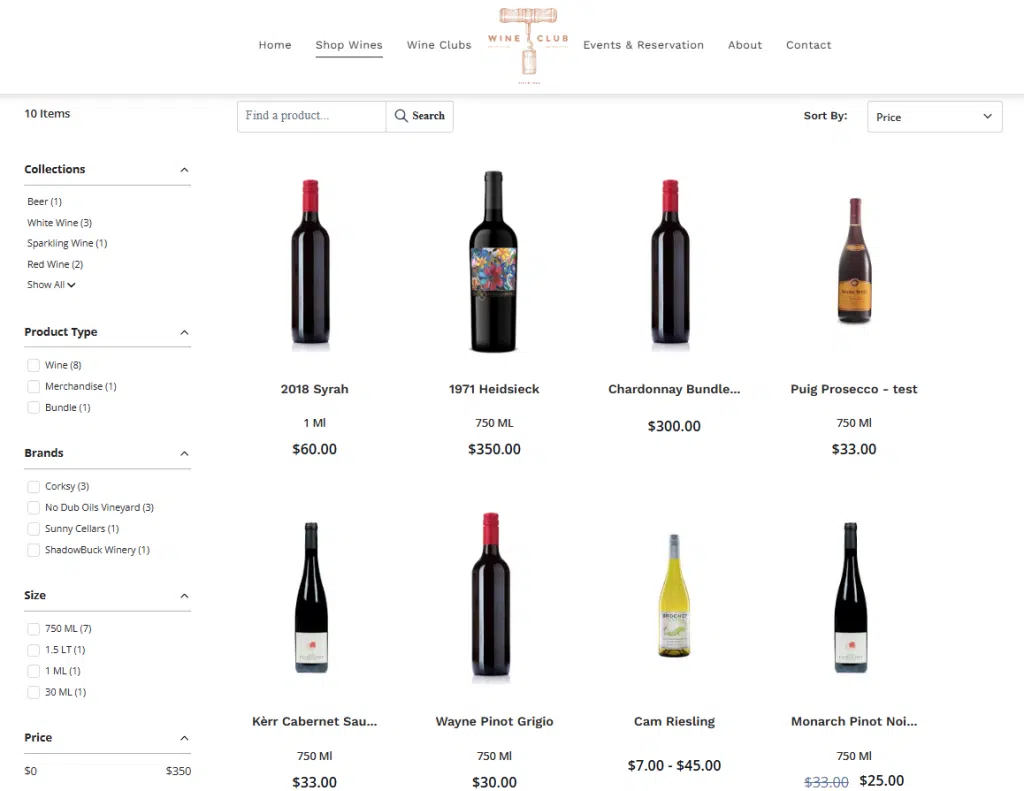 Corksy’s shop page organizes wines with clear filters, pricing visibility, and intuitive navigation, helping customers browse efficiently and build orders faster.
5. Product Pages: Where the Decision Happens
Once a customer clicks into a wine, they are no longer browsing; they are deciding. The job of the product page is to remove hesitation and make the choice feel obvious.
Most wineries handle technical tasting notes well. Structure, acidity, tannin, vineyard details, all important. But technical information alone rarely closes the sale. What often gets missed is context.
Wine is purchased for moments: hosting dinner, bringing a gift, restocking for the weekend, planning a holiday meal. A strong product page helps the customer see themselves opening the bottle.
Instead of stopping at technical descriptors, layer in decision-support language that answers the real questions customers are asking:
- Need a hostess gift that feels thoughtful but safe? This is the bottle.
- Planning pizza and a movie night? This red holds up without overpowering.
- Hosting Thanksgiving? Easy pairing, crowd-friendly, low risk.
- Looking for something that impresses without being polarizing? This fits.
You are not simplifying the wine. You are simplifying the decision.
At the same time, value must be easy to understand. Audit your product pages for structural clarity:
- Is club pricing displayed clearly next to retail pricing?
- Are savings at 6 or 12 bottles obvious without doing math?
- Is price per bottle visible when purchasing in volume?
- Are case incentives reinforced on the page?
- Is shipping threshold messaging visible?
- Are awards, reviews, or social proof used strategically?
Customers hesitate when they have to calculate value manually or guess whether a wine will “work.” Strong product pages remove both uncertainties: suitability and price logic.
When the wine feels like the answer to a specific need, and the value is immediately clear, conversion improves.
6. Shipping Strategy: Transparency First, Behavior Second
Shipping is one of the most influential and sensitive variables in wine DTC. It impacts margin, average order value, and conversion rate simultaneously.
The largest issue is rarely the cost itself. It is surprise.
The gap between what shipping actually costs and what consumers expect to pay continues to widen. Tablas Creek recently wrote about this growing disconnect, highlighting how customer perception and real logistics costs have never been further apart. The takeaway isn’t that wineries should absorb the cost blindly. It’s that expectations must be managed intentionally through clear thresholds, transparent pricing, and structured incentives.
When a customer plans to spend $300 and encounters an unexpected $50 shipping charge at checkout, hesitation increases immediately. Even if the rate is reasonable, the disconnect between expectation and reality suppresses conversion.
Shipping strategy should accomplish two things:
- Build trust through transparency.
- Shape order behavior intentionally.
Transparency comes first. Customers should not discover shipping rules at checkout. Before someone ever reaches cart, your site should clearly communicate:
- What is the free shipping threshold (if one exists)?
- Are flat rates visible?
- Are shipping states clearly listed?
- Is there guidance for states you do not ship to?
- Is pickup clearly differentiated from shipping?
If you do not ship to certain states, say so clearly on the shopping page. Where possible, redirect those customers to a retail locator or invite them to join the mailing list for future availability. Losing the order is one thing; losing the relationship is another.
Once transparency is established, shipping becomes a behavioral lever.
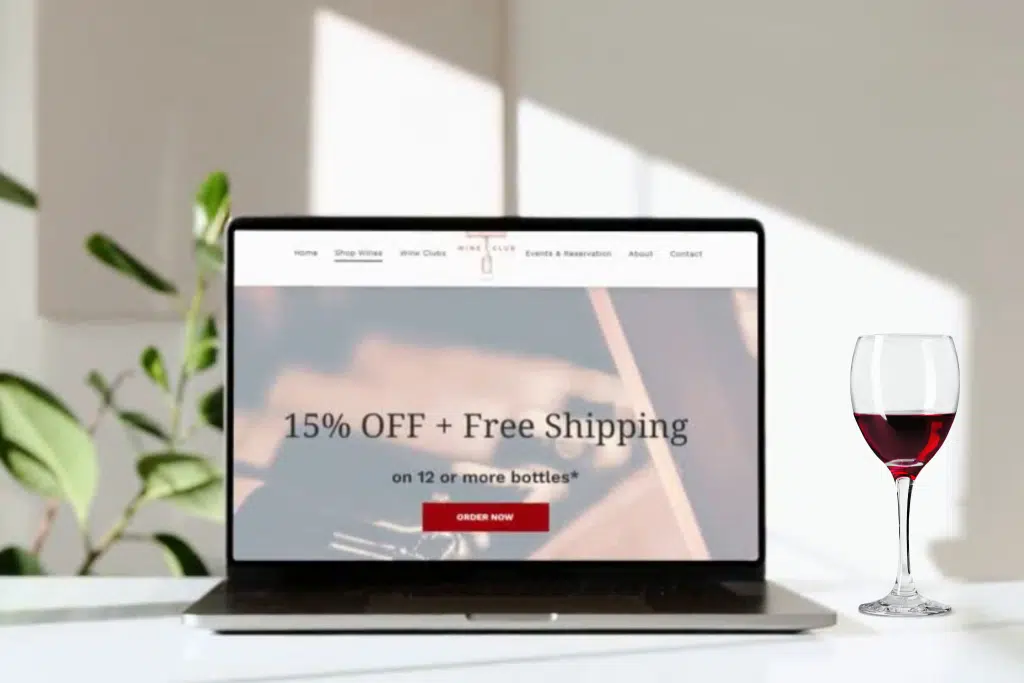
Strong DTC programs align shipping thresholds with margin logic and case incentives. If free shipping begins at 12 bottles, the site should support that behavior long before checkout:
- Reinforce the threshold on shop and product pages.
- Display progress toward free shipping in cart.
- Suggest add-ons when customers are close to qualifying.
- Pair thresholds with case discounts when appropriate.
When structured correctly, shipping thresholds increase average order value while protecting profitability. When hidden or poorly communicated, they create friction and erode trust.
Shipping is not just a logistics setting. It is a conversion design decision.
7. Checkout Friction: Where Revenue Is Won or Lost
By the time a customer reaches checkout, the hard work should already be done. They have selected the wine, justified the purchase, and moved forward with intent.
At this stage, friction, not price, is often what disrupts conversion.
Consumers compare your checkout experience to every modern retailer they use. That expectation carries over whether you are a 5,000-case winery or a global brand.
Small inefficiencies compound quickly:
- Extra required fields
- Slow shipping calculations
- Confusing pickup versus shipping options
- Limited payment methods
- Mobile layouts that require excessive scrolling
Audit your checkout experience on mobile first. A significant percentage of winery traffic originates there, and even slight usability issues can increase abandonment.
Evaluate the following:
- Are Apple Pay and Google Pay enabled?
- Is address entry streamlined?
- Are required fields minimized?
- Is pickup clearly separated from shipping?
- Are shipping costs calculated quickly and transparently?
- Does checkout feel visually consistent with the rest of the site?
For wineries that host club pickup days or high-volume release events, operational alignment also matters. Inventory synchronization between POS and eCommerce must be accurate to prevent overselling or fulfillment confusion. A clean backend protects the frontend experience.
Checkout is not where persuasion happens. It is where confirmation happens.
The objective is simple: remove unnecessary effort. When checkout feels fast, intuitive, and predictable, conversion rates improve without additional marketing spend.
8. Wine Club Integration: Acquisition and Retention Working Together
Wine club deserves its own dedicated section on your website. It should be easy to find, clearly explained, and thoughtfully structured.
But it should not live in isolation.
Too often, wine club pages are built solely to sell new memberships. Once someone joins, the experience shifts entirely into account login, with no clear hub for benefits, updates, or easy communication.
Strong wine club architecture serves two audiences at once:
- Prospective members evaluating whether to join
- Existing members who need reminders, access, or support
Start by evaluating the acquisition side:
- Is the value proposition clearly articulated?
- Are savings quantified?
- Are tiers easy to compare?
- Are benefits specific and immediate?
- Can someone join directly from product pages or checkout?
Then evaluate the member experience:
- Is there a clearly accessible club hub or landing page?
- Can members easily review benefits without logging in?
- Is there a simple way to contact the club manager (form, chatbot, or direct link)?
- Are event perks and member-exclusive releases clearly surfaced?
- Are pickup instructions and release timelines easy to find?
Wine club marketing is multifold. You are simultaneously selling new memberships and reinforcing VIP status for existing members.
If members cannot easily remind themselves why they joined, the perceived value erodes over time. If contacting the club manager requires navigating a generic contact page, friction increases. If benefits feel hidden or buried inside account settings, engagement drops.
Club architecture should reinforce exclusivity without adding complexity. Members should feel recognized. Prospects should feel compelled.
When acquisition and retention are structured together, wine club becomes more than a subscription. It becomes a central pillar of your DTC strategy.
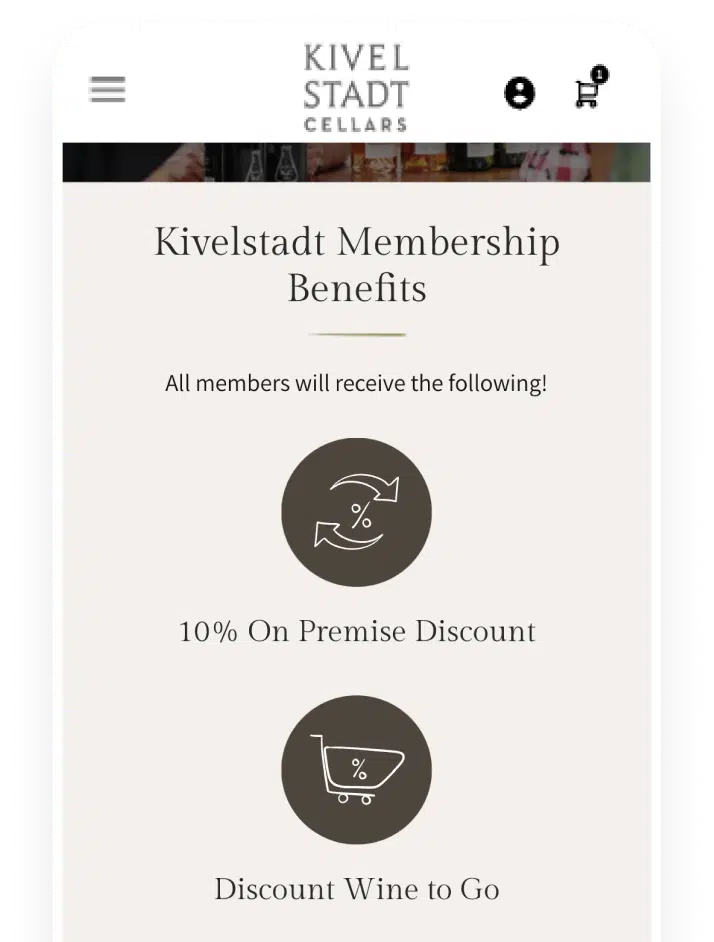 Kivelstadt Cellars’ wine club sign-up and benefits page is optimized for mobile, helping visitors quickly understand membership value and join from any device.
9. Email, Data, and Behavioral Visibility
Most wineries evaluate email performance based on opens and clicks. That’s only part of the story.
The more important question is what happens after the click.
If you cannot see how email traffic behaves on your site, what products are viewed, where abandonment occurs, whether club pages are visited, you are optimizing in partial darkness.
Email and website behavior should not operate separately. They should inform each other.
Start with basic behavioral visibility:
- Can you track product views after an email click?
- Are abandoned cart triggers SKU-specific?
- Do you know which campaigns drive 6-bottle orders versus 12-bottle orders?
- Can you measure club signups tied to specific sends?
- Do you know whether email traffic converts differently than paid or organic traffic?
If those answers are unclear, the issue is rarely marketing creativity. It is tracking architecture.
From a technical standpoint, confirm that:
- GA4 is configured properly with ecommerce tracking enabled.
- Google Tag Manager is firing cleanly across add-to-cart, checkout start, and purchase events.
- UTMs are consistently applied across email, paid, and social campaigns.
- Revenue attribution reflects real transaction data.
- Key events such as wine club signups, event registrations, and shipping threshold triggers are measurable.
Data must be harvestable before it can be strategic.
Once visibility is clean, segmentation becomes the lever.
Modern DTC performance depends on moving beyond blanket campaigns. AI-driven or rule-based segmentation allows you to identify:
- Customers who consistently build 12-bottle orders.
- Shoppers who stop at 3 bottles unless incentivized.
- High-lifetime-value buyers who should be targeted for club upgrades.
- Repeat browsers who have not yet converted.
- Members approaching churn risk based on behavior.
When segmentation is aligned with site behavior, email stops being a broadcast tool and becomes a revenue optimization engine.
The goal is not simply to send more campaigns. It is to use behavioral data to influence how, when, and what customers purchase.
When email, website behavior, POS data, and CRM history operate in a unified view, decision-making becomes proactive instead of reactive.
That shift is where meaningful revenue gains happen.
What a Winery Website Audit Can Actually Unlock
Consider a mid-sized winery generating:
- 25,000 monthly visitors
- 2.0% conversion rate
- $168 AOV
That results in:
- 500 monthly orders
- $84,000 in monthly revenue
- Approximately $1,008,000 annually
Now improve:
- Conversion to 2.6%
- AOV to $182
The result becomes:
- 650 monthly orders
- $118,300 in monthly revenue
- Approximately $1,419,600 annually
That is more than $400,000 in incremental annual revenue without increasing traffic.
This is the leverage of conversion architecture.
Patterns Observed in High-Performing Winery DTC Programs
Across the stronger wineries, structural elements consistently include:
- Case incentives paired with intentional shipping thresholds
- Club pricing embedded throughout the buying journey
- Express checkout enabled
- Personalized nudges for repeat visitors
- Behavior-based email automation
- Unified POS and online data visibility
None of these tactics are flashy. They are structural. And they are measurable.
Why Website Architecture Matters
Running a conversion audit is straightforward in theory.
Execution becomes complex when:
- POS and eCommerce are disconnected
- CRM data lives separately
- Club pricing cannot be dynamically displayed
- Cart logic cannot be configured
- Email attribution is incomplete
All-in-one systems reduce operational friction and allow wineries to implement behavioral adjustments faster.
The benefit is not simply consolidation.
It is strategic flexibility.
Closing
Conversion is not a campaign. It is architecture.
Most wineries do not need more traffic. They need tighter alignment between how customers browse, how value is presented, how thresholds are reinforced, and how data is used to guide decisions.
Before increasing spend or layering on additional promotions, refine the system that turns visitors into buyers.
For wineries operating on integrated platforms, many of these adjustments can be implemented quickly, from shipping logic to club pricing visibility to behavior-based segmentation. For others, the first step is simply visibility.
Run the audit. Identify the friction. Tighten the structure. If you need help with your audit or would like to review the results with our team, let us know!
Most wineries don’t have a promotion volume problem.
They have a promotion design problem.
When you look closely at wineries delivering strong margins alongside steady consumer sales growth, patterns start to appear. Not because those promotions are trendy or copied from competitors, but because they are intentionally designed to drive revenue while protecting long-term customer behavior and brand value.
Modern promotion strategy is not about running more campaigns.
It is about structuring incentives that influence how, when, and why customers buy.
Across the strongest performing wineries, promotions are increasingly treated as part of the revenue model rather than just part of the marketing calendar. They shape demand, influence order composition, and support long-term customer value.
Why Promotion Strategy Is Really Revenue Strategy
Promotions are no longer just marketing tactics.
They are one of the most controllable levers inside a winery’s DTC P&L.
For most wineries, shipping is one of the largest controllable cost centers in direct-to-consumer. When shipping is treated purely as a marketing incentive instead of a financial lever, margin erosion often happens quietly and incrementally.
In budget planning conversations, teams often focus on discount depth, debating whether an offer should be 15% or 20%. Meanwhile, shipping cost structure, fulfillment efficiency, and order composition are often having a much larger impact on profitability.
The wineries outperforming today are designing promotions to change customer behavior, not simply to increase short-term transaction volume.
That shift from campaign thinking to revenue engineering is becoming one of the defining characteristics of modern winery DTC strategy.
The Promotion That Shows Up Everywhere: Case Discount + Free Shipping Threshold
If there is one promotional structure that consistently performs across winery DTC, it is the combination of case incentives paired with a free shipping threshold.
Not because it is exciting.
Because it aligns with how consumers naturally prefer to purchase wine.
When structured correctly, this model typically drives:
- Higher average order value
- Increased case-building behavior
- Shipping positioned as a reward rather than a penalty
- Improved fulfillment efficiency
From a customer psychology standpoint, shipping often functions less like a cost and more like a trigger point. When customers feel they have “unlocked” free shipping, the purchase feels optimized, even if total spend increases.
The critical mistake many wineries make is trying to copy another brand’s exact thresholds or discount percentages. Effective thresholds are always relative to your own economics — including average order value, true shipping cost per package, and channel mix.
The goal is not to maximize discount depth.
The goal is to move the order composition just enough to change buying behavior while protecting margin.
Corksy’s discount engine was built to support this type of real-world winery logic, allowing wineries to structure case incentives, shipping incentives, and qualifying product rules without stacking disconnected promo codes or building one-off exceptions.
Free Shipping Is Never Free
Customers don’t think shipping should cost money.
Wineries cannot afford to treat it that way.
Across ecommerce industries, research consistently shows that customers are significantly more likely to complete purchases when shipping feels included, even when total order value is similar. This is not unique to wine, but wine’s weight, packaging, and compliance requirements make shipping economics especially sensitive.
The most effective shipping incentives are designed to achieve at least one measurable business outcome:
- Increase order size
- Drive movement of specific SKUs
- Encourage case-building behavior
- Reward high-value or high-tenure customers
If shipping incentives are not tied to a specific behavioral or financial outcome, they often become silent margin erosion.
Customers do not necessarily require free shipping.
They require shipping to feel predictable, fair, and earned.
Shipping-Structured Promotions That Change Buying Behavior
Not every shipping incentive should be “free shipping over X.”
Some of the highest-performing DTC programs use shipping as a behavior lever instead of a blanket incentive.
Examples that consistently perform:
- Flat-rate shipping for case purchases
- Shipping incentives tied to specific SKUs
- Seasonal shipping thresholds based on real carrier cost windows
- Club shipping structures that reward tenure or spend
Shipping is one of the largest controllable cost centers in winery DTC.
Treating it like a strategy lever, not just a promo toggle, is where many wineries protect margin without hurting conversion.
Flash Windows That Create Urgency (Without Training Customers To Wait For Sales)
Many wineries fall into one of two promotion traps:
Promotions run too long
Promotions run so frequently that customers stop reacting to them
In both cases, urgency disappears.
Short promotional windows create real decision moments. Instead of giving customers time to delay a purchase, they create a clear “buy now or miss it” signal, which is where urgency-driven conversion actually happens.
Flash windows tend to perform best when they are tied to something customers already care about, such as:
- Release days
- Event weekends
- Weather-driven buying moments
- End-of-quarter or end-of-vintage inventory moves
They are far less effective when used as open-ended discounts, such as running a blanket percentage-off promotion across an entire month.
A Simple Testing Framework
Many wineries see success starting with small, controlled flash tests before expanding.
For example:
- 2–4 hour release or promotion window
- Early access groups receive the strongest incentive
- Later buyers receive a smaller incentive or access-only benefit
This structure allows wineries to protect margin while still rewarding urgency. More importantly, it tends to create concentrated demand spikes instead of slow, margin-eroding discount periods.
When Every Promo Is Sitewide, You’re Probably Paying More for Sales Than You Think
Sitewide promotions are operationally simple.
They are rarely economically efficient.
When first-time buyers, occasional purchasers, and top-tier loyal customers all receive the same incentive, wineries often end up subsidizing revenue that would have happened without a promotion at all. Over time, this compresses margin and trains high-value customers to wait for offers they likely didn’t need.
More effective promotion structures typically introduce variation across customer and buying context, such as:
- Different incentives by customer segment
- Different incentives by channel
- Different incentives by timing or access window
This allows wineries to reward behavior strategically instead of applying blanket discounts across their entire customer base.
This is often the point where promotion strategy evolves beyond campaign planning and starts to resemble revenue design, where incentives are structured to influence buying behavior, protect margin, and reinforce long-term customer value.
Value-Add Promotions That Protect Price Perception
One of the most effective ways to protect brand value while still influencing purchase behavior is through value-add promotions, often structured as Buy X → Get Y.
Rather than increasing discount depth, value-add promotions focus on enhancing the perceived value of the purchase. This allows wineries to create incentive without directly lowering price, which helps preserve long-term price integrity and brand positioning.
Across winery DTC programs, value-add offers that consistently perform well include:
• Buy 6 bottles → library or small-production sample
• Buy a case → branded merch, event access, or experience add-on
• Buy a specific SKU → unlock early access, allocation priority, or exclusive content
When executed well, these promotions maintain brand value while still shifting buying behavior, often increasing order size or driving movement of strategic inventory.
Wine is particularly well suited for value-add promotions because experience, story, and access often carry as much perceived value as price itself. For many customers, exclusivity and connection to the brand can be a stronger motivator than an additional percentage off.
The Quiet Revenue Driver: Channel-Specific Promotions
NNot every promotion should exist everywhere.
One of the most common, and often invisible, sources of margin erosion in winery DTC programs happens when incentives designed for one channel are automatically extended across all channels by default.
Different buying environments create different customer expectations, different cost structures, and different margin realities. Treating every channel the same often means over-incentivizing customers in places where a promotion wasn’t actually needed.
Some of the most effective winery promotion strategies intentionally separate incentives by channel. For example:
- Farmers market or event incentives that are not available online
- Event-only wine club join bonuses tied to in-person experiences
- Ecommerce shipping promotions that do not impact tasting room pricing or POS margins
When promotions are structured at the channel level, wineries gain significantly more control over margin while still creating strong customer incentives where they matter most.
This is where many wineries quietly lose profitability when every successful promotion gradually becomes sitewide by default instead of remaining tied to the channel or behavior it was originally designed to influence.
Discount Depth Is Usually the Wrong Lever
When teams evaluate promotions, the conversation often starts with discount depth:
Should this be 10%, 15%, or 20%?
A more strategic question is whether the promotion needs to be a percentage discount at all.
Across high-performing DTC programs, the strongest performance gains often come from structural incentives rather than deeper price cuts. In many cases, small changes to how an offer is framed or delivered can outperform simply increasing discount percentage.
Some of the most effective levers tend to include:
- Shipping structure and thresholds
- Early or tiered access timing
- Exclusivity or allocation-style incentives
- Bundling and curated purchase pathways
These approaches allow wineries to influence buying behavior while maintaining price integrity.
In practice, margin protection typically comes from a promotion structure, not from reducing the price further. The wineries maintaining the strongest long-term DTC performance are usually the ones designing promotions around behavior and purchase context, rather than relying on deeper and deeper discounting.
You Cannot Copy Another Winery’s Promotion Math
There is no universal free shipping threshold, case discount percentage, or club incentive structure that works across every winery.
Promotion math only works when it is grounded in your own economics, including bottle price, average order value, shipping cost structure, club penetration, and channel mix.
Two wineries can run what looks like the same promotion on the surface and see completely different financial outcomes.
That’s because effective promotion design is always relative to your underlying unit economics and customer behavior patterns.
If someone offers universal promotion benchmarks without understanding your cost structure and buying patterns, they are guessing, even if the numbers sound reasonable.
The Pattern Many Wineries Fall Into (Without Realizing It)
Many wineries unintentionally train customers into predictable purchasing cycles.
When customers expect that:
- Every holiday includes a promotion
- Sitewide discounts appear regularly
- Another offer will always arrive in the next email
Promotions stop creating urgency and start functioning as a predictable calendar event.
The healthiest DTC programs typically share several characteristics:
- Fewer total promotions
- Shorter, more intentional windows
- Incentives tied to specific behaviors
- Strong protection of perceived brand value
The result is not lower sales volume.
It is typically stronger margin stability and more predictable revenue pacing.
The Operational Reality Behind Modern Promotion Strategy
As promotion strategies become more behavior-driven, operational complexity increases quickly.
Once wineries begin layering:
- Customer segmentation
- Channel-specific rules
- Time-based access windows
- Product-level qualification logic
- Shipping-based incentives
- Stacking rules and exclusions
Promotion management can shift from marketing execution into systems architecture.
Historically, many wineries managed this complexity using spreadsheets, overlapping promo codes, and manual overrides. Increasingly, modern winery commerce platforms are shifting toward structured promotional logic, allowing promotions to be built around real buying behavior rather than static discount rules.
This shift is less about technical sophistication and more about enabling wineries to run fewer, more intentional promotions with measurable financial impact.
The Bottom Line
The goal of modern promotion strategy is not simply to reduce discounting.
It is to make discounting intentional, measurable, and behavior-driven.
The most effective winery promotions consistently aim to:
- Change how customers buy
- Increase order size and efficiency
- Reward loyalty and tenure
- Move strategic inventory
- Protect long-term brand value
Across the industry, DTC promotion strategy is moving toward precision over volume.
And increasingly, the wineries maintaining the strongest margins are the ones treating promotions as part of their revenue architecture, not just part of their campaign calendar.
If you are evaluating how your current promotion structure is impacting margin, contribution, or long term customer behavior, it is worth taking a step back and mapping promotions against real order and shipping data.
At Corksy, we regularly help wineries analyze promotion performance across channels, customer segments, and order behavior to identify where revenue is being created versus subsidized. If you are pressure testing your current promotion strategy, we would love to connect and share what we are seeing across the broader winery DTC landscape.
The wine club isn’t dying. It’s being rewritten.
Wine clubs in 2026 still matter, but the way wineries build and grow them has fundamentally changed.
What has changed is the lifestyle of the people in them.
In 2026, the strongest force shaping wine club behavior is the Millennial generation — not because they are the only wine buyers, but because the way they live, spend, and subscribe has become the default expectation for everyone else. They are running households, hosting friends, raising families, managing busy schedules, and making more intentional purchasing decisions than any generation before them.
That reality is quietly transforming what a wine club needs to be.
Why lifestyle now matters more than allocations
Wine clubs used to compete on bottles:
how many, how rare, how discounted.
That’s not how people experience wine anymore.
Most members don’t think in terms of allocations or case sizes. They think in terms of how wine fits into their lives — dinner with friends, a quiet night in, hosting, book club, holidays, weekends. And they don’t judge their winery in a vacuum.
They compare it, often subconsciously, to everything else they already subscribe to. From community-driven platforms like Peloton to creator memberships on Substack to the personalized experiences they get from services like Spotify, modern subscriptions have trained people to expect more than a product.
They expect to feel known.
They expect curation.
They expect a sense of belonging.
That mindset now carries over into how wine clubs are evaluated. A shipment that shows up every few months is no longer enough on its own. Members want their winery to feel like it understands their routines, their social lives, and the moments when wine actually shows up.
Wine clubs are becoming lifestyle memberships
Wine clubs are no longer just about what’s in the box. They are about what that box enables.
The wineries seeing the strongest engagement in 2026 are building clubs around real-life moments: hosting, family dinners, gifting, and social gatherings. That’s why wine club add-ons now go far beyond food alone.
Some wineries are offering:
- Wine plus charcuterie, candles, or flowers for hosting
- Wine plus bakery boxes or picnic kits for family weekends
- Wine plus chocolates or spa items for gifting and self-care
- Wine plus event access or tasting kits for experiences
These lifestyle bundles turn a wine club into something people actually use, not just something they receive. They also increase order values, pickup rates, and word-of-mouth — all without needing to discount the wine itself.

Community is the new retention engine
Discounts don’t create loyalty.
Relationships do.
Some wineries have quietly built 20-year wine club retention by focusing on one thing: getting their members to know each other. They host off-site tastings, regional meetups, winemaker dinners, and trips that bring members together outside the tasting room.
When people make friends through your winery, your wine becomes part of their social life. That’s far more powerful than any promotional offer.
Across the country, wineries in major wine regions are already experimenting with more experience-driven, community-focused wine clubs, from regional tastings and city pop-ups to winemaker dinners and member trips, as they look for better ways to build long-term loyalty.
Every wine club should have a place to hang out
Modern wine clubs are increasingly supported by private online communities. Not email lists. Not SMS campaigns. Real spaces where members can talk to each other.
Private Facebook groups, community platforms, or member forums give people a place to share what they’re drinking, post event photos, ask for pairing advice, and see what other members love. The winery becomes part of that conversation, rather than just another brand in the inbox.
This simple shift makes members feel like they belong to something, not just that they’re on a list.

Loyalty should grow over time
Wine clubs in 2026 are moving toward tenure-based rewards that get better the longer someone stays. That might look like higher discounts after multiple years, access to library wines, or special events reserved for long-term members.
People don’t stay just because the wine is good. They stay because they’ve earned something.
Take the wine club on the road
Your members don’t live at your winery.
So your wine club shouldn’t either.
Pop-up tastings, city dinners, and regional events turn a wine club into a relationship instead of a shipment. They also give members something to look forward to and a reason to bring friends into your world.

Gamified clubs keep people engaged
Modern wine clubs are starting to feel more like experiences than transactions. Points, levels, referral perks, tasting challenges, and unlockable rewards give members a reason to keep interacting with the brand between shipments.
It keeps the club top of mind and makes participation feel rewarding.
Gamified clubs keep people engaged
Modern wine clubs are starting to feel more like experiences than transactions. Points, levels, referral perks, tasting challenges, and unlockable rewards give members a reason to keep interacting with the brand between shipments.
It keeps the club top of mind and makes participation feel rewarding.
What wineries should do in the next 90 days
If you want your wine club to stay competitive into 2026, focus on five practical moves.
1. Add one lifestyle bundle
Choose one way to make your club fit into real life – hosting, family, gifting, or experiences – and launch it as an add-on or pickup option.
2. Create a private member space
Start a Facebook group, community space, or forum just for club members. Use it for sharing, early offers, and member-to-member connection.
3. Plan one off-site member event
Pick a city or region where many of your members live. Host a tasting, pop-up, or winemaker dinner and let members bring friends.
4. Add one loyalty upgrade
Introduce at least one tenure-based perk, anniversary reward, or status tier to give members a reason to stay longer.
5. Pressure-test your wine club platform
Ask whether your current system can handle multiple tiers, non-wine items, events, personalization, and engagement tracking. If it can’t, your wine club isn’t future-proof, no matter how good your ideas are.
Ready to modernize your wine club?
The wineries that will win in 2026 won’t just have better ideas, they’ll have the systems to support them.
Corksy helps wineries run flexible, modern wine clubs with:
- Multiple club tiers
- Add-ons and lifestyle bundles
- Event-based memberships
- Personalized offers
- Member data and engagement tracking
If you’re exploring how to evolve your wine club beyond shipments, we’d love to show you what’s possible.
Cyber Week Winery Marketing: Planning Smarter, Selling Stronger
Cyber Week is almost here, and consumers are primed to buy. For wineries, it’s not just a chance to move inventory — it’s a chance to win new fans, reward loyal members, and end the year strong.
The goal isn’t simply to discount — it’s to strategically position value, create urgency, and make buying feel effortless. Whether you’re a small family-run tasting room or a multi-location brand, these proven strategies will help you get the most out of the week.
1. Build Anticipation Before the Week Begins
Cyber Week success starts long before Friday. The wineries that win start warming up their audience early — building curiosity, boosting email sign-ups, and reminding people why they love their brand.
Ideas to get the buzz going:
- Add a countdown banner or homepage teaser with “Our biggest offer of the year starts soon.”
- Send a “save the date” email to your list and wine club.
- Share short, behind-the-scenes videos on social — prepping shipments, wrapping bundles, or labeling bottles.
- Offer a sneak peek or early RSVP for club members (“Want first access? Join our club by Tuesday!”).
Tip: Use pop-ups to build your email list as traffic rises — offer early access or a small reward for signups.

2. Create a Plan for the Whole Week — Not Just One Day
Cyber Week isn’t a one-and-done sale. The best-performing wineries map out the entire week with a clear rhythm that keeps customers coming back.
Example timeline from the playbook:
- Tuesday: Wine Club early access (limited bundles, member-only discounts)
- Wednesday: VIP/high-spender email (personalized recommendation + shipping perk)
- Friday: Black Friday launch to the public (limited quantity messaging)
- Saturday: Small Business Saturday focus on local pickup and gift sets
- Monday: Cyber Monday flash sale or “final hours” push
Each day gives a different audience a reason to act. It also keeps your brand top of mind all week long.

3. Offer Value That Feels Intentional
Shoppers expect deals during Cyber Week — but how you structure those deals determines whether it builds loyalty or cheapens your brand.
Instead of blanket markdowns, create offers that tell a story or solve a problem:
Smart offer ideas:
- Themed bundles: “Wines for the Holiday Feast,” “Holiday Hosting Kit,” or “Sparkling Wine Lovers.”
- Tiered discounts: “Buy 3, save 10% — buy 6, save 20%.”
- Free shipping threshold: “Free shipping on orders over $150.”
- Gift with purchase: A tasting voucher, branded wine key, or handwritten note from the owner.
Position these as exclusive moments, not clearance events — something only available once a year.

4. Polish Your Digital Shelf
Think of your website as your tasting room — every touchpoint should make it easy (and enticing) to buy.
Quick win checklist:
- Update product photography with holiday-themed imagery or background color.
- Write fresh, holiday-specific copy for bestsellers (“Perfect for your holiday table” or “A cozy red for winter nights”).
- Add a dedicated Cyber Week landing page with all offers in one place.
- Use countdown timers on banners and product pages to build urgency.
- Double-check that your mobile checkout is flawless — fast load, quick pay options, and clear shipping cutoffs.
If you’re on Corksy’s web platform, tools like countdowns, banners, and holiday pop-ups can be added in minutes — no plugins or coding.
5. Segment and Automate Your Campaigns
You don’t need a massive marketing team to pull off a big Cyber Week campaign — automation can do the heavy lifting.
Ways to simplify and personalize:
- Schedule emails ahead: pre-sale announcement, launch, reminders, “final hours.”
- Use tags or filters to send specific offers to club members, high spenders, or past buyers.
- Turn on abandoned cart emails — even a 24-hour reminder can recover lost sales.
- Automate post-purchase thank-yous with pairings or serving ideas.
Tip: Corksy’s automation tools make these flows easy to build and personalize without leaving your dashboard.
6. Leverage Social and Paid to Build Momentum
Cyber Week is noisy, but the right combination of content and ads can keep your winery visible.
Organic ideas:
- Post daily on Instagram or Facebook Stories with reminders, bundle features, and short countdowns.
- Go live from the tasting room or share quick “team pick” videos.
- Encourage fans to tag you when they open their orders — social proof sells.
Paid ideas:
- Retarget people who visited your site in November but haven’t purchased.
- Boost your top-performing organic post instead of starting from scratch.
- Run an “early access” ad for club signups the week before Black Friday.
If your ads, emails, and website all tell one consistent story, shoppers will remember — and trust — your brand faster.
7. Make Post-Purchase Communication Personal
The sale isn’t the end — it’s the start of your next relationship.
A well-timed follow-up can turn a Cyber Week buyer into a year-round customer.
Post-sale best practices:
- Send a thank-you email that includes serving suggestions or winemaker notes.
- Follow up with a club invitation two weeks later.
- Add new buyers to a holiday gifting drip (great for New Year promotions).
- Ask for a quick review or social tag to build momentum for next year.

Small touches build long-term loyalty — especially when your competitors go silent after the sale.
8. Measure What Worked and What Didn’t
Once the rush slows down, take time to look back.
Use your sales reports, email metrics, and web analytics to understand what moved the needle.
Ask yourself:
- Which products or bundles performed best?
- What messages got the most clicks?
- Which day of Cyber Week drove the most conversions?
That data is your foundation for next year’s playbook.
If you’re using Corksy, the analytics dashboard gives you these insights instantly — sales by product, discount code performance, customer spend, and more.
The Takeaway: Plan Early, Personalize Often, and Keep It Human
Cyber Week is the most profitable time of the year for wineries — but it’s not about shouting the loudest. It’s about planning smart, communicating clearly, and using data to make each interaction more personal.
Whether you sell 500 cases a year or 50,000, these same fundamentals apply. Start early, stay consistent, and keep the customer experience front and center.
📘 Download the Corksy BFCM Playbook for the full checklist, timeline, and real examples from wineries that nailed Cyber Week last year.
🷠Want to see how Corksy’s tools can simplify your holiday campaigns? Book a quick demo and we’ll walk you through how to segment, automate, and sell more wine this season.
Over the past few years, wineries have seen tasting room visits decline as consumer habits shift. With more options than ever, visitors are looking for something special—experiences that go beyond just sampling wine. For many wineries, this means rethinking how they engage guests and creating a place people want to come back to.
This guide explores how wineries across the country are turning their tasting rooms into destinations—balancing local charm, modern convenience, and genuine hospitality.
Create Unique, Social Experiences
In today’s market, wineries that stand out provide more than just a tasting—they create memorable, shareable experiences that make guests want to stay longer and come back.
- Enhancing the Atmosphere with Music: Music adds energy and can make an ordinary tasting feel like an event. Hosting live music, whether it’s a local band or acoustic performer, brings people together and keeps them engaged. Many wineries schedule music on weekends to attract crowds, letting guests relax, sip, and enjoy the vibe.
- Hands-On Winemaking Events: Take the guest experience a step further by offering interactive sessions like blending workshops or harvest activities.
- Curated Pairing Dinners: Partner with local chefs to create pairing dinners that go beyond typical food and wine pairings. These can feature seasonal ingredients and creative presentations, like smoky effects or special lighting, making the meal an unforgettable experience. It’s an elevated, modern approach that resonates with guests looking for something unique to post and share.
- Personalized Tastings for a Tailored Experience: Many wineries have moved away from traditional tastings, but there’s still value in offering a more personalized option. Creating a dedicated space or reserving private areas for more formal tastings gives guests a deeper connection to the wine.

Curate Instagram-Worthy Spaces Without the High Cost
Wineries don’t need million-dollar buildouts to be photo-worthy.
Many emerging regions embrace rustic charm—polo fields in Virginia, metal barns in Texas, and lakeside patios in Michigan. It’s not about grandeur; it’s about authenticity.
Use what makes your winery unique to craft a memorable, photo-ready experience.
- Highlight Unique Spaces & Decor: If your winery has distinctive features—like a rustic barn, scenic overlook, or historic architecture—lean into those qualities. Adding simple decor touches like creative seating, string lights, or vintage furniture can make a big impact.
- Utilize the Landscape: Some of the best photo ops are already part of your surroundings. Beautiful vineyard views, cozy barrel rooms, and outdoor patios are natural backdrops that encourage guests to snap and share. Set up comfortable spaces in these areas to make your winery an inviting destination that shines on social media.
- Storytelling Through Every Touchpoint: Your winery’s story is part of what makes it unique. Make sure visitors can experience it everywhere, from your website to the tasting room. Consider using iPads, screens, or wall displays to showcase your vineyard’s history, sustainability practices, or winemaking philosophy. Giving guests a way to connect with your story on their own makes the experience more meaningful.
Welcome Families and Pet Owners with Inclusive Spaces
As visitation declines in some regions, wineries that adapt to meet the needs of younger consumers are seeing a positive shift. Many young adults today have families and pets, and they’re searching for relaxed, family-friendly destinations where everyone can enjoy themselves. By creating a welcoming environment, wineries can tap into this growing demographic, which values shared experiences over traditional wine tastings alone.
- Family-Friendly Days or Hours: Offering specific family-friendly hours or designated days of the week can create an inviting atmosphere for guests with kids. Wineries in places like Texas and Virginia have successfully boosted visitation by providing kid-friendly spaces, outdoor games, and picnic areas that let families relax and enjoy the day. Simple touches like this show younger visitors that your winery welcomes families and creates a stress-free space for everyone to unwind.
- Dog-Friendly Areas: Many guests want to bring their pets along, so adding dog-friendly patios or outdoor areas is an easy way to attract more visitors. With pet-friendly zones, your winery becomes a go-to spot for dog owners who want to relax with a glass of wine in hand and their furry friends nearby.
Corksy clients in these markets are using Corksy GO to simplify service in open-air environments—taking orders, managing tabs, and selling bottles on the go, whether guests are at picnic tables or seated near the stage.
 Corksy GO allows wineries to sell anywhere, any time with built-in LTE and wi-fi options.
Empower Wine Club Members as Ambassadors
Your wine club members are some of your best advocates. Turn them into organic ambassadors by giving them reasons to bring friends and family, naturally expanding your reach through genuine connections.
- Invite-Only Perks: Elevate the experience for club members by creating exclusive, invite-only spaces or events, like private tasting lounges, seasonal parties, or behind-the-scenes tours. When members have access to special areas or experiences, they’re more likely to share the experience by inviting friends along to join the fun.
- Fun Referral Incentives: Instead of standard discounts, try unique rewards like a complimentary glass for each new friend they bring, or access to limited-release wines. You could even offer a “Bring a Friend” day, where members can bring a guest to enjoy exclusive benefits, turning every visit into a memorable experience.
- Member-Hosted Events: Allow wine club members to host small gatherings or private events at your winery with discounted group rates or a complimentary tasting for their group. This can make members feel valued while introducing your winery to new guests in a relaxed setting.
- Friends-and-Family Membership Trials: Offer club members the chance to gift a short-term "trial membership" to friends or family. This lets guests experience club perks for a limited time, making them more likely to join after enjoying the exclusive benefits. Tip: Do this during a typically "slow" month to increase sales by allowing non-members to use membership benefits for a week.
Rethink Your Reservation Policy and Operating Hours
Flexibility can make your winery more accessible, especially for spontaneous visitors or locals. While some wineries require reservations, loosening this policy can open the door to a broader audience.
- Open-Door Policy: Evaluate whether you need reservations at all, or if you can keep a flexible walk-in policy, particularly during off-peak hours. Letting people drop in without booking in advance can encourage spontaneous visits, especially from locals.
- Hybrid Reservation Options: If reservations are necessary, consider a hybrid model where some areas remain reserved for walk-ins. This way, guests still have the option to drop by, while pre-booked visitors enjoy guaranteed spots.
- Flexible Hours: Extending your hours for evenings or weekdays can bring in guests looking to unwind after work or visit during quieter times. “Local Nights” with special discounts or live music can add to the appeal, encouraging midweek visits.
- Regularly Walk the Customer Journey: Periodically experience your winery from a guest’s perspective. Test the entire journey, from navigating your website and making a reservation to parking and entering the tasting room. This practice helps identify any areas that could be improved to create a smoother, more enjoyable experience for visitors.
Streamline with Self-Serve and Prepaid Options
Managing staffing levels can be challenging—especially if you currently operate by appointment only and are wanting to accept walk-ins. By adding self-serve options, you can enhance the guest experience and create a more efficient, flexible operation.
- Wine-by-the-Glass Stations: Set up dedicated areas where guests can easily grab a glass or bottle without needing full-service attention. This allows visitors to enjoy a relaxed, self-paced experience, perfect for busy times or when staffing may be limited.
- Prepaid Self-Serve Stations: Some wineries are investing in prepaid pouring stations like this one, where guests can swipe a card or wristband to sample wines by the ounce. While these stations come with upfront costs, many see them as a worthy investment to reduce staffing needs and provide guests with a unique, interactive way to explore wines. It’s also a great conversation starter that appeals to tech-savvy visitors and encourages a leisurely pace.
Expand Your Drink Options to Welcome All Guests
Adding non-alcoholic options and a variety of other drinks can make your winery more inviting for everyone. Offering non-alcoholic wine, mocktails, or wine slushies gives non-drinkers and designated drivers something to enjoy beyond just sodas and water.
- Non-Alcoholic and Mocktail Options: Including non-alcoholic wines or custom mocktails makes sure non-drinkers feel part of the experience. It’s a simple way to ensure everyone has something interesting to sip on, even if they aren’t drinking alcohol.
- Wine Cocktails and Slushies: Wine-based cocktails and slushies can add a fun, seasonal twist to your menu, especially in the warmer months. These unique options often attract younger crowds and create photo-worthy moments that guests love to share.
- Local Beer or Cider: Carrying a few local beers or ciders is a great way to cater to different tastes, drawing in visitors who might not typically stop by a winery. This flexibility broadens your appeal across generations and gives everyone a reason to enjoy your space.

Engage Your Local Community with Partnerships and Events
Getting involved locally is a great way to make your winery a real part of the community. By teaming up with nearby businesses, artists, and vendors, you can create events that attract locals and new visitors alike.
- Local Vendor Pop-Ups: Invite local artisans, food trucks, or musicians to set up at your winery. These events bring a fresh crowd and make the atmosphere lively and welcoming. Guests get to enjoy more than just wine—they experience a bit of the local flavor and community.
- Inventory Discount Days: To boost weekday visits, consider hosting discount days where locals or wine club members can get special deals on select bottles. It’s a simple way to show appreciation to your community, keep foot traffic steady, and clear out older inventory at the same time - a win-win!
- Engage Locally Through Events and Partnerships: Local events are a great way to reach new audiences. If allowed, set up a booth at your local farmer’s market or participate in regional festivals to showcase your wines. Also, building relationships with tour operators, local hotels, or Airbnbs can put your winery on the map for visitors, who may include you in their travel plans.
Boost Your Visibility with Local SEO and Google My Business
Making sure people can find your winery online is key to bringing in real-world visitors. Local SEO and an updated Google My Business profile can help you stand out and attract more guests.
- Keep Google My Business Updated: Regularly update your Google My Business profile with upcoming events, special offers, or unique experiences. When someone searches for local things to do, having all the latest info on your profile makes it easy for them to choose your winery.
- Use Local SEO: Include location-based keywords on your website and blog, like “family-friendly winery near [city]” or “dog-friendly winery in [region].” This helps you show up in local searches and reach people who are already nearby and looking for a place to visit.
Elevate the Experience with Food Options
Adding food to the mix can turn a tasting into a full experience, keeping guests around longer and giving them more reasons to visit. Even if health codes or building regulations prevent a full menu, there are plenty of ways to offer something satisfying.
- Grab-and-Go Options: Pre-packed items like charcuterie boxes, cheese plates, or small snacks are easy to manage and pair well with wine. They’re convenient for guests and keep things simple on your end.
- Food Trucks and Pop-Ups: Partner with local food trucks or pop-up chefs for a rotating selection of foods, creating something new and exciting each time guests visit. This can attract both wine lovers and locals who come for the food but stay for the wine.
- Allow Outside Food: If you’re open to guests bringing their own picnics, make it clear on your website so they know what to expect. Guests appreciate the flexibility, and it makes your winery feel even more welcoming.

Conclusion
Creating a destination winery goes beyond great wine; it’s about building an experience that keeps people coming back. From family-friendly spaces and local partnerships to self-serve options and memorable food pairings, these strategies make your winery a place people want to visit, stay awhile, and bring friends back to.
All of these are great suggestions, but the customer experience often hinges on the staff. Make sure they’re trained on the winery’s history, understand the 5-10 rule (acknowledging customers within five feet and smiling within 10), and are knowledgeable about the wines. A warm, welcoming staff can make a first-time visitor feel at home and eager to return.
Of course, balancing all these elements requires the right tools. Corksy can help streamline everything from managing reservations and keeping track of club members to running a POS system that works for both tastings and retail. With CRM capabilities and a web builder designed with SEO in mind, Corksy helps make it easier to stay organized and get noticed online. By keeping everything under one system, you’re free to focus on what really matters: creating an experience that resonates with every guest who walks through the door.
AI is changing how customers discover, research, and buy wine online — and that means your website strategy needs to change with it.
We’re moving beyond the days of traditional, keyword-heavy SEO. Today’s search landscape is driven by generative AI — platforms like ChatGPT, Perplexity, Bing Copilot, and Google’s AI Overviews — which don’t just show links. They summarize information, cite sources, and even recommend brands directly in the search results.
For wineries, that means success is no longer just about ranking on page one. It’s about becoming the trusted source these AI systems quote, reference, and build their answers from.
Here are five practical ways to make sure your winery’s site is ready for the AI era — and positioned to be discovered, cited, and recommended.
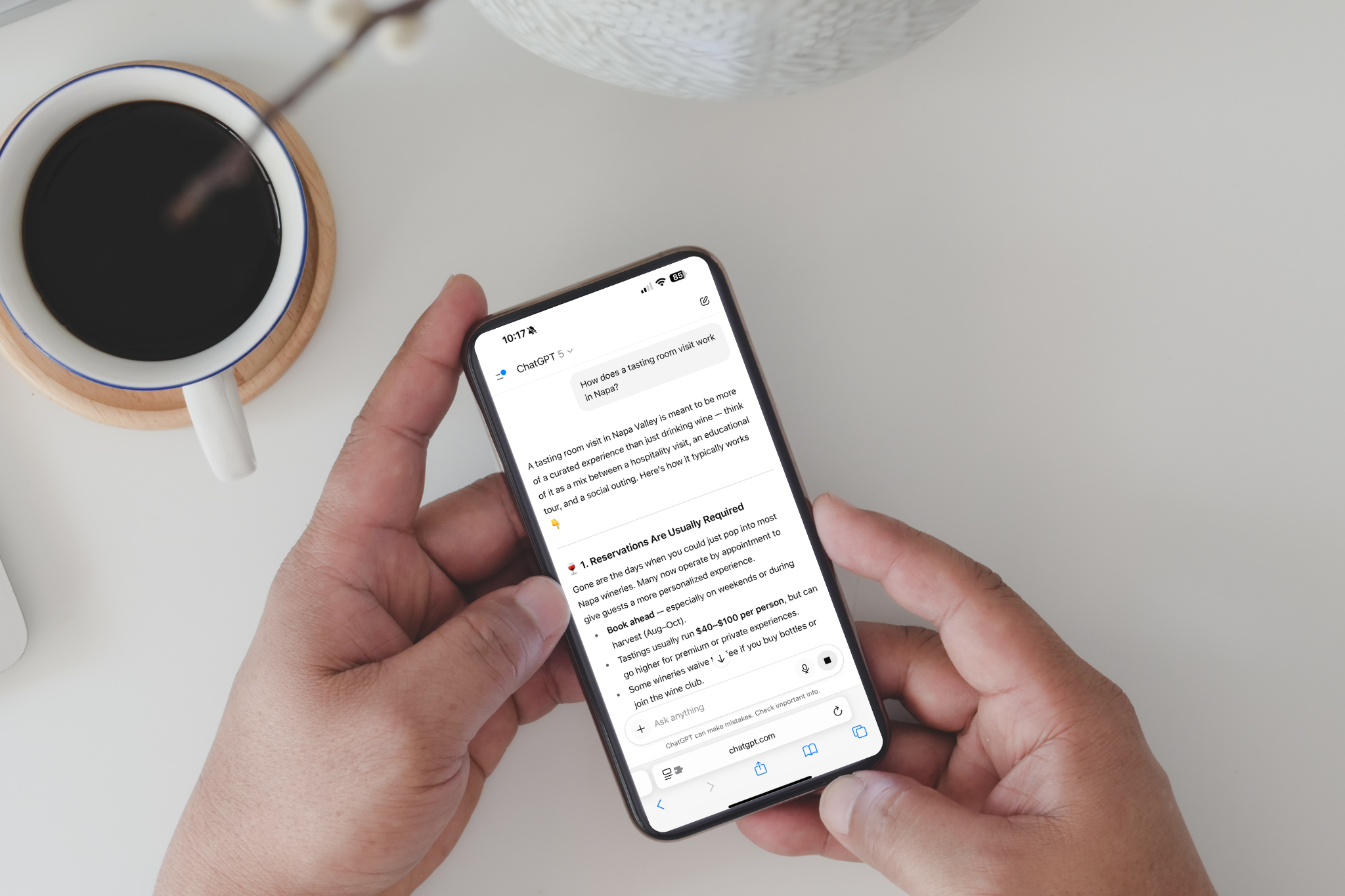
1. Make Sure AI Can Access and Understand Your Website
AI visibility starts with technical accessibility. If AI crawlers can’t reach or interpret your pages, they can’t include you in their answers — no matter how great your content is.
Start by checking that essential files like robots.txt and meta-robots tags allow known AI crawlers — such as GPTBot, Claude-Web, and CCBot — to index relevant sections of your site. Some companies are even using a new file called llms.txt, which works like robots.txt but gives large language models specific instructions on which pages to use for training or citation.
Also, make sure your canonical tags and redirect structures are properly configured so AI systems see the correct version of each page. And if important content is hidden behind login screens, paywalls, or JavaScript-only rendering, consider providing server-rendered versions or pre-rendered snapshots. Most AI crawlers can’t log in or execute complex scripts.
Finally, test your visibility directly. Search for your wine club page or tasting room info on AI platforms. If your site never appears as a cited source, accessibility may be the issue — and that’s the first thing to fix.
🍷 Corksy Tip: With Corksy’s website tools, you don’t have to stress about technical setup. We automatically generate crawler-friendly files like robots.txt and llms.txt, use server-side rendering to make your pages easier for AI to read, and ensure your site architecture is optimized right out of the box — something most DIY builders don’t handle well.
2. Structure Your Content for AI (and Humans)
Once AI can crawl your site, the next step is making sure it understands what it’s reading. Large language models rely on structure, hierarchy, and semantics to decide which information is trustworthy and relevant.
That means your content needs to be organized clearly. Use strong heading hierarchies, clear introductions, and concise summaries. Put a brief, direct answer near the top of every page or section — AI systems love definitive statements they can quote.
Breaking content into short paragraphs with clear subheadings also helps. And don’t forget structured data: adding schema markup (like Article, FAQPage, or HowTo) tells AI exactly what a page is about. Internal links between related topics strengthen your site’s authority and context, and regularly updating your content with timestamps signals freshness — another ranking factor for AI.
These adjustments don’t require rewriting your entire site. A few structural improvements can dramatically increase the odds of your content being cited.
🍷 Tip: With Corksy, your website automatically includes many types of schema markup — from product pages to events and blog posts — without you having to write a single line of code. That gives AI the context it needs to trust and surface your content, putting you ahead of wineries still relying on outdated site structures.
3. Build Credibility With Transparency and Data
AI systems prefer trustworthy, verifiable information — and that means credibility matters more than ever.
Start by backing up your claims with real data and citing reputable sources. Instead of writing, “wine club members are more loyal,” say, “According to WineBusiness.com, wine club members spend 2.5x more per year than non-members.” Specific, sourced statements like this are more likely to be quoted by AI.
Adding author bios, including your winemaker’s credentials or your team’s experience, also builds authority. Referencing respected organizations — even indirectly — helps AI connect your content to known knowledge graphs. And don’t underestimate the power of digital PR: features, interviews, and guest articles on external sites all strengthen your authority signal.
Finally, transparency counts. Note when your data was last updated, how you collected it, or the sample size behind any insights. In AI-driven search, credibility and verifiability are the new ranking currency — just as Google’s familiar E-E-A-T (Experience, Expertise, Authoritativeness, Trustworthiness) principles suggest.
🍷 Tip: Your website is only as powerful as the story it tells. Corksy makes it easy to showcase your credibility — from adding winemaker bios and sourcing notes to embedding press mentions and reviews — helping AI understand why your winery is a trusted authority worth recommending.
4. Write for AI Query Patterns — Not Just Keywords
AI search doesn’t work like Google did 10 years ago. It doesn’t just match keywords — it interprets intent and natural language.
To align with that, start studying how people phrase questions in AI chat tools. Run prompts like “What’s the best wine club in Virginia?” or “How does a tasting room visit work?” and see which phrasing gets the best results. Then, use those conversational patterns in your headings and copy.
Framing your page titles as direct questions (“How does a wine subscription work?”) and answering them clearly helps AI recognize your content as relevant. Cover related follow-up questions too — AI tools prefer pages that address a full topic cluster rather than just one angle.
And instead of repeating the same keyword over and over, use natural variations and synonyms. AI understands context, so variety builds stronger topical authority.
🍷 Tip: Corksy gives you complete control over your site’s content — so you can easily update headlines, page copy, and CTAs to reflect conversational search trends. Combined with our built-in SEO tools, it’s simple to stay aligned with how people are actually asking questions today.
5. Measure AI Visibility — and Keep Iterating
Optimizing for AI isn’t a one-and-done project. Like wine itself, it’s a process that gets better with time — and feedback.
Track when and where your content shows up in AI results. Tools like Semrush’s AI suite can help monitor citations across platforms like Google AI Overviews, Bing Copilot, and Perplexity. You can also manually test prompts and record when your winery is mentioned.
Watch for indirect signals, too. If more people start searching your winery name or wine club by brand, it’s often because AI is citing you. And remember — even if total traffic dips due to zero-click results, the visitors you do get are often more qualified. Track metrics like time on page, scroll depth, and conversions, not just raw clicks.
Finally, refresh older content regularly. Update stats, refine messaging, add new examples — and keep testing new approaches. The goal is steady improvement, not a one-time fix.
🍷 Tip: With Corksy, you can quickly update and publish content as often as you need — no developer required. That means you can iterate in real time, respond to changing AI trends, and keep your website fresh and competitive all year long.
The New Goal: Be Referenced, Not Just Ranked
AI search is already reshaping how people discover and trust information — and it’s only accelerating. Google’s AI Overviews now appear in more than half of all search results, and the company is building an AI-only search mode that prioritizes summarized answers over traditional links.
For wineries, this means that simply ranking isn’t enough anymore. Your content needs to be accessible, understandable, and authoritative enough to be used by AI systems — not just seen by them.
By focusing on five key areas — technical accessibility, structured content, credibility, conversational language, and ongoing iteration — you can ensure your winery is visible, trusted, and recommended in the AI era.
💡 Want to know how your site stacks up? Get a free website audit here and uncover opportunities to improve visibility, engagement, and sales.
If you want to dive deeper into common winery website errors and how to fix them, check out our recent AI-Ready Winery Webinar where we explored the biggest pitfalls and opportunities we’re seeing across the industry.
Your winery’s website is the digital front door to your brand — and in the age of AI, it’s more important than ever to get it right. Join experts from Corksy, Duda, and Insites as we reveal the top 10 most common winery website mistakes (and how to fix them), share how AI is reshaping discoverability, and show you simple steps to boost traffic, sign-ups, and sales. You’ll walk away with a clear action plan to make your website work harder for your business.