
Enartis USA announced the promotions of Amy Jensen to Sales Manager and James Allen to Applied Innovation Manager, effective March 2026. These strategic appointments underscore the company’s evolution from a traditional enological product supplier into a comprehensive partner for integrated winemaking solutions, engineering services, and applied research.
Strengthening Leadership for a Modernizing Industry
Producers across North America are actively navigating tightening margins, shifting consumer trends, and increased demands for operational efficiency. To meet these challenges head-on, Enartis is expanding its leadership structure to deliver connected, cross-disciplinary expertise that bridges enology, and engineering.
“The wine industry is moving from reactive decision-making to predictive control, and our leadership must reflect that,” said Francesco Bergaglio, CEO of Enartis USA. “Amy and James intimately understand the operational and financial pressures our clients face. Their combined expertise allows us to move beyond simply supplying products to designing integrated systems that deliver measurable ROI. We are moving from being simply a supplier to a true solution partner, and Amy and James embody that shift.”
About the Appointees
Amy Jensen – Sales Manager
 Amy JensenWith more than 15 years of wine industry experience, Amy Jensen steps into the Sales Manager role with a strong combination of technical knowledge, customer insight, and long-standing company experience. During her 13 years with Enartis USA, she has grown from Business Manager to Corporate Accounts Manager and now to Sales Manager, reflecting a career defined by deep customer relationships and a broad understanding of the business. She holds a degree from Cal Poly, San Luis Obispo, and, earlier in her career, she served as Lab Manager at DAOU Vineyards, experience that adds practical winery perspective to her commercial leadership background.
James Allen – Applied Innovation Manager
 James AllenJames will lead the expansion of Enartis Engineering (EE), focusing on winery automation initiatives and applied research collaborations. His work supports wineries in integrating real-time data and advanced process control to optimize enological outcomes. With nearly 20 years in the wine industry, James has extensive hands-on experience and education from around the world, including Australia, New Zealand, Europe, and the United States – from New York to Washington to California, where he has been based for the past decade. He has built skills across many facets of the industry, bringing a broad and practical perspective to winery operations. James holds a Master’s degree in Viticulture, Enology, and Wine Business from Montpellier SupAgro and Geisenheim University, where he researched machine learning and smart data sampling techniques.
Guiding the Next Phase of Integrated Innovation
The evolution of Enartis’ strategy relies on a unified approach that seamlessly blends innovative research, advanced engineering, and enological science. By aligning these disciplines, Enartis guarantees that wineries receive holistic, end-to-end support as they tackle problems together. This collaborative, customer-first model empowers producers to:
Drive measurable operational ROI by significantly reducing labor bottlenecks and optimizing energy consumption.
Shift from reactive to predictive winemaking through real-time data monitoring and intelligent, automated processes.
Ensure reproducibility to guarantee consistent quality and limit costly variance issues.
Deploy connected cellar infrastructure that scales seamlessly—from targeted IoT sensors to full-facility process control.
Advance applied research to continuously pioneer modern, highly efficient winemaking and beverage protocols.
This newsletter highlights the evolving role of clarification in modern winemaking, where the process has shifted from a routine operation to a strategic tool that shapes sensory definition and long‑term stability. Advances in technology and changing production priorities have prompted wineries to seek more selective, sustainable approaches to protein stabilization.
Featured in this issue is the Enartis CLARIL range, developed to deliver precise, minimal‑impact clarification while significantly reducing reliance on traditional bentonite. Recent research and winery trials demonstrate how CLARIL formulations enhance aromatic expression, improve filterability, support oxidative protection, and maintain wine brightness without compromising stability.
The content also examines the performance of CLARIL ZW and CLARIL ZR across white, rosé, and red wines, presenting data-driven comparisons that illustrate substantial efficiency gains and reduced sensory impact. Additional emphasis is given to sustainability benefits, allergen‑free formulations, and compatibility with modern tartaric stabilization practices.
This issue provides an in‑depth look at how selective clarification is reshaping contemporary winemaking by prioritizing precision, stability, and quality retention.

When it comes to fining wine, many traditional fining agents remove a broad spectrum of compounds that can often lead to stripped, less expressive wines. The CLARIL range from Enartis is focused on selective fining, which targets the specific compounds that cause instability and other faults, while preserving the integrity and quality of the wine.
The CLARIL range offers precision solutions for an array of issues, including:
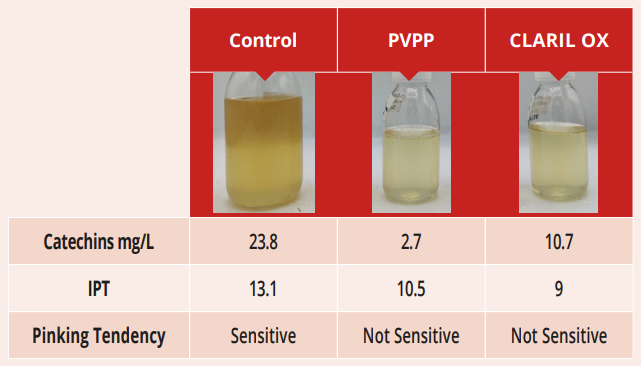
Preventing and Treating Oxidation – CLARIL OX
A natural alternative to PVPP, it acts with exceptional selectivity to target only the compounds responsible for pinking and browning. Its use during fermentation extends shelf-life while preserving color, freshness, and aromatic complexity.
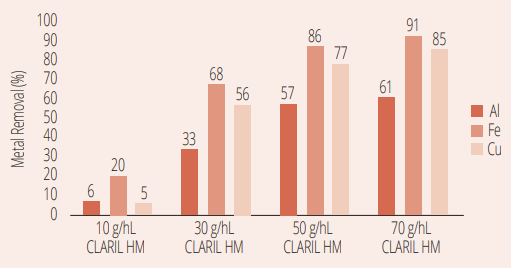
Metal Concentration Reduction – CLARIL HM
A blend of PVI-PVP and chitosan, CLARIL HM provides antioxidant protection by removing metals that catalyze oxidation reactions such as copper and iron.
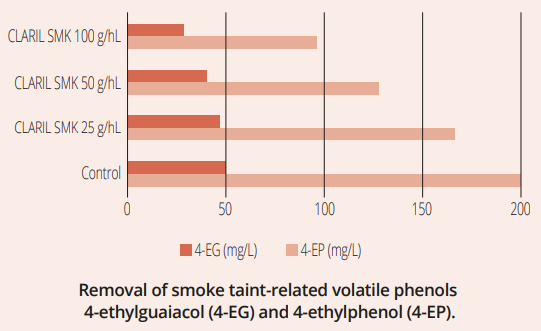
Smoke Taint and Other Off-Aromas – CLARIL SMK
Developed to eliminate smoke-related aromatic taints, it restores aromatic cleanliness and fruitiness while preserving freshness. In addition, it is highly effective at removing reductive off-aromas and other off-flavors.
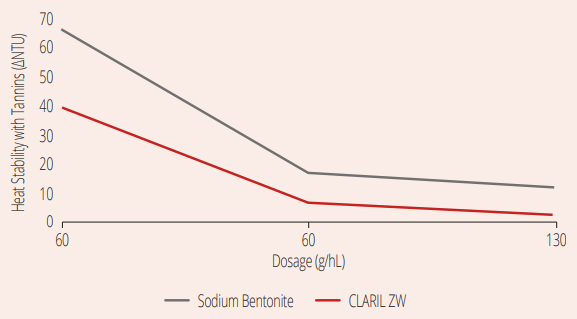
Protein Stabilization – CLARIL ZW
Reduce the amount of bentonite required to achieve protein stability with this specialized blend. CLARIL ZW is the ideal tool to prepare wine for tartrate stabilization using ZENITH.
Learn more about how the CLARIL range can help you here!
Questions? Contact your local technical sales representative or call 707 838-6312.
Once again this year, Enartis and WINEGRID® will be at the Unified Wine and Grape Symposium – where the industry comes together to shape what’s next – on January 28-29 at SAFE Credit Union Convention Center, Sacramento.
This is your chance to connect with thousands of wine and grape industry professionals: vineyard managers, owners, winemakers, winery managers, marketing executives, tasting room teams, and more.
Stop by our booth #1114 and discover how Enartis and Winegrid are driving innovation for smarter, more efficient winemaking.
Learn more and register here: https://www.unifiedsymposium.org/

Enartis S.r.l., a leading company of the Esseco Group and a world leader in providing products and technologies for the oenological industry, announces the signing of a preliminary agreement to acquire 100% of Parsec S.r.l., an Italian centre of excellence based in Sesto Fiorentino (Florence), internationally renowned for designing and manufacturing advanced, integrated control systems for the wine sector.
The effectiveness of the agreement is subject to the completion of the procedure required by Italian law.
The integration of Enartis and Parsec will create a global player capable of offering wineries worldwide a complete and smart management of their production processes, combining the advantages of cutting-edge oenological solutions with advanced, automated process management, from grape reception to bottling, on a single platform.
This strategic union, following the acquisition of the Portuguese company Winegrid in 2023, will mark the birth of a globally unique hub of expertise. The new group will be able to provide comprehensive support to wineries across the globe, optimising every production phase in terms of efficiency, sustainability, and quality.
Within the framework of the future structure, which aims to leverage the key competencies that have defined Parsec's success, Giuseppe Floridia will continue in his role as Chief Executive Officer. He will work in close synergy with the current partners and the entire team, a group of highly experienced professionals whose collective contribution has been instrumental to the company's development.
"This is the beginning of a chapter we intend to write together," declares Samuele Benelli, Chief Executive Officer of Enartis. "Today, we are laying the groundwork to unite not just two companies, but two families that share the same culture of customer service and the same passion for excellence and innovation. The extraordinary expertise of the Parsec team, combined with our global presence, will create incredible potential. We want every person, in both Enartis and Parsec, to feel like a key part of this future adventure."
Piermario Ticozzelli, Enartis Business Director, states: “The union between Enartis and Parsec will consolidate our commitment to offering integrated and innovative solutions for increasingly efficient and high-quality winemaking. The complementarity between the two companies' skills will be a powerful engine for growth, capable of generating new business opportunities. Together, we will become the strategic partner for future-focused wineries around the world.”
"The union with Enartis represents the natural evolution of Parsec's growth journey," declares Giuseppe Floridia, Chief Executive Officer of Parsec. "We chose Enartis because we see in them our own vision and a deep commitment to innovation. The combination of Parsec and Enartis allows for the integration of scientific knowledge with control and process management technology, offering the market tools for an ever more measurable and sustainable quality of wine."
The term NOLO wine refers to wine that contains either no or lower levels of alcohol. Regulations around the world differ, with most countries defining non-alcoholic beverages as containing less than 0.5% vol.
.
Brochure
NOLO WINE
Discover how to create a unique experience with NOLO wine: lower alcohol, greater flavor, and a world of possibilities to explore.
Learn more here.
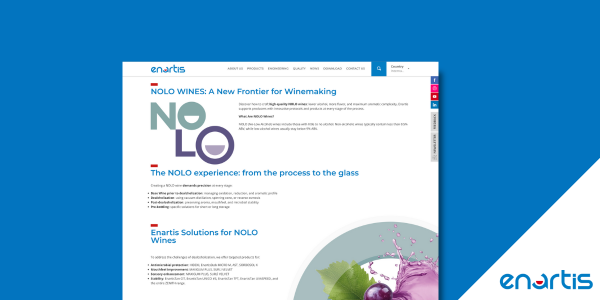
Webpage
A NEW FRONTIER FOR WINEMAKING
The NOLO wine market is growing fast. Enartis leads the way with expertise, research, and comprehensive technical solutions to craft well-balanced, stable, and flavorful NOLO wine.
Learn more here.
Healthy fermentations begin with balanced nutrition. Yeast nutrition during alcoholic fermentation is a critical factor in ensuring efficient processes and high-quality wines.
Enartis has introduced an innovative approach that goes beyond the traditional concept of YAN and developed a complete range of nutrients (NUTRIFERM) to specifically meet the needs of yeast during each stage of the fermentation process. By integrating amino acids, vitamins, sterols, and minerals, it is possible to ensure yeast well-being and prevent stuck or sluggish fermentations, while improving the aromatic quality and stability of wine.
Through its Centre of Excellence for Research in Microbiology (CERM), Enartis analyzes and evaluates the nutritional composition and behavior of yeasts according to the different stages of fermentation. This enables the development of tailor-made nutritional strategies that guarantee fermentation stability, aromatic expression, and sensory quality. Additionally, research is focused on adapting yeasts to new winemaking conditions influenced by climate change, with the aim of providing winemakers with increasingly targeted and effective tools.
In this video interview, we explore the importance of strategic, balanced nutrition to ensure yeast well-being during fermentation.
Learn out more in the video interview with Alessandro Magrin (Technical Winemaking Specialist, Enartis) and Francesco Invernizzi (Infowine).
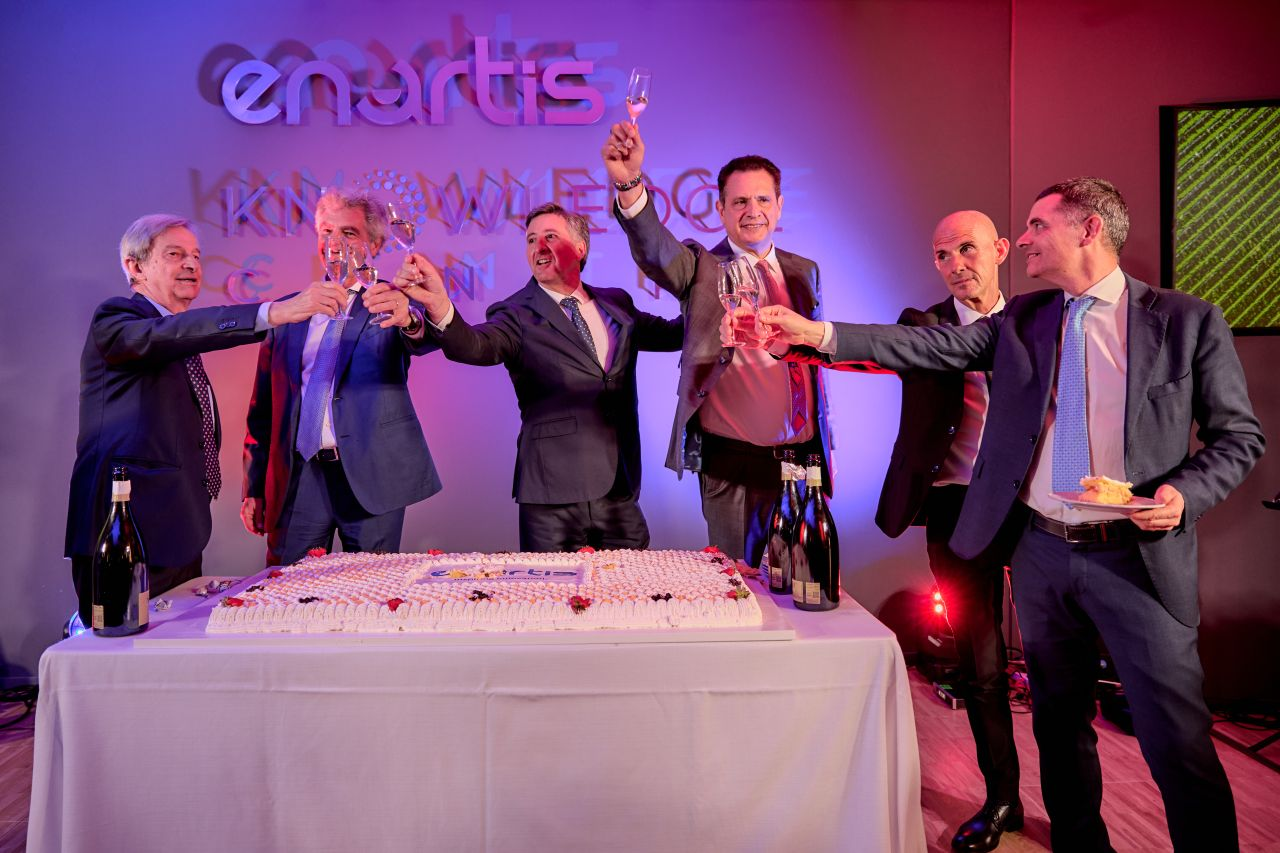
Let’s raise a glass to Enartis!
On April 4th, we proudly inaugurated our new headquarters in Galliate (Italy). The celebration took place in our state-of-the-art "Enartis Knowledge Center", where we were joined by friends, collaborators, partners and press.
A heartfelt thank you to everyone who made this milestone possible. Your trust and support drive our mission to shape the future of winemaking, and beyond!



POTASSIUM POLYASPARTATE (ZENITH) DECLARED CODEX ADDITIVE
At the latest Codex Alimentarius Commission meeting held in Geneva, potassium polyaspartate (ZENITH), was officially declared a Codex additive. This decision represents a major breakthrough for the wine industry that simplifies and facilitates export possibilities for wines treated with ZENITH.
What is Codex Alimentarius?
Codex Alimentarius is a collection of standards, guidelines, regulations, and codes of practice adopted by the Codex Alimentarius Commission, established by FAO and WHO in 1963. The Commission aims to protect consumer health and promote fair practices in food trade. All Codex Alimentarius countries agree that Codex additives are considered food safe. The scientific recommendations negotiated by members cover all aspects of food safety and quality, becoming a reference in World Trade Organization (WTO) trade disputes. Although these recommendations are voluntary, Codex Alimentarius standards are increasingly being used as the basis for national legislation in member countries.
Currently, the Codex Alimentarius Commission has 189 members (188 countries and the European Union): Members | CODEXALIMENTARIUS FAO-WHO
Good News for Wineries
The approval of potassium polyaspartate (ZENITH) as a Codex additive is a great achievement for Enartis and an excellent opportunity for the wine industry. The fact that KPA has been recognized by all Codex Alimentarius member countries as a safe additive implies the reduction of trade barriers in the export of ZENITH-treated wines and opens new market opportunities for wine producers.
Information regarding Codex Alimentarius and the approval of potassium polyaspartate (KPA) is based on official Commission decisions but does not constitute legal advice.
It is the sole responsibility of the user to verify compliance with applicable regulations in the country of destination prior to any shipment of KPA-treated wines.
Enartis disclaims any liability for litigation, import refusals, or other consequences resulting from the use of KPA in wines, regardless of its recognition by Codex Alimentarius.