
Advantages of early AI search visibility for wineries and how-to system for achieving results.
AI is quickly becoming the first place consumers turn when deciding what wine to buy, which winery to visit, and what experiences are worth their time. For wineries, this shift represents more than a new marketing channel. It is a fundamental change in how discovery, consideration, and purchase decisions are made.
The key insight: AI search visibility compounds over time.
Wineries that invest early in being visible, understandable, and trusted within AI-driven search environments gain a measurable advantage that grows. Each mention, citation, and recommendation strengthens future visibility, creating a flywheel effect that late adopters will struggle to match.
This is not about quick wins or isolated tactics. It is about building a durable presence across the digital ecosystem that AI systems rely on to generate answers. As these systems learn from consistent signals, brands that show up early and often become more likely to be recommended again and again.
At the same time, the market environment makes this even more critical. Consumers are more price-sensitive and more selective, increasingly asking AI questions like “What wine is worth it?” or “Where should I go?” In that moment, visibility is no longer just awareness. It directly influences revenue outcomes.
The implication for winery leaders is clear:
- AI visibility is becoming a leading indicator of future sales performance
- Discovery is shifting from traditional search and social to AI-driven recommendations
- Brands that delay investment risk becoming invisible in high-intent buying moments
The wineries that will outperform in the coming years are not necessarily those with the largest budgets, but those that commit early to building structured, credible, and consistent visibility in AI search.
In a category defined by long-term thinking, this is a familiar concept. The difference is that the compounding curve is now digital.
Visibility is no longer just a marketing outcome. It is an economic asset.
SURVEY: AI Readiness for Wineries / $100 Gift Card Drawing Apirl 30
The Weinheimer Group is running a 2-minute AI Marketing Readiness Poll right now — gathering data on where wineries actually stand with AI readiness as it relates to marketing and brand visibility. I'll present findings at the 2026 Wine Sales Symposium in May.
If you're kindly weighing in here, your survey response will add real signal and insights to the aggregate picture. All answers are confidential, and every completed entry enters a drawing for a $100 Wine.com gift card (drawing April 30).
Thank you!
AI is already shaping how wine brands are discovered.
Not someday. NOW. And there's never been a more advantageous time to win in today's down wine economy.
When someone asks, “What wine should I buy?” or “Which winery should I visit?” AI is often th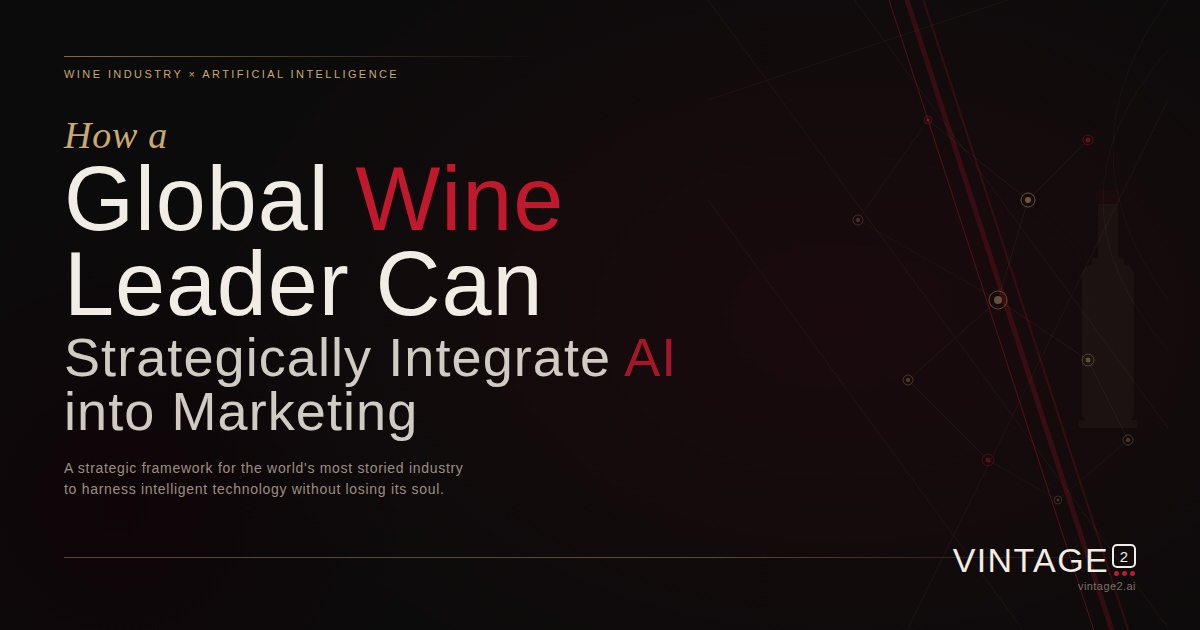 e first answer they see.
So here’s the question I keep coming back to: Is your brand showing up clearly in those moments or not at all? (For most wineries, not at all.)
I wrote a short piece for winery CMOs and marketing leaders on what this shift really means and how to think about it: How a Global Wine Leader Can Strategically Integrate AI into Marketing.
I took a look at recent articles and research to get a better understanding on how AI is moving the sales needle or not. While there's not a lot of reported public data just yet, there's significant evidence that brand visibility alone for a handful of wineries and wine brands is the path to purchase(s). But more importantly, I once again found the same truths about what's necessary for AI brand search visibility - educational, informative, and comparative public content is king for improving AI search visibility today. Is your brand providing an answer to the desired users AI intent?

My positive takeaways from Oregon Wine Symposium 2026 is that the wine industry has no shortage of opportunities right now. What is changing however is how clearly those opportunities are communicated and discovered. As consumers increasingly turn to AI to help them choose what to drink, where to go, and what fits their lifestyle, the wineries that articulate these wins clearly will be the ones that show up in the world of 'AI intent!'
Here are my 10 ways the wine business can win in 2026 and why embracing AI now can help make them visible.
Top 10 Ways the Wine Business Can Win in 2026
1. Lead with flavor, not labels
Consumers want to know what it tastes like, not what it’s called. Clear flavor language helps AI and people understand wines faster.
2. Whites and lighter styles are growth engines
White wines and blends align with affordability, freshness, and everyday occasions. Explaining why they fit modern lifestyles improves discovery.
3. “Better for you” needs clarity, not claims
Lower calories and reduced sugar matter, but confusion is high. Brands that explain simply earn trust and visibility.
4. Dispel the sugar myth directly
Many consumers still assume wine equals sugar. Straightforward education can remove a major barrier to trial.
5. Make wine easier to choose
Too many wines look the same. “Which wine suits you?” frameworks outperform broad portfolios in AI and on shelves.
6. Compete with cocktails by occasion
Wine wins when positioned for casual, social, seasonal, and food-forward moments that overlap with cocktails.
7. Smaller formats unlock trial
Less-than-750ml packaging lowers risk and encourages experimentation, especially for new consumers.
8. Pair wine with today’s food culture
Global and Hispanic cuisine influences are growing. Clear pairing guidance opens wine to new audiences.
9. Surprise them with flavor
Consumers want to be pleasantly surprised. Wines that exceed expectations for taste and ease create repeat buyers.
10. Grow by owning a niche
The sea of sameness is real. Focus on a clear audience, moment, or season and communicate it consistently.
For many, these wins already exist. The difference now is who AI can see, understand, and recommend. Wineries that begin aligning their messaging, content, and visibility with these realities today will be easier to discover tomorrow.
AI visibility is the new advantage! Cheers to a terrific OWS 2026.
AI visibility for wineries is a real opportunity to win,
A lot of attention was given last week to headlines suggesting the average price of a U.S. bottle of wine is now around $56. Is that number perfectly representative of every channel, region, or winery? Probably not. Averages don't always tell the whole story.
But here’s what is true: consumer price sensitivity is real right now, and consumers are pausing, questioning, and reassessing value more than they have in years.
For the win...in a world where consumers increasingly ask AI what to buy, where to go, and what’s worth it, wineries that invest steadily in AI visibility will have a meaningful advantage.
This truly isn’t about hype, quick wins, or shortcuts. It’s about committing, over time, to being discoverable, understandable, and trusted in a new search landscape. Visibility can be an economic asset. And for wineries willing to invest in it consistently, it’s a real opportunity to win.
I’m pleased to introduce VINTAGE², a new education system created specifically for wineries that want to better understand how AI is reshaping marketing, communications, and brand visibility.
VINTAGE² is not a tool or a software platform. It’s a practical, 101-level learning framework designed to help wineries evaluate how consumers now discover wine and wine experie nces, what’s working in their current digital presence, and where AI can play a useful role without overwhelming teams or replacing what makes wine brands human.
Why now? Because search behavior is changing quickly. Consumers are increasingly asking AI systems to recommend wineries, experiences, and bottles, and those systems can only surface brands they clearly understand.
VINTAGE² is for winery owners, marketers, tasting room leaders, and communications teams who want a clear starting point to explore AI thoughtfully, at their own pace.
Learn more here:
https://weinheimergroup.com/vintage2/